• Home
  • About
    • Our Contributors
    • Our Beliefs
  • Blog
  • Bible Studies
    • Scripture Dig
  • Archives
  • Shop
  • Advertise
  • Contact
    • Email
    • Facebook
    • Instagram
    • Pinterest
    • Twitter

Do Not Depart

Encouragement and Tools to Abide in God's Word

You are here: Home / Archives for application

Less Google, More God – Take an Informational Sabbath

October 16, 2019 by Lisa Burgess 21 Comments

Less Google More God Informational Sabbath

Give yourself a break from having to know all the things, all the time. Take an informational Sabbath.

It’s more than just a digital detox.

Less Google, More God

The Information Age

We want to know.

Right now.

  • What will happen if we don’t get the work contract?
  • Will it wreck my phone to update to iOS 13?
  • Is it going to rain Saturday?
  • Does my granddaughter have RSV?
  • Is this relationship in God’s will?

This is the age of information. We want knowledge quickly, easily, and accurately.

The first temptation still haunts us today. We want to know everything we can know, just as Eve wanted fruit from the tree of the knowledge of good and evil (Genesis 3:6).

  • Uncertainty makes us anxious. So we don’t let up until we know more.
  • We are afraid of being in the dark. So we flick on as many lights as we can.
  • We don’t want to appear stupid. So we put in hours of research until we’re worn out.

Are we trying to be our own gods? Thank God for Google. Right?

Search Overload

We definitely need information, of course.

We have to know things to function well. God wants us to make wise choices based on rational decisions. We need Christian scientists, teachers, nurses, business owners, therapists, theologians, etc. Knowledge helps us survive. It makes our lives better.

But can our “need to know” become unhealthy?

Yes.

Any of us can become information junkies, addicted to the next hit of knowledge. We can be misled into a false sense of security when we think we know it all. We can make poor decisions when we think we’re in total control.

And most dangerous of all, we can think, “Who needs God?” when we have so many sources of knowledge.

We know we have a problem when we ask Siri more than we ask God.

Yes, we do thank God for the amazing tools He’s given us in this century. Google and other search engines are such time-savers, giving us information we need or at least pointing us in the right direction.

But it’s the quantity and dependence that can swamp us. In these times of fast news, trying to keep up with everything is like drinking from the proverbial firehose. More information is available than we can handle. It comes to us faster than we have the ability to take in.

What can God teach us when we’re already worn out from trying to learn more, more, more, all the time?

Take an Informational Sabbath

Just as God directed His people in the Old Testament to take a Sabbath rest, we can benefit from a regular Sabbath, too.

While the Jews took a weekly Sabbath from anything considered work, our Sabbath choices might look different today.

Many still choose to do no major work one day a week. Others may take a week’s fast from all social media. Or unplug periodically from all technology. (There are apps like Mute for your digital detox goals, offline vacation B&B’s, and even technology rehab facilities to help you break internet addictions.)

Because of our addiction to gathering more and more information, maybe we need an occasional informational sabbath. Not just from Google, but a break from our need-to-know in general.

When we hunger for knowledge more than we hunger for God, we need to take a step back. Being smart is good, but being sanctified is better.

  • Rest your brain so your heart can rejoice in Christ.
    I grew up in a head-oriented faith tradition, but I learned in adulthood there is great delight and value in also releasing my heart to worship Christ. Love God with more than your mind: also include your heart and soul (Matthew 22:37).
  • Periodically set down the studying so you can just sit with Jesus.
    Sometimes we need to set down even our Bibles so we can soak in Jesus more directly (John 5:39-40). Worship Him. Talk with Him. Listen to Him. Knowing about God and knowing God can be two different things. Make time for both.
  • Give knowledge some time to digest.
    Knowledge isn’t the same thing as wisdom. Just as we need time in between meals for our food to digest, let God use time to turn what you already know into wisdom, before you haul in another pile of information (Lamentations 3:25).

We can grow our faith by trusting God in sabbatical breaks.

In an informational Sabbath, we can release our desire to constantly know more and always be right. We can let go of our quest for power and our need to stay in control. We can make peace with uncertainty and our fear of the unknown.

Because, in the stillness, we can remember that God already knows what was, what is, and what it to come.

Less Google, More God

So click off Google now and again. During your Sabbath break, trust God to let you know what you need to know, when you need to know it.

God created us to stop for breaths. He doesn’t expect us to keep learning 24 hours a day. He knows we’re happier (and smarter!) when we take a Sabbath rest in Him instead of trying to do everything on our own.

We can never know enough to be good enough on our own. Our brains are finite. His is infinite. We can’t think our way into heaven.

Who we know matters more than what we know.

Keep learning, but remember that learning is not a goal in itself. Changing into the image of Christ is.

Knowledge by itself does not save us. It leads us to the One who can: Christ the living Truth (John 8:32).

Thankfully we don’t have to figure everything out. God already has. He knows it all. And we know Him.

That’s what we most need to know.

Keep learning. But you don’t have to know it all. More God, less Google. #LordoftheSabbath

Click To Tweet

Read More:

  • Series – Lord of the Sabbath
    See all the posts in our Sabbath series
  • A Daily Dose to Overcome Anxiety
    God gave them a daily dose of manna for their journey. He gives us a daily dose of grace for ours.
  • 3 Things to Do When You Don’t Know What to Do
    Learn 3 things you can do when you just don’t know what to do. Grow your faith even when you’re uncertain.

Are you an information hoarder? What do you wish God would tell you right now? How do you make peace with not knowing? Please share your thoughts in the comments.
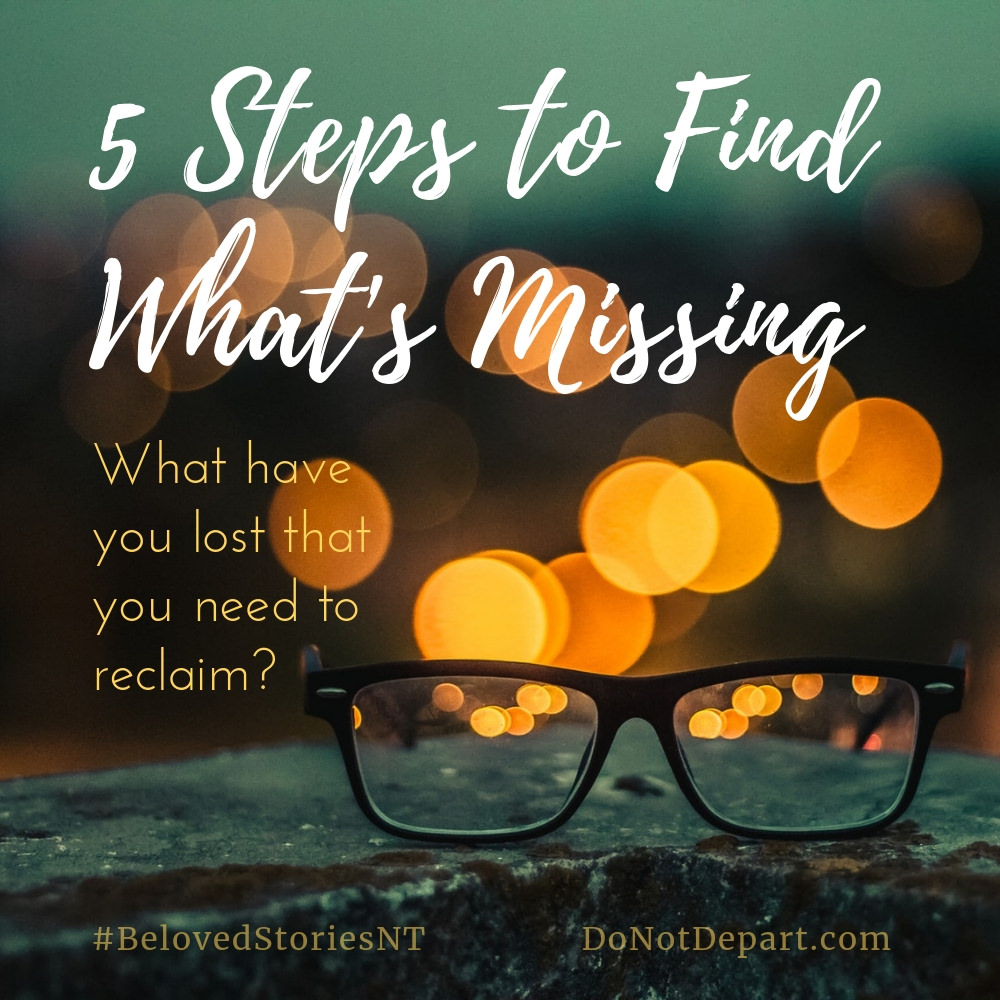
5 Steps to Find What’s Missing: The Story of the Lost Coin

September 13, 2018 by Lisa Burgess 31 Comments

Have you lost your peace? Your joy? Your rest? Look with us at the Parable of the Lost Coin for 5 steps to find what’s missing.

5 Steps to Find What's Missing - Lost Coin

WHERE ARE MY GOOD GLASSES?

I was reading the ballet program. I wanted to know when the students would perform from my daughter’s class.

So I know I had my glasses on.

But an hour later, my glasses were missing. My real ones. My prescription, progressive glass I paid dearly for. Not my cheap Dollar General reading glasses that I also use daily.

Maybe you misplace your glasses occasionally, too. Or your cell phone goes missing. Or you can’t find your car keys on your way out the door.

When we can’t find something we need, we get stressed.

And even though we may have access to another pair of glasses (thank you, Dollar General!) or someone else’s phone or a spouse’s key, we want our own.

THE LOST COIN

Jesus knows this about us, that we lose things and get anxious about it. And He knew this about the tax collectors and religious scholars of His day, too.

So when His audience began grumbling about His latest choice of dinner companions (“He takes in sinners and eats meals with them, treating them like old friends” Luke 15:2), Jesus told them some stories about the lost and found.

Today we’re looking at the story He told about the Lost Coin. (Read it in Luke 15:8-10.)

A woman in His parable has ten silver coins. She loses one. Just one.

But still one. And every one matters.

The coin is a drachma. (See more on Coins that Jesus Used.)

greek drachma

A drachma represented about a day’s wage in ancient Israel. It was valuable, not like dropping a penny down a drain. Oh, well.

This was like a paycheck, one of only ten she had. It made a difference.

5 STEPS TO FIND WHAT’S LOST

What is a day’s wage for you? Would you care if you lost that paycheck on your way home from work? How would you react?

What about if a friendship went missing? Or you floated adrift from a good spiritual habit? Or you lost track of God’s promises and thus lost your hope?

  1. Notice the Shadow

First, you have to realize something is missing.

Too often we so gradually acclimate to the coming nightfall that we don’t realize it’s dark until we need to see. I didn’t notice my eye glasses were missing at the ballet recital until I needed to read a message on my phone. And I couldn’t see it.

Jesus doesn’t tell us how the woman noticed her missing coin. Maybe she was counting her coins at the end of the day…7, 8, 9…where’s 10?

What wakes you up to your losses?

Perhaps doing a blessing-count at the end of the day will remind you that you’ve neglected a relationship. Or a new pain wakes you up to your need for God’s help. Or discontentment triggers awareness that your attitude has shifted.

Pay attention.

  1. Turn on the Light

The next thing the woman did was light a lamp. It’s what I did too in the search for my glasses. I turned on my phone light and began looking under my seat. And when the house lights finally came on, I could see even more areas to search.

What light switch do you need to flip?

Perhaps a sister in Christ can provide some illuminating advice. Or falling on your knees in prayer will help you see clearer. Or just spending time in worship will allow you to soak up His light for any dark days ahead.

  1. Clear out the clutter

When light alone didn’t uncover the silver coin, the woman picked up her broom. When my daughters were younger and looking for a lost toy, I’d tell them, “Use your hands.” Not just your eyes. Dig around to the bottom of the toy box.

Try moving something else out of the way to find your missing thing.

What is cluttering up your life this week? Could not only physical clutter but also spiritual clutter prevent you from finding what is missing?

Grab a broom and sweep your house.

  1. Keep Going and Going

Jesus said the woman would “seek diligently” until she found her coin. She wouldn’t give up after a quick five-minute search.

Are you as steadfast in your search for missing devotional time or a healthier marriage as you would be for lost money? How persistent are you in your search for missing contentment? Do you quickly give up on hearing from God if you don’t get an immediate answer?

Be diligent in your search.

  1. Prepare to Celebrate

The woman’s persistence paid off. She found her coin. Jesus said she called people around her afterwards.

Jesus wanted His listeners to see how the story can end: in community, in celebration, in gaiety.

Likewise, when you discover your own missing treasures, are you quick to share in celebrations? Who do you tell? Are you also willing to be the friend or neighbor who rejoices with others when they’ve found something they’ve lost?

GOD’S PARTY

This parable concludes with joy.

“Count on it—that’s the kind of party God’s angels throw every time one lost soul turns to God.” Luke 15:10 (The Message)

When the lost become found, God throws a party.

If you’ve lost something in your life that you need to reclaim—freedom in Christ, peace in stormy weather, love in a relationship—know that even the angels in heaven are rooting for you to find it.

And when you find it, God will crank up the music in celebration.

After searching for my glasses underneath my own row of seats, the row in front of me, and the row behind me, I began asking around, “Have you see any glasses?”

No, no, and no. And I gave up.

I walked to say good-bye to friends six rows in front of us. And that’s when I saw them: my glasses. In the hand of my friend. She said her daughter had found them earlier during intermission and they didn’t know who they belonged to.

They belonged to me.

In the end, my glasses found me.

I was happy. I was grateful for the grace of God, not just in seeing my glasses again (and seeing with my glasses!), but for valuing me, for meeting my needs, for caring about what I care about.

God cares about the things you’ve lost, too. Maybe not all your lost things are retrievable. But for the things that are, be encouraged to keep looking. God is watching over you as you do.

Because the thing He most doesn’t want to lose is . . . you. You are one of His.

And every one matters. 

Are you missing something? 5 Steps to Find What’s Missing #BelovedStoriesNT

Click To Tweet

What have you recently lost? How did you find it? Please share in the comments.


What’s Your Point? 10 Questions to Ask Yourself as You Lead {+ Printable}

August 16, 2018 by Lisa Burgess 24 Comments

What's Your Point

Are you preparing a lesson for a small group?

Want to be more equipped for the next time?

Stay on track by keeping your point sharp.

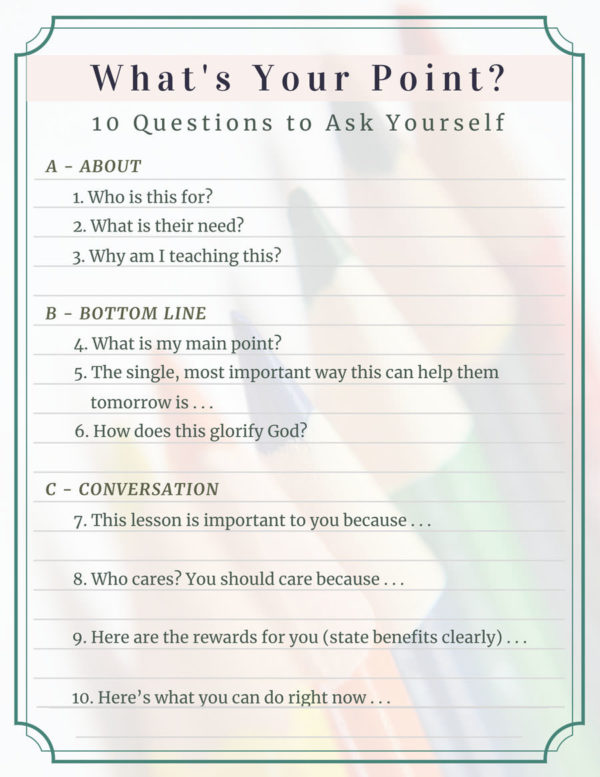
10 Questions to Ask Yourself - What's Your Point

Too Dull?

Have you tried cutting paper with dull scissors? Or peeling potatoes with a dull knife?

And surely you’ve sat in a dull class, wishing you were elsewhere?

What’s the point? When teachers (or let’s be honest, even friends) ramble on and on with no point, it can feel like a real time-waster.

So when it’s your turn to lead—whether a lecture in Sunday school or a discussion in a Facebook group or just at lunch with your friends—don’t be the dull one.

Be sharp. When you have something to say, whatever the forum, make your point clear and concise enough to be heard and felt.

All month we’re giving tips on how to be an effective small group leader, whether you’re a newbie or a pro, with our #LeadingEffectively series.

Today we’re giving you a free template to use.

Try these questions to uncover the heart of your lesson. To make a lasting difference, you must sharpen your point.

Make It Sharp

How?

Here is a proven method to discover the essence of your lesson (get the printable). I’ve used it again and again in ladies’ classes, in blog posts, in marketing materials for non-profits, and yes, even as prep work for important discussions with friends. It’s compiled from advice in Made to Stick and Presenting to Win.

Ask yourself this series of questions. With each level, dig deeper. Do it quickly (it can take as little as 5 minutes) or pray through it for days.

You’ll come out with the one most treasured nugget you want to share.

Then build your lesson around it. It’s as easy as A-B-C.

A – About

Identify the key players to be most effective.

# 1. Who is this for?

# 2. What is their need?

# 3. Why am I teaching this?

As much as possible, (# 1) pinpoint your audience before you construct your lesson. A talk to nonbelievers might be angled differently than to a group of lifetime believers. (# 2) Pray about the main thing your specific group needs. Answer with one sentence.

And then ask yourself, (# 3) Why me? Why does God have you here giving this message at this time to these people? What do you bring to the table that no one else does? As with all the questions, answer again with only one sentence.

Once you’ve defined your why, you can move on to the next set of questions to determine your what and how.

B – Bottom Line

If you haven’t consolidated your main point, your audience won’t take one home. As leader, ask yourself these questions.

# 4. What is my main point?

# 5. The single, most important way this can help them tomorrow is . . .

# 6. How does this glorify God?

Here’s an example.

(# 4) For our Bible memorization groups, despite what you might think, the main point isn’t to memorize words. Then why are we memorizing? To enhance our relationship with Jesus. We use the words to help us achieve that goal.

(# 5) What’s the single, most important way that memorizing can help us? It gives us a tangible set of words to study with, to pray through, to meditate on, to converse with God about. Memorizing provides the tangible process for our main goal of relationship-building.

(# 6) How does memorizing scripture glorify God? By getting closer to Him, we hope to become more like Him, revealing His love to those we encounter, which brings Him honor.

By nailing down your bottom line, you can stay on target when you’re tempted to drift toward undefined tangents.

Now you’re ready to have a conversation.

C – Conversation

Start an imaginary conversation in your head with your group, using the following questions and statements.

# 7. This lesson is important to you because . . .

# 8. Who cares? You should care because . . .

# 9. Here are the rewards for you (state benefits clearly) . . .

# 10. Here’s what you can do right now . . .

I have this conversation with you, the reader, as I write this article.

(# 7) Why is this article important to you? Because you truly want to help others see and love God more. (# 8) Why should you care? Because you’re either leading a small group now or you will later, and you want to make a difference. (# 9) What rewards will you get? You’ll have another tool to hone your future lessons more efficiently and effectively. (# 10) What can you do right now? Download the template and work through these 10 questions.

Don’t Waste Your Message

After your heart-work is done and you’ve centered your lesson around a theme, remember to release it all to God.

Just as He worked with you in preparing it, He’ll continue to work through you as you deliver it.

Allow His Spirit to breathe through it. He can enhance what you’ve already set up and make it even sharper. He can prick hearts in places you can’t reach.

One of my favorite classes at church was a Wednesday night series called Oasis. Each week we gathered in a well-prepared setting to celebrate a specific theme of God’s promised rest, an oasis in our week. Every song, video, scripture reading, and discussion focused our attention on one main aspect of God.

The message was easy to remember after we left. We were given practical suggestions to practice throughout our week. Years later, I still recall certain lessons and how they blessed me.

As a leader of a small group (your family counts!) or a large group, you have an opportunity every week to make an impression through the love of Christ. Don’t waste your moment.

Don’t be a dull blade.

Stay sharp.

Download your printable PDF here.

What's Your Point? 10 Questions to Ask Yourself

Leading a group? Ask yourself…10 Questions to Keep Your Point Sharp #LeadingEffectively

Click To Tweet

What helps you stay on topic when leading or participating in a small group? Do you have a favorite tip for preparing a lesson?

Please share your thoughts with us.

Should You Be Mad?

July 12, 2018 by Lisa Burgess 8 Comments

Should I Be Mad? Anger is easy.

Do you have a right to be angry? Are you entitled to it?

Continuing in our Exceptional Christian Book series, today we’re looking at Unoffendable, a book aimed at making our Christian walk better by giving up our right to be offended.

Louis L’Amour said, “Once you have read a book you care about, some part of it is always with you.” Unoffendable has stayed with me since I read it three years ago (and re-read since then).

Here’s why.

Should I Be Mad? Anger is easy.

I’m Mad

He hurt my feelings.

I disagreed with his facts. I didn’t appreciate his attitude. And I was offended by his conclusions about my faith.

It was a few years ago. I knew this elderly gentleman held strong opinions. He wasn’t afraid to state them. But I didn’t expect them aimed at me.

I thought I had a right to be angry at him for it. And to stay angry.

But was I wrong?

Too Much Offense

How often are you offended? Are you irritated too frequently? Overly sensitive?

Are Christians viewed as perpetually angry people?

When I think of exceptional Christian books, Unoffendable comes to mind. It’s not a huge best-seller or a classic that’s survived through the centuries (it was published in 2015).

But it can be a game-changer today for Christian anger.

Written by radio personality Brant Hansen (WAY-FM radio anyone?), Unoffendable says that our “righteous anger” has become a big problem.

We don’t have to look far for reasons to get angry.

  • Tune into your favorite social media.
  • Talk about politics at work.
  • Expect your children to make only smart choices.

We’ll find reasons to get mad. And to justify it. We’re always in the right, yes?

And shouldn’t we be angry against all the injustices of the world?

Didn’t Jesus Himself display an angry side? He even flipped a table in the temple.

No Entitlement

Hansen addresses all these issues in Unoffendable.

And he still comes out on this side: No. We’re not entitled to our perpetual offense or constant anger.

“We should forfeit our right to be offended. That means forfeiting our right to hold on to anger. When we do this, we’ll be making a sacrifice that’s very pleasing to God. It strikes at our very pride. It forces us not only to think about humility, but to actually be humble.”
– Brant Hansen

While there are legitimate reasons to get angry—and yes, we do read about God’s anger at evil—we’re also told to not hold onto it.
To not sit with it.
To not sin in it.

“Anger will happen; we’re human. But we can’t keep it.”

As Paul said,

“But now you must put them all away: anger, wrath, malice, slander, and obscene talk from your mouth.”
Colossians 3:8

Jesus may have had legitimate authority, judgment, and wisdom to toss a table, but that doesn’t mean we do.

Instead of pronouncing angry judgments, what if we allowed only God to do that?

“Quit being shocked when people don’t share your morality. Quit serving as judge and jury, in your own mind, of that person who just cut you off in traffic. Quit thinking you need to ‘discern’ what others’ motives are. And quit rehearsing in your mind what that other person did to you.”

Use Love, Not Anger

Yes, we can—and should—stop injustices. We can right wrongs. We can defend the defenseless.

“Choosing to be unoffendable, or relinquishing my right to anger, does not mean accepting injustice. It means actively seeking justice, and loving mercy, while walking humbly with God.
And that means remembering I’m not Him.
What a relief.”

But we can do all those things better with a clear head, not an angry one.

“People say we have to get angry to fight injustice, but I’ve noticed that the best police officers don’t do their jobs in anger. The best soldiers don’t function out of anger.
Anger does not enhance judgment.”

Or as Dallas Willard puts it in The Divine Conspiracy (another great book!),

“There is nothing that can be done with anger that cannot be done better without it.”
– Dallas Willard

Humility > Pride

And even better, what if we’d choose to be unoffendable in the first place? We’d have less to work through.

Instead of taking everything personally and being offended, what if we seek humility, offer forgiveness, and extend grace?

More from the apostle Paul:

“Put on then, as God’s chosen ones, holy and beloved, compassionate hearts, kindness, humility, meekness, and patience, bearing with one another and, if one has a complaint against another, forgiving each other; as the Lord has forgiven you, so you also must forgive.”
Colossians 3:12-13

Hansen reminds us that if we’ll begin with more humility and less pride, there will be less of ourselves to defend. Less slights that we notice. Less for us to prove.

“There’s only one way to not be threatened by anything, and that’s if you have nothing to lose. . . . Remember: Anger and rest are always at odds. You can’t have both at once.”

By being less offendable, we’ll be easier to get along with.

We’ll shine a brighter light for Christ in dark places.

We’ll bring more peace and more God.

“The anger of man does not produce the righteousness of God,” James 1:20.

“If you think people are drawn to you by an impressive religious resume, you’re in for a shock. When people are in crisis or need to know that God loves them, that they’re not alone, they don’t seek out the guy who thinks he’s Mr. Answer or who radiates superiority and disapproval. They want someone who loves God and who loves them.”

We love stronger when we’re offended less. Love is a purer motive than anger.

Aim for Unoffendable

I eventually forgave the gentleman who hurt my feelings.

But I haven’t forgotten.

It’s been a lesson.

Holding onto my “righteous anger” against him, even when it felt justified at first, ended up only causing me more pain. It didn’t help my relationship with the man. And it didn’t bring glory to God.

I had to let it go.

Are any of us entitled to hold on to our anger?

We will have legitimate reasons to become angry. Feel it. Work to correct the injustices underneath it. Then let the anger slide away.

Aim for unoffendable instead.

Are you entitled to your ‘righteous anger’? Join us for our #ChristianBooks series.

Click To Tweet

Are you easily offended? What helps you overcome slights? What’s the latest book that has stuck with you after reading it? Please share in the comments.

Can I Have Yours? {Dagon’s Story and Ours}

May 17, 2018 by Lisa Burgess 30 Comments

Can I Have Yours?

When I want what you have but God didn’t intend it for me, it will fall flat. Like Dagon. We’re connecting our stories with Old Testament stories this month.

Can I Have Yours?

I’ll Have What They’re Having, Please

She was born this January.

As typical grandparents, we were thrilled to get out first grandchild. As expected, she was beautiful and sweet and the best thing ever.

But the problem was location.

When I was younger and raising my own small children, my parents lived down the road. Even though I was a stay-at-home mom, if I had a dentist appointment or a dinner date with my husband, I could drop the girls off at my parents’ house at a moment’s notice. And because they lived so close, my parents came to our girls’ school functions and saw them often, along with their other grandchildren who all lived nearby.

I dreamed for the same proximity with my own grandchildren. It’s what I see with my brother and his grandchildren who live in the same town. It’s also true for my sister and her first grandchild born last year.


I want what they have.


But that’s not my reality.

Bring Me the Box

It reminds me of this story from the Old Testament book of 1 Samuel (read the whole thing in 1 Samuel 4-6; it’s a crazy story!).

It was a time of war between the Israelites and the Philistines. The Philistines were dominating. After the Philistines killed 4,000 Israelites in battle, the Israelites brought in their secret weapon: the ark of the covenant.

The ark was a portable sacred chest, the Israelites most prized possession. It was covered in gold. It contained a copy of the Ten Commandments and a sample of manna. Its lid was the Mercy Seat.

This holy box signified the very presence of God. It was their protective talisman.

The Philistines knew this about the ark, too. When they saw it coming, they were thrown into a panic. But instead of the ark’s presence bringing them bad luck, the Philistines continued to win. In addition to killing 30,000 Israelites, they also stole the ark of the covenant for themselves.

They wanted something that was not theirs. They thought they could grab God’s promise for someone else and make it their own.

But God and His promises don’t work that way.


The details God plans for one person are not the same as He plans for another.


What God planned for my siblings—to have their grandchildren live close by—is not the plan He is working in my life.

Dagon Falls Down

Here’s what happened next to the ark.

The Philistines returned home. They placed the ark in their own sacred temple, at the feet of their own god, Dagon, the pagan deity of corn and the father of the god Baal. Dagon was half-man, half-fish.

dagon-fish

But surprise!

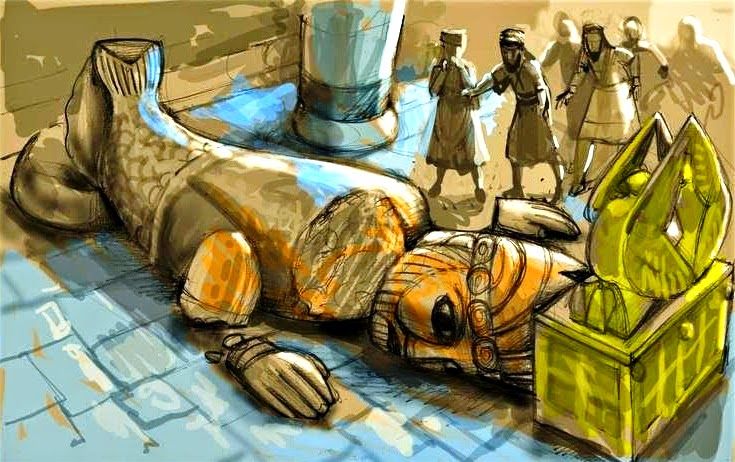
The next morning, the people walked into the temple to discover Dagon on the ground. Dagon now lay at the foot of the ark.

They propped Dagon back up, only to discover him bowing in the same position again the next morning. Dagon’s head and hands were broken off, again at the foot of the ark.

dagon falls down at ark

What could this mean? Bad news followed more bad news. The Philistines became stricken with tumors. Rats began to overtake their city. Fear ensued.


They no longer wanted someone else’s treasure.


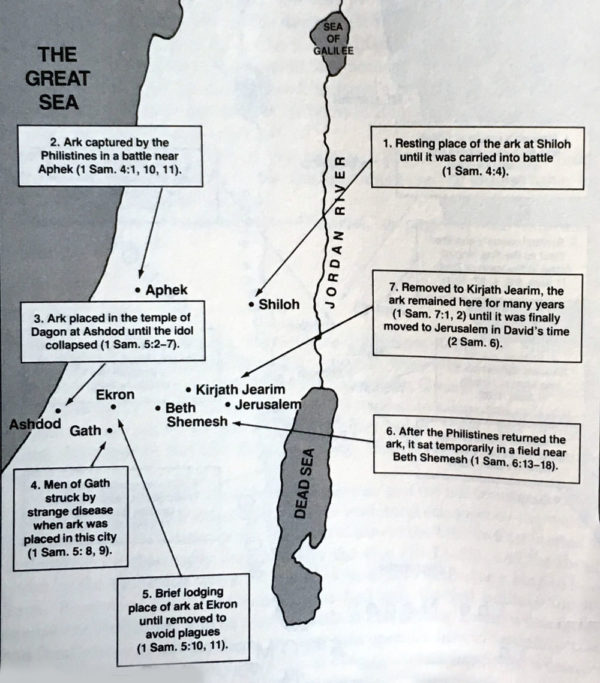
They passed off the ark to other Philistines in the city of Gath. But again, tumors came. People died. They moved the ark to another city, Ekron. But the same thing happened to them.

ark captured dagon
Nelson’s Complete Book of Bible Maps and Charts 1993 by Thomas Nelson, Inc.

After seven months, the religious leaders held a meeting. How can we get rid of this ark? It’s not good for us. It brings no blessings to our people.

They decided to send it back to the Israelites, along with a gift of five golden rats and five golden tumors. (Yes, this story gets better and better; read the remainder yourself.)

A Lesson for Us?

God puts individual gifts in each of our lives. These gifts are personally designed uniquely for us.

When we want other people’s gifts for ourselves instead, those gifts will fall flat, just like the imitation god Dagon fell flat at the foot of the ark.

  • What God intends for others is for their good.
  • What God intends for you is for your good.
  • Be content with your own treasures.

That’s what I’m learning with my granddaughter.

While she doesn’t live in my hometown like I’d prefer, she’s only three hours away. (I’ve learned to say “only” because many grandparents live across the world from their grandchildren.)

Maybe I’ll be better as a 3-hour away grandmother than I would be as a 3-mile away grandmother. Maybe I’d be too smothering or intrusive if she lived closer. Maybe, maybe there are reasons I can’t understand.


I don’t have to know details. I only have to trust God.


Three hours is close enough for me to drive down often. My daughter and son-in-law invite me frequently for overnight visits. So far, I’ve likely totaled more hours with our grandbaby living at a distance than I might have spent if she lived next door.

grandbaby 2018

Our relationship may not look like the one my own children had with their nearby grandparents. Or that my siblings have with their grandchildren.

But that’s okay. I don’t need to idolize the plan God has for their lives. I don’t need to wish it were my own.

I want instead to be grateful for the grace God keeps giving me (which includes a dependable vehicle, money for gas, and available time).

May we each worship God in the life He’s put before us, not in a dream He has for someone else.

Whether or not these plans look like we imagined, we can trust God to be in them with us.

His presence is the holy thing we need.

When we want what isn’t ours, it falls flat. Look at Dagon. #BelovedStoriesOT

Click To Tweet

When have you wanted what someone else has? What happened? Please share in the comments.

(P. S. If you’re a long-distance grandparent, please share any tips you have! I love hearing your ideas.)

When in Doubt, Focus on Jesus – Mark 8-9, John 7

March 6, 2018 by Lisa Burgess 28 Comments

When in doubt focus on Jesus

What do you do with the holes in your faith (and we all have them)? Read these passages with us during Lent: Mark 8, Mark 9, John 7. See what Jesus says about doubts.

When in doubt focus on Jesus

When You Doubt

Nobody has perfect faith. We all have doubts sometimes.

Our doubts can come when:

  • We’re faced with a difficult decision and we’re not getting a clear answer from God.
  • Or when we are in a season of suffering and we don’t feel God’s “comfort that only He can give.”
  • Or when the doctrine we used to believe just doesn’t make sense anymore.

When Jesus walked among men in the flesh, they had doubts, too. He was turning their world upside down. Everything they once knew was being flipped inside out.

How did Jesus handle their doubts? How does He handle our doubts?

Mark 8 – See, Hear, Remember Jesus

Jesus multiplied food again. He was concerned about those who had come a long way to hear Him. He didn’t want them to go home hungry. So He blessed what they had, turning it into more than enough for everyone to be satisfied.

But the miracle wasn’t enough for some. It didn’t satisfy their hunger for signs.

The Pharisees wanted more (Mark 8:11). Another sign. Another sign.

It was enough to make Jesus “sigh deeply in His spirit” (Mark 8:12). He didn’t give them a sign.

Later, the disciples were arguing among themselves about their own lack of bread.

Jesus overheard and was discouraged by their lack of understanding. He said, “Don’t you see the point of all this? Don’t you get it at all?” (Mark 8:17)

He then reminded them they had eyes to see. They had ears to hear. Why weren’t they remembering?

He wanted them to see Him. To hear Him. To remember what He had done.

Mark 9 – Take Doubts to Jesus

This chapter reveals Jesus in a new form, transfigured in a burst of light right before the eyes of Peter, James, and John (Mark 9:2).

They didn’t know what to say. And as we are prone to do when we’re left speechless, Peter blurted out something anyway. Anything. The wrong thing.

“Why don’t we build three shelters? One for you, one for Moses, and one for Elijah?” (Mark 9:5)

God redirected him directly to Jesus.

Then a cloud overshadowed them, and a voice from the cloud said, “This is my dearly loved Son. Listen to him.” (Mark 9:7)

Look only to Jesus.

Later, a man from the crowd brought his writhing son to Jesus. “Your disciples can’t heal him. If you can, help us.”

Jesus noted the doubt. “If I can?” (Mark 9:23)

The man acknowledged his own doubts. “I believe; help my unbelief!”

Jesus had mercy. He healed the boy. Surely the father’s unbelief shrunk measurably.

Later the disciples went with Jesus through Galilee. He told them He was be killed and would rise again in three days.

But they couldn’t grasp it (Mark 9:32). Instead of asking Jesus their questions, they kept their doubts underground.

John 7 – Reboot Your Thoughts

When Jesus went privately to Judea for the Feast of Tabernacles, the Jews couldn’t find Him. Their pride and fear kept them from speaking publicly about Him. Yet around the middle of the Feast when Jesus did choose to appear and teach, the Jews were even more confused.

“How does he know so much when he has never studied?” (John 7:15)

Jesus answered that His teachings were from God. He told them to use their heads to believe correctly, to make “right judgments.” (John 7:24)

Later when Jesus taught more—“If anyone thirsts, let him come to me and drink” (John 7:37—they became divided on who He really was.

Some believed He had to be the Messiah. But others kept doubting, believing their own interpretations of scripture instead of the one right in front of their eyes.

Their old beliefs wouldn’t budge, despite new evidence mounting in front of them: “No prophet comes from Galilee.” (John 7:52)

And with that, they went home, missing out on the amazing Son of God in their midst.

Do This When Doubting

We can doubt, too. Can Jesus really live up to the hype? Is it okay to admit doubt and ask questions? Is there ever a time to change our minds about what we believe?

What can we do when we doubt? 

  • See. Hear. Remember Jesus. Yes, Jesus has and does live up to the hype.
  • Ask questions. Jesus already knows our doubts anyway. Keep searching.
  • Upgrade our beliefs. When we’re wrong, let’s not be afraid to admit it. Believe better thoughts.

Nobody starts out with mature faith. It’s a growing process for all of us. And when we doubt, we need to look directly at Jesus again and again. Watch Him. Talk to Him. Believe Him.

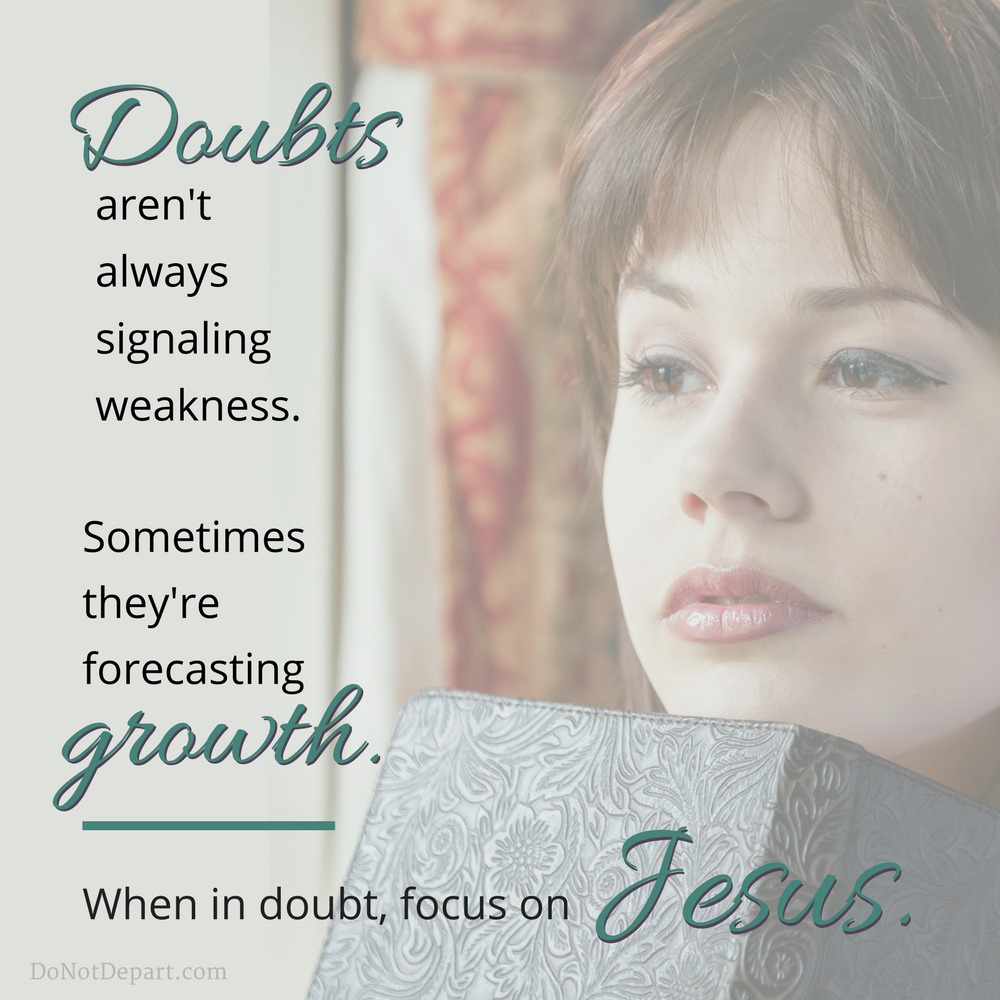
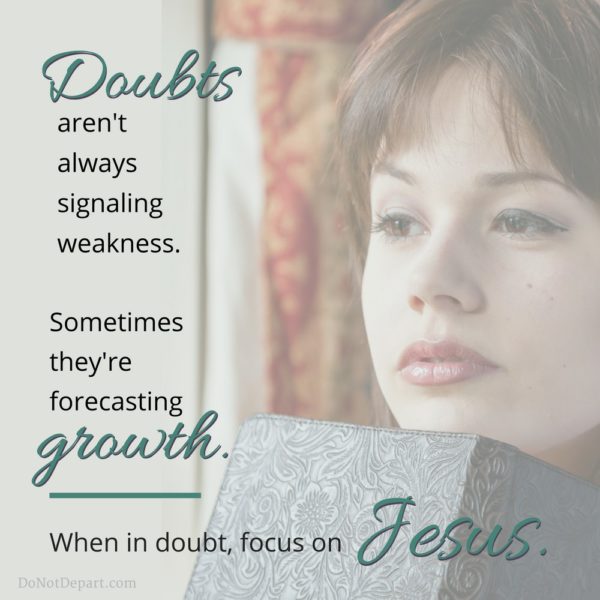
Doubts aren’t always signaling weakness. Sometimes they’re forecasting growth.

When in doubt, focus on Jesus.

Doubts don’t mean you’re weak. They may signal you’re about to grow. ‘When in Doubt, Focus on Jesus’

Click To Tweet

Are you reading along with us for Lent? Do you ever struggle with doubts? Are you slow or quick to change your mind? Please share in the comments.

How to Pray WITH Your Friend, Not Just FOR Your Friend

April 13, 2017 by Lisa Burgess 20 Comments

Pray-With-Friends-Not-Just-For

“We are not simply two people helping each other with our own ideas, insights and thoughts.

We are able to sit together in the presence of the living God in that sanctuary of the soul.

Not two, but three. That makes all the difference.”
– Keith R. Anderson

Praying Is Personal

The ladies were listening. One of our own was telling her story. Pain was in her voice. We felt close and wanted to do more than hear and offer encouragement.

So we gathered around her, surrounding her with our hands and hearts, and then with our words to the Father.

Praying is personal.

When our friends are struggling, we pray for them. And they pray for us.

But how often do we pray with each other, not just for each other?

We’re discussing here all month how to be a better friend. (See 5 Reasons We Need Friends; Taking the Initiative to Be a Better Friend; Friendship Matters)

Can praying with our friends be another way to be a better friend?

Pray-With-Friends-Not-Just-For

But I’m Scared to Pray Aloud

Though our hearts may be willing, our egos often block us.

  • We may be afraid we’ll stumble over our words if we pray aloud.
  • That we won’t know what to say.
  • That we won’t do it “right.”

We also may fear it will embarrass our friend. (Always ask permission first!) If it’s not something we normally do together, it may initially feel uncomfortable. Even though three of my closest Christian friends and I since childhood have spent hours and hours talking about God together, only recently have we started talking to God together. It’s a journey.

And what about Matthew 6:5-8 when Jesus warned his disciples against praying in public for praise?

5 And when you pray, you must not be like the hypocrites. For they love to stand and pray in the synagogues and at the street corners, that they may be seen by others. Truly, I say to you, they have received their reward.

6 But when you pray, go into your room and shut the door and pray to your Father who is in secret. And your Father who sees in secret will reward you.
Matthew 6:5-6

These are all definite concerns. But one by one, we can dismantle them all to become a better friend to those we love.

5 Tips for Praying Together

1. Start small.

When you’re first beginning to pray with friends, keep it short. Stay with one topic (pray over a meal, pray about a doctor’s visit). Ask what they’d like prayers for, then pray only for that.

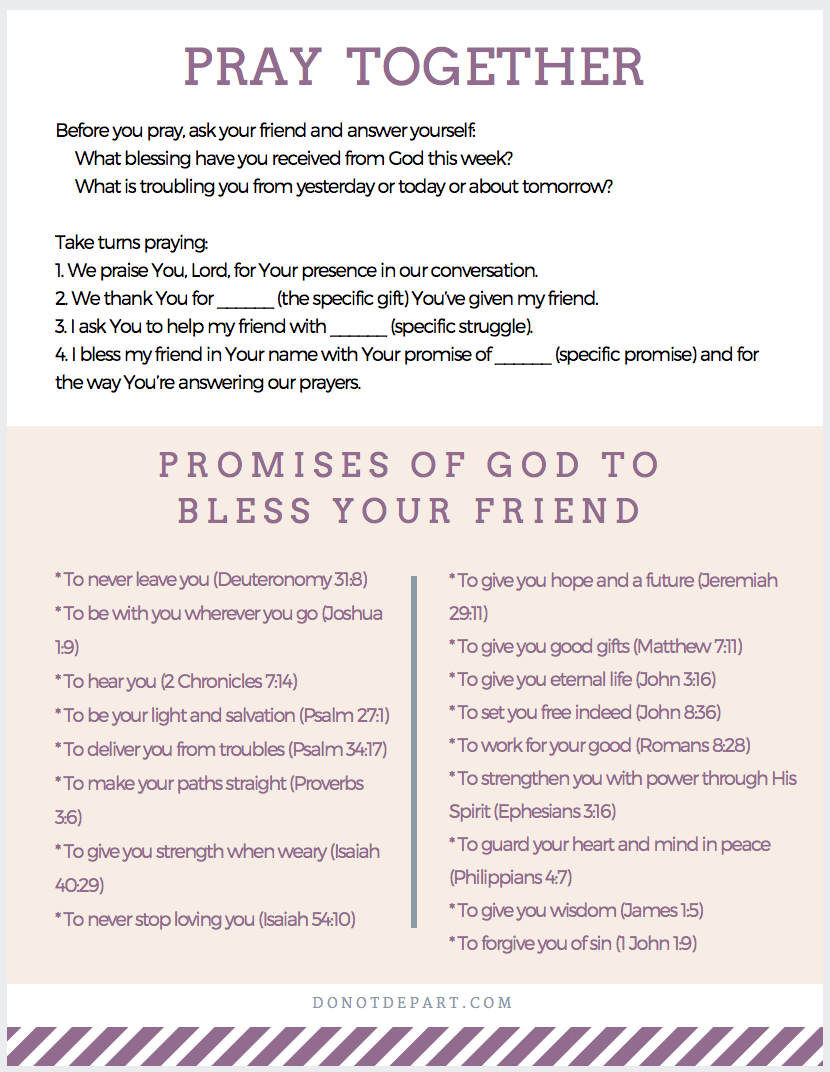
You can even use a prayer script of sorts [here’s one to download]. Or read favorite scriptures as you pray over each other or pray from a prayer book.

2. Use time wisely.

Finding time to pray together is another obstacle, but usually we can take 5 minutes from our ordinary conversations together to talk to God in person. Make a date if you need to. Plan it once or as a recurring event.

But also be spontaneous. When your friend says, “Can you pray for me about this?” Say yes and start praying right then. Just do it.

3. Pray in varied ways.

We don’t have to be face to face to communicate verbally with our friends. Use Facetime or Skype to pray together. My friend Linda and I used to pray together over the phone at 7am on weekday mornings for a season. It brought us closer than we could have imagined. Or swap prayer emails back and forth. Or short texts.

You can even send your prayer through a card via snail mail. Who wouldn’t love to receive that? God hears your prayer when you write it, then He and your friend hear it again when they read it.

4. Be yourself.

Be conversational. Don’t use King James language or try to sound like someone you’re not. Be humble as you pray to avoid the Matthew 6 dilemma of praying only to look good. Refrain from preaching to get a point across to your friend through your prayers. Be gracious and respectful with your words.

If you’re a passionate talker with your friend, be a passionate pray-er with her as well. Or if you’re a quiet, listening type, pray with lots of open pauses and contemplative spaces for God to speak, too. Keep the conversation open between you, your friend, and God. Listen and learn from powerful pray-ers you know, but ultimately be yourself.

5. Expect answers.

God is listening. The Spirit is interceding with words you don’t even know about (Romans 8:26-27). As soon as you and your friend invite God into the conversation, He begins answering.

But you may not see His answer immediately. Maybe not for months. Or even years. But know that He is answering, setting things in motion and moving in His way and in His time, even when we lack the vision to see it.

Rewards of Praying Together

Jesus often prayed alone. But He also prayed with His friends. When we pray with our friends, we’re following in His footsteps and in the example of His first disciples. (See Luke 11:1; Luke 22:39-40; Acts 4:24; Acts 12:12; Acts 16:25)

Because praying is an intimate activity, you’ll grow closer with friends you pray with. Prayer reveals our hearts in ways that regular conversations just don’t.

It won’t be an activity you do regularly with all your friends, but cultivate an inner circle of friends with whom it can become natural.

As you bless others and are blessed by others through praying together, your faith and love for the Lord will grow, too. You’ll learn to ask for things you might not have considered. And you’ll likely see new answers you might not have otherwise seen through prayers you prayed alone (James 5:14-16).

Your Voice Is Unique

Just as you and your friend have unique conversations, so, too, your prayers together with God will be unique. No one will pray the exact words with your friend that you will. Don’t rob someone else of your blessing. And don’t be robbed of being blessed yourself.

Take the challenge and begin praying more with your friends this month, not just for them.

Then watch what God will do!

Want to pray WITH your friends, not just FOR them? #BeABetterFriend

Click To Tweet

Extras

• Download this simple prayer template

Pray-Together-Thumbnail

• How to Bless Your Friends
Friends don’t let friends live unblessed. Don’t let yours go until you bless them.

• 5 Tips on Praying with Your Spouse or Friend
See common roadblocks to praying together and how to overcome them.

• When We’re Afraid to Pray Aloud
No matter how inarticulate we may feel, God knows what we mean.

• 5 Graces When a Woman Prays
Just as female conversations can differ from male conversations, our prayers can, too.

• No Voice Like Yours: An Uncommon Gift
Why your voice is one of the most sacred gifts you can offer.

Question:
Have you prayed with a friend lately? Is it easy or hard for you to pray aloud with friends? Please share your experience and tips in the comments.

Friendship Matters: Being a Better Friend. What does the Bible say about being a friend? How can we challenge ourselves to become a better friend? From DoNotDepart.com

3 Ways to Grow Your Faith When You Don’t Know What to Do

January 12, 2017 by Lisa Burgess 26 Comments

Growing-Faith-through-Uncertainty

Growing-Faith-through-Uncertainty

“Oh, the depth of the riches and wisdom and knowledge of God! How unsearchable are his judgments and how inscrutable his ways!
For who has known the mind of the Lord, or who has been his counselor?”
Romans 11:33-34

Google is my go-to source for quick answers.

  • When I want to know how old someone is, I google it.
  • When I want to see the menu at Local Taco, I google it.
  • When I’m looking for a TED talk on slow living, I google it.

But Google doesn’t know everything.

google-search

Google can never replace God.

So when Google doesn’t satisfy and God seems slow to answer, how do we handle our uncertainties?

This month we are focusing on renewing our minds through our attitudes in the new year (so far we’ve looked at optimism and gratitude through humility).

But what do we do when we have this attitude: “I NEED TO KNOW NOW!”?

The Insecurity of Uncertainty

When we don’t know whether to call the doctor or which job to take or even what to make for dinner, we can feel uncomfortable. Our brains don’t like gaps. We like to know. And when we don’t know, we can feel anxious or afraid.

Our insecurities can lead us to doubt God’s goodness. They can spur us to hoard today’s resources when we’re unsure of the arrival of tomorrow’s resources. They can paralyze us against timely decisions as we stall for more and clearer information.

And conversely, when we’re too proud of what we think we do know, we can become harsh and judgmental and legalistic (1 Corinthians 8:1 – “knowledge puffs up, but love builds up”).

How to Accept Not Knowing

What can we do with our doubts? For 2017 we can resolve to do these three things to make peace with uncertainty.

3-resolutions-when-you-dont-know

1. Resolve to see grace in the gaps

Look back over your life. Were you given 100% complete information before you decided where to live or married your spouse or settled on a major? No.

But in the midst of our lack of knowledge, God has always been faithful. Even when we’ve made bad decisions.

If we turn our backs on His guidance, He still never turns His back on us. Through the consequences, He provides a path forward from any mess we create, if we’ll seek it.

Look for the grace He’s giving you in this moment. He has armfuls of new grace every morning to fill in all our gaps of uncertainty. Resolve to acknowledge His presence as your constant companion.

“The steadfast love of the LORD never ceases; his mercies never come to an end; they are new every morning; great is your faithfulness.”
Lamentations 3:22-23

2. Resolve to be content with less information

Let’s face it. We’ll never know everything we want to know in this life. And that’s a good thing. Some things we don’t need to know. God sometimes spares us by not revealing the very things we ask to know.

Can we trust God in 2017 to keep us posted on what we need to know? Yes. When we are less greedy with having to know, we can settle into uncertainty as a protective place. God won’t keep us in the dark unnecessarily, so let’s not force His hand into showing us more than what’s helpful.

“For as the heavens are higher than the earth, so are my [God] ways higher than your ways and my thoughts than your thoughts.”
Isaiah 55:9

3. Resolve to embrace mystery

Finally, let’s resolve to thank God for handling the enigmas in our lives. Can knowing that He knows be enough for us? While being in-the-know can initially seem comforting, we’re not wise enough or strong enough to handle the responsibility.

But God is. He has absolute power. He has infinite wisdom. And He has unending love to manage our lives in the best possible manner. Be grateful for that.

“Such knowledge is too wonderful for me; it is high; I cannot attain it.”
Psalm 139:6

Grow Your Faith

Do these resolutions mean we lock down our brains and stop trying to learn more? Of course not. God wants us to excel in everything, including knowledge (2 Corinthians 8:7). Wise people store up knowledge (Proverbs 10:14). Keep studying. Continue learning.

But our faith flourishes when we trust Him even without perfect knowledge. Making peace with uncertainty leaves room for God to work. And for us to move forward.

Even when our minds are questioning, our hands are shaking, and our mouths are mumbling, “I just don’t know,” we can place our security in God’s omniscience.

We don’t have to understand everything along our journey.

But we can understand enough to show up with God for the ride. That’s faith.

Not even Google can explain that.

When we just don’t know, then what? 3 Resolutions for Uncertainty. #RenewedMinds

Click To Tweet

Do you like to know everything, too? What’s your comfort level with uncertainty? How do you make peace with what you don’t know? Let’s talk in the comments.

Related:

  • Take a Daily Dose of This to Overcome Anxiety
  • Why You Should Get Your Hopes Up
  • 3 Words to Silence Your Worries

3 Ways to “Go Tell It on the Mountain”

December 15, 2016 by Lisa Burgess 23 Comments

go-tell-it-on-the-mountain

go-tell-it-on-the-mountain

“How wonderful it is to see someone coming over the hills to tell good news. How wonderful to hear him announce, ‘There is peace! We have been saved!’ and to hear him say to Zion, ‘Your God is the king!’”
Isaiah 52:7 (ERV)

What’s the last big news you’ve shared? Who did you tell first?

When we have really good news, we don’t want to keep it to ourselves.

We’re looking at popular Christmas hymns this month. In “Go Tell It on the Mountain,” the shepherds had great news to share.

What is ours?

While shepherds kept their watching
O’er silent flocks by night,
Behold throughout the heavens
There shone a holy light

~ ~ ~

Go, tell it on the mountain
Over the hills and everywhere
Go, tell it on the mountain
That Jesus Christ is born.

But we’re not one of the shepherds. We didn’t hear the angels or see baby Jesus or run to tell others.

What do we have to share?

We often don’t even know what our own good news is. Yes, we know the broader story: Jesus came as a baby to save the world. But sometimes the generality of that message loses its punch in the daily specifics of our lives.

What is your good news? If you’re in the midst of your own personal struggles, how can you confidently tell others that Jesus is the giver of peace and joy? And who wants to hear what you have to say anyway?

Take a step closer to this song. Discover three ways in which we, too, can “Go Tell It on the Mountain.”

1. Tell Your Part of the Story

We don’t know the exact author of this song. But we do know it was written by African-American slaves in the American south by at least 1865. Life was extremely difficult for them. They endured or died from atrocities that most of us can hardly even imagine.

Yet these are the ones who wrote a song of good news?

Yes. Perhaps especially during the hard times, we notice God’s small and large graces even more keenly. We’re looking for hope. And hope can be found.

Pay attention to where you see God’s goodness in your own life. Even in difficult circumstances.

That’s your part of His story that you’re responsible to tell. And it’s an important part of the story, however small you may feel it is. It’s nothing you create yourself. Just share what you’re seeing and hearing.

2. Tell Those Who Need to Hear

Negro spirituals were written and sung by and for those who needed hope. They needed to remind each other that God wasn’t finished yet. Justice would still come. Righteousness would prevail in the end.

We need to hear those messages, too.

Who in your life needs to hear words of hope?

Maybe when they hear how God has worked and is working in your corner of the world, they can feel hopeful that He is powerful and kind enough to do it in their corner, too. Your story is meant to be shared.

God works in your life for more than just you; it’s meant for others, too.

3. Tell It Wherever You Go

Like most Negro spirituals at the time, “Go Tell It on the Mountain” was originally passed on as an oral tradition among plantations, not as a written one. Only when John Wesley Work, Jr., the son of a church choir director and a Greek/Latin professor himself, collected songs to compile in the songbook, Folk Songs of the American Negro, in the early 1900s, did “Go Tell It on the Mountain” become widely known.

It’s since been sung millions of time, and continues to be sung in many different styles and by many different voices. (Watch the video below.)

Where can we sing our good news today?

Wherever we naturally find ourselves. We don’t have to have a stage or a recording contract or an audience. Our friends and co-workers and families are the ones who listen to us talk about other things; why not hear us talk about what Jesus has done for us?

We can be confident that God will put the right people in our lives who can benefit by the message we have to share about Him. Just as the shepherds told those around them about the birth of Jesus, we, too, can share with those around us about the life of Jesus.

When we share joy with others, we create more joy for ourselves. Our faith increases when we are more attentive to God’s works and goodness. It brings Jesus honor when we tell others how good He is.

Sharing Jesus is sharing Love. That is good news.

Go tell it yourself. On the mountain, over the hills, and everywhere.

Watch and hear:

Especially from 1:27 onward, enjoy this beautiful version of “Go Tell It on the Mountain” by The Mississippi Mass Choir. It will bring you joy.

“Go Tell It on the Mountain”

[If you can’t see the video, click here]

You’ve seen something. Are you sharing it? Go Tell It on the Mountain #ChristInTheCarols

Click To Tweet

What good news from this year can you tell?
Who has shared good news with you this past year?

Please share in the comments.

Related:

Listen to this week’s episode of Pass the Mic podcast – Safe Havens in Tumultuous Times – to be encouraged by the faith and strength of the black church in times past as well as in the present.

pass-the-mic-podcast

Jesus, Our Forever High Priest

July 19, 2016 by Kelli LaFram 1 Comment

our forever High Priest

So also Christ did not glorify Himself to become High Priest, but it was He who said to Him:

“You are My Son, Today I have begotten You.”

As He also says in another place:

“You are a priest forever according to the order of Melchizedek.” (Hebrews 5:5-6, KNJV)

The writer of the book of Hebrews was addressing a group of Christian Jews. These Christians, because they had grown up Jewish, would have been quite familiar with the Levitical priesthood. Meaning, they believed that the high priest must come from the line of Aaron (Exodus 28-29). They also knew that the high priest had the responsibility to offer “both gifts and sacrifices for sin” (Hebrews 5:3). To them, these were the religious practices needed to honor God.

Then enters Jesus.

Put yourself in the shoes of these Christian Jews for a minute. They were being told “it is finished” (John 19:30). That their works of righteousness were not good enough and no longer needed. That this Man named Jesus, who wasn’t even from Aaron’s family line, had offered thee ultimate sacrifice on their behalf. That every sin they had committed, were committing or would commit was atoned for. The old covenant they had grown up with, everything they thought they knew about pleasing God was done away with. And a new covenant was in it’s place.

This may have been a hard pill to swallow, right?

So what did the author of Hebrews do with this hard pill, this hard truth? He didn’t sugar-coat it, he Scripture-coated it. And the Scripture he used they most likely knew by heart.

“You are My Son, Today I have begotten You.” (Psalm 2:7)

The Levites were servants of God, but Jesus was His Son. And He was begotten, at the day of His resurrection, for this purpose — to be the High Priest. God had appointed many high priests in the past, but this time it was different. This time He appointed His Son and His Son was more than special. How? We see it in the next coating of Scripture.

“You are a priest forever according to the order of Melchizedek.” (Psalm 110:4)

Jesus wasn’t a temporary high priest. He was (and is!) the forever High Priest because He was according to the order of Melchizedek. Jesus may not have been a Levite as the Jews thought all high priests needed to be, but that didn’t disqualify Him. Jesus, a Priest forever, was according to an order that had been around much longer than the Levitical order.

For this Melchizedek, king of Salem, priest of the Most High God, who met Abraham returning from the slaughter of the kings and blessed him, to whom also Abraham gave a tenth part of all, first being translated “king of righteousness,” and then also king of Salem, meaning “king of peace,” without father, without mother, without genealogy, having neither beginning of days nor end of life, but made like the Son of God, remains a priest continually. (Hebrews 7:1-3, also see Genesis 14)

Why is this important?

You may be wondering why all this is important. You may be thinking yeah, I already know all this. So what? Well, the what is in the why. Why was the letter to the Hebrews even written? Why did these Christian need to be told about Christ as their High Priest?

Why? Because they were beginning to question what Jesus did for them. They were beginning to wonder if what He did really was enough. They wanted to know if they need to go back to the old way of doing things, the old works-based way to make up for their sins and attempt to please God. And I know many Christians today who begin to question and wonder and want to know the same thing — is more needed?

I doubt many of us would consider reinstating the sacrifices from the Old Testament, but we are still very similar to these Jewish Christians. There is a deep rooted belief in many of us that says we must do more if God is to be pleased with us. This belief simply isn’t true.

Instead of animal sacrifices we often think we need to do things like read our Bibles, pray, go to church, be kind, be patient, etc in order to make God happy. We stress ourselves out working and working for something we already have — God’s approval.

Don’t get me wrong, reading our Bibles, praying and attending church are all wonderful. They are necessary for fellowship with our Savior, but they are not what earns us salvation. They are not what justify us before God. It is only through faith in Jesus Christ that we are saved and pleasing to God the Father.

It is my prayer today that we understand this: that because we have Jesus, our forever High Priest we have a forever smile from our Father in heaven. No more is needed. Our sins are washed away. We have right standing before God. There is nothing left to do. It truly is finished.


Friends,

Please remember that I am human and flawed and my thoughts on this passage and others may not always be right. Please hold what I write up against the Word of God and listen to the Holy Spirit as He speaks to you directly.

Only by grace,

Kelli


Action steps:

  1. Jot down a few of things that you “do” for Christ. Consider your motives. Are you trying to earn favor or are these things done in response to His love?
  2. Read more on the order of Melchizedek. Check out Hebrews 7, Genesis 14, and this mini Bible study.
  3. Listen to and sing old hymns, such as What Can Wash Away My Sin, There Is Power In the Blood, and How Deep The Father’s Love For Us.
Why was the letter to the Hebrews even written? http://wp.me/p1Su7F-3Sp @donotdepart

Click To Tweet

You’ve Been Called – Light Up as a Priest

July 14, 2016 by Lisa Burgess 32 Comments

Dark-Times-Bright-Light

When times seem darkest, your light—however small or dim—shines brightest.

We’ve been asked to arrive at church on Sunday mornings at 8 a.m. for a final practice of our worship songs. It means I set my alarm a little earlier than I’d like. But when I arrive at 8, it seems they’re not ready for us.

Should I just sleep later and arrive later, despite the request? I’ve been considering it. Until last Sunday . . . .

When times seek darkest light shines brightest

Priestly Duties

Sometimes we look around us and see a mess. Fighting in the streets. Mud-throwing from political candidates. Hatred on social media.

Is there any point in trying to make a difference? Or should we all just sleep in?

I wonder how the high priest felt back in the old days. Twice every day—every single day, rain or shine—he had to enter the tabernacle and light the candles in the holy place (Exodus 30:7-8). Who would even notice? Could he slide by and just do it once a day if he was sick or tired or busy?

He had other duties, too. Important ones, like offering sacrifices for the people’s sins. Offering gifts to God on their behalf. Remaining ritually clean beyond anything required by other people.

Yet the sincerest of the priests did it. Why? Because he was called by God to do it. And he took that call seriously.

Called, Not Self-Appointed

As we continue our study in Hebrews 4:14-5:14 this month, we come across these two verses:

“Because of this he is obligated to offer sacrifice for his own sins just as he does for those of the people. And no one takes this honor for himself, but only when called by God, just as Aaron was.”
Hebrews 5:3-4

We read that the high priest (beginning with Aaron) was invited by name, by God, to lead the people to God Himself.

He had holy garments put on him, was anointed, and consecrated so he could serve the Lord as a priest (Exodus 40:13).

What an honor! In times of trouble and confusion, he was to be a light for the people, shining the presence of God.

Me, Too?

But it gets crazier . . . These also are messy days of trouble and confusion. Who is God calling to shine His presence into the dark places now?

You and me!

We are priests, too.

  • A royal priesthood (1 Peter 2:9)
  • Children of light (Ephesians 5:8)
  • City on a hill (Matthew 5:14)

As believers in Jesus we have been washed with water, clothed with righteousness, anointed with Jesus’s blood, and set apart for His work so we can serve Him as a priest.

What are our opportunities? Like the priests of old, we are:

  • To shine brightly (Matthew 5:16),
  • To offer thanks to God for the good gifts He’s given (Hebrews 13:15),
  • To point others to Jesus (Ephesians 3:9), the Highest Priest of all (Hebrews 7:27), who heals our pains and washes our sins.

Is becoming a priest an honor we bestow on ourselves? No. We have been invited to wear the Name, not self-appointed. We’ve been called by God to love our family, our friends, even our enemies. Not through our goodness, but through His grace.

We have been strategically positioned to answer the world’s call for help.

When our lights shine, those around us can see clearer themselves, can feel more hopeful about their own lives, and can live more purposeful lives for the glory of the Father.

Priesthood of Honor

Being a priest isn’t always easy. Such as getting up earlier when we’re asked to.

I was reminded last Sunday that arriving at 8 a.m. was about more than singing practice. It was about being a true priest. Arriving early in the sanctuary, we could straighten up the chairs, clean paper off the floor, walk the aisles and pray for souls that would soon be seated there.

We were to prepare the place where God’s people would be gathering.

Be a priest. It’s an honor. And a responsibility.

But we’ve been chosen. Let’s light up and go do it.

To Do This Week

  1. Read by candlelight.
    Light a candle to remember to shine as you read Hebrews 4:14-5:14.
  2. Write it out.
    If you’re writing the text by hand this month (see Ali’s suggestion), add in Hebrews 5:3-4.
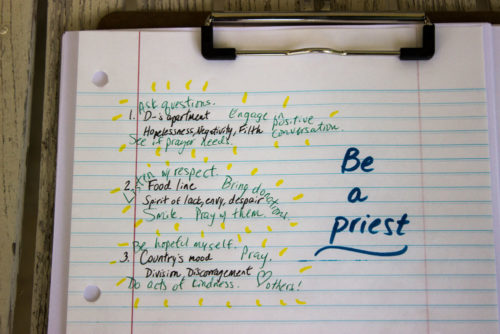
  3. Three Dark/Three Light.
    Write down 3 dark places in your sphere of influence. Pray about 3 or more things you can do this week to bring the light of Jesus to those dark places. Write them brightly on top of and around the dark places.
    be-a-priest
  4. Advance it.
    Spread hope in your conversations and be a light in your actions this week!
  5. More priestly material?
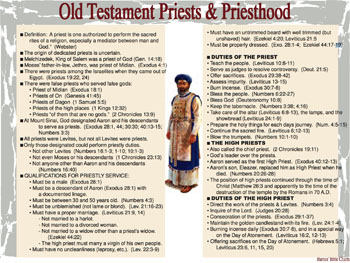
    Check out this chart, “Old Testament Priests & Priesthood.”

    Old Testament Priests
    Barnes Bible Charts
You’ve been called. Light up. Be a priest. #Hebrews5 #JesusAsHighPriest

Click To Tweet

Do you feel like a priest? Where do you see hopelessness? Where would you most like to shine a light?  Please share your thoughts in the comments.

Jesus as High Priests - new series on Hebrews 4:14-5:14

3 Words to Silence Your Worries

June 16, 2016 by Lisa Burgess 36 Comments

Worried-3-Words-to-Say

Worried-3-Words-to-Say

“Don’t panic. I’m with you. There’s no need to fear for I’m your God. I’ll give you strength. I’ll help you. I’ll hold you steady, keep a firm grip on you.”
Isaiah 41:10 (The Message)

[Please note: This post is only about garden-variety worrying, not mental anxiety due to biological or other causes. See “Where Is God in Mental Illness” for the latter.]

What’s Worrying You Today?

  • Will violence break out where I am or where my loved ones are?
  • If our car breaks down again, how will we pay for it?
  • Why does my daughter keep getting headaches?
  • Will I ever find the right spouse/friend/church/____?
  • What am I supposed to do with my life?
  • Am I a lousy parent after what I said this morning?

And this classic one:

  • Why can’t I stop worrying?

Unfortunately, many of us worry too much. I know I do. Despite that Jesus said don’t do it:

“So do not worry, saying, ‘What shall we eat?’ or ‘What shall we drink?’ or ‘What shall we wear?'”
Matthew 6:31 (NIV)

What’s Wrong with Worrying?

Worrying is painful. It steals our joy. It hurts those around us. It wastes our energy. It leads us to doubt God’s goodness.

So why do we worry? Perhaps because we think if we catch the bad thing in time, we can prevent it from happening. As if our worrying can stop it before it’s too late.

But of course our worrying does not solve problems. It just creates new ones. It divides our minds, births discontentment, and prevents us from thinking about things that would be beneficial.

The word “anxious” in the Greek, merimnao, comes from merizo, “to divide,” and nous, “the mind.”

Worrying = a divided mind

Worrying pulls us in many directions instead of keeping us focused and together.

3 Words to Quiet Worry

So what can we do about worrying? Self-discipline doesn’t work. Denying problems exists doesn’t work. Entertaining it away doesn’t work. Trying to control the circumstance or person doesn’t work.

Instead, the next time your mind is distracted with worry, try using these three words as you pray to silence your mind’s chatter.

1. Jesus

There is power in the name of Jesus. Focus on Him (Hebrews 12:2; Colossians 3:1). Call on His peace. Say and believe His words, not your own.

If you’ve been memorizing Matthew 6 with us the past few months, think about this: every minute you spent focusing on Jesus’s words was one minute you didn’t spend worrying about your own troubles. It’s not vain repetition to say over and over, “Jesus, Jesus, Jesus.” It’s wise. He’s listening and answering, even if you’re unaware of how.

2. Here

Many of our worries come from things that might happen “over there,” not what’s actually happening “right here.” Draw your attention away from “what if” and instead accept “what is” actually happening, even if it’s hard stuff. Look for how God is working in it. Count the blessings you can see (Isaiah 12:4-5). Choose gratitude for what you find and let the peace of Christ displace the worrying (Colossians 3:15).

Use Philippians 4:8 as a guide to help you see what is right here to be grateful for. And to help you respond to what is right here instead of simply worrying about something somewhere else.

3. Now

Correct the time-shift problem: get out of the future and come back to the present. God has fresh supplies of grace for us every single day (Lamentations 3:23), but He only gives them to us one day at a time. In this day, open your hand to receive this day’s grace instead of reaching out for tomorrow’s grace, too. Now is the when of God’s presence.

Our beliefs that future outcomes will be bad is the root of much of our anxiety. But if we can return back to now, seeing that God is always with us in this very moment, we can better trust He’ll be equally faithful in the days to come. [Read A Daily Dose to Overcome Anxiety.]

“Give your entire attention to what God is doing right now, and don’t get worked up about what may or may not happen tomorrow. God will help you deal with whatever hard things come up when the time comes.”
Matthew 6:34 (The Message)

Benefits of Jesus—Here—Now

Saying these three words to ourselves when we worry, “Jesus, Here, Now,” is not a magic mantra to stop our worrying. But it can be an exercise of intentional prayer to bring us back to this moment of grace and find hope again. We can think more clearly, more positively, and be more available to others.

God promises us a mind of power and love and self-control (2 Timothy 1:7). Not fear. Not confusion. Not worries.

I’m still learning how to accept this gift of peace in the moment. I’m not there yet. I’m still not totally comfortable with uncertainty.

But I continue to reach for contentment with today’s grace instead of worrying about its potential lack in the future. And I am making progress.

May we all encourage each other to accept God’s grace in the name of Jesus, in this here, right now.

Jesus. Here. Now.

Try these 3 words to silence your worries. #OurSinsGodsGrace

Click To Tweet

Do you struggle with worry, too? Which word stands out most to you: Jesus, Here, or Now? Please share in the comments.

Our Sins, God's Grace

Related:

  • A Daily Dose of This to Overcome Anxiety
  • What Not to Say When Anxious – Matthew 6:31-32
  • Enough Grace for Today – Matthew 6:33-34

The Why, What, and How of Bible Journaling

January 14, 2016 by Lisa Burgess 24 Comments

Bible-Journaling_Why-What-How_Do-Not-Depart

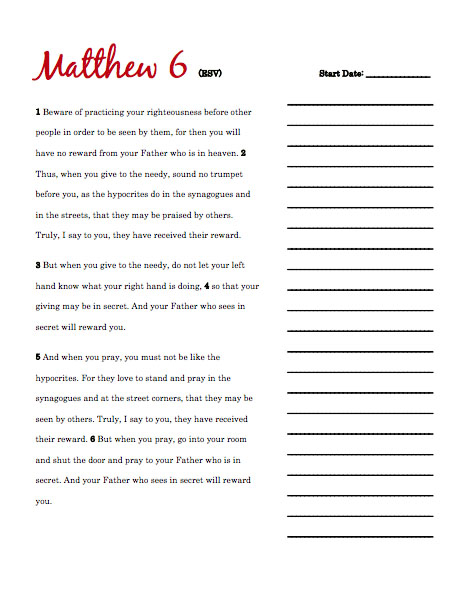
[NOTE: For Matthew 6 memorizers, get your printable journaling page here]

Bible-Journaling_Why-What-How_Do-Not-Depart

You read the Bible. Pray through some of the Psalms. Maybe memorize favorite verses here and there.

But have you ever tried journaling through the Bible?

Why journal?

Journaling is a spiritual discipline that leaves a tangible footprint.

Writing helps hone your thoughts now, clarifying and capturing the swirling ideas that rumble loose in your head. It’s listening and recording how your heart is hearing God’s love for you.

But journaling has the added benefit of laying down a record for later, too. Today’s lessons can be reused in future circumstances if you’re ever doubting God’s promises or need reminders of how He’s brought you through a tough time or want to celebrate again a victory He won for you.

What is Bible journaling?

At its most basic, journaling is simply writing down what the Spirit whispers to you as you read through scripture. There are no rules or requirements.

However, you have many options to guide you along the way.

• Journaling Bibles
Easy to find online or at bookstores. They have wider margins than a regular Bible, specifically designed to record your notes, prayers, or questions.

• Artistic Journaling
A hot trend. [Google “bible journal” and see.] Don’t just record words, but create your own art in the margins of your regular Bible or Journaling Bible. You don’t have to be an artist to do it. [Read Teri Lynne Underwood, “Three Reasons I Love Using my Journaling Bible”]

Journaling-Bible-Teri-Lynne-Underwood

• Digital Journaling
If screens are your preferred medium, keep a digital journal as a regular Word document or via an app created specifically for Bible journaling.

• Notebook
Use a spiral bound notebook, a decorative journal, or loose-leaf paper in a binder to record your Bible reading and thoughts.

How to Bible journal

1. Write side by side in the margins

As you’re reading your Bible, jot down any insights or questions directly beside the verse you’re on. This has been an effective method for years and still works beautifully for many.

2. Pick one verse from many

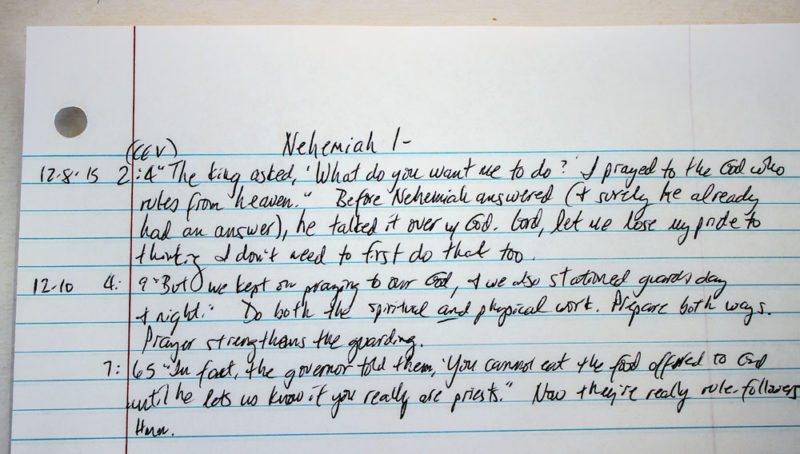
I keep two kinds of separate Bible journals. For my daily Bible reading, I use my Kindle before I get out of bed each morning, highlighting verses of interest as I go. Later in the day, I return to the highlighted verses, and choose only one verse out of three chapters to journal about.

I copy that verse by hand on notebook paper, then write a few sentences about why it stood out to me. Perhaps it was reassuring or particularly relevant or maybe even confusing. I then file these pages in my Bible notebook (details on how to make your own Bible notebook). The whole process is quick but meaningful.

Nehemiah-bible-journaling

3. Go deeply with only one verse

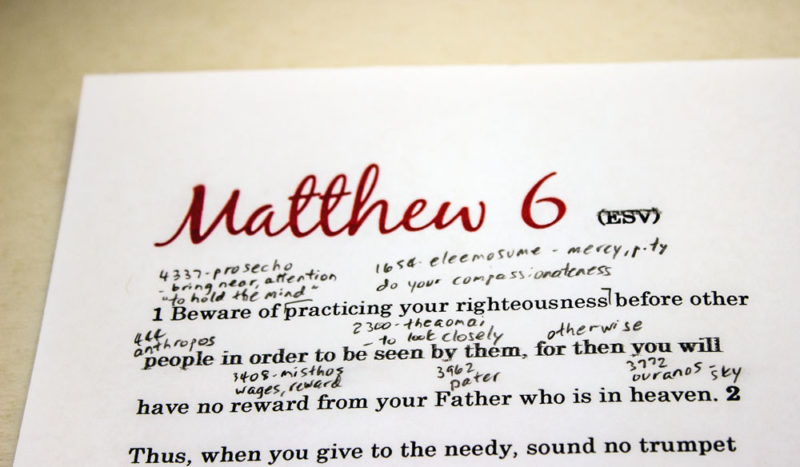
The second type of journaling I do coincides with what I’m memorizing or studying. Here I look at only one verse for several days, writing on a double-spaced, printed copy of the chapter. On day 1 I write brief notes about the Hebrew or Greek roots using e-Sword.net or StudyLight.org. On day 2 I record anything significant from commentaries about the verse. Day 3 is when I record my own thoughts and experiences with the verse. Again, it doesn’t take long, but it creates a record of what God is teaching me.

matthew-6-bible-journaling

But for you, what’s the best way to journal?
The one that you’ll use.

And one that you’ll occasionally re-read. It’s valuable to look back on your own personal history with God alongside the Biblical narrative from ancient times.

Experiment with different methods to find one that works for you. [Pinterest has tons of ideas.] It might include sharing on social media: Use Twitter as a 140-character journal about the verses you’re reading. Or blog or Instagram about the study you’re doing. Or keep it private: Write a one-line-a-day diary of love notes between you and God, tucked quietly in your sock drawer for no eyes but yours and His.

  • Journal the lessons you want to remember.
  • Write down memories of God’s goodness you don’t want to forget.
  • Record the insights the Spirit gives you to use.

Your growing relationship with God is worth treasuring.

[Printable “Bible Journaling through Matthew 6” ESV]

Matthew-6-Bible-Journaling-Pages

The Basics of #BibleJournaling – Why, What, and How #PlantoAbide

Click To Tweet

Do you journal? What works for you? We’d love to hear your ideas in the comments.

RELATED LINKS

  • How to Make a Bible Notebook
  • Tips and Printables to Organize your Bible Notebook
  • Journaling in Your Bible by Lizzy Jeffers
  • Five Ways to Flourish in Journaling by David Mathis

Plan to spend more time this year in God's Word and pursuing a growing relationship with Jesus Christ. Find resources to help you plan in this month's series "Plan to Abide."

A daily dose to overcome anxiety

October 15, 2015 by Lisa Burgess 22 Comments

Lord-shows-mercy-Lamentations-3

Lord-shows-mercy-Lamentations-3

The craziest thing happens every month.

On the first Saturday, we gather with the homeless and poor in our community at Manna House to have a church service outside, although no one is an outsider. Everyone is welcome. Clean clothes aren’t required. Body odor is allowed.

And every Saturday, just the right musicians show up to sing to hungry souls, just the right food shows up to fill empty bellies, and just the right hands show up to serve and hug and love.

So why do I worry each time?

Because—I hate to admit this—I’m a worrier. 

I can get anxious over small things, big things, trivial things, anything. I don’t want to. I see it as a hole in my faith.

I find myself mentally preparing for potential bad outcomes so I won’t be caught off-guard.

  • What if not enough people come to serve the food on Saturday?
  • What if we run out of food altogether?
  • What if I’m asked to do something I’m uncomfortable with, like this?

What if?

No.
I’m slowly growing into a better question: What is it?

“What is it” was what the Israelites called manna. Remember when they were traveling through the wilderness after being freedom from slavery in Egypt? God provided them food in fine, flake-like, white wafers that rained down from heaven each morning (Exodus 16:1-36).

He promised to give the perfect amount for each day.

  • If they weren’t grateful to gather it each morning, the sun melted it instead.
  • If they became greedy and collected more than they needed, it “bred worms and stank” before the next day, proving more than useless.

Day after day after day, God met their needs in the moment.

That’s what I’m learning, too.

If I will stay present, focused on the person and the task right in front of me, God will provide what I need for it.

This day is not only where God is, but this day is also when God is.

Anxiety only surfaces when I open a time gap, thinking too far ahead without God, instead of being available to Him now. If there’s anything I need to put off until tomorrow, it’s my fretting. I’d rather stay preoccupied with noticing God’s provision today.

I want to look up each morning and receive the grace that God rains down today.

What is it?
It’s grace.

  • It’s the power to stay in the moment.
  • To sit with God in the now.
  • To be okay in this place, in this time, with these provisions, knowing God is enough.

God provided daily for the Israelite travelers on their journey through the desert. He gave them manna.
God provides daily for our journeys now. He gives us grace.
It’s the craziest thing, and it happens every day.

“Give your entire attention to what God is doing right now, and don’t get worked up about what may or may not happen tomorrow. God will help you deal with whatever hard things come up when the time comes.”
– Jesus (Matthew 6:34 MSG)

A daily dose to overcome anxiety. What is it? It’s grace. #DepressionTruths

Click To Tweet

How do you defeat anxiety? What scripture helps you? Please share in the comments.

More about God in the now:

  • Are we scared of the wrong things?
  • God is most present in this moment
  • What is God doing now?

Depression Truths

Invite Jesus into every room of your house (literally!)

August 13, 2015 by Lisa Burgess 11 Comments

House-welcome

Make-our-home-John-14-23

With summer practically behind us, and the busyness of fall and upcoming holidays looming ahead, we need to store up our reserves now.

Here’s one way: Throw a private party in your home! Just for two. Jesus and you. Invite the Prince of Peace in to stay. Not just to live in the neighborhood. Or even next door. But right in your home, inside of you.

Jesus has already said He and the Father would love to make their home with you (John 14:23).

But is Jesus welcome in every room? To peek in your closets? See inside your pantry? Look under your bed?

We invite you to . . .

  1. Print this paper house. It has five rooms, each representing an area of your life.
  2. Pick a half-hour when your home is (mostly) calm (or choose five minutes a day for five days).
  3. Take your Bible and the printed house with you into each room of your home.
  4. While physically present, acknowledge Jesus’ presence there, too, through scripture readings and prayer.

House-welcome

Invite Him to renovate each space, bringing revival and renewal. . .

  • To the activities that go on in that space
  • To the people who walk through its doors
  • To the relationships lived out there

Allow the Spirit of the Lord to breathe replenishment and revitalization to spaces you’ve had locked up too long. He longs to awaken every area of your life for His purposes and His glory.

And when we allow Him into the center of it all—even our messes, perhaps especially our messes—He brings His peace along with Him.

Print this house to pray over your own home. #ReviveAndRenew

Click To Tweet

What room (or area) of your life most needs refreshing?
What room have you most recently renovated? Please share in the comments.

Revive and Renew

Are you on Instagram? Now we are now too! Please follow us for beautiful scriptures to encourage your faith.

Instagram-Do-Not-Depart

Don’t look directly at the sun! But the Son?

July 16, 2015 by Lisa Burgess 19 Comments

sun-flare

sun-flare

DON’T LOOK DIRECTLY AT THE SUN

Were you told as a child, “Never look directly at the sun! You’ll go blind!”?

I was. It made me skittish to look toward the sun at all, lest I accidentally linger too long on that ball of fire and live in darkness forever.

The sun is the brightest and most prominent object in our sky. Everyone depends on it. Our lives are scheduled around it. We get our energy from it.

King David knew that too, albeit in a different way than we know now through scientific knowledge. He wrote poetically in Psalm 19:4-6 that God uses the sky as a tent for the sun. The sun sets out each morning, and like a strong man, it runs its course with joy, always on the move, from one end of the heavens to the other.

But as it turns out, our mama’s advice about not looking at the sun IS valid. We should NOT look directly at the sun, because, well, we really could go blind. Just like setting fire to paper by focusing sunlight through a lens, the same thing can happen to the lens of our eyes. And once our retina cells are killed, they don’t regenerate.

So instead we give quick glances toward the sun or look through other mediums or settle for images from high-resolution telescopes.

BUT WHAT ABOUT THE SON?

Does the same advice apply: Don’t look directly at the Son?

By our actions, we sometimes imply the answer is yes.

Instead of looking directly at Jesus, we may give Him quick glances. Or we think our work FOR Him is the same thing as gazing at Him. Or we are satisfied with simply hearing what others say about Him.

What happens when we look directly at other things (even good, godly things!) instead of on Jesus?

  • When we focus on church, we become discouraged by flawed people
  • When we focus on culture, we lose hope that good always wins in the end
  • When we focus on ministries, we turn them into idols

Anything other than Jesus placed at the center of our lives will eventually create blind spots. And if those things are stared at long enough, they can cause us to lose our true vision altogether.

SO WHAT ARE WE TO DO?

Look directly at the Son!

Continue to love your church, work among your culture, minister with your gifts, but stay centered on Jesus.

  • Talk to Him
  • Praise Him
  • Thank Him
  • Confess to Him
  • Worship Him

As you do, you’ll discover in your daily circle around the earthly sun that your spiritual vision is becoming clearer and stronger.

May the eternal Son always stay the brightest and most prominent object in your atmosphere.

Psalm-27-4

Should you stare directly at the Son? You won’t go blind. #BeautifulWorldPerfectWord

Click To Tweet

Have you ever been tempted to stare at the sun?
How do you keep yourself focused on Jesus the Son?
Please share in the comments.

We’re studying Psalm 19 all month. Read it often throughout July. Check out our other posts here.
God's Beautiful World and Perfect Word {a Psalm 19 study}

Next Page »

This Month’s Theme

  • Jesus is the Way
  • And He Shall Be Called Series Intro

Enter your email address to have new posts emailed to you:

We’ll come to you

Enter your email address to have new posts emailed to you

Categories

Bible Memory – Lent 2021

Memorizing Isaiah 12

Let the Children Come

Let the Children Come

Want more #HideHisWord resources?

Memorizing Psalm 1

Find Us on Facebook


Search

Recent Posts

  • Series Wrap-Up: The Lord Is My Light
  • His Marvelous Light
  • When the Darkness Deepens
  • Though I Sit in Darkness…
  • Let Your Light Shine
  • Life-Giving Light

Archives

© 2026 · Pretty Creative WordPress Theme by, Pretty Darn Cute Design