• Home
  • About
    • Our Contributors
    • Our Beliefs
  • Blog
  • Bible Studies
    • Scripture Dig
  • Archives
  • Shop
  • Advertise
  • Contact
    • Email
    • Facebook
    • Instagram
    • Pinterest
    • Twitter

Do Not Depart

Encouragement and Tools to Abide in God's Word

You are here: Home / Archives for encouragement

3 Ways to Hope in God’s Goodness

August 13, 2020 by Lisa Burgess 20 Comments

Hope in God's Goodness

I know she’ll be here soon. I purposely set one chocolate kiss in the glass candy dish in my kitchen. She’ll look there.

I want to be a good grandmother. When my 2-year-old granddaughter comes to my house, I want to give her treats and make her happy. For her, that includes chocolate. (Chocolate makes me happy too.)

But I also don’t want to ruin her appetite for real food or make her sick from too much junk food.

What is actually good?

Hope in God's Goodness

When Things Look Bad

2020 has good things in it, to be sure. God is still here, still with us.

But by most measures, 2020 is one of our craziest years. It’s been easy to lose hope from week to week.

  • We can’t feel totally safe from the coronavirus even in our previously good activities.
  • We can’t talk sanely about sensitive issues with some of the good people we once talked with.
  • We can’t even trust ourselves to not occasionally lash out in frustration or to not give up in hopelessness.

None of us can live up to always being “good” (Psalm 14:3).

What about God? Is God angry at us this year? Is He holding out?

We once knew the right answer to this call-and-response:

“God is good all the time. And all the time __________.”

But what about now? Is God still good?

3 Ways to Hope in God’s Goodness Again

1. LOOK TO THE PAST

When we get confused in the present, one way to reorient ourselves is to look back to the past. Who has God been to you in the past? God is not an unknown factor.

God reveals Himself to us again and again in good ways. And His character never changes.

If we’ve ever had anything good happen in our lives, we can be assured of its source: God.

“Every good gift and every perfect gift is from above, coming down from the Father of lights, with whom there is no variation or shadow due to change.”
James 1:17

If you’ve ever found forgiveness, received grace, been blessed, you’ve seen God.

Remember God’s goodness in your past.

2. RELAX IN THE PRESENT

When we remember that God is goodness itself, it changes our narrative about the present. Regardless of what is happening to us right now, while maybe not always pleasant, we are still safe in the hands of the Good Shepherd (John 10:11).

It doesn’t mean there won’t be problems. It doesn’t mean there won’t be pain.

But God gives the needed sunshine and replenishing rain to all of us; He doesn’t play favorites (Matthew 5:45).

“The LORD is good to all, and his mercy is over all that he has made.”
Psalm 145:9

When we believe God is always good, never bad, we can more easily relax in the present. We can depend on God’s goodness, not our circumstances, other people, or ourselves, to give us what we need. We can trust God will always provide the best for us (Matthew 6:33-34).

“If you then, who are evil, know how to give good gifts to your children, how much more will your Father who is in heaven give good things to those who ask him!”
Matthew 7:11

It’s who He is.

3. HOPE FOR THE FUTURE

Maybe we can’t see the path yet for a bright future or a successful ending to a saga we’re in. But God can.

And because God is good, we can safely get our hopes up.

“Surely there is a future, and your hope will not be cut off.”
Proverbs 23:18

One verse never to forget is the final verse of Psalm 23. Perhaps you memorized it as a child or an adult. If not, memorize it now to cling to in hard times:

“Surely goodness and mercy shall follow me all the days of my life, and I shall dwell in the house of the LORD forever.”
Psalm 23:6

It was true in King David’s lifetime; it is true in our lifetime.

We will eventually move past the hard time we’re in, even if it takes awhile. God’s goodness assures it.

God’s goodness has been with us in the past, is with us now, and will be with us forever.

Good Things Always Come

After my granddaughter ate her chocolate kiss after lunch (okay, technically it was after breakfast), I had to leave the bowl empty for awhile. It was for her own good. She checked back periodically. Still empty.

But the next day? I had added another chocolate kiss to the bowl. I want her to trust that good things will always come, just maybe not as quickly as she may want them. I also want her to count on my goodness both for her well-being (not TOO much chocolate) as well as for her delight.

“Oh, taste and see that the Lord is good! Blessed is the man who takes refuge in him!”
Psalm 34:8

We too can keep looking for God’s goodness around us. We will find it. God wants and has planned good things for us (Jeremiah 29:11). God is good all the time.

And all the time, God is good.

Don’t lose hope.

Don’t lose hope. Keep looking for God’s goodness around you. Good things always come. #AnchoredbyHope

Click To Tweet

How has God been good to you even in 2020? Please share your thoughts in the comments.

For more hope in God’s goodness:

• 3 Ways to Find the Good in God [Article]

Has God been good to you? Here are 3 things you can do to find out.

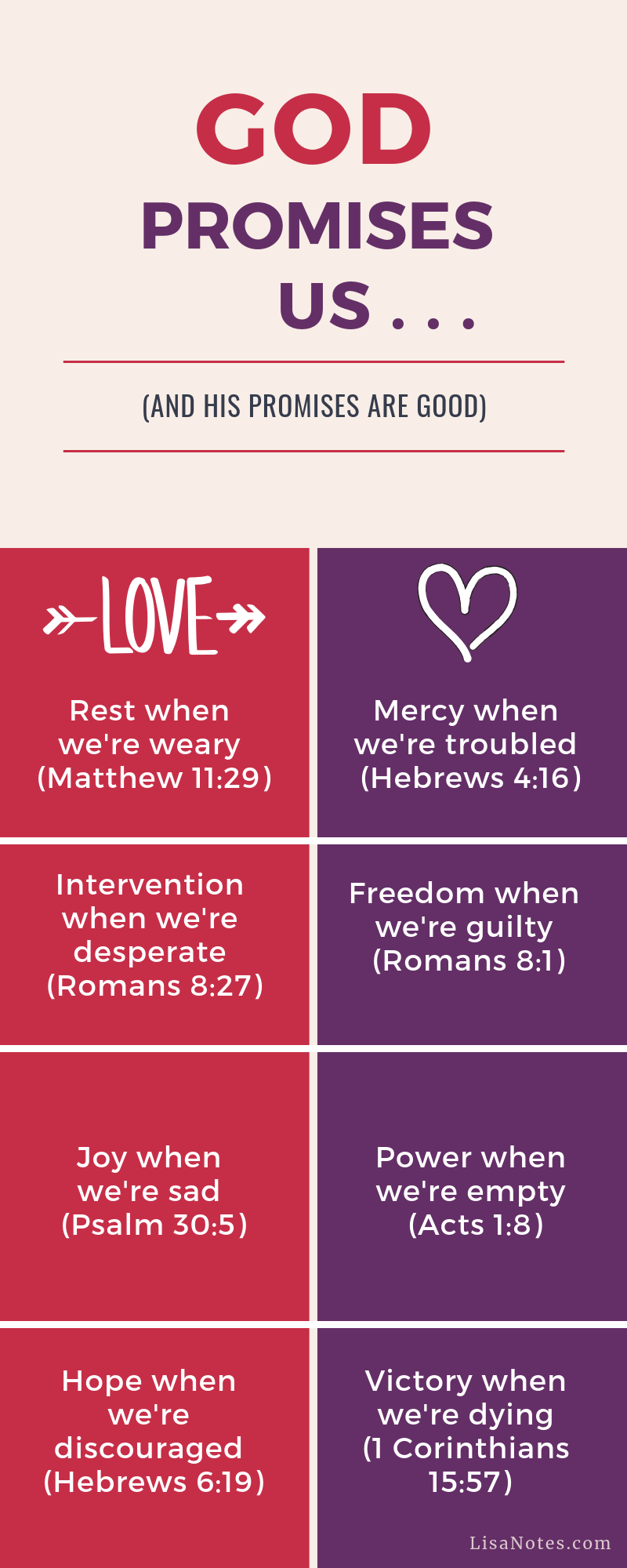
• God’s Promises [Infographic]

Sometimes we forget to hope because we forget God’s promises. God’s promises for us are good. Here’s an infographic to remind you of His goodness.

Anchored By Hope

August 4, 2020 by Jennifer Hong 4 Comments

Anchored by Hope

In the midst of a year characterized by uncertainty, let’s take the month of August to anchor ourselves in a hope that does not disappoint. Our circumstances may ebb and flow or may completely rock us, but in Christ we are securely anchored by hope. 

Anchored by Hope

A few years ago I was listening to a friend of mine give a sermon on the topic of hope. I was sitting in the cry room with a toddler messing about at my feet and an active infant in my lap. My preschooler was in the sanctuary with my husband, but he had spotted me through the cry room window and was clearly negotiating to join me there. Given the chaos around me, I will admit I now recall few details of that sermon. But one moment stands out. While straining to listen over the babbling of the children literally crawling over me, I heard my friend Brandon pause and ask directly, “What do you hope in?” No joke, clear as a bell something in me responded, “Bedtime. My hope is in bedtime.”

True Hope

I chuckled, outloud, because it was somewhat true. I would find myself multiple times a day with frayed nerves thinking, “It’s all going to be okay. In a few hours, they will go to bed, and I will be okay.” I was in the thick of the “short years / long days” season, and though I actually missed the kids when they were sleeping soundly, I also desperately needed the quiet time to collect myself. And yet, on the way home from Church that morning, I knew there was more to it than an introvert’s need for a few minutes of silence.

“When all feels chaotic, when I am afraid that I am failing them at every turn, when I am not sure how to comfort three of them at once,” I asked myself, “is my hope in bedtime? Or am I resting right then in the blessed assurance that the God of the Universe is right here with me? He knows exactly what is needed.” Am I missing the opportunity to be securely anchored by a true hope?

Grounded

Am I white-knuckled clinging to my to-do list? Or am I looking to the Holy Spirit for in-the-moment guidance? Am I holding my breath until the circumstances change? Or am I abiding in the life-giving breath of God, Who calms the storms and stills the winds? This summer, is my sense of hope tied to my confidence in our leaders, to graphs of reported data, or to the One who reigns forever? 

As people, our hope can easily become tied to the ever-changing circumstances around us. But as Believers, our hope is rightly grounded in Who God is. It flourishes when we focus our hearts on Him. He is good, righteous, sovereign, and faithful. Our hope rests in the knowledge that He is making all things new. He is making us into the likeness of Christ and reconciling us to one another in the Spirit.

Anchored, Firm and Secure

The author of Hebrews tells us that we may be encouraged because, “we have this hope as an anchor for the soul, firm and secure.” (Hebrews 6:19a, NIV). We have this anchor of hope, he says, because Christ entered behind the temple curtain into the Most Holy Place ushering those washed in His blood into the presence of God (Hebrews 6:19-20, Hebrews 9:1-14, Matthew 27:50-51). That’s the game-changer. His blood and righteousness mean I have access to the throne of God. That’s hope.

Do you know how an anchor works? An anchor is substantial, heavy and solid, sinking into the seabed. It becomes even more effective when resistance is applied. When a force pulls against the anchor, it is designed to dig deeper, becoming more secure. Thus grounded, an anchor protects a boat from drifting away or from crashing into nearby rocks.

Friends, I may have read more news in the past five months than I did in the previous decade. And it certainly is prudent to know what’s happening around us. Let’s check our anchor, though. Where is our hope? I love this sentence from a boating article titled “How to Anchor Securely:” “We know of no way to ensure that your anchor will hold other than by pulling on it hard.” Pull hard, and be assured. Hope anchored in Christ holds true. Join us in a month-long blog series as we explore what it means to be Anchored by Hope.

“May the God of hope fill you with all joy and peace in believing, so that by the power of the Holy Spirit you may abound in hope.” Romans 15:13

Never Alone

April 23, 2020 by Jennifer Hong 1 Comment

Never Alone, suffering

In the early days of this pandemic, I was preoccupied with the word, “alone.” My heart grieved reading the stories of patients who were critically-ill without the comforting presence of family. Fears of my own loved ones being similarly sick and separated from me disrupted my sleep. As my husband and I discussed plans for his isolation from the rest of the family if he contracted the virus while caring for patients, I broke down crying. “I am so afraid of you getting sick and being alone.”

The moment I said it out loud, I knew the word “alone” masked the truth. As Believers, we are never alone.

Never Alone, suffering

God with Us

It is a beautiful thing as the Body of Christ to be the hands and feet of Jesus, attending to the comfort and physical needs of one another. But even when we cannot reach one another, in our quietest, most solitary of times, Christ Himself is present with us. We are never alone.

Matthew begins and ends his Gospel with the assurance that Christ is “God with us.”

“Behold, the virgin shall conceive and bear a son, and they shall call his name Immanuel,” (which means, God with us).
(Matthew 1:23)

“And behold, I am with you always to the end of the age.”
(Matthew 28:20)

The presence of the Lord with His people is central to the story of the Bible — from the intimacy of the Garden of Eden to the presence of the Lord in the Temple among the Israelite’s, from the physical incarnation of Christ to the indwelling of the Holy Spirit, God is with us.

King David knew the closeness of the Lord in seasons of heartache. He wrote, “The Lord is near to the brokenhearted and saves those who are crushed in spirit.” (Psalm 34:18)

Similarly, Jesus taught “Blessed are the poor in spirit, for theirs is the kingdom of heaven. Blessed are those who mourn, for they shall be comforted.” (Matthew 5:2-4)

Weathering the Storm

A thoughtful message by an unknown author was recently shared on social media recognizing that, while we are all in the storm of this pandemic together, we are not all “in the same boat.” Our individual experiences differ greatly. For some, the pandemic has meant painful loneliness. For others, it is too much togetherness. It has brought financial insecurity, the loss of a job, or hunger to many. This pandemic has meant severe illness for many patients, and exhausting, high-risk work for health care workers. And for many families, it has meant the loss of loved ones and the grief that follows.

While each of us may be weathering this storm “in a different boat,” Christ walks out across the stormy waters towards every one of us.

“But the boat by this time was a long way from the land, beaten by the waves, for the wind was against them.  And in the fourth watch of the night he came to them, walking on the sea. But when the disciples saw him walking on the sea, they were terrified, and said, “It is a ghost!” and they cried out in fear. But immediately Jesus spoke to them, saying, “Take heart; it is I. Do not be afraid.”… And when [Jesus and Peter] got into the boat, the wind ceased. And those in the boat worshiped him, saying, “Truly you are the Son of God.”
(Matthew 14:24-27, 32-33)

Your pandemic-weathering boat may be crowded right now, with family juggling both work and school in the same space every day. Or you may be alone in your boat, weathering trials your neighbors know nothing about. Regardless of your unique burdens in this storm, know that Jesus is walking out to join you. Invite Him in.

Peace accompanies His presence.

As Jesus got into the boat, the wind ceased. The presence of Christ brings peace.

 Peace I leave with you; my peace I give to you. Not as the world gives do I give to you. Let not your hearts be troubled, neither let them be afraid.
(John 14:27)

Sometimes, the storm rages on around us. Jesus was very clear that we should expect trouble in this life — tribulation. Jesus spoke to His disciples of His peace at a time when His crucifixion was still ahead and their own trials were only beginning. However, He also assured them that He would never leave them, and that, soon, the Holy Spirit would be sent as to equip them, comfort them, and intercede on their behalf.

 In the world you will have tribulation. But take heart; I have overcome the world.
(John 16:33b)

This month, when the news is heavy and the future uncertain, I’ve been reaching for Psalm 121 and hymns like In Christ Alone to ground myself in truth. I am not alone. Not one of His children is alone, today or any day ahead.

Take heart, we are not alone.


Benedictions: Series Wrap-Up

February 27, 2020 by Jennifer Hong Leave a Comment

Benedictions of the Bible

This month we have been looking at Benedictions, God’s words of blessing for His people. Have you been drawn to commit to memory any of the Scriptures we’ve looked at? Let’s wrap up this series with a review of the verses of benediction we have read thus far before concluding with one of my favorites.

Benedictions of the Bible

We began the month with one of the first blessings of the Bible, given to the priesthood of Aaron to say over the Israelites. These beautiful words convey God’s desire to extend His goodness to His people.

May the Lord bless you and keep you.
The Lord make His face to shine upon you and be gracious to you.
The Lord lift up His countenance upon you and give you peace. (Numbers 6:24-26)


In a post about the God who equips, Ali reminded us that God gives us the ability to do His will and “will not ask anything of us that He will not help us do.” She wrote, “Until God supports me and directs me– until He equips me — I can’t do His will. On the other hand, with God’s help ‘through Jesus,’ I am able.

Now may the God of peace who brought again from the dead our Lord Jesus, the great shepherd of the sheep, by the blood of the eternal covenant, equip you with everything good that you may do his will, working in us that which is pleasing in his sight, through Jesus Christ, to whom be glory forever and ever. Amen. (Hebrews 13:20-21)


Jaime explored musical harmony as the metaphor for life within the Church. I found it clarifying to read her words: “Living in harmony with anyone is deeply challenging because we are regularly confronted by and forced to choose between our own selfish desires and the needs or wants of another.” Harmony results from putting the needs of others around us ahead of our own desires.

May the God of endurance and encouragement grant you to live in such harmony with one another, in accord with Christ Jesus, that together you may with one voice glorify the God and Father of our Lord Jesus Christ. (Romans 15:5-6)


Elaborating on how benedictions give us words to bless others when we don’t know what to say, Lisa shared that her Pastor’s closing each service with Philippians 1:9-11 has guided her in praying for others.

And it is my prayer that your love may abound more and more, with knowledge and all discernment, so that you may approve what is excellent, and so be pure and blameless for the day of Christ, filled with the fruit of righteousness that comes through Jesus Christ, to the glory and praise of God.” (Philippians 1:9-11)


“God wants the overflow of everything He pours into us to spill out onto others,” Cheli wrote. “Essentially, we are filled up to spill out.” The benedictions exemplify this as we receive God’s blessings and use God’s own words to pronounce His goodness upon others.

“So that Christ may dwell in your hearts through faith—that you, being rooted and grounded in love, may have strength to comprehend with all the saints what is the breadth and length and height and depth, and to know the love of Christ that surpasses knowledge, that you may be filled with all the fullness of God. (Ephesians 3:17-19)


Last week in a post on the God of hope, I shared my experience with hope in the midst of physical pain. “When the roots of hope reach deeper down to living water from the God of hope, our hope is not vulnerable to circumstances. That hope flourishes regardless of circumstance.”

May the God of hope fill you with all joy and peace in believing, so that by the power of the Holy Spirit you may abound in hope.” (Romans 15:13)

He is Able

Our evening family prayer time has always been quite a circus, but with my youngest no longer a toddler, I am daring to add a little more structure and reverence. While my attempt to add candle light was short lived (we are still too wiggly for that, it seems), the benediction has stuck. My favorite part of the day may now be the last moments of our evening together as one of us reads words of encouragement over the family. I find the simplest way to memorize Scripture is simply to say or hear it every day, and so we use one passage until it is deeply in all of our hearts, before changing it out for another.

Tonight as we ended family prayers, my 7-year-old son read Ephesians 3:20-21:

Now to him who is able to do far more abundantly than all that we ask or think, according to the power at work within us, to him be glory in the church and in Christ Jesus throughout all generations, forever and ever. Amen. (Ephesians 3:20-21)

It is my hope that these truths sink in deeply. After we have lifted our hearts and concerns to the Lord, what joy it is to be reminded: He is able. Able to do far more than all that we ask, or think! (I love those additional words. There is no limit to His power!) And that power? It is more than available to us. It is presently at work within us. What grace. It is my hope that as we lay down to rest each night, my family’s faith and hope will be nourished by those words of truth.

In a church service, the benediction is part of a liturgy — words and actions that are part of a meaningful routine which shapes our hearts and our faith. Is there a Scripture we have looked at this month that you want to make a part of your daily life? One you want to commit to heart and have on hand for when you don’t know what to say or how to pray? Which of these would most nourish your faith right now?

May You Live in Such Harmony

February 11, 2020 by Jaime Hilton 1 Comment

My 13 year old daughter has the loveliest voice. She also has a very natural ear which she uses to pick out complicated harmonies. We put music on in the car and she goes to town, singing at the top of her lungs to whatever genre of music we happen to be playing. Most of the time I really enjoy this about her. Sometimes I even miss it when she’s not around and will make my own feeble attempts to replicate her ethereal additions to the familiar tunes.

Her harmonies elevate the music, not just because she is singing along to the music, but because she is adding her voice. Her notes combine with the other voices and instruments – different, yet unified in the purpose of the song.

That is the picture I see (and hear!) when I read Paul’s blessing in Romans 15:5-6.

“May the God of endurance and encouragement grant you to live in such harmony with one another, in accord with Christ Jesus, that together you may with one voice glorify the God and Father of our Lord Jesus Christ. “

Is It Possible?

Living in harmony with anyone is deeply challenging because we are regularly confronted by and forced to choose between our own selfish desires and the needs or wants of another. Whether we are dealing with our immediate, extended, or church family, conflict is pretty much a given. But, praise the Lord!, that is not the final word! Unity is not only desirable but possible through the patient work of the Holy Spirit.

Though we have short attention spans and stubborn hearts, the God of Endurance extends His patience and understanding to us.

Though we are discouraged by the conflict and challenges inherent in any human interaction, the God of Encouragement provides everything we need to live like Jesus among our brothers and sisters.


What does it look like?

Occasionally when my daughter sings in the car, the experience is less than pleasant. The harmonies overwhelm the melody and I have to remind her not to lose sight of the song. The harmonies are there to support and enhance, not show off or take center stage.

Romans 15:1-2 describes what harmony looks like,

“We who are strong have an obligation to bear with the failings of the weak, and not to please ourselves. Let each of us please his neighbor for his good, to build him up.”

This action of giving up our own desires for the sake of those around us, putting their needs ahead of ours, creates the harmonies that allow us to glorify God in one voice.


What can you do today to add harmony to this song of glory?


Benedictions: Pronouncing God’s Blessings Upon His People

February 4, 2020 by Jennifer Hong 2 Comments

Benedictions: Pronouncing God's Blessings

Do you ever wrestle with how to pray for someone? This month we look at benedictions. From the Latin words for “well” and “say,” benedictions convey the goodness God calls us to say over one another. They voice agreement with the blessings God has in store for us, and they are a rich resource for praying for people.

Benedictions: Pronouncing God's Blessings Upon His People

I was many states away when I received an unexpected phone call from my aunt. She had called to tell me that my Nana had become weak, less responsive, and would not be with us much longer. “What is the blessing you say for your kids each night? Would you say that for Nana?” She held the phone up to my grandmother’s ear.

Choking back tears, I managed to say, “May the Lord bless you and keep you. May the Lord make His face to shine upon you and be gracious to you. May the Lord lift up His countenance upon you and give you peace.”

My bedtime blessing for my children, and for Nana, was taken from one of the first benedictions in the Bible, the blessing God gave the priesthood of Aaron to say over the Israelites (Numbers 6:22-27). It expresses God’s will for His relationship with His people, pronouncing God’s favor over the nation of Israel, later extended to Christian Believers (Galatians 3:7-9).

I think my children sometimes hear these words as, “May God bless you… blah blah blah blah… peace.” The fact that we are all pretty fried by bedtime doesn’t help. I recently researched the Hebrew used in Numbers 6:24-26 and shared with my kids the depth of meaning in these Ancient words.

The Lord Bless You and Keep You

The Lord bless you and keep you. (Numbers 6:24)

The word “keep” here is the Hebrew word “shamar.” It is used to describe Adam’s responsibility to tend the garden of Eden (Genesis 2:15), the cherubim’s swords that later guard the tree of life (Genesis 3:24), and the Lord’s assurance to Jacob after he fled his brother’s wrath. “Behold, I am with you and will keep you wherever you go, and will bring you back to this land. For I will not leave you until I have done what I have promised you” (Genesis 28:15).

In verse 24, I see the Lord as an attentive gardener, cultivating his plants with nutrients that facilitate their growth and protecting them from harm. My own paraphrase for this verse would be, “May the Lord bestow his favor upon you and keep you close to Himself, protecting you with tender care.”

Illuminate

The Lord make his face to shine upon you and be gracious to you. (Numbers 6:25)

“Panaw,” used in verses 25 and 26, describes a person’s physical face, expression, and gaze. It is also used to describe God’s presence (2 Kings 13:23).

The word for “shine” here is related to the Hebrew word “or,” describing the effect of the sun upon the earth (Genesis 1:15) as well as miraculous provision during the Exodus. “And the pillar of cloud … stood behind them, coming between the host of Egypt and the host of Israel. And there was the cloud and the darkness. And it lit up the night without one coming near the other all night.” This light, in the presence of both darkness and evil, provided protection from both (Exodus 14:20).

Together, these words show God bringing His radiant light to His people by setting them before Himself. In His light, darkness dissipates. I read verse 25, “May God illuminate your life with His presence. May He bless you with unmerited goodness.”

Shalom

The Lord lift up His countenance upon you and give you peace (Numbers 6:26).

“Shalom” may be one of the most recognized Hebrew words. Though translated “peace,” it conveys more than a restful state or the absence of conflict. Shalom depicts a deep soundness and contented wholeness, an enduring harmony within as well as without. It describes peace with others and peace with God. The reiteration of the word “panaw,” translated here as “countenance,” suggests that it is the face or gaze of the Lord that brings shalom.

Verse 26 could be read, “May He look upon you with grace and give you the enduring peace of wholeness.”

Receiving and Bestowing Grace in Benedictions

When my heart longed for all of God’s comfort and grace for Nana, I was grateful for the words of His tender care that God gave us centuries ago. This month, we’ll look at benedictions in Scripture, to receive their grace and bestow it upon others. Ask the Lord to show you any that you should commit to memory. If your church service includes a benediction at its close, let your heart be attentive. Fully hear and receive the words of blessing. They are rich descriptions of the abundance of life in Christ.

To each of you,

May the Lord bless you and keep you.
The Lord make His face to shine upon you and be gracious to you.
The Lord lift up His countenance upon you and give you peace.

Draw Near, Hold Fast, and Take Care (Hebrews 10:19-25)

July 31, 2019 by Patti Brown Leave a Comment

Draw Near, Hold Tight, and Take Care - a look at Hebrews 10:19-25

Today we come to our final verses in the passage from Hebrews 10 we have been studying all month. And boy are these verses packed!

We start with a little look back over our shoulders at what Jesus has done for us, then we move on to the future – how ought we to respond as followers of Christ who have been blessed so abundantly?

Therefore, brothers, since we have confidence to enter the holy places by the blood of Jesus, by the new and living way that he opened for us through the curtain, that is, through his flesh, and since we have a great priest over the house of God, let us draw near with a true heart in full assurance of faith, with our hearts sprinkled clean from an evil conscience and our bodies washed with pure water. Let us hold fast the confession of our hope without wavering, for he who promised is faithful. And let us consider how to stir up one another to love and good works, not neglecting to meet together, as is the habit of some, but encouraging one another, and all the more as you see the Day drawing near. – Hebrews 10:19-25

Draw Near, Hold Tight, and Take Care - a look at Hebrews 10:19-25

Since We Have…

The beginning of Hebrews 10:19-25 reflects back on the themes the author of Hebrews has already been addressing in chapter 10. It’s as if he is saying, “Hey guys, remember we discussed that we have…”

  1. Confidence to face God! Jesus’ death on the cross allows us to no longer need a human intermediary offering sacrifices, but instead we can go straight to God Himself.
  2.  A great high priest! The Greek word used in this verse is sightly different from the word used for high priest in most passages. This word might even be translated “kingly priest.” Jesus is the ultimate high priest, the Lord of all the high priests, the fulfillment of all priestly roles.

We have received these precious gifts, now the question is, how shall we respond? The author of Hebrews gives the answer using three “let us” verses.

Let Us Draw Near

Unlike Old Testament times, God’s people no longer need to keep their distance from Him! We are called to draw near…

  1. … with a true heart in full assurance of faith – A true heart is a sincere heart, nothing put on for show. John said “true worshipers will worship the Father in spirit and truth” (John 4:21). This is the kind of sincerity God is looking for. We can be sincere because we are confident in God, like a little child who is confident her father can help her with anything she asks.
  2. … with our hearts sprinkled clean from an evil conscience – Like the sprinkling of blood on Levitical priests to purify them (Exodus 29:21), we have had our hearts “sprinkled” with the purifying blood of Jesus Christ. Our consciences can be clear. “How much more will the blood of Christ, who through the eternal Spirit offered himself without blemish to God, purify our conscience from dead works to serve the living God.” (Hebrews 9:14)
  3. … and our bodies washed with pure water – There are multiple levels to this: an allusion to the ritual washings of Old Testament law, and to baptism, but on a visceral level I think we can understand this easily. We have been refreshed and cleansed, inside and out, by the power of Jesus’ sacrifice. We have been purified, and offered a new life!

Let Us Hold Fast

“hold fast the confession of our hope without wavering, for he who promised is faithful.” – Hebrews 10:23

Hope is a funny thing – it can be easy to lose can’t it? Perhaps that’s why the author of Hebrews gets descriptive for us. We are to hold fast, and not waver in our hope. I picture myself holding on white-knuckled, because indeed, that has been my reality in certain seasons. The world, and people in my life, have sought to disrupt my hope. But God has been abundantly faithful to me. He has never disappointed me, and my hope in Him has never yet been shown to be misplaced.

As W. Robertson Nicoll says, “The promises of God are necessarily the ground of hope (Hebrews 6:12.) These promises cannot fail, because God cannot lie. (Hebrews 6:18.)”

Let Us Stir Up One Another

We draw close into God (draw near), we hold on tight (hold fast), and finally we are asked to remember and encourage each other.

  1. “let us consider how to stir up one another to love and good works” – God uses brothers and sisters in Christ to grow one another. Some versions translate “stir up” as “provoke” and I am sure we can all recall a time when we felt provoked in church! But passion does not have to come from negativity. As Believers we can’t just look to meet our needs by drawing close to God, we must also look outward, loving and serving those around us, and helping each other persevere in service.
  2. “not neglecting to meet together” – We were created to be a family, children of the living God. It is part of our personal growth, and our call to love and serve, that we must continue to fellowship with other Believers regularly
  3. “encouraging one another, and all the more as you see the Day drawing near.” – Everyone needs encouragement. It is our responsibility to be the source of that encouragement for our brothers and sisters in Christ. Knowing that Jesus will return is not the reason we do it, it is merely a reminder that we may not be complacent in this!

As we conclude our study of Hebrews 10 this month, today’s passage provides us a lovely and simple thought to meditate upon: Draw near to God, hold tight, and take care of those around you. It is our drawing near that gives us the strength to care for others.

And it is only because of Jesus’ once for all sacrifice that we can even begin. Without His gift to us, we could not draw near to God, and none of the rest would matter. Praise His holy name!

Draw near to God, hold tight, and take care. That’s Hebrews 10:19-25 in a nutshell. #OnceForAll

Click To Tweet

5 Steps to Find What’s Missing: The Story of the Lost Coin

September 13, 2018 by Lisa Burgess 31 Comments

Have you lost your peace? Your joy? Your rest? Look with us at the Parable of the Lost Coin for 5 steps to find what’s missing.

5 Steps to Find What's Missing - Lost Coin

WHERE ARE MY GOOD GLASSES?

I was reading the ballet program. I wanted to know when the students would perform from my daughter’s class.

So I know I had my glasses on.

But an hour later, my glasses were missing. My real ones. My prescription, progressive glass I paid dearly for. Not my cheap Dollar General reading glasses that I also use daily.

Maybe you misplace your glasses occasionally, too. Or your cell phone goes missing. Or you can’t find your car keys on your way out the door.

When we can’t find something we need, we get stressed.

And even though we may have access to another pair of glasses (thank you, Dollar General!) or someone else’s phone or a spouse’s key, we want our own.

THE LOST COIN

Jesus knows this about us, that we lose things and get anxious about it. And He knew this about the tax collectors and religious scholars of His day, too.

So when His audience began grumbling about His latest choice of dinner companions (“He takes in sinners and eats meals with them, treating them like old friends” Luke 15:2), Jesus told them some stories about the lost and found.

Today we’re looking at the story He told about the Lost Coin. (Read it in Luke 15:8-10.)

A woman in His parable has ten silver coins. She loses one. Just one.

But still one. And every one matters.

The coin is a drachma. (See more on Coins that Jesus Used.)

greek drachma

A drachma represented about a day’s wage in ancient Israel. It was valuable, not like dropping a penny down a drain. Oh, well.

This was like a paycheck, one of only ten she had. It made a difference.

5 STEPS TO FIND WHAT’S LOST

What is a day’s wage for you? Would you care if you lost that paycheck on your way home from work? How would you react?

What about if a friendship went missing? Or you floated adrift from a good spiritual habit? Or you lost track of God’s promises and thus lost your hope?

  1. Notice the Shadow

First, you have to realize something is missing.

Too often we so gradually acclimate to the coming nightfall that we don’t realize it’s dark until we need to see. I didn’t notice my eye glasses were missing at the ballet recital until I needed to read a message on my phone. And I couldn’t see it.

Jesus doesn’t tell us how the woman noticed her missing coin. Maybe she was counting her coins at the end of the day…7, 8, 9…where’s 10?

What wakes you up to your losses?

Perhaps doing a blessing-count at the end of the day will remind you that you’ve neglected a relationship. Or a new pain wakes you up to your need for God’s help. Or discontentment triggers awareness that your attitude has shifted.

Pay attention.

  1. Turn on the Light

The next thing the woman did was light a lamp. It’s what I did too in the search for my glasses. I turned on my phone light and began looking under my seat. And when the house lights finally came on, I could see even more areas to search.

What light switch do you need to flip?

Perhaps a sister in Christ can provide some illuminating advice. Or falling on your knees in prayer will help you see clearer. Or just spending time in worship will allow you to soak up His light for any dark days ahead.

  1. Clear out the clutter

When light alone didn’t uncover the silver coin, the woman picked up her broom. When my daughters were younger and looking for a lost toy, I’d tell them, “Use your hands.” Not just your eyes. Dig around to the bottom of the toy box.

Try moving something else out of the way to find your missing thing.

What is cluttering up your life this week? Could not only physical clutter but also spiritual clutter prevent you from finding what is missing?

Grab a broom and sweep your house.

  1. Keep Going and Going

Jesus said the woman would “seek diligently” until she found her coin. She wouldn’t give up after a quick five-minute search.

Are you as steadfast in your search for missing devotional time or a healthier marriage as you would be for lost money? How persistent are you in your search for missing contentment? Do you quickly give up on hearing from God if you don’t get an immediate answer?

Be diligent in your search.

  1. Prepare to Celebrate

The woman’s persistence paid off. She found her coin. Jesus said she called people around her afterwards.

Jesus wanted His listeners to see how the story can end: in community, in celebration, in gaiety.

Likewise, when you discover your own missing treasures, are you quick to share in celebrations? Who do you tell? Are you also willing to be the friend or neighbor who rejoices with others when they’ve found something they’ve lost?

GOD’S PARTY

This parable concludes with joy.

“Count on it—that’s the kind of party God’s angels throw every time one lost soul turns to God.” Luke 15:10 (The Message)

When the lost become found, God throws a party.

If you’ve lost something in your life that you need to reclaim—freedom in Christ, peace in stormy weather, love in a relationship—know that even the angels in heaven are rooting for you to find it.

And when you find it, God will crank up the music in celebration.

After searching for my glasses underneath my own row of seats, the row in front of me, and the row behind me, I began asking around, “Have you see any glasses?”

No, no, and no. And I gave up.

I walked to say good-bye to friends six rows in front of us. And that’s when I saw them: my glasses. In the hand of my friend. She said her daughter had found them earlier during intermission and they didn’t know who they belonged to.

They belonged to me.

In the end, my glasses found me.

I was happy. I was grateful for the grace of God, not just in seeing my glasses again (and seeing with my glasses!), but for valuing me, for meeting my needs, for caring about what I care about.

God cares about the things you’ve lost, too. Maybe not all your lost things are retrievable. But for the things that are, be encouraged to keep looking. God is watching over you as you do.

Because the thing He most doesn’t want to lose is . . . you. You are one of His.

And every one matters. 

Are you missing something? 5 Steps to Find What’s Missing #BelovedStoriesNT

Click To Tweet

What have you recently lost? How did you find it? Please share in the comments.


Should You Be Mad?

July 12, 2018 by Lisa Burgess 8 Comments

Should I Be Mad? Anger is easy.

Do you have a right to be angry? Are you entitled to it?

Continuing in our Exceptional Christian Book series, today we’re looking at Unoffendable, a book aimed at making our Christian walk better by giving up our right to be offended.

Louis L’Amour said, “Once you have read a book you care about, some part of it is always with you.” Unoffendable has stayed with me since I read it three years ago (and re-read since then).

Here’s why.

Should I Be Mad? Anger is easy.

I’m Mad

He hurt my feelings.

I disagreed with his facts. I didn’t appreciate his attitude. And I was offended by his conclusions about my faith.

It was a few years ago. I knew this elderly gentleman held strong opinions. He wasn’t afraid to state them. But I didn’t expect them aimed at me.

I thought I had a right to be angry at him for it. And to stay angry.

But was I wrong?

Too Much Offense

How often are you offended? Are you irritated too frequently? Overly sensitive?

Are Christians viewed as perpetually angry people?

When I think of exceptional Christian books, Unoffendable comes to mind. It’s not a huge best-seller or a classic that’s survived through the centuries (it was published in 2015).

But it can be a game-changer today for Christian anger.

Written by radio personality Brant Hansen (WAY-FM radio anyone?), Unoffendable says that our “righteous anger” has become a big problem.

We don’t have to look far for reasons to get angry.

  • Tune into your favorite social media.
  • Talk about politics at work.
  • Expect your children to make only smart choices.

We’ll find reasons to get mad. And to justify it. We’re always in the right, yes?

And shouldn’t we be angry against all the injustices of the world?

Didn’t Jesus Himself display an angry side? He even flipped a table in the temple.

No Entitlement

Hansen addresses all these issues in Unoffendable.

And he still comes out on this side: No. We’re not entitled to our perpetual offense or constant anger.

“We should forfeit our right to be offended. That means forfeiting our right to hold on to anger. When we do this, we’ll be making a sacrifice that’s very pleasing to God. It strikes at our very pride. It forces us not only to think about humility, but to actually be humble.”
– Brant Hansen

While there are legitimate reasons to get angry—and yes, we do read about God’s anger at evil—we’re also told to not hold onto it.
To not sit with it.
To not sin in it.

“Anger will happen; we’re human. But we can’t keep it.”

As Paul said,

“But now you must put them all away: anger, wrath, malice, slander, and obscene talk from your mouth.”
Colossians 3:8

Jesus may have had legitimate authority, judgment, and wisdom to toss a table, but that doesn’t mean we do.

Instead of pronouncing angry judgments, what if we allowed only God to do that?

“Quit being shocked when people don’t share your morality. Quit serving as judge and jury, in your own mind, of that person who just cut you off in traffic. Quit thinking you need to ‘discern’ what others’ motives are. And quit rehearsing in your mind what that other person did to you.”

Use Love, Not Anger

Yes, we can—and should—stop injustices. We can right wrongs. We can defend the defenseless.

“Choosing to be unoffendable, or relinquishing my right to anger, does not mean accepting injustice. It means actively seeking justice, and loving mercy, while walking humbly with God.
And that means remembering I’m not Him.
What a relief.”

But we can do all those things better with a clear head, not an angry one.

“People say we have to get angry to fight injustice, but I’ve noticed that the best police officers don’t do their jobs in anger. The best soldiers don’t function out of anger.
Anger does not enhance judgment.”

Or as Dallas Willard puts it in The Divine Conspiracy (another great book!),

“There is nothing that can be done with anger that cannot be done better without it.”
– Dallas Willard

Humility > Pride

And even better, what if we’d choose to be unoffendable in the first place? We’d have less to work through.

Instead of taking everything personally and being offended, what if we seek humility, offer forgiveness, and extend grace?

More from the apostle Paul:

“Put on then, as God’s chosen ones, holy and beloved, compassionate hearts, kindness, humility, meekness, and patience, bearing with one another and, if one has a complaint against another, forgiving each other; as the Lord has forgiven you, so you also must forgive.”
Colossians 3:12-13

Hansen reminds us that if we’ll begin with more humility and less pride, there will be less of ourselves to defend. Less slights that we notice. Less for us to prove.

“There’s only one way to not be threatened by anything, and that’s if you have nothing to lose. . . . Remember: Anger and rest are always at odds. You can’t have both at once.”

By being less offendable, we’ll be easier to get along with.

We’ll shine a brighter light for Christ in dark places.

We’ll bring more peace and more God.

“The anger of man does not produce the righteousness of God,” James 1:20.

“If you think people are drawn to you by an impressive religious resume, you’re in for a shock. When people are in crisis or need to know that God loves them, that they’re not alone, they don’t seek out the guy who thinks he’s Mr. Answer or who radiates superiority and disapproval. They want someone who loves God and who loves them.”

We love stronger when we’re offended less. Love is a purer motive than anger.

Aim for Unoffendable

I eventually forgave the gentleman who hurt my feelings.

But I haven’t forgotten.

It’s been a lesson.

Holding onto my “righteous anger” against him, even when it felt justified at first, ended up only causing me more pain. It didn’t help my relationship with the man. And it didn’t bring glory to God.

I had to let it go.

Are any of us entitled to hold on to our anger?

We will have legitimate reasons to become angry. Feel it. Work to correct the injustices underneath it. Then let the anger slide away.

Aim for unoffendable instead.

Are you entitled to your ‘righteous anger’? Join us for our #ChristianBooks series.

Click To Tweet

Are you easily offended? What helps you overcome slights? What’s the latest book that has stuck with you after reading it? Please share in the comments.

How to Be an Encouraging Friend in Times of Pain

April 25, 2017 by Patti Brown 1 Comment

When your friend struggles, how can you help? Learn more about encouraging friends in times of pain.

Mary sends up a flare on Facebook: “I just don’t know how I am going to get through this day.”

You see Angela hurrying out of church with tears streaming down her face.

Liz angrily pours out her frustration about something minor, and you realize that a deeper hurt is fueling her emotion.

When your friend struggles, how can you help? Learn more about encouraging friends in times of pain.
No matter how you realize she is hurting, when your friend is in pain she needs your loving encouragement. But sometimes it is hard to know what to say or do, isn’t it? We want to help but we aren’t sure how.

“A friend loves at all times, And a brother is born for adversity.” – Proverbs 17:17

The encouragement of a loving friend can make all the difference in how we face the struggles that come in life. Here are suggestions for how to be the encourager your friend needs.

AN ENCOURAGING FRIEND DOES…

  • Make a point to connect – When you realize your friend is hurting, reach out in person or via technology (here are some ideas Ali shared earlier in our series on friendship). “Better is a neighbor who is near than a brother who is far away.” (Proverbs 27:10)
  • Acknowledge her pain – Don’t reach for solutions straight away. Honor the fact that she is hurting and be with her in her pain: “This is so hard.” “I am so sorry.” “It is understandable that you feel this way.” “I can’t imagine how difficult this is.”
  • Speak words that build up – Choose life-giving words. If her pain comes from recognition of sin in her own life, don’t neglect to encourage her about the ways she blesses you. “Therefore encourage one another and build one another up,” (1 Thessalonians 5:11)
  • Ask questions – “How are you feeling today?” “What can I do to help?” “How can I pray for you?”… and really listen to the answers.
  • Find a way to bring beauty into her life – Email or text her a worship song that is meaningful, or a pretty image of a scripture applicable to her situation. Bring her flowers, or a small cheerful gift basket. Make a meal that she can enjoy in her own home, or have her over for dinner.

AN ENCOURAGING FRIEND DOES NOT…

  • Minimize her struggle – Now is not the time to talk about how great other things are in her life. If your friend’s father dies, it would obviously be insensitive to say “Well at least you have another parent.” Don’t make this sort of mistake in another context. Her pain is what it is.
  • Preach a sermon – The last thing someone needs when she is suffering is to hear a long theological treatise. Yes, speak God’s Truth, but be sensitive about timing, and be concise! “Gracious words are like a honeycomb, sweetness to the soul and health to the body.” (Proverbs 16:24)
  • Make it about you – It’s okay to share your personal experience in a limited fashion, but be mindful of keeping the focus on your friend.
  • Forget to follow up – Stay connected. Make a point to check in with your friend regularly.

God knows that we need each other, and that we need Him in our friendships. I love this passage from Ecclesiastes:

“Two are better than one, because they have a good reward for their toil. For if they fall, one will lift up his fellow. But woe to him who is alone when he falls and has not another to lift him up! Again, if two lie together, they keep warm, but how can one keep warm alone? And though a man might prevail against one who is alone, two will withstand him—a threefold cord is not quickly broken.” – Ecclesiastes 4:9-12

You + your friend + God = a threefold cord! Be the encourager that your friend needs in her pain. You will be blessed as you bless!

“For I long to see you so that I may impart to you some spiritual gift to strengthen you, that is, that we may be mutually encouraged by each other’s faith, both yours and mine.” – Romans 1:12

Practical ways to encourage a friend who is suffering. #BeingABetterFriend

Click To Tweet

How to Be an Encouraging Friend in Times of Pain. #BeingABetterFriend

Click To Tweet

Do you have a friend in pain? Be intentional about being an encourager. #BeingABetterFriend

Click To Tweet

Save

Save

Save

Save

Save

Save

3 Ways to Grow Your Faith When You Don’t Know What to Do

January 12, 2017 by Lisa Burgess 26 Comments

Growing-Faith-through-Uncertainty

Growing-Faith-through-Uncertainty

“Oh, the depth of the riches and wisdom and knowledge of God! How unsearchable are his judgments and how inscrutable his ways!
For who has known the mind of the Lord, or who has been his counselor?”
Romans 11:33-34

Google is my go-to source for quick answers.

  • When I want to know how old someone is, I google it.
  • When I want to see the menu at Local Taco, I google it.
  • When I’m looking for a TED talk on slow living, I google it.

But Google doesn’t know everything.

google-search

Google can never replace God.

So when Google doesn’t satisfy and God seems slow to answer, how do we handle our uncertainties?

This month we are focusing on renewing our minds through our attitudes in the new year (so far we’ve looked at optimism and gratitude through humility).

But what do we do when we have this attitude: “I NEED TO KNOW NOW!”?

The Insecurity of Uncertainty

When we don’t know whether to call the doctor or which job to take or even what to make for dinner, we can feel uncomfortable. Our brains don’t like gaps. We like to know. And when we don’t know, we can feel anxious or afraid.

Our insecurities can lead us to doubt God’s goodness. They can spur us to hoard today’s resources when we’re unsure of the arrival of tomorrow’s resources. They can paralyze us against timely decisions as we stall for more and clearer information.

And conversely, when we’re too proud of what we think we do know, we can become harsh and judgmental and legalistic (1 Corinthians 8:1 – “knowledge puffs up, but love builds up”).

How to Accept Not Knowing

What can we do with our doubts? For 2017 we can resolve to do these three things to make peace with uncertainty.

3-resolutions-when-you-dont-know

1. Resolve to see grace in the gaps

Look back over your life. Were you given 100% complete information before you decided where to live or married your spouse or settled on a major? No.

But in the midst of our lack of knowledge, God has always been faithful. Even when we’ve made bad decisions.

If we turn our backs on His guidance, He still never turns His back on us. Through the consequences, He provides a path forward from any mess we create, if we’ll seek it.

Look for the grace He’s giving you in this moment. He has armfuls of new grace every morning to fill in all our gaps of uncertainty. Resolve to acknowledge His presence as your constant companion.

“The steadfast love of the LORD never ceases; his mercies never come to an end; they are new every morning; great is your faithfulness.”
Lamentations 3:22-23

2. Resolve to be content with less information

Let’s face it. We’ll never know everything we want to know in this life. And that’s a good thing. Some things we don’t need to know. God sometimes spares us by not revealing the very things we ask to know.

Can we trust God in 2017 to keep us posted on what we need to know? Yes. When we are less greedy with having to know, we can settle into uncertainty as a protective place. God won’t keep us in the dark unnecessarily, so let’s not force His hand into showing us more than what’s helpful.

“For as the heavens are higher than the earth, so are my [God] ways higher than your ways and my thoughts than your thoughts.”
Isaiah 55:9

3. Resolve to embrace mystery

Finally, let’s resolve to thank God for handling the enigmas in our lives. Can knowing that He knows be enough for us? While being in-the-know can initially seem comforting, we’re not wise enough or strong enough to handle the responsibility.

But God is. He has absolute power. He has infinite wisdom. And He has unending love to manage our lives in the best possible manner. Be grateful for that.

“Such knowledge is too wonderful for me; it is high; I cannot attain it.”
Psalm 139:6

Grow Your Faith

Do these resolutions mean we lock down our brains and stop trying to learn more? Of course not. God wants us to excel in everything, including knowledge (2 Corinthians 8:7). Wise people store up knowledge (Proverbs 10:14). Keep studying. Continue learning.

But our faith flourishes when we trust Him even without perfect knowledge. Making peace with uncertainty leaves room for God to work. And for us to move forward.

Even when our minds are questioning, our hands are shaking, and our mouths are mumbling, “I just don’t know,” we can place our security in God’s omniscience.

We don’t have to understand everything along our journey.

But we can understand enough to show up with God for the ride. That’s faith.

Not even Google can explain that.

When we just don’t know, then what? 3 Resolutions for Uncertainty. #RenewedMinds

Click To Tweet

Do you like to know everything, too? What’s your comfort level with uncertainty? How do you make peace with what you don’t know? Let’s talk in the comments.

Related:

  • Take a Daily Dose of This to Overcome Anxiety
  • Why You Should Get Your Hopes Up
  • 3 Words to Silence Your Worries

Get Your Hopes Up – Gifts in Your Future

September 15, 2016 by Lisa Burgess 22 Comments

get-your-hopes-up

get-your-hopes-up

You likely had a schedule for this week, a to-do list (if only in your mind) that you wanted to check off. How is it going so far?

We are lousy predictors of what’s next.

Five years ago (five months, five days), could you have predicted the events happening in our country today? In your church? Even in your family?

Unexpected > Expected

We can plan and prepare, but life is often more unexpected than expected. The unknown is out of our control. We don’t have the foresight or ability to stockpile enough resources in advance to prepare for every possible scenario.

We’re sometimes afraid to get our hopes up.

So how do we deal with this?

We place our hope in God’s future grace.

“Surely there is a future, and your hope will not be cut off.”
Proverbs 23:18

Gifts Ahead

Thankfully, God does know our future (Jeremiah 29:11). And because He is good, He has good plans in place for what’s next (Isaiah 46:4). Even when bad things happen alongside them.

The Lord goes before us and plants good gifts in our future. He has more than enough resources and power to line it up and give it to us at just the right time.

  1. The Gift of Today

“But seek first the kingdom of God and his righteousness, and all these things will be added to you. Therefore do not be anxious about tomorrow, for tomorrow will be anxious for itself. Sufficient for the day is its own trouble.”
Matthew 6:33-34

Once we believe in God’s provisions for tomorrow, we can better enjoy today. We can stay present, right here and now, knowing that God will handle our future. Does that mean we don’t plan for tomorrow? No. We still look ahead and prepare, but we don’t have to obsess about it and live in the future. We can live in the day.

  1. The Gift of Giving

“And I am sure of this, that he who began a good work in you will bring it to completion at the day of Jesus Christ.”
Philippians 1:6

Once we trust that God will replenish our manna each day, we no longer have to hoard. We’re free to fully use today’s gifts today, knowing that tomorrow we’ll be given a fresh supply. Not wasting or misallocating our resources, but confidently using them in discerning ways. We are more free to meet others’ needs when we’re less consumed with getting our own needs met. Trust God to finish what He’s started in you.

  1. The Gift of Peace

“But this I call to mind, and therefore I have hope: The steadfast love of the LORD never ceases; his mercies never come to an end; they are new every morning; great is your faithfulness.”
Lamentations 3:21-23

When we worry about the unknown, we produce anxiety not only for ourselves, but also for those around us. Isn’t it more restful instead to hope in God’s future provisions? He promises peace to those who rest in Him (Isaiah 26:3). Hoping in His future grace is a vehicle for us to receive that peace in our lives.

God at Every Turn

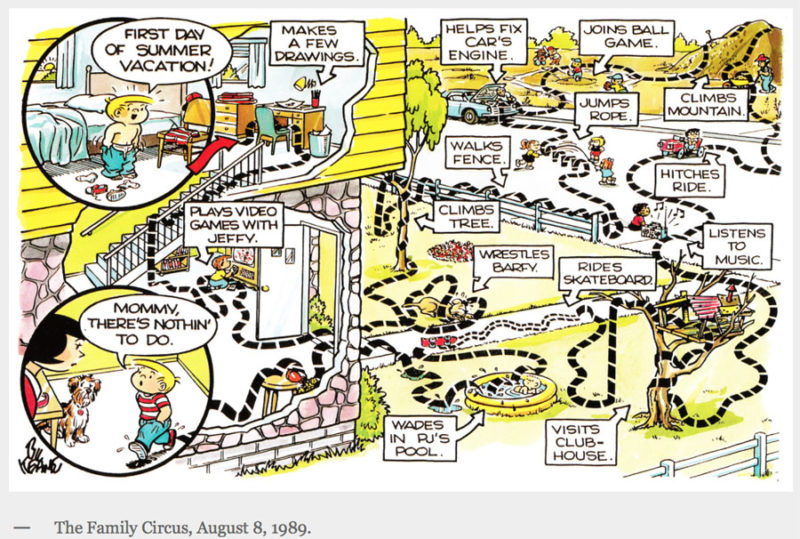
Each of our lives is a path. Like Billy’s path in Bil Keane’s Family Circle, it’s not a straight line. We can’t predict each step and twist along the way.

family-circus-billy_bil-keane
illustrated by Bil Keane

But what we can predict is this: God will show up at every turn.

We start at Point A. God is there. We unexpectedly go next to Point K. God has already been there, too, going before us, planting gifts along the roadside for us to pick up once we arrive. Maybe a new friend or a different job opportunity or a deeper spiritual insight.

These gifts of grace will help us get through the bad stuff, the hard stuff, and even the pleasant surprises.

We can’t know what each gift will be, or how it will be wrapped, or what time it will arrive. But we can know it will be good. It will be grace. It will be God.

Count on it. Get your hopes up. There are good gifts in your future.

“Surely goodness and mercy shall follow me all the days of my life, and I shall dwell in the house of the LORD forever.”
Psalm 23:6

Get Your Hopes Up – There Are Good Gifts in Your Future. #hope

Click To Tweet

What concerns you most about the future? What brings you peace about it? Please share in the comments.

Want to read more?

  • A daily dose to overcome anxiety
  • What if you believed all the good things are true?
  • 3 words to silence worries
  • Book: Future Grace by John Piper

Download a free PDF of “Hope in Future Grace” scriptures

hope-in-future-grace-pdf-sm

A High Priest and Son of Encouragement

July 21, 2016 by Caroline 3 Comments

A High Priest and Son of Encouragement - a look at Hebrews 5:7-10 - DoNotDepart.com

A High Priest and Son of Encouragement - a look at Hebrews 5:7-10 - DoNotDepart.com

We’ve established that Jesus is our Forever High Priest, and we see in Hebrews 5:7-10 how Jesus fulfilled that role of High Priest while here on this earth:

“During the days of Jesus’ life on earth, he offered up prayers and petitions with fervent cries and tears to the one who could save him from death, and he was heard because of his reverent submission. Son though he was, he learned obedience from what he suffered and, once made perfect, he became the source of eternal salvation for all who obey him and was designated by God to be high priest in the order of Melchizedek.” – Hebrews 5:7-10 (NIV)

Like Lisa shared, Christ shined brightly and offered prayers of thanks and petitions of the people during His life on earth.

As parents listen to their child, teach their child obedience, and call them to the right path, God modeled the same with Jesus. These verses show how much of a Son Jesus was.

He was heard. He prayed, and God listened. Just as God hears our prayers now (1 John 5:14, Luke 18:1).

He learned obedience through suffering He endured (Hebrews 4:14-15).

He was designated by God.

Why Does This Matter?

Besides having the perfect example in Jesus, we also have confidence in a High Priest who truly understands all we go through and, like Hebrews 5:2 says, can “deal gently” with us in this process of becoming like Christ we undergo during life.

The [amazon_link id=”0830814426″ target=”_blank” ]New Bible Commentary[/amazon_link] says this of the writer of Hebrews: “…the writer’s teaching on Jesus’s high-priesthood is fundamentally designed to encourage endurance in the struggle against sin and unbelief. We are urged by these passages to take hold of all the spiritual resources available to us in Christ” (p. 1332).

What’s Available

What are those spiritual resources available?

We have available in Christ, our High Priest:

  • a place to trust (verse 8),
  • somewhere lean on during suffering (verse 8),
  • an empathetic and compassionate forever High Priest (verse 8),
  • a perfect example (verse 9),
  • our source of eternal salvation (verse 9),
  • a forever leader (verse 10).

With all of this available, we can shine our lights like His, offer thanks, and invite others along the path with us.

How are you thankful for an empathetic, compassionate High Priest today? 

Further Reflection This Week:

  1. Find two verses in the Bible in which Christ offered prayers on behalf of the people. Read through the stories around those verses?
  2. Consider at least two instances in which you’ve learned obedience through suffering. (This is an ongoing part of life, isn’t it?)
  3. Find three other verses in the Bible where we see spiritual resources available to us because of Christ’s position as forever High Priest.
  4. Write or say a prayer of thanks to God for this encouragement.

Jesus as High Priests - new series on Hebrews 4:14-5:14

Why does it matter that Jesus learned obedience through suffering? #JesusAsHighPriest

Click To Tweet

Today’s #JesusAsHighPriest verses show us what’s available because we have a forever High Priest:

Click To Tweet

4 Ways to Love Someone with Dementia or Alzheimer’s, like God Loves Us

February 11, 2016 by Lisa Burgess 29 Comments

4 ways to love someone with dementia or alzheimers

4 ways to love someone with dementia or alzheimers

When my mom was in her 50s, she would have sleepovers for the grandkids. She would host huge family meals. She would go to lunch with friends.

But in her 60s, she began wondering how to use the remote control, forget who a cousin was, and make list after list to remember what to do tomorrow.

By her 70s, she was in full-blown Alzheimer’s.

As the disease progressed and her dependence increased, Mama refused to acknowledge she needed help. For the first time ever, I saw her being rude to the girl we brought in to cut her hair, fire a caregiver we had hired to help around the house, and urge us to go back to our own homes because she didn’t need a “babysitter.”

The ways we were trying to love her were only making her more anxious.

How do we love someone who is no longer the same? We have to change, too.

Here are 4 ways we can adapt to a loved one with dementia in ways that benefit them, from examples of how God loves us. [Please add more ways in the comments!]

1. Stay in the moment

I tend to quickly jump from now to future plans, or from now to what I did yesterday. But people with Alzheimer’s are slower to transition between time zones, and may eventually lose that capacity altogether. They live most comfortably in this moment.

So when with them, stay in this moment with them. Be present to what’s happening now. Look at the flowers, talk about the color of their clothes, taste the food at their table. Jesus said that each day is sufficient in itself (Matthew 6:34). “No procrastination. No backward looks. You can’t put God’s kingdom off till tomorrow. Seize the day” (Luke 9:62, The Message).

2. Do things with, not just for

We all want to feel useful, regardless of our capacities. Jesus allowed and encouraged participation in His own ministry, such as letting Peter throw in the nets to catch the fish (Luke 5:4). So when possible, make things easier for your loved one to feel they’re still lending a hand as well, not just watching from the sidelines as you make all their decisions.

Guide them toward their toothbrush and toothpaste, but let them handle the rest on their own. Pare down their wardrobe so they can manage their choices about what to wear. Let them help you fold the towels, even if you have to redo the job later.

3. Listen deeply

When has God ever interrupted your prayers? He listens attentively (Psalm 34:15), even when we babble on and on. We can give that same gift of deep listening to our loved one, even when they aren’t making sense either.

One of the women in assisted living with my mom would speak in long paragraphs, using big words that were jumbled together. Once we realized she only wanted to be heard, instead of us anxiously trying to decipher her meaning, we listened differently and all enjoyed our “conversations” much more.

4. Let them know they bring you joy

If there’s an overarching feeling God wants us to get from His love, it’s that He takes pleasure in us, just as we are, because we are His children (Zephaniah 3:17). We’re not His pet projects; we’re His prize family. If we can convey that same sense of joy to our loved one with dementia—in whatever way they can best receive it—we’re giving them a priceless gift.

Who doesn’t want to feel valued? Letting someone know that they make us happy, regardless of their illness, is a beneficial contribution to their own happiness as well.

On one of the last days of my mother’s life, I watched my brother brush Mama’s hair, wash her face, place her in a more comfortable position. They were minor details that she may not have been aware of, but I’m certain she was aware of what they meant: she was being loved.

That’s the only thing that mattered.

My dear, dear friends, if God loved us like this, we certainly ought to love each other.
1 John 4:11 (The Message)

What would you add to the list? How do you show love to someone with dementia? Please share in the comments.

4 Ways to Love Someone with Dementia or Alzheimer’s #LoveOneAnother

Click To Tweet

Related:

  • How to talk to people with Alzheimer’s by Stacey Burling
  • 5 Things I’m Learning from Those with Alzheimer’s
  • Alzheimer’s…My Reflections
  • A Book on What We Get Right and Wrong on Aging and Dying

Love One Another - Learning to Love Others As Christ Loves us. How did Christ love? Sacrificially, faithfully, passionately, beneficially, etc... Read more at DoNotDepart.com

How to be brave

February 12, 2015 by Lisa Burgess 17 Comments

Isaiah 53:3. Visit DoNotDepart.com for more shareable scripture graphics! #SpreadTheWord

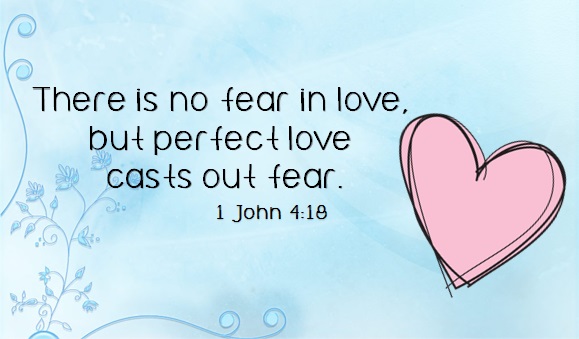
no-fear-in-love-1-john-4-18

If you could substitute your fear today with love, how differently would you live?

I’ve seen it; you have too. The shy, in-the-background woman suddenly can keep quiet no longer. Someone she loves is threatened, and she has to speak up.

That’s what love can do to us.
It makes us brave.

The world can be a hard place. It often requires things of us and ways from us that we don’t feel equipped to give—time, energy, money.

And courage.

The world needs our courage.

  • It needs us to speak up for the powerless.
  • It needs us to create peace in chaotic places.
  • It needs us to love those who don’t love back.

I received a short supply of courage by nature. I’ve always wanted more. And now that I’m an adult, I’ve seen the need for more.

But there’s only one way my human tendencies toward worry and timidity can be overcome: By love.

Specifically, the love of God.  

We need a safe home base because it can go bad for us out there. We can be betrayed, knocked down, and even have our physical life ended by other people or circumstances. It’s the risk we take when we choose to step out in love.

It’s the risk Jesus took when He loved. Look where it got Him: He was betrayed, knocked down, and even allowed His life to be snuffed out.

But because Love is always stronger, He arose. And because His love now lives in us, we, too, can rise up to be brave.

God’s love is the only unshakable foundation that can’t be moved. No one can take away our safe place in God. Only through Him can we be truly brave. To go. To do. To love. Even to die.

  • Because we are loved, we can look reality eye-to-eye and keep moving forward.
  • Because we are loved, we can take chances to love others who are hard to love.
  • Because we are loved, we can give ourselves away trusting God will replenish us.

To err on the side of love is the brave thing to do. In God’s love, we are safe.

Stay in His love today and do the next thing He’s calling you to do. Even if you have knocking knees, a fast-beating heart, and a mind that says, “I’m scared!”.

Fear says, “What if . . . ?”
Love says, “What can be . . . ?”

His love is bigger than our fear. May He make us brave.

Oh give thanks to the LORD, for he is good; for his steadfast love endures forever! . . . The LORD is on my side; I will not fear. What can man do to me?
Psalm 118:1,6

What do you need courage for today? Let’s talk in the comments. 


Click here if you can’t see the song video “You Make Me Brave”

Click here for the backstory of “You Make Me Brave”

The world needs your courage. God’s love is bigger than your fear. “How to be brave”

Click To Tweet

Love Songs

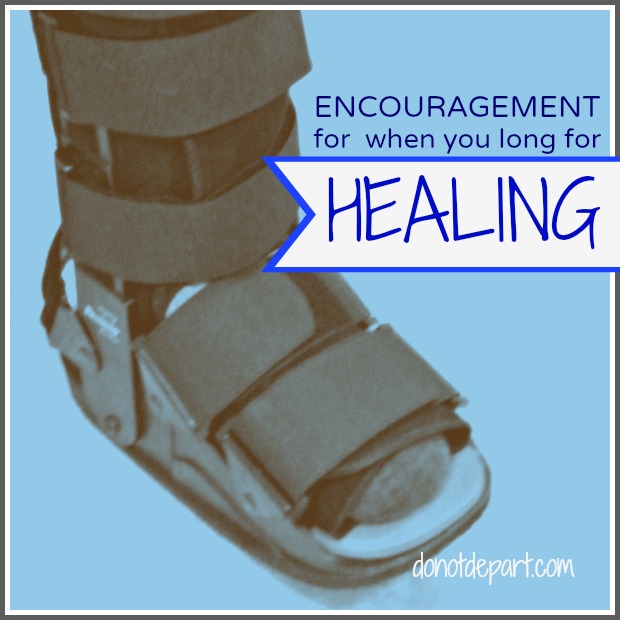
Encouragement for when you long for healing

September 16, 2014 by Julie 2 Comments

Encouragement healing

I showed up with her favorite lunch, which we shared while chatting at her bedside. She sat in her wheelchair while I perched where her roommate could keep a jealous eye on me. I asked about her bruising and her wrapped foot, her therapy and her progress. We talked and remembered and planned for a future drive to her childhood homeplace and an Autumn trip to the mountains. But inside, where I could not see, her illness was gaining ground.

Encouragement healing

Illness takes time to take hold, so it’s rarely defeated instantly. Often unseen, its progress lurks under a familiar smile, toss of the head, or sparkle in the eye, until the day of diagnosis. That’s the day when a disease declares its unwelcome presence, making it known that a battle is underway. And then we fight and hope and pray for healing to come. Just as physical or emotional illnesses progress over time, so too restoration often comes with the slow passage of days or weeks or years.

God is identified as the Healer: Jehovah Rapha. He may use wisdom He gives to man or the resources of earth transformed through technology, but no healing happens apart from Him. His plan includes conquering death physically and spiritually. When we or our loved ones suffer pain, we join in God’s grand plan by engaging in prayer for healing. Since our grief and concern may make it hard to know where to begin, use these words from scripture to call on the name of Jehovah Rapha, the God who heals.

ENCOURAGING verses for when you long for healing

  • “I am the LORD, your healer.” (from Exodus 15:26) ~ God, You have an actual NAME that means you are the healer. Would you intervene in the life of _______ to bring healing at the best time and in the best way?
  • “When you pass through the waters, I will be with you; and through the rivers, they shall not overwhelm you …” (Isaiah 43:2a) ~ Thank you, Jehovah Rapha, for staying with us in the most difficult times of life, even in the times when we are at our weakest, physically and emotionally.
  • “My son, be attentive to my words; incline your ear to my sayings. Let them not escape from your sight; keep them within your heart. For they are life to those who find them, and healing to all their flesh.”(Proverbs 4:20-22) ~ Dear Lord who made __________, help us absorb your truths in our hearts and minds during this time of sickness. Use your words to bring energy, restoration, and healing to _________ emotionally and physically.

  • “Therefore, confess your sins to one another and pray for one another, that you may be healed. The prayer of a righteous person has great power as it is working.” (James 5:16) ~ Show us if there’s any sin eating away at us, and help us to uphold one another well.
  • “He will wipe away every tear from their eyes, and death shall be no more, neither shall there be mourning, nor crying, nor pain anymore, for the former things have passed away.” (Revelation 21:4) ~ Jehovah Rapha, we look forward to the day when there will be no more pain or disease leading to physical death. Would you comfort ____________? We want and need Your comfort!

Sometimes healing is reserved for heaven. We don’t always have the chance to see it with our earthly eyes, though we long for it on our timetable. Instead, some pain waits for fuller, more glorious, restoration.

Death is swallowed up in victory when healing finally comes.

Before I could drive my frail friend to her old Tennessee homeplace or make our trip to the mountains, she passed from this world to heaven. Illness was her means of escape, but complete healing awaited her in heaven. She is well. Very well.
Click here for 10 Ways to Pray for Sick Friends, including a printable version with scripture to pray.

Sometimes healing is reserved for heaven #EncouragingWord

Click To Tweet

Next Page »

This Month’s Theme

  • Jesus is the Way
  • And He Shall Be Called Series Intro

Enter your email address to have new posts emailed to you:

We’ll come to you

Enter your email address to have new posts emailed to you

Categories

Bible Memory – Lent 2021

Memorizing Isaiah 12

Let the Children Come

Let the Children Come

Want more #HideHisWord resources?

Memorizing Psalm 1

Find Us on Facebook


Search

Recent Posts

  • Series Wrap-Up: The Lord Is My Light
  • His Marvelous Light
  • When the Darkness Deepens
  • Though I Sit in Darkness…
  • Let Your Light Shine
  • Life-Giving Light

Archives

© 2026 · Pretty Creative WordPress Theme by, Pretty Darn Cute Design