• Home
  • About
    • Our Contributors
    • Our Beliefs
  • Blog
  • Bible Studies
    • Scripture Dig
  • Archives
  • Shop
  • Advertise
  • Contact
    • Email
    • Facebook
    • Instagram
    • Pinterest
    • Twitter

Do Not Depart

Encouragement and Tools to Abide in God's Word

You are here: Home / Archives for The Church

Unity in Marriage Points to Jesus

June 20, 2019 by Kelli LaFram Leave a Comment

All this month on the blog, we’ll be exploring the marriage metaphor found in Scripture. Check out previous posts in this series.


Lighting a unity candle is a relatively new tradition in Christian weddings. It symbolizes two individuals joining together in one relationship. The bride and the groom each take their own tapers and together light a third candle, usually a pillar. Once their flames have been united and the pillar is lit, they each extinguish their individual tapers. They are no longer two, but united as one.

Therefore a man leaves his father and his mother and clings to his wife, and they become one flesh. ~Genesis 2:24.

The unity a man and wife share in one flesh is a reflection — albeit a dim reflection — of the unity we have with Jesus. According to the Apostle Paul, because the marriage is a metaphor for the relationship between Christ and the Church, wives are to submit to their husband and husbands are to love their wives as they love themselves.

Wives, submit to your own husbands, as to the Lord. For the husband is the head of the wife even as Christ is the head of the church, his body, and is himself its Savior. Now as the church submits to Christ, so also wives should submit in everything to their husbands. Husbands, love your wives, as Christ loved the church and gave himself up for her, that he might sanctify her, having cleansed her by the washing of water with the word, so that he might present the church to himself in splendor, without spot or wrinkle or any such thing, that she might be holy and without blemish. In the same way husbands should love their wives as their own bodies. He who loves his wife loves himself. For no one ever hated his own flesh, but nourishes and cherishes it, just as Christ does the church, because we are members of his body. ~Ephesians 5:22-30

Could you imagine the trust your husband would have in you if you submitted to and trusted him the way the Church is to submit to and trust Jesus? Could you imagine how fearlessly you would live if you knew that your husband loved you and would protect you the way Jesus does for his Bride? I try but I don’t think my mind can fully grasp how freeing this would be for both me and my husband. I can only begin to imagine what we could accomplish together in this life if we fully loved, submitted to, and trust each other the way God intends us to.

Now, remember that a Christian marriage is a picture for Christ and his bride the Church. What do you think He wants to accomplish through His relationship with His bride? What do you think could happen if she fully submitted to Him? What do you think could happen if she fully understood His love for her? When she fully respected His authority? When she knew that she was utterly cherished and completely protected? 

I’ll tell you! Amazing things, that’s what! Christ’s Bride would reflect his glory, people would be drawn to the remarkable power of the gospel, and old, dead lives would be made knew.

When we see couples that are truly united, when they have let go of being individuals and are fully committed to being “one flesh” we notice. There is something special about their marriage that is intriguing. We recognize her respect for him and his love for her and we go, “I want that, too!” That is also the purpose of the oneness of Christ and His Bride. 

Jesus is sanctifying her and cleansing her with the washing of water with the word. He is making His Bride glorious — without spot, wrinkle, or blemish — so that others notice. Her beauty is a reflection of His love her and is intended to make others say “I want that, too! I want to know that love. I want to be cherished the way you are. I want to know your Jesus. Please tell me the Gospel.” 

The Gospel.

That is it.

When it’s all boiled down, our unity in marriage is meant to point others to Jesus and the Gospel — the good news that we sinner, who deserve eternal separation from God, are loved with His great love and can enjoy life in Christ for eternity.

But God, being rich in mercy, because of the great love with which he loved us,even when we were dead in our trespasses, made us alive together with Christ—by grace you have been saved—and raised us up with him and seated us with him in the heavenly places in Christ Jesus,so that in the coming ages he might show the immeasurable riches of his grace in kindness toward us in Christ Jesus. ~Ephesians 2:4-7

Whether or not a Christian couple lights a unity candle together during their wedding they are beginning a beautiful relationship that reflects the stunning love that Jesus has for us. Though husband and wife will make mistakes and continue to sin as they walk this earth together, they can rest in the knowledge that they are cherished by Jesus and he loves them as He loves Himself.

The Missional Resource of Me

February 18, 2014 by Guest Post 3 Comments

The Missional Resource of Me

Every original follower of Christ had a unique, one-of-a-kind combination of skills, experiences, and gifts to carry out the command to multiply the gospel throughout all of the peoples of the earth. When Jesus delivered the directive to “Go therefore and make disciples of all nations,” (Matthew 28:19a) he was speaking to a group of 11 varied individuals. “Now the eleven disciples went to Galilee, to the mountain to which Jesus had directed them,” (Matthew 28:16). While on the mountain, the Son of God filled the imagination and vision of the disciples as they heard the missional imperative to reach people with the gospel. Matthew may’ve been thinking about the funding, and Peter may’ve been thinking about traveling by boat.

What skills, experiences, and gifts has God woven into the fabric of your being as resources for reaching the world?

  • Do you know how to deliver a baby and treat illnesses?
  • Do you know how to teach a lesson effectively so people understand?
  • Do you know how to start a small business and manage money?
  • Do you know how to learn languages and relate in other cultures?
  • Have you known what it is to lose a child or suffer a great loss?
  • Have you experienced poverty or struggled with unemployment?
  • Have you faced oppression or experienced prejudice or persecution?
  • Have you made choices that have left you guilty?
  • Do you have citizenship that opens doors for you around the world?
  • Do you have financial resources that meet your needs and then some?
  • Do you have the ability to read and a Bible to explore?
  • Do you have an understanding of God’s truth?

God equips those He calls The Missional Resource of Me

God doesn’t call us without equipping us. Every disciple of Christ is a resource for reaching those who have yet to experience God’s forgiveness. No one who calls themselves by the name of Christ is exempt from a part in the grand plan of getting out the word of the truth.

God has a heart for all nations

The great giver of grace has a heart for all people, every tribe and tongue. He declares, “Let the heavens be glad, and let the earth rejoice, and let them say among the nations, ‘The Lord reigns!'” (1 Chronicles 16:31). God plans for all nations to be included in the scope of salvation born when “God so loved the world,” (John 3:16).

God includes all disciples in the plan

In sounding out His plan for all nations to know of the salvation brought by His Son, He strategically equipped individuals, churches, and nations to spread the gospel so all will hear. “How then will they call on him in whom they have not believed? And how are they to believe in him of whom they have never heard? And how are they to hear without someone preaching.” (Romans 10:14)

If you are a disciple of Christ, you are a resource to reach others. The disciples who stood around Jesus on the Galilean mountain had one thing in common with one another and with every follower of Christ since: “Everyone to whom much was given, of him much will be required, and from him to whom they entrusted much, they will demand the more.” (Luke 12:48)

How will God use the RESOURCE of YOU?

  • Will He use you to send others?
  • Will He use you to pray?
  • Will He use you to train others about His plan?
  • Will He use you to open doors for others?
  • Will He use you to support national believers in their own nations?
  • Will He use you to be the one to go?

How has God gifted you? How has He gifted your church? How has He gifted your nation for this time in history? YOU ARE A RESOURCE TO REACH THE WORLD.

May God entrust us with much as He sends out His truth and multiplies grace among the peoples of the world.

Tweetables to share:

  • God doesn’t call us without equipping us http://wp.me/p1Su7F-2NH #MissionalLiving @donotdepart  <  Tweet this!
  • YOU are a resource to reach the world. http://wp.me/p1Su7F-2NH #MissionalLiving @donotdepart  <  Tweet this!

Singles in community

February 19, 2013 by Julie 10 Comments

Is there a place in the faith community for singles? More than half of homes with children in my city are headed by a single parent. The number of adults who are unmarried, divorced, or widowed continues to rise in the United States, but much of church community life focuses on married people. Recently, a godly single friend of mine admitted that she often feels “invisible.” If God sees the life of each individual, married or single, why doesn’t the Church?

With industrialization came assembly line concepts that grouped like pieces for the purpose of efficiency. God didn’t intend for the community life of believers to be so segregated. Instead, His word describes a Body life where a variety of ages and marital statuses blend for greater strength, understanding, and impact. Singles want and need to be in community with married friends, and the whole Church is better when our single friends are part of it.

“For the body does not consist of one member but of many… But as it is, God arranged the members in the body, each one of them, as he chose… If all were a single member, where would the body be? As it is, there are many parts, yet one body… If one member suffers, all suffer together; if one member is honored, all rejoice together. Now you are the body of Christ and individually members of it” (from 1 Corinthians 12:4-27).

A “single” member here doesn’t refer to marital status, but to one individual. As each one experiences God’s grace individually, we each have reason to look around us and help every other member be seen, included, valued, and loved. “By this all people will know that you are my disciples, if you have love for one another” (John 13:35).

Many unmarried community members are suffering today, because they long to be in a mixed status, loving community, but they feel invisible. The Body needs the value they bring, and we miss out when they’re absent … or just invisible. If one suffers, the whole Body suffers.

A godly single friend of mine is a treasure in our community, and I asked her to share: What can a married woman do to be a good friend to a single woman?

How to love single women in your community

  1. Respect the single woman and treat her as an equal.
  2. Be interested in your single friend’s life.
  3. Be sensitive to her desire for marriage and accept her for who she is.
  4. Encourage her to serve the Lord with her whole heart in the situation God has placed her in.
  5. Be sensitive to the single woman’s comfort level around children.
  6. Offer to help (don’t wait to be asked). Let her have the joy of helping you.
  7. Pray for and with the single woman.

Created for Community
A “single” (marital status) person doesn’t want or need to be a “single” (only one/alone) person in the community of believers. Let’s see those who are unmarried and help them feel like part of the “one body” of God’s bigger family.


Read more about Married Friends for Singles and Why some married people make good single friends.

Faithful in community

February 7, 2013 by Julie 5 Comments

Created for Community

The believers were scattered and facing persecution when James wrote to them to encourage them in their trials. They struggled to have joy, well aware of their need for wisdom in the difficult things of life. Have you ever been alone in the midst of trying times? Trials are hard enough, but facing them without community is harder.

Accept His community challenge

Created for Community
The message of the book of Hebrew resonates with the echo of encouragement to be full off faith in trials. Tucked inside the tenth chapter of the book, God reveals a key choice that may determine how steadfast we are as individuals. Choose to regularly assemble in one place with others who follow Him.  He challenges us to practice this habit in order to be faithful in hard times.

“Let us hold unswervingly to the hope we profess, for he who promised is faithful. And let us consider how we may spur one another on toward love and good deeds, not giving up meeting together, as some are in the habit of doing, but encouraging one another—and all the more as you see the Day approaching” (Hebrews 10:23-25).

Accept the community urgency

As followers of God recognize the Day of His return coming closer, they will face hardships that tempt them to move from hope to hopeless. Just identifying themselves as a member of His Body may come with a price tag, and they may give us coming together. Some Christ followers will drift away from a culture of love and doing kingdom things. More than ever, God wants the community of faith to gather together to encourage each other to be firm in their faith.  By gathering together as His people, we remember who we are in Christ, who God is, why we have power instead of fear, and how light overcomes darkness.

Accept no community substitute

In this day, a scattered community of believers has more ways than ever to overcome isolation. It’s never been easier to network globally, but it’s never been easier to give up “meeting together,” which has the idea of assembling together in one physical place. Technology complements and creates community networks, but it doesn’t take the place of “meeting together.” There’s power in physical presence. We can not experience in reality what we only envision virtually.

Just as God became “God with us,” He urges us to be with each other. He set the precedent of relationship in community. Let’s keep on:

  • gathering together regularly
  • in local communities of believers
  • to spur each other on
  • to living out our faith
  • right up until the Day is here!

We will be faithful to the faithful One when we meet together faithfully.

Following the knee-worn path

January 22, 2013 by Julie 11 Comments

“There’s one more thing,” the plumber said, “Do you know where your main water cut off is?” Indicted by his simple question, I wondered how I could have ignored something so basic, especially when we’ve had a major “water episode.”

“What would you do if you needed to turn off your water?” He asked.

“Call you? Call my husband? Call my neighbor?” I smiled. He wasn’t charmed.

“I’m going to show you where your water source is. You don’t want to wait until you need it to find out where it is.”


If you haven’t cultivated prayer’s knee-worn path before a flood rushes in, now is a good time to begin. We don’t want to wait until we need it to find out where it is. Theologian Armin Gesswein said, “God’s throne is the busiest place in all the universe because everything centers there. Yet, the lack of prayer on earth keeps it from operating at full capacity.” Most of us say we’re too busy to pray. I was once too busy to find the water source in our house, and I paid a high price.

Jesus Prayed

Jesus himself was a man of prayer, expressing dependence on his Father and determination to do His will. Even now, “he always lives to make intercession for them,” (Hebrews 7:25b) pleading our case. The Father Himself is the source of prayer, a gift to mankind as an invitation for two-way communication. With all of our technology, it’s better than any man-made version. Scripture teaches us the language of prayer, teaching our independent mouths to speak heart words of dependence. Though seated beside His Father, Jesus prays on.

Followers Prayed

Simple men who followed Jesus up close and personal, and knew the work of prayer, still asked to be taught how to pray (Luke 11:1). Jesus’ prayer pattern hinged on desiring His Father’s will. Since God’s word reveals His will, prayer needs the fodder of truth to drive the faith behind it. The Bible is our book of prayer.

The Church Prayed

When believers first gathered as the Church, they began as a praying Church. Vulnerable in a contra-God world, “All these with one accord were devoting themselves to prayer.” (Acts 1:14a). They were sure of their need to cry out in dependence on God. If the people of God are to experience faith, intimacy, and power in an anti-God world, they must be people of prayer. To claim we are too busy to pray is to turn away from our waiting Lord. Prayer is not a piece of Body life; prayer is the foundation of Body life.

When I pray

  • Prayer strengthens faith. We call on God to fulfill promises He has already made.
  • Prayer nurtures intimacy. We expose ourselves to God and He makes Himself personally known.
  • Prayer inspires power. We gain boldness by focusing on the person of God instead of ourselves.

Two-way communication with God isn’t only for moments of helplessness, though Abba Father welcomes us near then. He invites us to call on Him as long as we live, to live in sweet, close communion with Him. To cultivate the discipline of prayer is to work at knowing His will, listening to Him, and opening our lives to Him.

“I love the LORD, because he has heard my voice and my pleas for mercy. Because he inclined his ear to me, therefore I will call on him as long as I live” (Ps. 116:1-2).

If you want to take a step on the knee-worn prayer path, check out our tools like Prayer Calendars or  A Prayer Album for Women on the Go.

Is there a tool or habit you’ve found to help you keep prayer as part of your daily life?

Share the Love – Unshakeable Faith 8

November 5, 2012 by Kathy Howard 6 Comments

Unshakeable Faith Bible Study

Unshakeable Faith Bible Study This is the last lesson in the Unshakeable Faith Bible study. It has been a privilege to share it with you! The devotional is below. Access the 2-page Quick Study here.

Every Christian belongs to God’s family. When God saves us, He saves us into His family. We can never experience all God has for us apart from a local body of believers. Jesus made it clear to His disciples that God designed the Christian life to be lived in the context of community.

Unshakeable Faith trait eight: Connected to a local church body with love and service

Peter spent roughly three years learning from Jesus how to live in a community of believers. This group traveled together, ate together, and did life together. But Jesus didn’t merely teach about love and service. He set the example.

Read John 15:12-13. What command did Jesus give His disciples – then and now – on the night He was arrested?

How did Jesus ultimately show His love for us?

Our friend Peter learned what love looks like from Jesus. In his first letter, Peter encouraged his readers to also love like Jesus loved.

Read 1 Peter 3:8-9 and 1 Peter 4:8-10. List all the characteristics and behaviors that describe how we Christians should love one another.

Peter used the Greek word agape to describe the kind of love Christians should have for each other. According to the The Expositor’s Bible Commentary, “agape love is capable of being commanded because it is not primarily an emotion but a decision of the will leading to action.” Agape loves deeply, unselfishly, with the other’s best interests at heart.

God loves His children through His children. He cares for us, comforts us, provides for us, and encourages us through our brothers and sisters in Christ.

Do you know of a need right now in your church family that needs your love in action? List some concrete ways you can show your love.

God’s purpose for your life includes a vital connection to a local church body. He has designed this interdependent relationship to benefit each of us. When trials hit, God will use His body to hold you up and He will use you to encourage someone else. If you are not fully connected to a local church, don’t wait any longer!

Let’s talk! Let’s share today some of the ways God has loved you through the local church.

I’d also love to hear how this study has encouraged you in your faith!

Royal Wedding?

April 25, 2011 by ScriptureDig 6 Comments

At the end of this week, much of the world will watch as Prince William of England marries Catherine Middleton at West Minster Abbey.  An app was developed to allow curious people of the world (ahem) to take a virtual tour of the Abbey before the wedding. Barbara Walters released a special about the events, saying “No one does it quite like the British.”  After Princess Diana’s 25 foot long train in 1981, we might be tempted to believe Barbara, but she’s not quite right.  In reality, the world has yet to see a truly royal wedding.


On Friday we looked at the heavenly hope for wives to respect their husbands and husbands to love their wives. The comparison to how Christ loves his church was a key part of understanding how and why, but today let’s take a closer look at what it means to be the Heavenly Bride.

Unlike an earthly husband, Christ is actually able to sanctify his bride (set her apart) and cleanse her by paying for her impurities with his own righteous sacrifice. In comparison, even the earthly wealth of England doesn’t look quite so grand.   The gift of the Bridegroom Christ on the cross makes it possible for the Bride Church to be totally clean and holy, so nothing separates her from his love. He longs to “present the church to himself in splendor, without spot or wrinkle or any such thing, that she might be hold and without blemish,” (Eph. 5:27) and husbands are to love their wives “in the same way” (v.28).

Photo by Shine4Him8Himself.

We glimpse the gift in our “engagement,” but we’ll fully realize the joy when we are united at the royal Marriage Supper of the Lamb. It will rival the celebration just held at Buckingham Palace by Her Majesty the Queen. The Marriage Supper of the Lamb and his love will be hosted by the Heavenly Father

Revelation 19 offers us a glimpse of what awaits the Bride of Christ, the Church, in heaven.

“Hallelujah!For the Lord our God the Almighty reigns.
Let us rejoice and exult and give him the glory,
for the marriage of the Lamb has come, and his Bride has made herself ready; it was granted her to clothe herself with fine linen, bright and pure”— for the fine linen is the righteous deeds of the saints. And the angel said to me, “Write this: Blessed are those who are invited to the marriage supper of the Lamb.”

(vv. 6b-9a)

For West Minister’s “royal wedding,” Catherine prepared for months; the world watched with curious anticipation.  When the Bridegroom Christ receives his Bride the Church, will he see that, “his Bride has made herself ready?”  Will we be covered in the fine linen of righteousness?

I’m sad to say I didn’t receive an invitation to royal wedding of William and Kate, and I venture to guess you didn’t either, but we ALL got an invitation to the Marriage Supper of the Lamb.  And even more thrilling, the Father has chosen us to be the Bride!  We don’t know when we’ll be wed to our Love, but we know the wedding is coming, and it’s going to be more than royal; it’s going to be divine.


Are you ready to meet the Bridegroom? 

Tell Each Other What?

January 25, 2011 by ScriptureDig 13 Comments

Therefore, confess your sins to one another and pray for one another, that you may be healed. James 5:16 ESV

For there is one God, and there is one mediator between God and men, the man Christ Jesus. 1 Timothy 2:5 ESV

The confession of evil works is the first beginning of good works. Augustine of Hippo


Corporate Disciplines … spiritual practices exercised within the Body of believers.   Those habits and methods that grow us together to function in unity.    And we start with Confession.

Confession:  (n) acknowledgment, avowal; admission.  {from Dictionary.com}

Why is it necessary to engage in corporate confession?

I love what Richard Foster says about this in Celebration of Discipline:

But if we know that the people of God are first a fellowship of sinners, we are freed to hear the unconditional call of God’s love and to confess our needs openly before our brothers and sisters.  We know we are not alone in our sin.   The fear and pride that cling to us like barnacles cling to others also.  We are sinners together.  In acts of mutual confession we release the power that heals.  Our humanity is no longer denied, but transformed.  (145-146)

We need to confess to one another … not for redemption or absolution, but for healing! It is in sharing our failures – as well as our successes – that we are bound together in the depth of His grace.   And it is in receiving the sincere confession of others and offering our willing voices of grace and counsel without judgment or condemnation that we experience the fullness of bearing one another’s burdens.

It’s a scary thought, though, to look someone else in the eyes and confess the blackness of our hearts.   Opening ourselves up to that level of vulnerability forces us to assume a great risk.    Equally hazardous to our hearts is the hearing of another’s vulnerabilities and sins.

So how does this Discipline of Confession work?

  1. Discernment is vital! We do not confess to one another randomly or without great prayer beforehand.   Generally speaking, confession as a discipline functions best within the framework of a mentoring, discipling relationship.
  2. When we confess, we are specific … and when we pray over one another, we do not add to nor take away from the confession that has been offered.  Honesty is necessary for a sincere confession.  HOWEVER, this is not a time for unnecessary explanation or gratuitous details.
  3. Like fasting, confession is not commanded. We offer you information about these Disciplines not to add burden to your faith.   Rather, as with fasting, confession to one another is discussed in Scripture and therefore is a topic we must explore and seek the will of God in our own lives.

Exercising the disciplines of fellowship and confession will take us into relationships and situations that will challenge our faith and test our love for God and his people.  It is good to remember that God gave us these disciplines to aid us in our growth toward Christlikeness … they are aids for training us to live free of artiface and bondage to appearances. {Jan Winebrenner, Intimate Faith: A Woman’s Guide to the Spiritual Disciplines}

Perhaps you have experienced the grace found in confessing both to God and to another the burden of sin in your life … maybe you have difficulty believing the fullness of God’s mercy and grace and living in the freedom of His forgiveness … or maybe you struggle with being open with others about the sin in your life … the Discipline of Confession can be a powerful tool in our spiritual formation.

What are your experiences with confession to or from others?

How have you seen it benefit or harm the Body?

Image by:  suds4565


The Corporate Disciplines – Doing Life Together

January 24, 2011 by ScriptureDig 4 Comments

As we enter our last week of study on the Spiritual Disciplines, we look at those that involve the Body.   These last Disciplines are certainly to be practiced privately but they are also to be shared practices.


Why does it matter if we practice these Disciplines in the collective?  What difference does it make? This week we will explore Confession, Worship, Guidance, and Celebration … visible, audible, hands-on, feet-to-the-pavement putting into practice the foundations laid through the Inward Disciplines of Prayer and Study, Fasting and Meditation, and then nurtured and grown through the Outward Disciplines of Simplicity and Solitude, Submission and Service.


These Corporate Disciplines guide us into functioning as the early church … doing life together.   As we learn the richness of Confession and the depth of Worship, the necessity of Guidance and the joy of Celebration, our understanding of the beauty of the Church, the vibrant Body of Christ, will undoubtedly grow and our recognition of our need for fellowship with one another will be increased.

Join us?

History reminds us to be thankful

November 1, 2010 by ScriptureDig 2 Comments

For the past month we’ve reflected on life in the Body of Christ and what it’s like to be a member of it. How fitting it is that the month ends with observances of significant moments in the church’s story.

While many people celebrate Halloween on October 31st, that day in 1517 is remembered as a pivotal day in church history. A young professor was concerned that people were trying to buy their way into relationship with God, so he went to the town bulletin board (the door of Castle Church in Wittenberg, Germany) and posted a notice written in Latin, announcing a discussion, along with 95 items to consider. Martin Luther didn’t know his “Ninety-five Thesis” would be translated into German and spread across Europe like leaves on a blustery day. It was used to stir hearts of common men to know the truth of God’s Word and experience salvation by grace alone.  Luther paid a high price for declaring his convictions and was labeled an outlaw.

We can be thankful for those who stood firm through past centuries, so that the church has endured and thrived. As this new month begins, it reminds us of another  significant day in church history. More than 1500 years ago lies were circulating about the person of Jesus Christ (sound familiar?), so a council was called in Chalcedon (across from Constantinople) to unite in the truth. This was first millennium Scripture Digging!

In 325 the Council of Nicea had affirmed that Christ is fully God, but the Council of Chalcedon took on the question about Christ’s humanity. Peter (the one on whom Jesus said He would build His church) warned in 2 Peter 2:1 that people would come to try and confuse the truth. They did, and they still do. On November 1, 451 the church leaders in Chalcedon declared a unified agreement that Jesus Christ is fully God, fully human, one person, with two distinct natures.  It wouldn’t be for another thousand years that Martin Luther would hammer his list of concerns onto the Wittenberg door to clarify that Jesus Christ is sufficient to save men by His grace.

Followers of Christ continue to suffer today for their faithfulness.  The history of the Church, of the individual PEOPLE of the Church, has passed on a great heritage to those of us today who still follow Christ, who still love His truth, who still want to dig into His Word. What other response can we give, but to be full of gratitude?

This month join us as we look at Thanks Giving. We’ll explore what the word means, examples of gratitude and ingratitude, how to be thankful in hard times, ways to express gratitude to God, and our own personal stories of growing in gratefulness. After considering our salvation and the growth of the church, our hearts are full.

In Jeremiah 33:11 our Heavenly Father invites us,  “Give thanks to the LORD Almighty, for the LORD is good; his love endures forever.” We invite you to dig in with us this month to discover the beauty of giving thanks.

If we are the body…

October 29, 2010 by ScriptureDig 5 Comments

I hope that you have been blessed and challenged by our look at the beautiful and sometimes difficult thing we know as the local church. As believers in Christ, we are part of the body… and if we are the body, what does that mean?

It’s difficult. It’s messy. It’s painful. It’s beautiful. – We opened our series considering how close the church is to God’s heart, and therefore how close it should be to our own.

The birth of the church – Sandra looked at the very beginning of the Church at Pentecost and reminded us that we can’t take a time-out. The church has a job to do!

From one church to many – We buckled our seatbelts and took a fast-paced overview of the development of the Church through Acts and the epistles.

What is “church?” – Kathy reminded us that the church is not a building and used Ephesians 2 to define for us what the church is really all about.

Why all these denominations? – Teri Lynne distinguished between religion and denomination and gave a broad overview of the differences between the denominations.

Can’t we all just get along? – Julie reminded us what really matters.

You need a local church – Sandra explained how God has provided the perfect environment for spiritual growth within the local church.

Connection is key to service – Stephanie taught us that we are saved to serve, and that we need one another to function as the body.

Sock shopping – Julie looked at how consumerism in the church is like sock shopping.

Sin causes pain in the body – Kathy tackled the tough topic of church discipline and why it is so essential for healthy body life.

Give grace – Teri Lynne challenged us to give grace to one another, whether we know each other’s life circumstances or not.

When is it ok to leave? – Kathy looked at Biblical principles to guide us through this tough question.

Welcome forgiveness – Julie shared her own personal story of welcoming forgiveness when rifts occur in the body.

It’s not what you think it is – Teri Lynne gave us a great picture of what worship really entails.

Service in the church – Sandra reminded us that the the body of Christ needs all of us and all of our gifts to function effectively.

Truth, justice, and the congregation’s way? – Teri Lynne challenged us to stand for the truth of the Gospel, recognize God’s justice in all things, and submit to God’s ways in all areas.

Loving lavishly – Stephanie asked us to examine whether or not we really love one another in the body.

Welcome Forgiveness

October 22, 2010 by Julie 11 Comments

We were ministry leaders when our staff supervisor changed our structure. For no special reason, I was told first and asked to explain to Debbie*. She had been in our ministry longer than I had, and she was older than I was. Debbie listened quietly, but I could see her heart was not quiet.

In the next weeks, her quiet became deafening to me; I knew she was offended. At our meeting with our supervisor, Debbie’s husband came to help her work through the injury. The staff member tried to explain what happened, making it known the change did not come from me, but the damage was already done. Life in the church can be painful. When “Body parts” are moving, we can inflict damage on each other. I confessed my inadequate sensitivity; I asked for forgiveness.  It was denied.  I felt sick.

For months it weighed heavily on my heart. My Christian sister withdrew from ministry. I noticed she stopped coming to church.  Her husband looked sad. I felt responsible.

God was moving in my own family during these months, until He took us to Asia as full-time missionaries. I knew I was leaving behind a damaged sister in Christ, and I felt helpless. I prayed. I hoped. And ultimately I packed up my stuff and my concern, and I left. I never stopped praying God would work in the heart of my sister in Christ. Sadly, much pain in the Body of Christ comes from other Body members.  Though the Spirit lives in us, we often default to our flesh, and that causes pain.

Several years later God brought us back to our church for a time of transition. During those few months, I noticed the absence of my one time ministry co-laborer. I remembered how 2 women who once served alongside each other (Phil. 4:2-3) experienced conflict in church life. It didn’t seem right. I knew it didn’t honor God or His name. Perhaps that’s why Paul urged them to get along and “stand firm.” I knew what God wanted. It required crucifying my pride and taking up my cross (Luke 9:23).

Years had passed. I picked up the phone and called Debbie. At her door, I told her I knew I had hurt her years before, doing damage that drew her away from the Lord. I told her I knew she hadn’t been ready to accept my apology before, but I wanted to ask again for her forgiveness, so she and I could be free.  I waited.  I prayed. I braced myself.

She threw her arms around me and hugged me, tearfully telling me she had wished she had forgiven me and offered her apologies. She wanted to be free of the burden, but knew she had rejected me. She wondered if she would ever get another chance.  The Lord made sure she did.

When I left I felt the joy of being forgiven, the joy of reconciliation, and the joy of knowing a stain on the Body of Christ had been wiped clean. I love His name, and I don’t want anything I do to injure it.

Have you been hurt?  Have you hurt?  Has it been years?  Maybe it’s time to go prayerfully knock on that door and be set free!

*Name changed

Sock Shopping

October 18, 2010 by Julie 8 Comments

Outside of our city there’s a store called “The Sock Store.”  You know what you’ll find inside. They’re not distracted from their mission of selling socks. A while ago, I went sock shopping, but I went to a store that “has it all.” Ultimately, I became distracted and overwhelmed by the abundant options; I didn’t even buy socks.  I did, however, go home with things I didn’t need … and cold feet.

In much of the world today, people have limitless options. Two hundred years ago John Wesley said, “I fear, wherever riches have increased, the essence of religion has decreased in the same proportion.”¹ Where the Church lives in an atmosphere of comfort and excess, the faith focus of members may become diluted. A believer in Eastern Europe admitted, “Some of us are voting for the Communist Party to return to power, in order to help purify the church.”¹ In Western society much of the Church has taken on corporate characteristics, offering a multitude of options to suit varying tastes, requiring little in return, for fear of losing regular attendees and contributors. Much of our accommodation is done in the name of reaching more people, but scripture says not many choose the narrow gate; most choose the wide gate. With so much available, no one wants to go where there’s only “socks,” even if socks are what we need. If it’s available and appears exciting, we want to try it.

Acts 2:42-47 gives a picture of an early church with focus. Believers exercised faith by releasing their grip on possessions, being generous with others, worshiping together, and sharing life.  The result was that “the Lord added to their number day by day those who were being saved.” When the church maintained its focus of teaching, fellowship, breaking bread, and prayer, more people were actually reached.  Chuck Swindoll says, “When we commit ourselves to the essentials, our churches will be contagious for the right reasons.”²

The consumer trap isn’t new. Just a few chapters after the beautiful picture of the fledgling Acts 2 church, Acts 5 tells about Ananias and Sapphira = early consumers. They wanted to know, “What can we get out of this? What’s in it for us?” Within 3 hours of each other, their lives were taken, evidence God wanted believers focused on true worship, then and now.

Just like The Sock Store, people need to know the Church is about:  worshiping the one true God and knowing His truth. Our goal is that people find the Savior and know Him, instead of getting caught up in consumer traps of shopping for pleasure feeding trends and, ultimately, distracting them from what they need most.

What’s distracting you from what you came to the Church for?


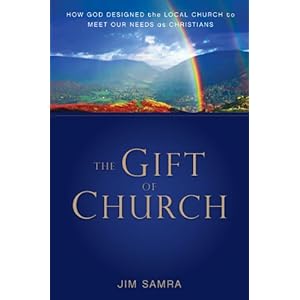
We are giving away a copy of The Gift of Church by Jim Samra. You can read the details of what you’ll find in the book and how to enter by clicking here.


For Further Reading:

1  What Good is God? by Philip Yancey

2  The Church Awakening by Chuck Swindoll

Know Your Goal

Seeing the church as a gift

October 15, 2010 by ScriptureDig 15 Comments

When we started this series, I wondered how these posts would hit those of you walking around with deep wounds from sinful actions of those around you in local churches.

It’s inevitable that there are some of you who fit that description.

And as we mentioned from the beginning, we understand. It is impossible to invest deeply in the local church and avoid being wounded. Sometimes we are wounded in a good way, as our pride and sin are cut open and exposed… sometimes we are wounded when those around us sin against us and leave deep scars on our hearts.

There is so much I would love to say to you if we had coffee in person. I would love to hear your story. And I would love to give you a book to read.

Whether you are a new believer in Jesus Christ and just learning the “ropes” of  investing in a local church, or a person who has grown up in churches and has battle wounds to show for it, or a person who is actively in ministry as a staff member, pastor’s wife, or other integral role… I cannot recommend this book highly enough.

You see, the church is a beautiful thing. It is full of broken people. It desperately needs the grace of God. And it is a gift from God to you.

In The Gift of Church, Jim Samra does a fantastic job of presenting the Biblical and practical reasons why we should treasure and value the church as a beautiful gift to us from God Himself. Samra never glosses over the very real issues that have plagued church life since the time of Paul… and oh, the stories that each of us could share to back up the fact that sin plagues our local churches still today.

But the church is a gift.

“We love the church because it is a gift from God. We participate in the church because God does. We do not give up on the church, because God refuses to.” – Jim Samra,

It is in the assembly of believers in our local church body where God’s presence is manifested in a unique and powerful way, where God speaks to us uniquely through the preaching and teaching of the Word, corporate worship, and prayer.

It is in the local church where we display the diversity of God’s people, assembled in unity – people of all walks of life, economic and educational backgrounds, age groups, and ethnicities gathered together as one.

It is in the local church where we find true communion – in a world with a coffee house on every corner, filled with people desperately seeking a community where they can know and be known… it is only within the church where we don’t just find community, but we are community.

It is the local church which functions as our spiritual mother, disciplining and reproving us, nurturing us, feeding us, raising us to maturity in Jesus Christ. God has uniquely designed the local church to function in this way, and no other group can truly take its place.

It is the local church where our service and giving and praise join together with those of like mind, creating a beautiful symphony of different giftings and abilities. We can do together what we could never accomplish alone.

It is the local church that functions as the visible Jesus in our world, displaying His grace to a lost world.

In Samra’s own words,

“The church is God’s church, and it is a result of his vision. We can and should take issue with the varying ways in which God’s vision for the church has been manipulated, perverted, and corrupted. We can and should acknowledge that the church has failed us and we have failed the church. But in the end, God’s vision for the church remains. The church is a creative act of God. God the Father designed and decreed the first creation, and he has designed and decreed the creation of the church…

Despite the apparent flaws that sin introduced into the world we live in, it is still a place of great beauty. The same is true of the church. Despite the presence of sin and the ongoing, persistent failures of the church, it remains a community of great beauty.” (137)

I highly, highly recommend this book. Read it yourself. Share it with your pastor as a gift for pastor appreciation month. Discuss it in your small group.

We also have some great news – Pastor Samra has graciously contributed a copy of the book to be given away to one of our treasured Scripture Dig readers!

To enter to win this giveaway (for yourself, your pastor, or someone else!), just leave us a comment and let us know what you treasure most about your local church. How has it impacted and enriched your walk with Christ?

*This giveaway will close at 10pm EST on Friday, October 22nd 2010. Winner will be chosen from the comments below using random.org.

From one church to many

October 6, 2010 by ScriptureDig 10 Comments

Image from http://www.heartandsoulreflections.com/

Yesterday, Sandra gave us a better understanding of how the Church got started during the feast of Pentecost. Fasten your seatbelt today, because we are going to take a turbo-speed overview of the early history of God’s work in and through the local church through the books of Acts and the epistles!

After Pentecost, we see the Church expanding at a phenomenal rate as more and more people came to understand that Jesus Christ was the Messiah they had been looking for, the Lamb of God who died on their behalf (Acts 2:46-47). As the apostles shared boldly with the public about the identity of this controversial Jesus (an annoyance the Jewish religious leaders had done their best to rid themselves of several months earlier), they began to face increasing persecution. In response to persecution, we find the believers in Jesus not hiding their faith, but praying for boldness to continue sharing truth (Acts 4:23-31).

The number of believers in Jesus living in Jerusalem continued to blossom and this first church met daily together in the temple for worship and also assembled in smaller groups in private homes (Acts 2:46). The apostles served as the leadership of the church, distributing donated goods and money to the poor (Acts 4:32-37), performing signs and wonders (Acts 4:12-16), and devoting themselves to prayer and to teaching the Word of God (Acts 6:4). As the number of believers greatly increased and the practical demand of caring for the needy in their midst became too much for the original twelve, other men were appointed as lay leaders to serve and support the church body (Acts 6:1-7).

In Acts chapters 6 and 7 we find the dramatic account of the arrest and stoning of Stephen and are introduced to a zealous and fiery young man by the name of Saul. Full of anger at the spread of what he viewed as a blasphemous twist of Judaism, Saul began a savage one-man crusade to destroy the church (Acts 8:3). In Acts 9, God literally stopped Saul in his tracks and showed him how blind he had been to the truth of Jesus; after this one encounter with the living Jesus Saul turned from the church’s number one enemy to God’s chosen instrument to proclaim truth and establish churches throughout the Roman empire.

As persecution increased in Jerusalem, believers in Jesus began to scatter to surrounding areas, carrying the Truth with them as they went – first to fellow Jews and then also to Gentiles (Acts 11:19-26). A thriving group of believers became established in Antioch, the first place where followers of Jesus Christ were called Christians; this group of believers was also referred to as a church and was taught and pastored by Barnabus and Saul.

Throughout the remainder of the book of Acts, we find Paul and his companions traveling throughout Asia Minor to share the Truth of Jesus with both Jews and Gentiles. These believers were not expected to fend for themselves – establishing local churches with spiritually qualified leadership was a critical part of their ministry (Acts 14:23). Established churches became actively involved in ministry themselves, sending people into ministry (Acts 15:22); established leaders were entrusted with the responsibility to guard the doctrinal purity of their local bodies (Acts 20:28).

Throughout the remainder of the New Testament, we find many letters (or “epistles”) to individual churches, mostly from Paul. Scanning a list of verses which reference the term “church” in the epistles quickly shows us the following:

  • There were many local churches with independent leadership who together formed the larger Church
  • The churches were urged to strive for unity, but never at the cost of doctrinal purity
  • Believers had been gifted by the Holy Spirit with specific spiritual gifts for the express purpose of building up their local churches
  • The churches were to be orderly with clearly appointed leadership and authority
  • Local churches collected money to support ministry and missions and meet needs of other believers
  • Christ is the head of the Church, and the Church is His body

Through these churches, believers were to be spiritually built up and taught, equipped for ministry and given opportunities to serve. These churches were the front-lines of the advance of the Gospel, being a light in their local communities and also sending out members from their midst to share the gospel and plant churches in new areas.

As we will continue to discuss tomorrow, the church is close to God’s heart; it is a vital part of His plan to form us into the image of Jesus, and it is His chosen vehicle to share Truth and unconditional love with the world. Dig into His Word on your own, and ask Him to reveal to you how very much He values the church!

It’s difficult. It’s messy. It’s painful. It’s beautiful.

October 4, 2010 by ScriptureDig 8 Comments

LONDON, ENGLAND - MAY 15:  St Stephen's Tower,...
Image by Getty Images via @daylife

For the past month here on Scripture Dig, we have  been examining the amazing and profound topic of salvation. In many ways, our next topic – the church – ties directly into this previous emphasis. You see, if you have been saved, if Christ’s blood has covered your sin and you have received new life in Him, you are part of His Church.

Once you were alienated from God and were enemies in your minds because of your evil behavior. But now he has reconciled you by Christ’s physical body through death to present you holy in his sight, without blemish and free from accusation— if you continue in your faith, established and firm, not moved from the hope held out in the gospel. This is the gospel that you heard and that has been proclaimed to every creature under heaven, and of which I, Paul, have become a servant.

Now I rejoice in what was suffered for you, and I fill up in my flesh what is still lacking in regard to Christ’s afflictions, for the sake of his body, which is the church. I have become its servant by the commission God gave me to present to you the word of God in its fullness— the mystery that has been kept hidden for ages and generations, but is now disclosed to the saints. To them God has chosen to make known among the Gentiles the glorious riches of this mystery, which is Christ in you, the hope of glory.

We proclaim him, admonishing and teaching everyone with all wisdom, so that we may present everyone perfect in Christ. To this end I labor, struggling with all his energy, which so powerfully works in me.

Colossians 1:21-29

In many of Paul’s writings, his passion for the Church of God shines through. He labored and literally poured himself out for small, struggling assemblies of believers in Jesus Christ – particular local churches which together comprised “the Church.”

In his letters we find that church life in the 1st century was very similar to church life in the 21st century – it was messy. These local churches were full of sinners who sometimes struggled to live like saints. They wrestled to discern doctrinal truth from error. Their leaders were imperfect, even though well-intentioned. Personal struggles and conflicts between believers (often women – go figure!) were evident.

Body life is messy, but it is absolutely essential. The New Testament knows of no such thing as a believer who is not an active part of a local church – if you are saved, belonging to, being held accountable by, and serving in the local church is a vital component of your growth.

The church is near and dear to the heart of God – local churches function as “the body of Christ” here on earth as we await His return. The church was, therefore, near to the heart of Paul… and it should be near to our hearts, as well.

For the next month here at Scripture Dig we will examine this topic of the local church – we will look at it’s Biblical roots, purposes,  and necessity in our lives.

I write this knowing full well that some of you are walking around with deep wounds that spring from conflicts and issues in local churches. Some of you may have distanced yourselves from church altogether, seeking to avoid further pain and frustration. I pray that this series would not only change your perspective about the importance of actively belonging to a local church, but I also pray that you would know that we understand.

Each member of the Scripture Dig team is actively involved in our local bodies of believers, as staff, pastor’s wives, or lay leaders. I guarantee that all of us have been deeply wounded in local churches in various ways – it is a “package deal” when working to speak spiritual Truth into the lives of fellow sinners… and those situations often bring our own sin to the surface, as well. It’s difficult. It’s messy. It’s painful. And it is most definitely an essential part of what has helped to form us more into the image of Jesus Christ.

So, let’s dig into this topic together; let’s pray together that God will give us a heart like His for this imperfect but beautiful and precious thing called “the church.”

This Month’s Theme

  • Jesus is the Way
  • And He Shall Be Called Series Intro

Enter your email address to have new posts emailed to you:

We’ll come to you

Enter your email address to have new posts emailed to you

Categories

Bible Memory – Lent 2021

Memorizing Isaiah 12

Let the Children Come

Let the Children Come

Want more #HideHisWord resources?

Memorizing Psalm 1

Find Us on Facebook


Search

Recent Posts

  • Series Wrap-Up: The Lord Is My Light
  • His Marvelous Light
  • When the Darkness Deepens
  • Though I Sit in Darkness…
  • Let Your Light Shine
  • Life-Giving Light

Archives

© 2026 · Pretty Creative WordPress Theme by, Pretty Darn Cute Design