
• Home
  • About
    • Our Contributors
    • Our Beliefs
  • Blog
  • Bible Studies
    • Scripture Dig
  • Archives
  • Shop
  • Advertise
  • Contact
    • Email
    • Facebook
    • Instagram
    • Pinterest
    • Twitter

Do Not Depart

Encouragement and Tools to Abide in God's Word

You are here: Home / Archives for Theology

Who Are You, Lord? Series Intro

July 6, 2021 by Jaime Hilton 1 Comment

Possibly one of the most miraculous things about God is that He works through people. While He is more than capable of handling everything, He delights in our participation and allows imperfect people to do the work that needs to be done. Even the Bible, the revelation of His character and purpose to us is a gift inspired by the Holy Spirit but written, preserved, and translated by humans! I call it miraculous because people are so very messy. We have no shortage of faults and failings. It’s humbling and awesome to read the stories in Scripture, to see His hand guiding, and to know He is still working through us today.

Saul, Saul…

One such example is found in the book of Acts when God chose a certain man to take the gospel to the Gentiles. The man he chose was Saul, or in Greek, Paul. This man’s identity was thoroughly grounded in being Jewish, so much so that he took part in persecuting the early church. He purposefully sought out people who believed and followed Jesus of Nazareth so he could violently punish and imprison them for blasphemy (Acts 8:3).  In his letter to the Philippians, he describes himself as being, “…circumcised on the eighth day, of the people of Israel, of the tribe of Benjamin, a Hebrew of Hebrews; as to the law, a Pharisee; as to zeal, a persecutor of the church; as to righteousness under the law, blameless” (3:5-6). In other words, though raised in an important Roman city, among Hellenized (Greek-speaking) Jews, Paul was an observant Jew who spoke Aramaic and studied the Law under the best teachers in Jerusalem.

Yet despite this impressive and comfortable identity, Paul goes on in his letter to say, “But whatever gain I had, I counted as loss for the sake of Christ. Indeed, I count everything as loss because of the surpassing worth of knowing Christ Jesus my Lord” (Philippians 3:7-8).

How did Saul, zealous persecutor of Christians, come to know Christ Jesus as Lord?


Why Are You Persecuting Me?

In Acts 9:1-9 we read the story of Saul’s encounter with the risen Jesus.

“But Saul, still breathing threats and murder against the disciples of the Lord, went to the high priest and asked him for letters to the synagogues at Damascus, so that if he found any belonging to the Way, men or women, he might bring them bound to Jerusalem. Now as he went on his way, he approached Damascus, and suddenly a light from heaven shone around him. And falling to the ground, he heard a voice saying to him, “Saul, Saul, why are you persecuting me?” And he said, “Who are you, Lord?” And he said, “I am Jesus, whom you are persecuting. But rise and enter the city, and you will be told what you are to do.” The men who were traveling with him stood speechless, hearing the voice but seeing no one. Saul rose from the ground, and although his eyes were opened, he saw nothing. So they led him by the hand and brought him into Damascus. And for three days he was without sight, and neither ate nor drank.”

I can’t help but imagine what those three days without sight may have been like. Did he recall the prophet Jonah, swallowed and saved in the belly of a fish so he could take God’s message of redemption to the Ninevites? Maybe. Paul was a very good student who loved the Law. I imagine him going over every word he’d memorized from the Torah, but in his blindness seeing it with the fresh eyes of the Spirit.

The Lord sent Ananias, a disciple, to heal him, sharing that Saul of Tarsus would bring the gospel to the Gentiles (v. 15). The story continues with Paul regaining his sight, being baptized, “and taking food, he was strengthened. For some days he was with the disciples at Damascus. And immediately he proclaimed Jesus in the synagogues, saying, ‘He is the Son of God’” (v. 19-20).


Who Are You, Lord?

Paul had a strong foundational understanding of God thanks to his upbringing in Hebrew culture. He knew who God was. Once he understood that Jesus is the Messiah, the pieces of God’s redemptive plan, his character of mercy and the gift of grace clicked into place. From that point on Paul’s identity was not in anything he achieved but in knowing Jesus Christ.

All this month on the blog we’ll be studying the greetings in Paul’s letters to get an idea of what he thought and who he understood Jesus to be.

“Of this gospel I was made a minister according to the gift of God’s grace, which was given me by the working of his power. To me, though I am the very least of all the saints, this grace was given, to preach to the Gentiles the unsearchable riches of Christ, and to bring to light for everyone what is the plan of the mystery hidden for ages in God, who created all things” (Ephesians 3:7-9)

I hope you’ll join us!

Who Is the Holy Spirit?

February 7, 2017 by Ali Shaw 1 Comment

Who is the Holy Spirit? A month long series examining the person and works of the Holy Spirit

The Bible refers to the Holy Spirit using many descriptive terms. He came to the apostles with the sound of a mighty windstorm in Acts 2:2. Jesus taught us in John 7:37-39 that the Holy Spirit is like water – and that Believers will have His rivers of living water flowing in us. Occasionally He’s compared to fire, like in Matthew 3:11 and Luke 24:32. And when the Spirit descended on Jesus, Luke 3:22 says He was in a form like a dove.

When the day of Pentecost arrived, they were all together in one place. And suddenly there came from heaven a sound like a mighty rushing wind, and it filled the entire house where they were sitting. And divided tongues as of fire appeared to them and rested on each one of them. And they were all filled with the Holy Spirit… (Acts 2:1-4 a)

 On the last day of the feast, the great day, Jesus stood up and cried out, “If anyone thirsts, let him come to me and drink. Whoever believes in me, as the Scripture has said, ‘Out of his heart will flow rivers of living water.’” Now this he said about the Spirit, whom those who believed in him were to receive, for as yet the Spirit had not been given, because Jesus was not yet glorified. (John 7:37-39)

So the Spirit was promised and given. But, exactly who is this Holy Spirit?

The easy answer is that the Holy Spirit is one person of our triune God. As we see from the verses above, He was sent to all Christians on the day of Pentecost to dwell within the hearts of any who believe in Jesus as their Savior. (See also Acts 2:38-39 and Romans 8:9.)

But this month, we’ll look further into the person of the Holy Spirit and even examine some of His works. Though this series won’t be exhaustive, we want you to walk away knowing more about who the Bible says the Holy Spirit is and understanding what He’s done throughout the Word of God.

We are so blessed to serve a God that comes to make His abode in the hearts of His children!

New month long series @DoNotDepart #WhoIsTheHolySpirit

Click To Tweet

The person and works of the Spirit @DoNotDepart #WhoIsTheHolySpirit

Click To Tweet

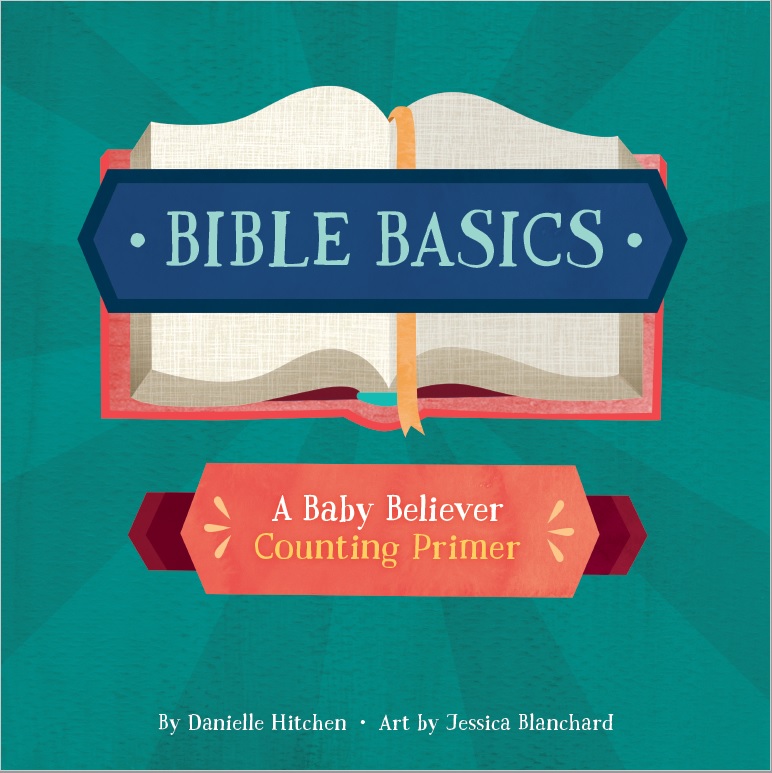
Bible Basics: A Baby Believer Counting Primer

December 7, 2016 by Guest Post 1 Comment

Bible Basics: A Counting Primer - teach your young children foundational Christian beliefs.

Bible Basics: A Counting Primer - teach your young children foundational Christian beliefs.

“You shall love the Lord your God with all your heart and with all your soul and with all your might. And these words that I command you today shall be on your heart. You shall teach them diligently to your children…”      Deuteronomy 6:5-7 a

I’ve often thought if parenting doesn’t put the fear of God into someone, nothing will. Raising a child (or two or ten) is a weighty task – we are charged with forming small, helpless little humans into well-rounded and well-adjusted individuals who contribute to their communities. For Christian parents, the monumental task of teaching our children to know and love God is added to an already overwhelming list of duties.

As a mom of two little ones (2.5 and 9 months), I spend most of my time just trying to meet the basic needs of my family – feeding, bathing, diaper changes, playtime, maybe a shower for myself. I desperately want to teach my little ones to know and love God, but I find that I’m often short on both time and energy.

Bible Basics: A Counting Primer - teach your young children foundational Christian beliefs. As I searched for age-appropriate resources to help me in this task, I came up empty. While storybook Bibles are a great addition to my children’s library, I wanted something to go beyond Bible stories to actual theology.

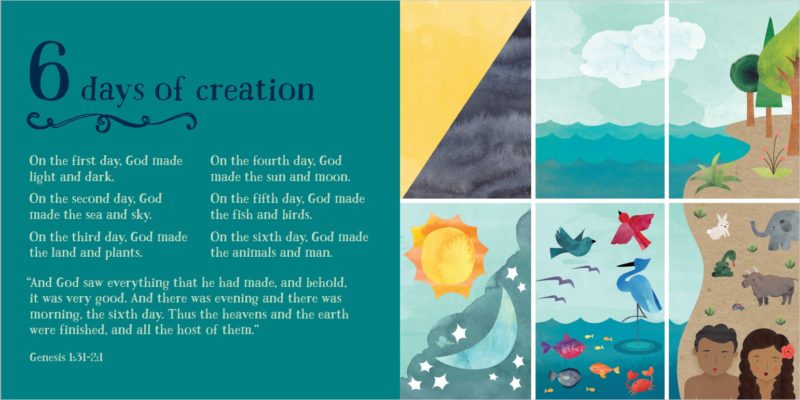
That’s why I wrote Bible Basics: A Baby Believer Counting Primer – a counting book designed to familiarize young children with the core tenets of the Christian faith. Bible Basics is the first of the Baby Believer Primers, a series of concepts books to help parents teach their children foundational Christian beliefs.

Bible Basics: A Counting Primer - teach your young children foundational Christian beliefs.
Counting books are ubiquitous for young ones – my kids have nearly a dozen on their shelves! – so what makes this one different? It seems to me that if we teach kids to count random items on a page (apples, hippos, dinosaurs), why not teach them to count persons of the Trinity or Fruits of the Spirit? From where I’m sitting, integrating the core tenets of the Christian faith into basic learning just makes sense.

Bible Basics: A Counting Primer - teach your young children foundational Christian beliefs. Bible Basics: A Counting Primer - teach your young children foundational Christian beliefs. Although small children are not going to walk away from repeated readings of Bible Basics with a thorough and robust theology of the Incarnation (or anything else), they will become acquainted with the vocabulary of basic theology. This vocabulary can function as a jumping off point for parents to have deeper, more meaningful faith conversations with their children. It can be a touchstone that parents return to in order to help their children develop a firmer grasp of their faith.

Bible Basics: A Baby Believer Counting Primer from Danielle Hitchen on Vimeo.
My great hope is that Bible Basics makes it just a little bit easier for parents like me to help teach their children to know and love God.


Bible Basics: A Counting Primer - teach your young children foundational Christian beliefs.
Danielle Hitchen founded Catechesis Books in 2016 in order to build out a collection of biblical and theological resources for babies, toddlers, and preschoolers. She desires to create beautiful books to help parents have better faith conversations with their children. She is mom to two wonderful children who are her primary inspiration for writing and publishing the Baby Believer Primer series.  

Her professional background includes communications consulting, radio production, event planning, and non-profit and church administration. Danielle is a graduate of the Torrey Honors Institute at Biola University where she earned her B.A. in Humanities. She presently resides in northern Virginia where she loves enjoying a good story with her husband, local playgrounds, serving at her Anglican church, wine tasting, reading to her kids, and her adult coloring book. 

Connect with Danielle on Twitter, Instagram, or Facebook.


Theology for toddlers? Check out the new book from @BibleBasicsBook. #LetTheChildrenCome

Click To Tweet

The new book from @BibleBasicsBook would make a great gift for your favorite toddler! #LetTheChildrenCome

Click To Tweet

Let The Children Come - DoNotDepart.com
Save

Save

Save

Save

Save

Save

Theology and Trust

October 20, 2016 by Caroline 3 Comments

Proverbs 2:6 - Theology and Trust

Proverbs 2:6 - Theology and Trust

When I think of theology, I often think of logic. Of proof, of study, and of learning.

Merriam-Webster defines theology as:

“the study of religious faith, practice, and experience : the study of God and God’s relation to the world”

It’s the study of our God, the study of our faith, and the study of practice of that faith.

Determining and studying one’s own theology is important for so many reasons, as we’ve been discussing all month.

I’m a fact-finder and a lifelong learner, so I love and get excited over the opportunity to learn more and study deeper.

But, as I grow older (and re-realize how little I know), I’m slowly grasping that deepening our theology doesn’t mean only expanding our knowledge. And knowledge and understanding aren’t the same thing.

Sometimes understanding doesn’t mean knowledge.

Sometimes faith doesn’t mean seeing.

“Now faith is confidence in what we hope for and assurance about what we do not see.” – Hebrews 11:1 (NIV)

And sometimes trust doesn’t mean knowing the answers first.

“Trust in the Lord with all your heart, and do not lean on your own understanding.” – Proverbs 3:5

Receiving Wisdom

I’ve always liked Proverbs 2 because it talks of the value of wisdom. Wisdom is good, wisdom is needed. But something important to remember about our theology is that wisdom is from God. And if wisdom comes not from ourselves, that means we must first receive it.

Picture this: Someone comes up to you and says they would like to give you something. A gift, perhaps. All you have to do is hold out your hand.

If you keep your hand closed or even find somewhere else to go, perhaps you don’t trust this person or this situation (and perhaps with good reason). Without that trust, there’s no way you’d open your hand to receive it.

But if you do trust, then you hold out your open hand, ready to receive.

Proverbs 2 begins:

“My son, if you receive my words
and treasure up my commandments with you,
making your ear attentive to wisdom
and inclining your heart to understanding…
then you will understand the fear of the Lord
and find the knowledge of God.
For the Lord gives wisdom;
from his mouth come knowledge and understanding…” – Proverbs 2:1-2, 5-6

First, we receive, then comes the understanding.

Isn’t this the way of faith sometimes? We believe even when we don’t understand (Hebrews 11:1). We ask for faith even when we can’t see beyond a clouding doubt (Mark 9:24). We seek Him first, even when we aren’t sure how to fill our needs (Matthew 6:33).

Theology and Trust Together

None of this means we sit idly by, not trying to deepen our knowledge of God and His nature. But it does mean that theology and trust are partners. We need both to thrive and grow in His example.

The more we trust, the more we learn, the more we lean into His wisdom, the more our eyes open to His peace (Philippians 4:7) and His love.

“Then you will understand righteousness and justice
and equity, every good path;
for wisdom will come into your heart,
and knowledge will be pleasant to your soul;
discretion will watch over you,
understanding will guard you…” – Proverbs 2:9-11

How do you trust even when you may not understand?

Sometimes understanding doesn’t mean knowledge. Sometimes faith doesn’t mean seeing. #TheologyForWomen

Click To Tweet

Today’s #TheologyforWomen post from @DoNotDepart considers Theology and Trust together:

Click To Tweet

Additional resources:

  • Author Sarah Bessey wrote this article on everyday theology and how what we truly believe and trust about God impacts our daily lives.
  • Rachel Wojnarowski shares 14 verses for when we can’t understand God’s plan.
  • This Bible.org article offers an interesting explanation on the definition of theology.
  • “The Theology of Resting in God” from My Utmost for His Highest by Oswald Chambers.

The Formula for Becoming Like Jesus

October 18, 2016 by Lindsey 1 Comment

The formula for becoming like Jesus

Many of us want to become more like Jesus. But sometimes, I think we make it more complicated than it actually needs to be. We’re looking for an extensive formula, when really, it’s much more simple than that.

The formula for becoming like Jesus

I love this picture of my son wearing his daddy’s shoes.

Just as a child wants to be like a parent, so we want to be like Jesus.

It’s such a great reminder that our kids will likely become (for better or for worse) like us. They will – quite literally – follow in our footsteps.

Just as it’s true that our children will likely become like us, it’s also true that we will become like those we spend the most time with.

I’ve heard it said that you will become like the 5 people you are around the most.

It’s interesting to me how many of us say we want to be like Jesus but don’t spend very much time with Him.

(And believe me, I’m just as guilty as anyone else!)

The reality is, if we’re not spending time with Jesus and learning about Him – how He lived, how he spoke, how He loved – then we’re going to have a really hard time becoming like Him.

How can we become like someone we’re never around? 

How can we mimic the actions of someone we don’t see? 

I love that the opposite is also true, though.

The more we are around someone, the more like them we become.

So the more we dig into the Word of God and the more we study the person of Jesus, the more we will become like Him.

Luke 6:40, in the New Life Version, says this, “But everyone who learns well will be like his teacher.”

All this month here at Do Not Depart, we’ve been talking about why sound theology matters. In the introductory post, Ali explained that theology is the study or knowledge of God.

In the past few weeks, we have shared several reasons why sound theology matters: because it helps us identify false teachers and false doctrines, because it helps us know God better, and because it helps us know how to interact with others.

Another reason sound theology matters is because it is through sound theology that we become more like Jesus.

It is through the study of Him that we become like Him.  

The formula for becoming like Jesus isn’t as hard as we often make it.

We often think we have to follow a whole bunch of rules: don’t have sex outside of marriage, don’t get drunk, do go to church every Sunday, don’t steal or kill or lust, don’t do this, do this, etc.

But the truth is, the formula for becoming like Jesus is simply this:

Be with Jesus = Become like Jesus

We become like those we around, so when we’re around Jesus, His amazing qualities begin to rub off on us. And before we know it, when people look at us, they start to see more Jesus.

Sound theology matters because the study of Jesus helps us grow more like Him.

There is one thing I want to warn you about, though.

Just having knowledge of God is not enough.

We can know a lot about God without actually knowing Him.

I think that’s what happened to many of the religious leaders while Jesus walked on this earth.

They had a lot of head knowledge about the Scriptures, but they failed to let their knowledge reach their hearts.

In John 5:39-40, Jesus challenged the Jewish leaders about their knowledge of the Scriptures: “You search the Scriptures because you think they give you eternal life. But the Scriptures point to me!  Yet you refuse to come to me to receive this life” (NLT).

So this week, spend some time with Jesus. Open your Bible and get to know Him. But don’t do it just to know facts.

Instead, do it to know Him.

Let’s chat: Have you made the “formula for becoming like Jesus” more complicated than necessary? How?

We can know a lot about God without actually knowing Him. @LindseyMBell #TheologyforWomen

Click To Tweet

It is through the study of Him that we become like Him. #TheologyforWomen @LindseyMBell

Click To Tweet

Is it possible to become like Jesus if you’re never around Him? #TheologyforWomen @LindseyMBell

Click To Tweet

Theology Helps Us Identify False Teachers and False Doctrine

October 11, 2016 by Kelli LaFram 2 Comments

do-not-believe-every-spirit-but-test-the-spirits-to-see-whether-they-are-from-god

But there were also false prophets among the people, even as there will be false teachers among you, who will secretly bring in destructive heresies, even denying the Lord who bought them, and bring on themselves swift destruction. And many will follow their destructive ways, because of whom the way of truth will be blasphemed. By covetousness they will exploit you with deceptive words; for a long time their judgment has not been idle, and their destruction does not slumber. 2 Peter 2:1-3

There are all sorts of false teachers in the world today. There have been around since the days of the early church. I’m going to resist the urge to call-out the more “famous” ones of our generation, because I am sure there are far more than I am aware of and far more than I could list. I will say this though, in hopes that it will help you identify them for yourself: they walk in the lusts of the flesh. They despise authority. They are presumptuous and self-willed. And even though they are not afraid to speak evil of evil beings (Satan and demons) and stand against them, they do so out of selfish pride and arrogance (2 Peter 2:10).

The saddest thing about these false teachers, however, is that they deny the Gospel (in full or in part, either by adding to it or taking away from it) and many people will fall victim to their lies. So how do we guard our hearts from these people who are bound for destruction? How do we tell the difference from words that sound pretty and words that are true? By being in God’s Word for ourselves. By learning for ourselves, through the power of the Holy Spirit, what the Gospel is in it’s purest form.

As children of God we have the Holy Spirit living inside us. And because of His presence we have the ability to understand God’s holy word. Many people wrongly believe that they can’t possibly study Scripture on their own, that they need a teacher or preacher to help them to understand it. Yes, we do need good, God-fearing, Bible-believing shepherds in our lives. We need church leaders who are willing to preach the Word to us to convince, rebuke, and exhort us with all longsuffering (2 Timothy 4:2). However, they are not the only point of access we have to God’s word.

But the Helper, the Holy Spirit, whom the Father will send in my name, he will teach you all things and bring to your remembrance all that I have said to you. John 14:26

When the Spirit of truth comes, he will guide you into all the truth, for he will not speak on his own authority, but whatever he hears he will speak, and he will declare to you the things that are to come. John 16:13

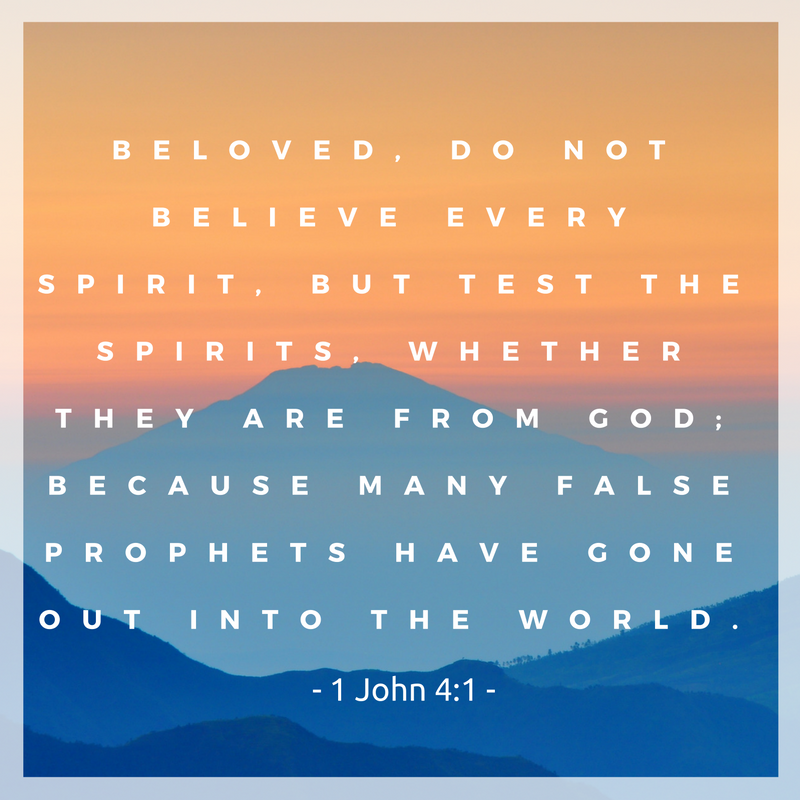
Being in God’s word for ourselves and relying on the Holy Spirit for enlightenment will allow us to discern what is right from what is wrong, truth from lies, and the genuine Gospel from the many, many false gospels that are being proclaimed today. We are told in 1 John 4:1 “do not believe every spirit, but test the spirits to see whether they are from God…” Why? Because many of the ideas and notions that we hear from others (and even ones we come up with on our own) don’t line up with what Scripture says about God, His Son, and the amazing grace He lavishes on those who come to Him by faith. And we do not want to be believing lies about our Loving Father, do we?

Friends, my prayer for each of us is this: that the God of our Lord Jesus Christ, the Father of glory, give to us the spirit of wisdom and revelation in the knowledge of Him. I pray that the eyes of our understanding would be enlightened, so that we may know what is the hope of His calling, what are the riches of the glory of His inheritance in the saints, and that we may know what is the exceeding greatness of His power toward us who believe (Ephesians 4:17-19, paraphrased).


If the idea of studying the Bible on you own is a new concept to you or is a little intimidating, may I suggest this resource by John MacArthur. It is a study of the Book of Ephesians, which contains the foundations of Christianity. I believe that studying Ephesians in-depth will help all believers to understand their union in Christ, the unity of the church in Christ, and our responsibility to be useful in Christ.

[amazon_image id=”0718035100″ link=”true” target=”_blank” size=”medium” ]Ephesians: Our Immeasurable Blessings in Christ (MacArthur Bible Studies)[/amazon_image]

Love Songs – What is Real Love?

February 3, 2015 by Kathy Howard 1 Comment

Love SongsWhat is real love?

At it’s best, the world’s concept of love is warped and self-centered. At it’s worst, the world’s “love” is harmful and destructive. One recent example of the latter is the upcoming release of the movie version of “Fifty Shades of Grey.” Which, sadly, is sure to be a block-buster.

This month at Do Not Depart, we will explore real love. God’s love.

W cannot fully know real love apart from knowing God. Because “God is love” (1 John 4:16). God is the source and initiator of true love.

Furthermore, we have seen with our own eyes and now testify that the Father sent his Son to be the Savior of the world. All who declare that Jesus is the Son of God have God living in them, and they live in God.We know how much God loves us, and we have put our trust in his love. God is love, and all who live in love live in God, and God lives in them.  1 John 4:14-16, NLT

When we come into a saving relationship with Jesus, God takes up residence within us. Real love comes to live inside us! Without a relationship with Jesus, we cannot experience or give true love because we are disconnected from God.

I don’t mean that non-Christians can’t give and experience tremendous “love.” While there is a huge range of emotions and behavior we call “love” – much of it wonderful! – we cannot have true “agape” love apart from knowing Jesus.

The Greek word used to describe the love of God and the love He calls His children to express is agape. Here’s a quick description of agape:

  • Agape is the love God has for His Son and for us
  • Agape is love expressed it deliberate action (See Romans 5:8)
  • Agape seeks the welfare of others
  • Agape is a choice; it’s love of volition, not emotion
  • Agape is based on the giver’s character and not the merit of the receiver

This month, we’ll discover more about the scope and depth of God’s love for us. We’ll see the glorious effects of His love in our lives. And we’ll learn how we can love like He loves.

Today, let’s reflect on the mind-boggling truth that God has chosen us as the object of His great love. Listen to “Only Your Love,” performed by Kari Jobe, worship our God, and praise Him for His amazing love.

Let’s talk: How is God’s love different from the way the world understands and expresses “love?”


Jesus Is…

October 30, 2014 by Kathy Howard Leave a Comment

Who is Jesus?This month at Do Not Depart we’ve tackled a huge question: Who is Jesus? Although we will spend an eternity discovering the full answer, we have touched on a few vital truths.


Let’s recap what we’ve learned:

Jesus is the True Sacrifice – Ali reminded us that Jesus was the final and full sacrifice for sin. “We can have hope because we have a loving Savior who gave himself to rob our sin. We no longer need to live under guilt and condemnation! We’re set free from the punishment of sin! And we’re able to approach the throne of grace confidently (Heb 4:16) any and every time we draw near to God.”

Jesus was fully human – Lindsey showed us from Scripture that Jesus was 100% human. “Because Jesus was fully human, he understands fully what it’s like to be human… He understands our struggles…  our fears … and our feelings of abandonment when God seems distant.”

Jesus was fully God – Jesus was 100% human, but Scripture teaches He was also 100% God. (God’s able to do math like that!) Lisa laid out a list of reasons why we must accept the deity of Jesus. “Everything is different for us since Jesus is divine. Awakened to a higher purpose, we have a fuller joy now and a kingdom home with God forever.”

Jesus is our High Priest – Jesus is the only mediator between us and God the Father. He gives us access to God. I love how Caroline reminded us that because Jesus is our High Priest, “we can come to Him any time, any place, with anything on our hearts.”

Jesus is the Messiah – Jesus is the Promised One, the Deliverer, the Savior, the One God’s people had long waited for. I loved Patti’s conclusion: “Jesus our Messiah bore our every sin. He was anointed to make intercession for us with His very life, and save us from an eternity of separation from God. Jesus is the Anointed Savior Who was promised from the beginning – our Messiah and our hope!”

We could say so much more about Jesus! But instead of me rambling on, I ‘d like to share some words from the Nicene Creed, crafted by some of the early church fathers at the Council of Nicea in 325 AD.

I believe in one God, the Father Almighty,
maker of heaven and earth, and of all things visible and invisible;

And in one Lord Jesus Christ, the only begotten Son of God,
begotten of his Father before all worlds,
God of God, Light of Light, very God of very God, begotten, not made,
being of one substance with the Father; by whom all things were made;
who for us men and for our salvation came down from heaven,
and was incarnate by the Holy Ghost of the Virgin Mary, and was made man;
and was crucified also for us under Pontius Pilate;
he suffered and was buried; and the third day he rose again
according to the Scriptures, and ascended into heaven,
and sitteth on the right hand of the Father;
and he shall come again, with glory, to judge both the quick and the dead;
whose kingdom shall have no end.

Jesus – who is our Savior, our Sacrifice, our High Priest, and our God – is coming again as King!

For the Lord himself will come down from heaven, with a loud command, with the voice of the archangel and with the trumpet call of God, and the dead in Christ will rise first. 17 After that, we who are still alive and are left will be caught up together with them in the clouds to meet the Lord in the air. And so we will be with the Lord forever. 18 Therefore encourage one another with these words.  1 Thessalonians 4:16-18, NIV


Why Jesus’ Humanity Matters

October 14, 2014 by Lindsey 5 Comments

Why Jesus' Humanity Matters - Do Not Depart

Why Jesus' Humanity Matters - Do Not DepartJesus was fully human.

He wasn’t fully God and partially human or fully human and partially God. No, Jesus was 100% human and 100% God.

In the past few weeks, Jesus’ humanity has taken on new meaning in my life (but I’ll explain more on that in a moment). First, let’s look at what the Bible tells us about Jesus’ humanity:

What The Bible Says About Jesus’ Humanity: 

Jesus was born from a woman, just as you and I were (Luke 2:7).

Jesus grew tired and weak, just as we do (John 4:6).

Jesus became hungry when he wasn’t able to eat (Matthew 4:2).

Jesus grew and became stronger (Luke 2:40).

Jesus learned and grew in wisdom (Luke 2:52).

Jesus cried, just as we do (John 11:35).

Jesus prayed and cried out to His Father in heaven (Hebrews 5:7).

Jesus was tempted in every way, just as we are (Hebrews 4:15).

Jesus died a real, physical death (Luke 23:46).

In all of these ways, Jesus was like us, and this reality is life-changing. Here’s why: when we’re feeling alone….wondering if anyone understands what we are going through, we can know-WITH CERTAINTY-that Jesus gets it.

He has been there.

Because Jesus was fully human, he understands fully what it’s like to be human. 

Because Jesus was fully human, he understands fully what it’s like to be human. @LindseyMBell and @DoNotDepart

Click To Tweet

He understands our struggles when we’re short on sleep. He understands our fears when facing death or pain. He understands our feelings of abandonment when God seems distant.

Two weeks ago, a friend of mine buried her five month old baby girl. Very unexpectedly, this baby became sick and passed away.

In tragic times like these, it’s easy to feel forgotten…to think no one could possibly understand what you’re going through. That is why Jesus’ humanity matters.

Jesus’ humanity reminds us He understands. Because he was fully human, he gets it. He gets you. 

1 Timothy 2:5 say, “For there is one God, and there is one mediator between God and men, the man Christ Jesus.”  When you don’t know what to pray…when you can’t come up with words to say to Him…you can trust Jesus is there, standing before God, as one Human representing another.

What aspect of Jesus’ humanity is an encouragement to you today? 

Why Jesus’ Humanity Matters via @LindseyMBell and @DoNotDepart

Click To Tweet

*photo courtesy: unsplash

Who Is Jesus?

October 7, 2014 by Kathy Howard 6 Comments

Who is Jesus?

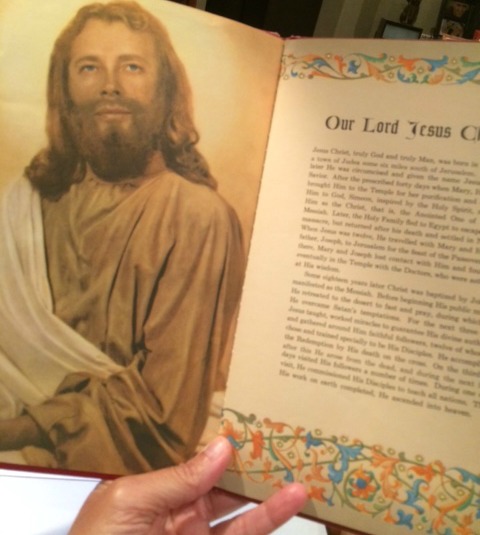
Who is Jesus?Recently, I came across a book my grandmother gave me in 1966 about Jesus and His disciples. It includes a one-page description and an artist rendering of Jesus and each of the twelve. The full-color drawings are beautiful. They just aren’t necessarily accurate. For instance, “Jesus” is portrayed with light brown hair and blue eyes.

In giving Jesus these specific physical characteristics, the artist separated Jesus from His Jewish heritage. Maybe that’s how the artist pictured Him. Perhaps the artist was swayed by his audience’s expectations. But a Jew with blue eyes and light hair would have been very unusual in ancient Palestine. A blue-eyed, light-haired Jesus is not the Jesus of the Bible.

After seeing that drawing, I started to wonder about other ways we might have “altered” Jesus into a Savior of our own making. Is our understanding of Jesus accurate? Or has it been morphed by our own worldviews and preconceptions?

Jesus bookJoin us this month at Do Not Depart as we explore the Jesus of the Bible. Our goal is to delve into the truth of God’s Word to better understand Jesus. My prayer for us is that God will correct any misconceptions. That He would expand and explode our view of the Savior. That we would be humbled and fall on our faces in worship.


Have you ever believed something about Jesus that God later corrected? What was it? How did He show you the truth?

Bondage broken after 18 crippled years

October 8, 2013 by Julie 10 Comments

crippled woman set free

If you’re bent over, all you can see is the dirty ground, the earth from which we came. It would be hard to lift your eyes and look up with hope if your view excludes the faces of people, the landscape, or the horizon. Even work would be mostly out of reach, not to mention community life and relationships, without the ability to look into the eyes of another person or reach forward with purpose.crippled woman set free That’s how we meet one unnamed woman in the Gospels.

Bent over for eighteen years, the crippled woman of Luke 13:10-17 had been “kept bound” by Satan himself. Unable to even straighten up, she waited at a house of worship, a synagogue. When Jesus came to her synagogue on a Sabbath day and saw the woman’s condition, he set her on a path to change the course of her life.

Freedom from bondage

On that day, the woman long bound by Satan was unbound.

The Devil is a supplier of sickness, a developer of diseases, and an ambassador of affliction. He loved taking a woman made in the image of God and twisting her with an infirmity as a trophy of his bondage. But then Jesus saw her, called her forward, and said, “Woman, you are set free from your infirmity.” Jesus laid his hands on her and right away her gnarled spirit-bound body straightened up. Right away, she praised God, because that’s what a genuinely unbound woman does.

Staying in bondage

On that day, a religious ruler long bound by tradition stayed bound.

The Devil has planted the sickness of legalism in the hearts of the religious ruler and his friends. Though not visibly bent in body, their hearts were gnarled by their regard for rules. As quickly as the freed woman stood to her full height in praise, the synagogue ruler was overcome with indignation, blurting out rebuke to the Healer for healing on the Sabbath day. Instead of a declaration of worship, he responded by defending the same hollow tradition that was unable to free the woman during any of her bent up, eyes down, infirmity ridden eighteen years. Jesus rebuked him in return, allowing the crowd to hear His heart for setting captives free. Instead of lifting up His opponents as He had the crippled woman, “all his opponents were humiliated” (v.17b).

The Devil despises the image bearers of God, but Jesus came to “free captives”(Isaiah 42:6-7) from the bondage of the Enemy. Has the supplier of sickness, the developer of disease, the ambassador of affliction bent you down physically, spiritually, or emotionally? Do you feel like all you can see is the dirt of the road you walk? Are you finding it hard to lift up your eyes and see a hope-filled future?

Jesus sees you, calls you, and wants to free you from what the Enemy is using to bind you. What do your shackles look like? He is the true Bondage Breaker who can take a gnarled heart or twisted relationships or a downcast life and raise them up for His glory. Ask God to unbind you and help you walk in newness of life. Let yours be the next voice to praise Him, because that’s what a genuinely unbound woman does.

Has God given you freedom from bondage in your life? Leave a comment and share a praise.

Click to tweet about this post

I Am Adopted: Chosen and Loved

October 18, 2012 by Caroline 5 Comments

chosen and loved - sun tree pond

Sometimes I need to read, read, and re-read Scripture to even begin to grasp its meaning.

Ephesians 1:3-6 fit in to that category.

It can be helpful to take verses packed with extraordinary impact line by line to see what truths they explain.

Chosen and Loved

Ephesians 1:3 – “Blessed be the God and Father of our Lord Jesus Christ, who has blessed us in Christ with every spiritual blessing in the heavenly places…”

[amazon_link id=”1598562754″ target=”_blank” ]Matthew Henry’s Commentary[/amazon_link] says, “Spiritual blessings are the best blessings with which God blesses us.” This adoption blesses. He blesses us, and so we are to bless Him with praise, obedience, and love.

Ephesians 1:4 – “…even as he chose us in him before the foundation of the world, that we should be holy and blameless before him. In love…”

God chose us before the foundation of world. Does that baffle anyone else’s mind? He chose us. Us. You. Me. Them. Not only did He choose – in love – but He chose us for the purpose of becoming holy before Himchosen and loved - sun tree pond

I love how [amazon_link id=”1598562754″ target=”_blank” ]Matthew Henry’s Commentary[/amazon_link] explains this original choosing: “…not because he foresaw they would be holy, but because he determined to make them so. All who are chosen to happiness as the end are chosen to holiness as the means. Their sanctification, as well as their salvation, is the result of the counsels of divine love.”

Our adoption results from God, and happiness abounds from that holy adoption.

Ephesians 1:5 – “…he predestined us for adoption as sons through Jesus Christ, according to the purpose of his will…”

We fulfill His purposes in part because we are His adopted. Since it is by God’s infallible will, this adoption is not at all a mistake. He chose us for a purpose.

Ephesians 1:6 – “…to the praise of his glorious grace, with which he has blessed us in the Beloved.”

We are adopted in grace. Undeserved, unmerited, amazing grace. I shake my head in awe as I ponder this love. We are chosen by grace, and so we praise.

Gifts of Adoption

A loving, responsible adoptive family offers a home, safety, provision, and love. What do we receive in our adoption from God?

  • Redemption through His blood (Ephesians 1:7)
  • Forgiveness of our trespasses (Ephesians 1:7)
  • Grace lavished upon us (Ephesians 1:7-8)
  • A plan set forth in Christ to unite all things to Him (Ephesians 1:9-10)

We are chosen, adopted. We are loved. And He offers us this life to praise Him for it and share that love with others.


What is your response from knowing you are specifically and purposefully chosen?

Jehovah Shalom: Climb out of the winepress!

July 17, 2012 by Julie 4 Comments

A winepress from Biblical times

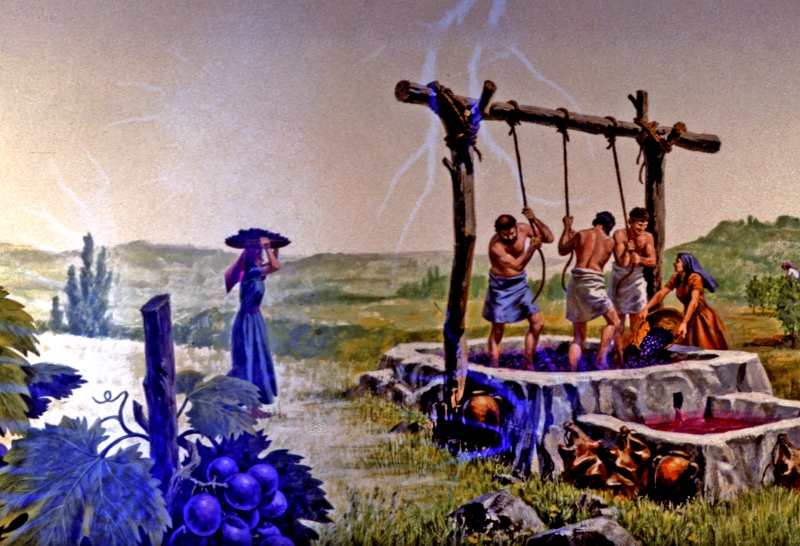
He was the least important child in the least important family of his tribe, in a nation oppressed for seven long years. Watched by the angel of the Lord from beneath a tree, Gideon threshed wheat in hiding down in a winepress, where the Midianites wouldn’t find him or his precious grain. He believed God had forsaken them, despite their unfaithfulness to Him. When the Angel approached Gideon to declare God was with him, Gideon spoke the honest, desperate words of a man whose daily life had worn deep ruts in suffering’s path. “Please, sir, if the Lord is with us, why then has all this happened to us? And where are all his wonderful deeds that our fathers recounted to us …?” (Judges 6:13a).

Valley moments

Tired of being beaten down from his start on the lowest of places, Gideon asked what the honest among us will admit to wondering, “If God is with us, why is life so hard?”

Last week I created a spiritual life map of my journey with God. Some of my greatest discoveries about who God is came in my darkest places. I noticed that “valleys” were often followed by strength and advance. Gideon was in a low place when the angel of the Lord came and patiently answered his honest question. It wasn’t until the weary Israelite realized, “I have seen the angel of the Lord face to face” (v.22) that his desperation turned to fear. As if things weren’t bad enough, Gideon went from fragile to freaked out. Can you relate?

Peaceful moments

The Lord answered him where he was: “Peace be to you. Do not fear; you shall not die.” (v.23)
The only thing worse than being insignificant and insecure in the face of a marauding enemy is understanding how insignificant you are in the face of a holy God. Realizing he was part of a divine encounter with the God who had NOT forsaken him, Gideon built an altar of worship and named it for the discovery of his darkest moment: Jehovah-shalom. The Lord is peace. (Judges 6:11-24)

When we’re under attack, uncertain, in need, and painfully aware of our weakness, the world only offers illusions of temporary feelings suggesting peace. Jehovah-shalom IS peace, so He can promise, “Peace I leave with you; My peace I give to you; not as the world gives, do I give to you. Let not your heart be troubled, not let it be fearful” (John 14:27).

Past our understanding moments

Gideon couldn’t conceive of what happened in the wine press that day, stunned as he served meat and unleavened bread to the angel of the Lord. The peace he found “passed understanding;” he encountered true peace in the midst of hardship. He discovered what God offers each one of us reading now: real peace.

“… do not be anxious about anything, but in everything by prayer and supplication with thanksgiving let your requests be made known to God. And the peace of God, which surpasses all understanding, will guard your hearts and your minds in Christ Jesus” (Phil. 4:6-7).

Yes, it surpasses understanding, but it can guard our hearts and our discouraged thoughts when we find ourselves in the wine press, hiding from our hardships and fighting fear. We can know the peace of Jehovah-shalom. We are meant to know the peace of Jehovah-shalom.

Let’s climb out of the wine press and get down on our knees, so Jehovah Shalom can cover us in peace that’s out of this world!

Have you had a “wine press” experience when God gave you His peace?

Yahweh – He who is

July 10, 2012 by Kathy Howard 2 Comments

Yahweh, Moses and burning bush

This post originally appeared on Scripture Dig during a series on the Names of God.

There’s so much about God that I don’t understand. For instance, why He loves me and how He keeps the universe spinning along. But possibly the hardest thing to get my puny mind around is His eternal, self-sufficient existence.

There has never been a time that God was not, or a moment when He will not be. He exists because of Himself and He needs nothing outside of Himself.

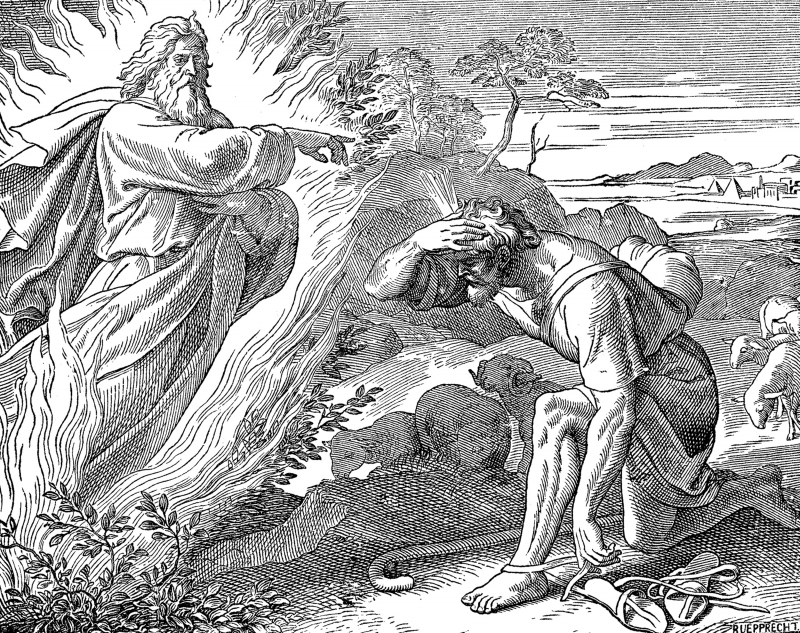
God’s name “Yahweh” (also known by the Christian transliteration “Jehovah”) signifies His timeless, ever-present existence. The root word of Yahweh means “to exist,” “to be.” In fact, some scholars suggest that “I am that I am” in Exodus 3:14 would be better translated as “I am He who exists” or “I am He who is.”

The name God gave Himself

Yahweh, Moses and burning bush
Moses & burning bush, visualbiblealive.com

This is the name God gave when Moses asked Him:

“Suppose I go to the Israelites and say to them, ‘The God of your fathers has sent me to you,’ and they ask me, ‘What is his name?’ Then what shall I tell them?” (Exodus 3:13, NIV)

Since God’s name identifies his nature, when Moses requested his “name” he was asking about God’s character. Can we trust you to be with us? Can we believe that you can deliver us?

God’s answer: “Yahweh.” I am the One who exists. I have no source, yet I am the Source of everything. If nothing else was, still I would be.

God chose the name Yahweh for Himself. It is His personal name by which He related specifically to His chosen people. It is His covenant name, particularly in His relationship with the nation of Israel.

Yahweh is first found in the second chapter of Genesis. Abraham (Gen 12:8) knew God by this name. Adam probably did as well since we are told during the lifetime of his son, Seth “men began to call upon the name of the LORD (Gen 4:26).”

“The” Name

Yahweh is God’s most sacred name. Scripture speaks of it as “this glorious and fearful name” (Deut 28:58) or simply “the name” (Lev 24:11). The Jews would not speak it out of reverence, but generally substituted another name such as Adonai.

Because the sacred name was not spoken, precise pronunciation is uncertain. This problem is compounded by the fact that Hebrew was written without vowels until about 850 BC. YHWH or Yahweh, the personal name of God occurs more than 5,000 times in the Old Testament. In your Bible, it is typically designated by all caps: LORD.

According to the Theological Wordbook of the Old Testament, the name Yahweh connotes “God’s nearness, his concern for man, and the revelation of His redemptive covenant.” Oh, there is much in a name!

What does it mean to you personally that God is “He who exists?”

Names of God: Jehovah Shammah

July 3, 2012 by Caroline 9 Comments

“The Lord of hosts is with us; the God of Jacob is our fortress.” – Psalm 46:11

Kathy opened this month’s study sharing the power and meaning behind names, especially as we study God’s names.

An article on Bible.org on the names of God states: “…giving glory to God is tied in with the knowledge of God (revelation of God), and knowing God personally (response to God).”

Giving glory is a reaction. God created us to glorify Him, and we eagerly do so because, as we get to know Him, we see His active nature, His compassion, and His love.

A God of Many Names

In our lives, we may receive many descriptive adjectives to our character. You might be calm, patient, and compassion. A friend might have a fierce, devoted personality. A coworker may be considered energetic, contemplative, or deliberate.

The Old and New Testaments describe our God as compassionate, loving, fatherly, strong, all-knowing, and more. He is a God of salvation, of justice, and of mercy.

Photo Credit

As we grow in our knowledge of Him and our experience in faith with Him, we see how active and present God is in our lives.

A Present God

As much as we know God’s interest in our lives, some days we just feel alone. Unattended. Forgotten.

When I plummet into days like these, God presents me with a reminder of a perhaps lesser-known one of His names – Jehovah Shammah, meaning “He is There.”

“Jehovah Shammah” only appears once in the Old Testament. In Ezekiel 48:35, the Israelites are building the new Jerusalem, which God instructs will be named “Jehovah Shammah.” The city itself reminds the people that God is present.

He was present in the past, leading the Israelites through generations of slavery, wandering, and growth. He was present in the specific plans His people carried out as they rebuilt Jerusalem. He is present now, as He guides us through living out His love. He offers His presence through us, acting through our hearts and delivering eternal hope.

This verse in Ezekiel ends the book, and what a way to end a book! The last note we read here proclaims “from that time on” God’s ever presence. He is always with us.

Matthew Henry’s Commentary says:

“…it is true of every good Christian; he dwells in God, and God in him; whatever soul has in it a living principle of grace, it may be truly said, The Lord is There.”

If, during my struggles and my worries, I stop and consider how God is with me, how much will that change my perspective? I can give those worries away when I remember He guides, protects, and journeys with me.

From now until forever, God is there.

“And I heard a loud voice from the throne saying, “Behold, the dwelling place of God is with man. He will dwell with them, and they will be his people, and God himself will be with them as their God.” – Revelation 21:3

May we live certain He is with us!


How have you experienced God’s presence? What verses remind you He is always there?

DO. GO. STAND.

April 16, 2012 by Julie Leave a Comment

Open Prison Cells
Open Prison Cells
Photo by Arvind Balaraman

Three weeks ago, the news was heavy: six of our partners imprisoned in a hostile country. Their court case won’t be heard until this Wednesday, but their chances for justice are, by earthly standards, slim. If they are miraculously given their freedom, there’s no chance they’ll stay shackled. They’ll go to where the freedom is, and they’ll celebrate their release.  But until this Wednesday, we pray.

Sin imprisoned all of mankind and all of creation in corruption’s cell; even the world waits for freedom (Romans 8:19-23).

If you can … DO!

In speaking to bondservants in the position of slaves, Paul encouraged that, “if you can gain your freedom, avail yourself of the opportunity” (1 Cor. 7:21). When one who has been captive gains freedom, there’s no reason to return to the master of cruelty. We are encouraged that since, “You were bought with a price; do not become bondservants of men” 1 Cor. 7:23.  The earth and all of mankind waited for a liberator.  If you can be free … DO!

Sin bound each soul since birth, but we are not without hope. Though we once gave ourselves as slaves to evil, we can give ourselves to a new Master. Our “kyrios” is the One who owns, possesses, and controls us; He is our Lord, and “the Lord is the Spirit, and where the Spirit of the Lord is, there is freedom” (2 Cor. 3:17).

If it’s there … GO!

There is a place of freedom within our reach. “For just as you once presented your members as slaves to impurity and to lawlessness leading to more lawlessness, so now present your members as slaves to righteousness leading to sanctification” (Romans 6:19).  Freedom for one-time prisoners awaits in the presence of the kyrios, the Master. If its’ there … GO!

Why would a prisoner return to his cell? Paul asked the Galatians, “now that you have come to know God, or rather to be known by God, how can you turn back again to the weak and worthless elementary principles of the world, whose slaves you want to be once more?” (Galatians 4:9). Once the case is heard and the captives are freed, why would they return?  But some do.

If it’s done … STAND!

Christ sacrificed his perfect life for the sake of our freedom. “For freedom Christ has set us free; stand firm therefore, and do not submit again to a yoke of slavery” (Galatians 5:1).  If his work has paid the high price for our freedom, we should stand and stay in it, not turning back to our captor who would gladly re-chain us. Since we were called to be free (Gal. 5:13) we should,   “Live as people who are free, not using {our} freedom as a cover-up for evil, but living as servants of God” (1 Peter 2:16).  The payment for our release has been made, so we should stay that way and not make excuses to go back to our cell or corruption.  If it’s done … STAND!

Freedom in Christ!

We could offer to pay the price for the physical freedom of our friends. No one could offer a price high enough for Satan to free us. “For freedom Christ has set us free.”  He paid what no one else could, and the case is closed. No one has the power to recapture us; why would we ever want to give up our precious, dearly bought freedom? Why would we go back?

  • Our freedom from sin’s slavery is possible.
  • Our freedom is in the presence of the Lord’s Spirit.
  • Our freedom is completely paid for.
  • If you can … DO!
  • If it’s there … GO!
  • If it’s done … STAND!

Would you pray with me for the decision of those who will hear the case of our partners in chains? Their captors are but slaves, themselves. Oh that they would know the same freedom offered to each reader today through the Friend who paid our ransom prince. Our freedom physically and spiritually is a gift. Let’s DO, GO, STAND!

Next Page »

This Month’s Theme

  • Jesus is the Way
  • And He Shall Be Called Series Intro

Enter your email address to have new posts emailed to you:

We’ll come to you

Enter your email address to have new posts emailed to you

Categories

Bible Memory – Lent 2021

Memorizing Isaiah 12

Let the Children Come

Let the Children Come

Want more #HideHisWord resources?

Memorizing Psalm 1

Find Us on Facebook


Search

Recent Posts

  • Series Wrap-Up: The Lord Is My Light
  • His Marvelous Light
  • When the Darkness Deepens
  • Though I Sit in Darkness…
  • Let Your Light Shine
  • Life-Giving Light

Archives

© 2026 · Pretty Creative WordPress Theme by, Pretty Darn Cute Design