• Home
  • About
    • Our Contributors
    • Our Beliefs
  • Blog
  • Bible Studies
    • Scripture Dig
  • Archives
  • Shop
  • Advertise
  • Contact
    • Email
    • Facebook
    • Instagram
    • Pinterest
    • Twitter

Do Not Depart

Encouragement and Tools to Abide in God's Word

You are here: Home / Archives for Old Testament

Come, Feast Freely

March 6, 2014 by Ali Shaw 10 Comments

DoNotDepart.com


“Come, everyone who thirsts, come to the waters; and he who has no money, come, buy and eat! Come, buy wine and milk without money and without price. Why do you spend your money for that which is not bread, and your labor for that which does not satisfy? Listen diligently to me, and eat what is good, and delight yourselves in rich food. Incline your ear, and come to me; hear, that your soul may live; and I will make with you an everlasting covenant, my steadfast, sure love for David.”
~ Isa 55:1-3, ESV


It’s Always About Love

God’s love is unfailing, gracious, and absolutely amazing. The Bible often refers to God’s steadfast, merciful, loyal lovingkindess (chesed or hesed in Hebrew). The Old Testament uses this word about 250 times, and I believe these verses point to God’s chesed character beautifully. And because I love doing research, I decided to look at the Hebrew translation. Guess what I found? A form of chesed, tucked away in verse three. But, we’ll get to that in a minute.
DoNotDepart.com
Photo Credit, CC License

Because God loves us so deeply, He wants what is best for us. He wants us to draw near to Him, so He invites us to come. A close relationship to God is the only thing that will satisfy our spirits. God offers a rich feast of love, spiritual blessings, and eternal life – a well that waters our thirsty souls, and bread that offers us rich, lasting contentment. He fulfills us spiritually like nothing in the world could ever do.

“If I find in myself desires which nothing in this world can satisfy, the only logical explanation is that I was made for another world.” – CS Lewis

The words in Isaiah were directed to the Israelites, offering them the promise of a Savior who would bring reconciliation to God, spiritual fulfillment, and eternal life. As Christians, we know Jesus is the Savior. Yet, I think it would still serve us well to examine our hearts in light of these words spoken before He came to earth.

  • Are we coming “to the waters”, knowing we can’t purchase what Christ has already paid for?
  • Are we spending (or wasting) time searching for things that can’t satisfy us like Jesus can?
  • Are we working for contentment apart from the Lord?
  • Are we laboring for what He offers freely?
  • Are we trading things of value (our time, our talents, our gifts, etc.) for things that have no real, lasting value simply to find temporary satisfaction?  (John Gill called this the “husks which swine eat”.)
  • Are we listening diligently to God and coming to Him to feast and be filled?
  • Are we thanking God for His new covenant and following Jesus?

“Come to me, all who labor and are heavy laden, and I will give you rest. Take my yoke upon you, and learn from me, for I am gentle and lowly in heart, and you will find rest for your souls. For my yoke is easy, and my burden is light.” – Matt 11:28-30

A new covenant was enacted through the sacrifice and resurrection of Jesus. The Father showed his great, merciful lovingkindness for the entire world by sending His very own Son to be the propitiation for our sins (1 John 2:2 and 4:10). I said we’d get to chesed tucked into verse three. Well, God’s new, everlasting covenant is based on His “covenant loyalty” translated in the ESV as His “steadfast… love.” That is the Hebrew word hasde, a form of chesed. This love was demonstrated by Jesus Christ coming into the world to save us, make our burden light, and to fulfill us spiritually with the very bread of life. Unfailing, gracious, absolutely amazing love! Wouldn’t you agree?

So, how are you delighting yourself in the rich food of Jesus? What do you need to give up laboring for?

A Recap on Wisdom for Life

September 30, 2013 by Julie Leave a Comment

Wisdom for Life

We’ve been in pursuit of Wisdom for Life here this month. Our prayer is that we’ve given you some Bible study tools to know how to get the wisdom and insight you need for life as a woman, an employee, a mom, a friend, a wife, a sister, a child, a friend, a neighbor.

How much better to get wisdom than gold! To get understanding is to be chosen rather than silver. (Proverbs 16:16)

A Recap on Wisdom for Life

  • 3 Tips to Understanding Proverbs
  •  Wisdom for today … still calling
  • What the world needs now … wisdom
  • Using Inductive Bible Study with Kids
  • Where you find wisdom
  • Oh, Job (Learning to abide with God when you don’t understand)
  • Applying Wisdom with Love (Rather than legalistic law)
  • Wisdom from Proverbs (free printable)
  • Ecclesiastes:  Wisdom to Understand What Matters Most

Wisdom for Life

 Let us know if you were helped this Wisdom for Life month. Share in the comments if this helped you to “wise up.”

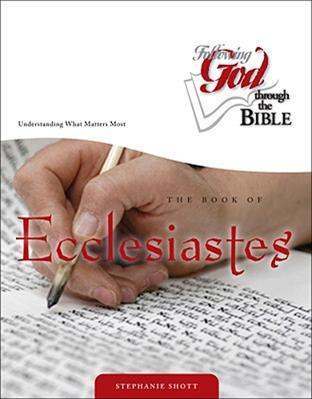
Ecclesiastes: Wisdom to Understand What Matters Most

September 26, 2013 by Julie Leave a Comment

Today we welcome Stephanie Shott, founder of The MOM Initiative and author of Ecclesiastes: Understanding What Matters Most. We’ve asked her to pull back the curtain on this wisdom book that has many readers stumped. Find out why it’s a book of the Bible that helps us understand how to avoid wasting our lives. 

I have a huge affinity for Ecclesiastes. It was the unexpected place God took me when God called us to the mission field and I was desperately trying to make sense of that which didn’t make any sense at all.

Yet, it was one of those books of the Bible others had told me I would never really understand. So every year, when I read through the Bible, I would kind of ‘read over’ it, skimming the pages of what seemed to be one of the most negative twelve chapters I have ever read, written by one of the most pessimistic men who had ever lived.

But when I really needed to know what matters most in life, God planted my face and my heart smack dab in middle of that often avoided book where I discovered how we can make our lives count and minutes matter.

When Solomon was about 20 years old, he became the successor to his father, David’s throne. Solomon’s wildest dreams came true, when in a dream God asked him, “What shall I give you?”

Wise enough to choose wisdom, Solomon was given more than what he requested. He was a man who started really well, but didn’t cross the finish line as well as I’m sure he had hoped he would.

Solomon had it all. But like his daddy, he was a sucker for a pretty woman and what David did in moderation, Solomon did in excess. Somewhere along the way in his quest for more, he went from faithful to philanderer and from a man who worshiped God to a man who worshiped idols.

Ecclesiastes is written in his later years and was penned as a sort of riches to rags story. Kind of like a “been there, done that, you don’t want to go there” kind of message.

Wow! What a waste! All that wisdom and he still blew it!

That’s pretty scary to me!

I don’t know about you, but I don’t want to waste my life. It’s really one of my greatest fears. I don’t want to start out well and blow it along the way, do you?

I don’t want to spend my days letting life happen, focusing on the insignificant, and being so distracted by the dailies that I miss what really matters most.

And it can happen so easily. The laundry, the dishes, the all night cry-a-thons with the baby, little-league practice, work, life, even ministry – they all vie for our attention.

But what I love about Ecclesiastes is that Solomon covers the gamut of life experiences and gives us a solution to how we can make our lives count, not in spite of all of what is going on in our lives, but in light of it all.

From Solomon & the book of Ecclesiastes we learn:

1. WISDOM DOES NOT EQUAL PERFECTION ~ Knowing how we should live and actually living like we know we should are two very different things. Wisdom gives us the knowledge and ability to choose well, but it is an act of our will to actually do it.

Recently, I noticed a Facebook post from someone who is known to have a wealth of biblical knowledge, yet he is also known as a very hard and arrogant man. It’s pretty hard to tell someone about the love and mercy of God when others don’t see the love and mercy of God actively at work in the lives of His children. We are to be living epistles who live out loud for Christ. Not perfect. But passionately pursing a life that honors God.

2. DON’T WASTE YOUR TIME GRASPING AT THE WIND ~ Throughout Ecclesiastes, Solomon uses the terms, vanity and grasping at the wind a lot. But in Ecclesiastes 12, he sums up what is important in life and tells us the bottom-line to life is that we fear God and keep His commandments.

It’s easy to struggle with living for eternity in the midst of the dailies of life. But one day, with a toilet brush in one hand and a can of Comet in the other, the Lord showed me that I can even clean toilets to the glory of God.

It’s so easy to long for the significant rather than the menial. Yet, each is equal in God’s site when done for His glory. I’m not wasting my time when I’m cleaning toilets or scrubbing dried spaghetti off the carpets. With the right heart attitude, I can even do those things for eternity.

3. FAILURE IS NEVER FINAL ~ One of the hidden treasures of Ecclesiastes is the fact that it was written by a man who had forsaken God and followed false gods. He not only failed God, he forsook Him! But Ecclesiastes was penned in Solomon’s later years…after he had taken a detour and tried to live life under the sun apart from Him. The book of Ecclesiastes stands as a testimony to all of us that failure is never final.

I’ve failed God a lot. Maybe you have too. And it’s easy to think that God is done with us. But if you and I are still breathing, He’s not. He not only has a plan for your life, but He has plans for each minute of your life. Don’t give up. Don’t give in. Do the next thing because He’s not done with you yet!

HAVE YOU EVER AVOIDED ECCLESIASTES? HAVE YOU EVER FELT LIKE YOU HAD LET GOD DOWN AND COULDN’T BE USED ANYMORE? WHAT ARE YOU DOING NOW THAT MAY SEEM MUNDANE, YET CAN BE DONE FOR THE GLORY OF GOD?

Find Stephanie at www.stephanieshott.com

Wisdom for today … still calling

September 5, 2013 by Julie 6 Comments

Wisdom for Life

The Bible isn’t the only book of wisdom. Around the globe, men have reached for other books claiming to be the source of wisdom, also known as “skill in godly living.” When biblical wisdom literature was recorded, scribes of parallel cultures and kingdoms also penned their words and stories. But when we talk about biblical truth, “All Scripture is breathed out by God and profitable for teaching, for reproof, for correction, and for training in righteousness,  that the man of God may be complete, equipped for every good work,” (2 Timothy 3:16).  God’s book self identifies its content as inspired by the one true God, and that makes its wisdom unique and essential.

When we refer to biblical Wisdom Literature we include five books:  Job, Psalms, Proverbs, Ecclesiastes, Song of Solomon. The righteous, the wicked, and the true God play the main parts in these books, revealing the limits of mankind’s wisdom and the necessity of fearing of God to prosper and find peace. In the times their words were written, voices opposing God’s ways called out from ancient streets peppered with a plethora of gods, but today voices call out from media screens, digital highways, steel framed cities and hand held gadgets. The tug of war for how we live hasn’t changed, but in many ways, the appearance of “righteous” and “wicked” has. Some may assume, then, the Bible doesn’t speak to life today, but Wisdom Literature’s concrete teaching matters as much now as when Job scraped his oozing sores.

Keys to unlock the 5 Wisdom books:

  • Job – This book addresses the same questions asked today:  Can we trust God? Is He good? Where do we find real comfort? The relatable character’s story takes place outside of Israel. Ultimately, we can put our faith in the sovereign God.
  • Psalms – Not all of these songs written for public worship fit in the “wisdom” category. Divided into 5 books, the Book of Psalms likely began as personal expressions of emotion, adapted for congregations. This book gives shape to our intense feelings about life in pursuit of God. Basic Old Testament themes like the fall of man, the One God, and the covenant relationship come to life here.
  • Proverbs – This collection of wisdom makes it clear that to be skillful in godly living, we must fear God and walk His way in everyday life. Practical truths show what a restored life with God looks like in our behavior, producing a joyful, useful life. Wisdom is available to all, and we discover it by comparing the wise man, the foolish man, and the simple man.
  • Ecclesiastes – This is a book for our day; Ecclesiastes explores trusting in God while living in a messed up world. Poetic devices help organize these proverbs into clusters with a plot line about the unfolding of a  quest for a good and satisfying life. This could be written in our day.
  • Song of Solomon – Intimacy stirs up emotion, and this book of love poetry is no exception. With a variety of opinions on its interpretation, some treat it as an allegory of God’s love for Israel and others as a picture of Christ’s love for the church. Authorship is not certain, but we agree that it’s a love story. There’s no doubt this poetic book demonstrates how God’s ways are the pathway to delight.

In the New Testament the Book of James and some of Jesus’ own teaching also qualify as “Biblical Wisdom Literature,” but these five Old Testament books form the collection commonly known as Wisdom Literature.

Today, as in days of old, “fools despise wisdom and instruction” (Prov. 1:7) but wisdom cries aloud in the street, in the market she raises her voice,” (Prov. 1:20).  Wisdom asks, “How long, O simple ones, will you love being simple? How long will scoffers delight in their scoffing and fools hate knowledge?” (Prov. 1:22). It’s hard to hear the call of wisdom in today’s world, but our children, families, and world are desperate to understand and apply skill in godly living that leads to a relationship with God and His peace.

“Let the wise hear and increase in learning, and the one who understands obtain guidance, to understand a proverb and a saying, the words of the wise and their riddles.  The fear of the Lord is the beginning of knowledge; fools despise wisdom and instruction.” (Prov. 1:22)

What evidence do you see that people desperately need biblical wisdom?

Click here for the printable Wisdom Bookmark to accompany our study of Wisdom Literature.

What the world needs now: WISDOM

September 3, 2013 by Julie 3 Comments

I dropped off my teenager and went to look for a parking spot. The place was packed. A man sat with his bottle and bag of books on the curb, staring at the pages as if they were empty. I wormed my way inside the store and past a long line of customers who looked like they’d been out all night. A swarm of humanity pushed each other aside to rifle through video games, movies, and gadgetry as if the store would close any minute … but it was mid-afternoon. From the upper level, a child screamed and ran away from an adult yelling obscene words to recapture him, and a man walked past me displaying an equally obscene t-shirt like a billboard on a highway. A couple sat on an old couch, groping one another as they watched the parade of people, but their gender was a mystery to me. Jesus once saw a throng such as that and “When he saw the crowds, he had compassion for them, because they were harassed and helpless, like sheep without a shepherd.” (Matt. 9:36)

I ducked into the first aisle to search for my son, only to find myself in “Erotic Fantasy,” just on the other side of “Children’s Fiction.” With bookshelves towering over my head across the length of the warehouse, I thought, there must surely be a book containing answers for wise living that the crowds with me so desperately need.

  • Today’s world thirsts for wisdom that comes from God alone.
  • Today’s church is malnutritioned when it comes to vital wisdom for living out our faith in an obscene world.

After navigating my way through the world, the Bibles were in the back corner of the store.  God’s book of truth holds the key to wisdom we so desperately need, and it was there all the time, waiting to be opened and read and obeyed. We only need to see what’s trending, check the Facebook feed, turn on the news, or open our front door to see our world buckling under the weight of sin and begging for the underpinnings of wisdom to give us strength and structure.

This month at Do Not Depart we’re taking a look at Wisdom Literature. We’ll give you Bible study tools to understand the rich resource of wisdom God has given us. Wisdom is calling out to us, and God’s blessings await those who listen. Come with us as we explore tools for unlocking Wisdom Literature.

Are you feeling the need for wisdom in your life?

Resurrection: Preparing our hearts to celebrate Easter

March 5, 2013 by Julie Leave a Comment

Resurrection Series on www.donotdepart.com

We’re born wanting something we can’t have. Have you ever lost a loved one? Have you ever battled for your own life? Since death was announced in Genesis 3:19, people have searched for ways to prolong life, live forever, and outwit death. After all, Adam’s judgment echoes through the ages to all of us: “Therefore, just as sin came into the world through one man, and death through sin, and so death spread to all men because all sinned.”   (Romans 5:12)

From tombs full of riches for the afterlife to quests for the fountain of youth to modern medical technology, the hope of life and fear of death spurs men on to find the key to eternal life. Losses, disappointments, and decay tasted in earthly life point to our shared ultimate end: “And just as it is appointed for man to die once, and after that comes judgment” (Hebrews 9:27).

Only One has power over death. There have always been skeptics; even the Sadducees of Jesus’ day scoffed at the thought of immortality. Scripture records the stories of a few who were powerless over death, but they saw God intervene and do the unimaginable: restore life.

Brought to Life In the Old Testament

  • The Widow of Zeraphath’s Son (1 Kings 17:17-24)
  • The Shunnamite Woman’s Son (11 Kings 4:20-37)
  • The Man thrown into Elisha’s Tomb (II Kings 13:21)

Brought to Life In the New Testament

  • The Widow of Nain’s Son (Luke 7:11-16)
  • Jairus’ 12 year old daughter (Mark 5:35-43)
  • Lazarus (John 11:1-44)
  • Tabitha (Acts 9:36-41)
  • Eutychus (Acts 20:7-12)
  • Saints buried near Jerusalem (Matt. 27:51-53)

These people did not raise themselves, but they were raised by God. His power worked independently, and occasionally through His servants, to defeat death itself. As foretold in Genesis 3:15, the Enemy’s plan suffered a fatal blow when the gospel triumphed in the risen Savior. The resurrected life of Jesus makes our abundant life possible. What man could never do, God did.

Resurrection is the conquering of death, the overcoming of the Enemy’s plan to thwart God’s gift of life. Jesus said, “The thief comes only to steal and kill and destroy. I came that they may have life and have it abundantly.“ (John 10:10)

This month we celebrate the Resurrection victory over loss and pain and death. With “Easter” at the end of this month, we want to prepare our hearts with fresh appreciation for the Resurrection. All month long, we will share Bible Study tools to help you focus on this greatest of all mysteries that makes abundant life possible.

Behold! I tell you a mystery. We shall not all sleep, but we shall all be changed … the dead will be raised imperishable, and we shall be changed. For this perishable body must put on the imperishable, and this mortal body must put on immortality…“Death is swallowed up in victory. O death, where is your victory? O death, where is your sting?”… thanks be to God, who gives us the victory through our Lord Jesus Christ.
(Excerpts from 1 Corinthians 15:51-57)

Join us this month on Do Not Depart as we share Bible Study Tools to prepare our hearts for a celebration of the Resurrection.

Thankfulness in a hard marriage

November 20, 2012 by Julie 7 Comments

David and Abigail

If being in a hard marriage gives a wife a “pass” on having a grateful attitude, Abigail qualified.

When it’s hard to be thankful

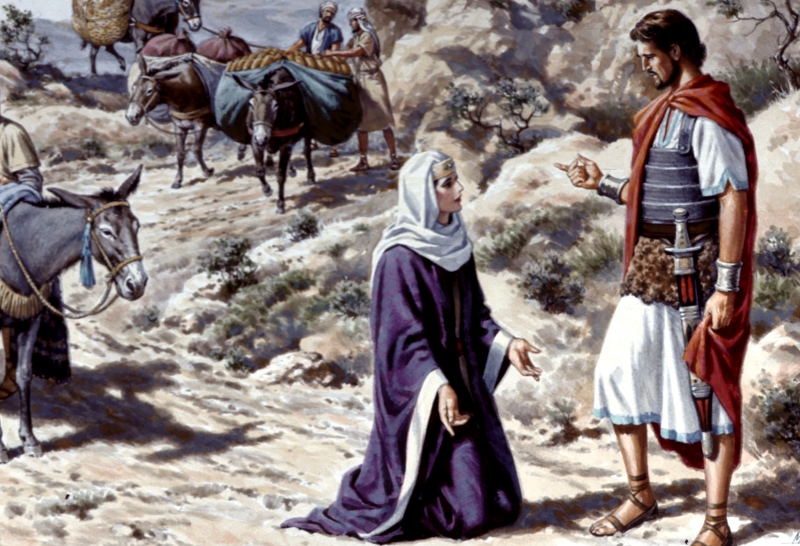
God’s word doesn’t tell the circumstances of their courtship, what the groom was like when they wed, or if they’d met before they were joined. By the time the ugly story unravels in 1 Samuel 25, the wealthy husband is called “Nabal,” meaning full of folly and worthless. “The woman was discerning and beautiful, but the man was harsh and badly behaved” (1 Sam. 25:25), and her name was Abigail. Her presence in the narrative of scripture testifies that God sees  and knows that sometimes it’s hard for wives to have a grateful spirit, but it’s not impossible.

God designed marriage to reflect the oneness He Himself displays, to be the tender blending of mutual protection and singular intimacy that produces a grateful spirit. But sometimes it falls far short. How can we be grateful in marriages marred by the folly of our flesh?

One woman’s example

David and AbigailAbigail’s grateful display took place on the stage of sheep shearing season, a major event for a businessman with 3,000 sheep and 1,00 goats.  As David fled from King Saul, the would-be king sent a  request for culturally-expected hospitality; the “worthless” one lived up to his name,  inviting David’s vengeance. To have attacked Nabal and his people would’ve tarnished David with “bloodguilt” and spoiled his preparation as future king. Abigail knew David was God’s chosen, anointed king, and she acted boldly out of regard for God’s plans, as well as  the honor of her home. Despite her imperfect circumstances and intolerable marriage, she displayed a godly spirit and presented herself in humility. Despite disappointment, she had  nurtured a strong heart turned straight after God’s plans. Abigail was satisfied in God and determined to honor Him. The soil of her marriage was hard, but she cultivated an attitude of gratitude.

A God-filled wife is a grateful wife

Abigail found satisfaction, help, and purpose in her Husband-God, and she directed her gratitude to Him. As a God filled wife, Abigail was able to forgive her husband, act for his best, consider his reputation, and give unconditional love aside from his folly.  Unable to trust him, she turned her eyes from her human husband and looked to the God she could trust.  Sometimes it’s really hard to be grateful in marriage, but it’s possible.

She acted boldly, because she knew, “my lord<David> is fighting the battles of the Lord” (1 Sam. 25:28). Abigail’s story didn’t end with marriage counseling or reconciliation, but with judgment on her husband and a new beginning for her.  Declared “Blessed be your discretion, and blessed be you” (v. 33) by David, she answered, “Behold, your handmaid is a servant to wash the feet of the servants of my lord” (v.41). Humility revealed her grateful heart.  In the harshest of marriages, she cultivated an attitude of gratitude.

Proverbs 31 gives a composite picture of the qualities of an excellent wife. Written by King Lemuel, this man was probably a contemporary of Solomon, a son of David.  I have to think King Lemuel would’ve known of the woman Abigail and the story of her beautiful, grateful spirit that endured the folly of a drunkard husband and captured the heart of the shepherd-warrior David. Perhaps Abigail inspired the kind of woman described in King Lemuel’s proverb about a wife who does her husband good, “and not harm, all the days of her life” (Prov. 31:12).

To cultivate thanksgiving in a hard marriage

  1. First cultivate trust in God and His plans
  2. Grow your individual faith-roots deep
  3. Pray for your husband and act for his good
  4. Focus on God’s grace to you and give it in return to your mate

If your marriage resembles that of Abigail to Nabal, focus on gratitude in your relationship to God. If you are blessed with a husband who loves you well, don’t take it for granted; express thanks to God and to your man. Every wife can have an attitude of gratitude.

If Abigail was your friend, what would you tell her about God to encourage her?

His Word when we’re burned out

August 21, 2012 by Julie 13 Comments

Do Not Depart

Woman crying head in hands From where I sit, I’ve had a close up view of people following hard after God who have fallen hard in their pursuit of living for Him.  We’re all susceptible to wanting to please people. Expectations sometimes sweep away passionate people who wanted to do their best and end up worn out. Without meaning to, family, bosses, relatives, friends,  and church people have needs that may drive the most well meaning woman to a weary place before she even knows it.

In his book Leading on Empty, Wayne Cordeiro cautions that, “You will burn out sooner on the inside than you’re able to see on the outside.” We may want a quick “fix” to this slow growing problem, but that covers up the true need to recharge, figure out what brought us to burnout, and change the way we do life. No one is exempt from a burned out condition.

Some signs of burnout

  1. Work becomes difficult
  2. What once gave us joy feels like a heavy drain
  3. Decisions paralyze us
  4. Our creativity is stifled
  5. Physical symptoms or depression arise
  6. We feel swept along by life, but out of control

God’s Word records worn out words from some of God’s heaviest hitters:  Moses (Numbers 11:14-15), David (Psalm 69:1-2), Elijah (1 Kings 19:2-4).

Do Not Depart

God’s Word for the weary

Elijah came away from victorious battle with 850 prophets of Baal and the evil King Ahab, leaving him with a target on his back in the eyes of the even more evil Queen Jezebel. Physically, emotionally, and mentally drained, the Prophet ran away into the wilderness and collapsed under a broom tree. He uttered a prayer to ask God to end his life. He was “over it.”

There under that tree, God sent an angel to speak words of understanding to the burned out, battle -weary man. Do you ever wish God would speak to you in your battle-weary place beside your laundry pile, at your bedside, at your desk, or in the pew? He might say what the angel said to Elijah:

But he himself went a day’s journey into the wilderness and came and sat down under a broom tree. And he asked that he might die, saying, “It is enough; now, O Lord, take away my life, for I am no better than my fathers.” And he lay down and slept under a broom tree. And behold, an angel touched him and said to him, “Arise and eat.” And he looked, and behold, there was at his head a cake baked on hot stones and a jar of water. And he ate and drank and lay down again. And the angel of the Lord came again a second time and touched him and said, “Arise and eat, for the journey is too great for you.” And he arose and ate and drank, and went in the strength of that food forty days and forty nights to Horeb, the mount of God (1 Kings 19:1-8).

God knows we have limits, yet He has no limits. He invites us to let Him care for our needs, ceasing from doing and receiving His invitation to rest, letting Him be our Protector and Provider. The undeserved favor He shows can shelter us when we’re so weary we wish we could die.  Even the man after God’s own heart, the anointed shepherd-king David experienced the feeling of being in over his head:

“Save me, O God! For the waters have come up to my neck.I sink in deep mire, where there is no foothold; I have come into deep waters, and the flood sweeps over me.” (Psalm 69:1-2).

God has an answer for seasons of weakness when life is heavy on our shoulders of flesh:

But he said to me, “My grace is sufficient for you, for my power is made perfect in weakness.” Therefore I will boast all the more gladly of my weaknesses, so that the power of Christ may rest upon me.  For the sake of Christ, then, I am content with weaknesses, insults, hardships, persecutions, and calamities. For when I am weak, then I am strong (2 Corinthians 12:9-10).

Have you ever been under a broom tree? Eat what the Lord has prepared to give you strength, rest with Him watching over your circumstances, and follow Him one more step at a time. The power of Christ will rest on you.

 What words would you share with someone who is under the broom tree?

Jehovah Shalom: Climb out of the winepress!

July 17, 2012 by Julie 4 Comments

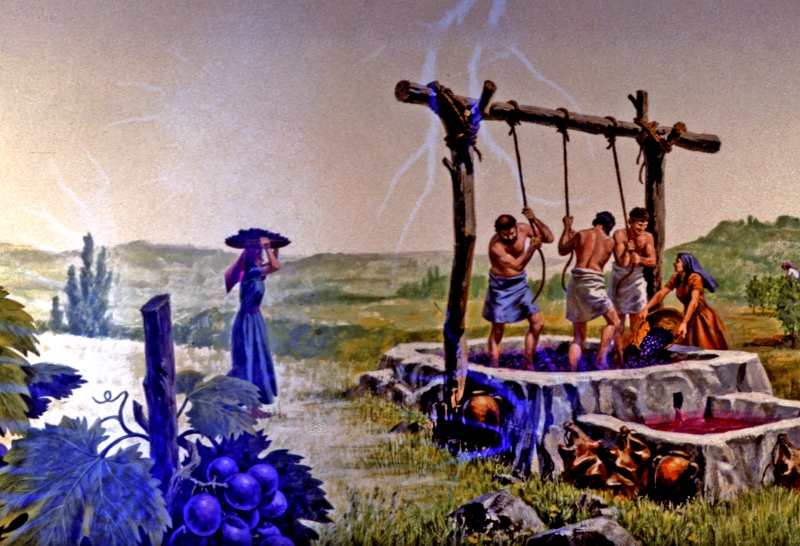
A winepress from Biblical times

He was the least important child in the least important family of his tribe, in a nation oppressed for seven long years. Watched by the angel of the Lord from beneath a tree, Gideon threshed wheat in hiding down in a winepress, where the Midianites wouldn’t find him or his precious grain. He believed God had forsaken them, despite their unfaithfulness to Him. When the Angel approached Gideon to declare God was with him, Gideon spoke the honest, desperate words of a man whose daily life had worn deep ruts in suffering’s path. “Please, sir, if the Lord is with us, why then has all this happened to us? And where are all his wonderful deeds that our fathers recounted to us …?” (Judges 6:13a).

Valley moments

Tired of being beaten down from his start on the lowest of places, Gideon asked what the honest among us will admit to wondering, “If God is with us, why is life so hard?”

Last week I created a spiritual life map of my journey with God. Some of my greatest discoveries about who God is came in my darkest places. I noticed that “valleys” were often followed by strength and advance. Gideon was in a low place when the angel of the Lord came and patiently answered his honest question. It wasn’t until the weary Israelite realized, “I have seen the angel of the Lord face to face” (v.22) that his desperation turned to fear. As if things weren’t bad enough, Gideon went from fragile to freaked out. Can you relate?

Peaceful moments

The Lord answered him where he was: “Peace be to you. Do not fear; you shall not die.” (v.23)
The only thing worse than being insignificant and insecure in the face of a marauding enemy is understanding how insignificant you are in the face of a holy God. Realizing he was part of a divine encounter with the God who had NOT forsaken him, Gideon built an altar of worship and named it for the discovery of his darkest moment: Jehovah-shalom. The Lord is peace. (Judges 6:11-24)

When we’re under attack, uncertain, in need, and painfully aware of our weakness, the world only offers illusions of temporary feelings suggesting peace. Jehovah-shalom IS peace, so He can promise, “Peace I leave with you; My peace I give to you; not as the world gives, do I give to you. Let not your heart be troubled, not let it be fearful” (John 14:27).

Past our understanding moments

Gideon couldn’t conceive of what happened in the wine press that day, stunned as he served meat and unleavened bread to the angel of the Lord. The peace he found “passed understanding;” he encountered true peace in the midst of hardship. He discovered what God offers each one of us reading now: real peace.

“… do not be anxious about anything, but in everything by prayer and supplication with thanksgiving let your requests be made known to God. And the peace of God, which surpasses all understanding, will guard your hearts and your minds in Christ Jesus” (Phil. 4:6-7).

Yes, it surpasses understanding, but it can guard our hearts and our discouraged thoughts when we find ourselves in the wine press, hiding from our hardships and fighting fear. We can know the peace of Jehovah-shalom. We are meant to know the peace of Jehovah-shalom.

Let’s climb out of the wine press and get down on our knees, so Jehovah Shalom can cover us in peace that’s out of this world!

Have you had a “wine press” experience when God gave you His peace?

I Praise Because He is Worthy (Run to Him – Psalm 148)

April 14, 2012 by Katie Orr 2 Comments

Praise the Lord

We’ve been in Psalm 148 this week. Everytime I read it, I get this Seeds Family Worship song stuck in my head. (Click here if you can’t see the video.) It’s my daughter’s favorite Seed’s song, and she asks for it almost every time we get in the car. So I’ve listened to it…a lot.

Praise the Lord!

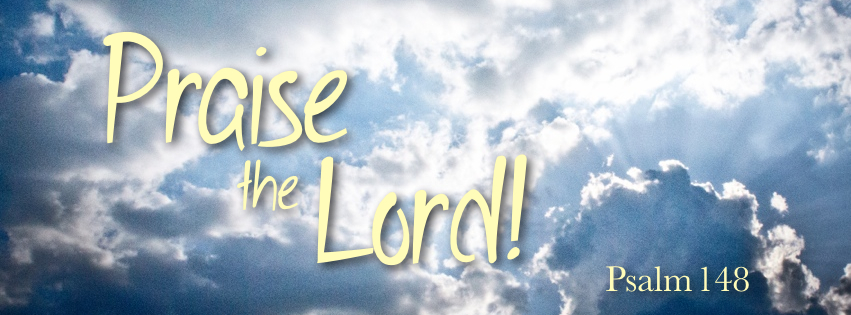
There is no mistaking the main command in Psalm 148!  We are to praise the Lord.

Praise the Lord

I looked at the Hebrew word for praise this week; it is halal. I love the insight looking at the original language gives:

…to shine…to make a show, to boast; and thus to be (clamorously) foolish; to rave…celebrate, commend…glory, give (light)…(sing, be worthy of) praise…renowned, shine. (Strong’s Concordance via eBible)

How to Praise the Lord

One fun Bible study tool is to insert these synonyms into the verses, to get a fuller meaning of the text. Let’s try it together!

Shine the Lord!
Make a show about the Lord!
Boast about the Lord!
Be clamorously foolish about the Lord!
Rave about the Lord!
Celebrate the Lord!
Commend the Lord!
Give glory to the Lord!

Doesn’t this give a better idea of what it means to praise the Lord?

Let them praise the name of the Lord!

What can you praise God for today? Share it in the comments below!

Oh sing to the Lord a new song;
sing to the Lord, all the earth!
Sing to the Lord, bless his name;
tell of his salvation from day to day.
Declare his glory among the nations,
his marvelous works among all the peoples!
For great is the Lord, and greatly to be praised!
(Psalm 96:1-4 ESV)

(And by the way, the picture above is the perfect dimensions for a free Facebook cover. To download it for free, just right click the picture to download!)

I Obey Because He Instructs Righteousness (Run to Him – Psalm 119)

March 31, 2012 by Katie Orr 2 Comments

Picky

Obedience.

It’s hard for my four year old. (It’s also hard for that four-year-old’s momma.)

Though I long to live a life of obedience to His commands, I struggle daily to keep my feet on the narrow path.

Obedience is not simply a choice of the will, as our efforts will only bring us so far. Our beliefs come in to play as well.

When I disobey I am ultimately saying that I know better—just like my four year old. Now, I might never say so with my mouth—that I know better than God—but I say it daily when I choose my own way.

You do too.

Disobedience, even in the smallest of choices, is at its core rebellion against the God of those commands.

When I choose selfishness instead of sacrifice, I sin. When I “vent” my frustrations about a difficult person instead of holding my tongue, I disobey. When my thoughts drift to discontentment and dwell in an attitude of ungratefulness, I rebel.

In each of these situations, I say “Katie knows best.”

Obedience is saying “God knows best.”

Holiness is not a series of do’s and don’ts, but conformity to the character of God and obedience to the will of God. – Jerry Bridges, The Pursuit of Holiness

The Beliefs of the Psalmist

Your testimonies are wonderful; therefore my soul keeps them. (Psalm 119:129)

The psalmist was not some super-Christian, who had more ability to obey than you or me. We have all been given everything we need for godliness (2 Peter 1). We just need to figure out what hinders us. Oftentimes it is because we don’t believe that God and His commands are good. The psalmist saw God’s commands as wonderful, and I fully believe that had all to do with his commitment to obedience.

Here is more of what the psalmist believed:

  • God’s words gives light and understanding. (Psalm 119:130)
  • His rules are forever right and faithful. (Psalm 119:138, 144)
  • God righteousness is everlasting. (Psalm 119:137,142)
  • His Word is very pure.  (Psalm 119:140)
  • His law is truth and well tried. (Psalm 119:142)

Because of these beliefs, the writer of this Psalm had a resolved commitment to the Word of God, and the God of those words. This commitment flows naturally into obedience.

The Actions of the Psalmist

Here are just a few actions I saw of the psalmist:

  • He longed for God’s commandments. (Psalm 119:131)
  • He prayed for God to teach him His statues, and direct his steps by the Word (Psalm 119:133, 135)
  • He loved the Word. (Psalm 119:140)
  • He delighted in God’s commands. DELIGHTED. (Psalm 119:35, 143)
  • He was determined to walk in obedience to God’s Word. (Psalm 119:33,34,57)

The psalmist understood the relationship between God and His commandments. They could not be separated. If He wanted to be near to God, He must walk in His commands. He saw God and His commandments as good, right, and trustworthy. That made all the difference in his obedience.

When we walk with the Lord

in the light of his word,

what a glory he sheds on our way!

While we do his good will,

he abides with us still,

and with all who will trust and obey.

Then in fellowship sweet we will sit at his feet,

or we’ll walk by his side in the way;

what he says we will do,

where he sends we will go;

never fear, only trust and obey.

Trust and obey, for there’s no other way to be happy in Jesus, but to trust and obey.

–John H. Sammis

What did you see in the verses you studied this week? Come and share with us what you learned!


Photo Credit

The Most Powerful List You Can Make :: Run to Him :: Psalm 77

March 9, 2012 by Do Not Depart 8 Comments

We make lists. To do lists. To read lists. To buy lists.

We live in a fast paced society that is all about getting things done. Go. Go. Go. Our culture sees the power in movement. But in all that getting ahead, we miss the power of remembering.

Sometimes? At the end of a day, I make a list of the things I accomplished simply so I can check them off. Yes, I’m one of those people. But there is a certain power and momentum in remembering what we’ve done.

the list

Photo credit

Apparently, the Psalmist was a list maker too. But he didn’t make a list of all the things he has or hasn’t done. Instead, he made a list of all the things God has done.  And wow what a difference it made!

In Psalm 77, the writer was having a terrible, horrible, no good, very bad day.

…I would not be comforted… (v. 2)

I was too troubled to speak. (v. 4)

Ever had one of those days? Ever wonder how to change the course of one of those days? Here’s how he did it:

Starting in verse 13, he began to simply list the wonders God has done.

Your ways, God, are holy. What god is as great as our God? You are the God who performs miracles; you display your power among the peoples. (v. 13)

The change in tone, attitude and hopefulness of the passage is simply remarkable from verse 13 onward.

With your mighty arm you redeemed your people, the descendants of Jacob and Joseph…You led your people like a flock by the hand of Moses and Aaron. (vv. 15, 20)

He may not have immediately felt different, but he immediately spoke different and that changed everything.

He took his eyes off of himself and what he could or couldn’t do. Instead put his eyes on God and what He has already done and will do again.

You see, God doesn’t change. He has been faithful to do wonders and He will be faithful to do wonders. Our greatest times of struggle are simply when we forget to remember.

Make a list

Keep a journal of the things God has done in your life. When troubles come your way, fight them with remembrance of the wonders He’s done.

Psalms Bible Study, How to run to God, Psalms study


What is one thing He’s done that you can remember today?

What did you learn from your study of the Psalms this week?


________________________________

Kat blogs at Inspired To Action, a site dedicated to helping moms develop the habits and skills they need to effectively manage their homes and raise children who are prepared to change the world. Kat and her husband live in the great state of Texas and have 3 children ages 7, 5 and 2.


Clean to the Fibers {Run to Him Psalm 51}

February 24, 2012 by Julie 6 Comments

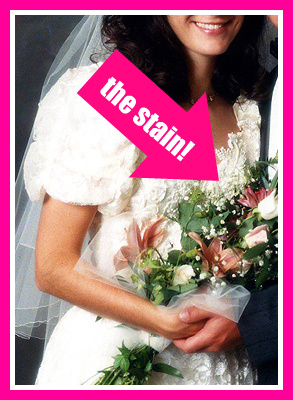
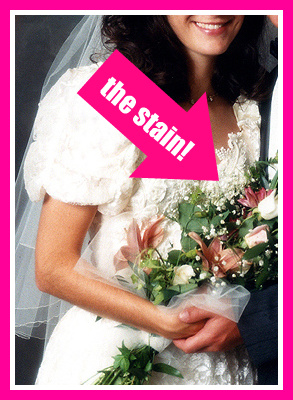
The pollen from my bouquet left a dark yellow stain on the neckline of my once pure white wedding dress. We went into crisis mode to renew the lace and prepare for presentation to my husband-to-be. With little time, there was no way to truly cleanse it; covering it up was the best we could do.

The Need for Repentance

None of us begins with a pure heart; we’re all born with a sin problem. We’re delivered to this world with a need for deliverance. When the prophet Nathan confronted David with his adultery and murder, the Psalmist’s sin stared him in the face. The King was “always aware” of his offense “against God,” so “evil to God,” recognizing he was born that way (v.5). David shared his individual longing to be made right in Psalm 51’s words, written for a congregational group to song together. The ceremonial system required worshipers to “wash” and “cleanse” themselves before coming into God’s presence.  Knowing he was undeserving, he appealed to the character of God, marked by steadfast love and abundant mercy.

  • David knew the scope of his offense and responded with a humble heart.
  • David knew the scope of God’s mercy and responded with a plea for deliverance.
  • David knew the scope of God’s love and responded with a worshipful heart.

Have mercy, wash me, cleanse me, purge me, wash me, hide your face, blot my sin, create a new heart, renew my spirit, don’t cast me away, don’t remove your Spirit, restore my joy, uphold me…. 

These are the words of a man who was sin-stained and knew it. These are the cries of a man who was unworthy to be in God’s presence and knew it. These are the pleas of a man who knew God’s mercy and love surpassed his dirtiness and evil. These are the hopes of a man who knew he could not make himself clean, but God could. Could these be your words?

Because He is the “God of my salvation” (v.14), He looks for more than a covering up of our outward stain; He wants inward purity demonstrated by outward obedience.  Cleansing prepares us to enter His presence. Without it, our dirty condition overflows to the whole community of believers. A gathering of the cleansed and forgiven cannot help but respond in worship to the One who mercifully gives what isn’t deserved.

The Joy of Restoration

David knew the joy of having his personal evil washed to a miraculously whiter-than snow condition. He felt the joy of having his contrite heart and broken spirit healed and accepted.  Deliverance from sin opens the door for freedom in worship, so he promised, “my tongue will sing aloud of your righteousness … and my mouth will declare your praise” (vv. 14-15). Worship is the song of a forgiven heart.

There was no time to cleanse my wedding dress. A heavy spray of hairspray, covered by a dousing of baby powder, masked the stain on my yellowed bridal lace. It was covered, but not clean.

God isn’t fooled by our attempts to cover up our sin. Only the God of our Salvation has the power to cleanse the deep fibers of our hearts and restore our broken spirit.  For those who know the joy of undeserved mercy, let’s join David’s congregation and sing the song of the forgiven hearts!

  • Do you have a humble heart that’s honest about your stained condition?
  • Have you appealed to God’s mercy with a plea for cleansing and to be upheld?
  • Are you taking time to worship God privately and with a group of other forgiven people?

I Trust Because He Delivers {Run to Him Psalm 40}

February 17, 2012 by Caroline 10 Comments

Sitting in a hospital works wonders for one’s trust in God.

My husband and I have seen with our own eyes how God delivers people from pain, troubles, and sadness. It’s not that we won’t experience these hard things. We will see suffering in this life (Romans 5:1-5), but God always remains present for us to trust through the good and the rough. His answer may not always be what we expect, but we can rely on Him to give us what we need (Psalm 34:8-9).

Waiting While Crying Out

In Psalm 40, David waited and received answers from God on his previous troubles (Psalm 40:1). He witnessed God’s good deeds, deepening his knowledge of Him (Psalm 40:3) and set about praising Him.

“Such wonders of God demand a response (Psalm 40:5). No ritual will suffice (Psalm 40:6), only serious commitment to God’s will (Psalm 40:7-8).” (Source: New Bible Commentary, p. 512)

Image from Microsoft Clip Art

Yet, David still needed God’s help and deliverance (Psalm 40:11-13). Continuing to need God’s help did not cause David’s trust to suffer. Instead, he trusted all the more because he had witnessed God’s saving redemption. And because of that trust, he waited patiently while still crying out to God for His saving help. Trust breeds patience and that patience signifies deep trust. Oh, to have that trust!

The New Bible Commentary looks at David’s example of patient trust and summarizes: “How we react to life constitutes a potent testimony and nothing is more powerful than to maintain a simple attitude of waiting trust” (p. 512).

He Delivers

God’s love and faithfulness protects (Psalm 40:11). He gives not only His salvation and His physical protection, but His love and faithfulness protect our hearts, too.

Psalm 40:17 declares that God helps and delivers. We can trust even these words because we know His Word to be true (Psalm 33:4).

We always need God’s gracious help. And He is always willing to give it His children, who love Him, revere Him, and seek Him wholeheartedly. We can do all of this in trust because we see how He delivers. We have known from the beginning (Psalm 22:9-10) and in spite of those who mock the faith (Psalm 22:8) – God is trustworthy. I may want answers fast or a different path than what may be placed in front of me, but in and throughout it all, I have a God who opens my ears to hear His blessings (Psalm 40:6) and opens my heart to receive His love.

My prayer today is to trust like David shows us because God’s love and deliverance produces this praise-filled reliance:

“Be still before the LORD and wait patiently for him…” – Psalm 37:7


How have you personally seen God deliver? What else did you learn from this week’s Run To Him reading in Psalm 40?

Where are you safest? {Run to Him – Psalm 27}

February 3, 2012 by Lisa Burgess 23 Comments

It’s been almost one year since tornadoes ripped through neighborhoods hauntingly close to mine. The weathermen had warned April 27 would be bad, but until my own trees and fence blew down, I didn’t believe them.

By the end of the day, it was a war zone. Wind versus everything else. On the outside, it appeared wind had won.

But on the inside—for those hidden in shelters—there was safety.

Who is the enemy?

David knew wars. Enemies surrounded him. Yet he had the audacity to ask, “Whom shall I fear? Of whom shall I be afraid?” (Psalm 27:1).

Um, I could make a list, David. A long list.

And not just for him, but for me, too. I’m leery of new situations, confrontational people, even hints of danger. And that’s not even counting “evildoers assailing me to eat up my flesh, my adversaries and foes” (Psalm 27:2).

So what do we do in times of danger, or perceived danger? In Alabama, many are buying tornado shelters. Our instinct is to protect ourselves from vulnerability.

But what did David ask?

David did one main thing. He asked the Lord, “Can I stay in Your presence?” (Psalm 27:4). There was safety. There was shelter.

In God’s presence, he could sing with joy, he could cry for guidance, he could learn His ways.

Can we be that dependent? Can we be vulnerable enough to stop striving after stronger fortresses, and instead trust the One already built for us?

Can we let go of trying to be more—if I pray more, study more, mop my kitchen floors more—and instead let God be more?

He didn’t tell us to build a spiritual storm shelter. He said He would hide us in His.
He didn’t say to bring our own tents. His can cover us just fine.
He didn’t even point toward a big rock and say climb up. He lifts us up and places us on top.

So what do we do?

Let’s start by repenting. Instead of wasting resources building our own walls of protection, let’s ask His forgiveness for our attempts at self-sufficiency. And become dependent instead.

Then let’s stand firmer in our faith. Can we let down our guard in a relationship that needs more authenticity? Perhaps we can try a new ministry, trusting He will lead us. Or maybe “waste” more time with Him, simply delighting in His presence.

If we want more peace, more rest, more confidence—and God to receive more glory—let’s live and love out of the home base of His shelter.

We don’t have to design it.
We don’t have to manufacture it.
We don’t even have to pay for it.

We just worship in it with joy. God is our shelter. Nowhere else can be safer.

For he will hide me in his shelter in the day of trouble;
he will conceal me under the cover of his tent;
he will lift me high upon a rock.
Psalm 27:5

Psalms Bible Study, How to run to God, Psalms study Is it easy or hard for you to abandon self-sufficiency? In what areas do you most realize your dependency on the Lord?

Please share something that helped you this week from Psalm 27.

How to Live the Successful Christian Life

January 30, 2012 by Katie Orr 14 Comments

I want to be prosperous and successful. Don’t you?

Specifically, I long to see success in my spiritual life. I want to experience spiritual growth and abundant fruit. I want to look different next month than I do today—I desire for more of Christ to be seen in me.

My assumption is that you do too!

How to Live the “Successful” Christian Life

This Book of the Law shall not depart from your mouth, but you shall meditate on it day and night, so that you may be careful to do according to all that is written in it. For then you will make your way prosperous, and then you will have good success. -Joshua 1:8

Prosperity and “good success” is the promise in this passage. It is a conditional promise, and the condition is that we do according to all that is written in the Book of the Law, God’s Word. So if we are intentionally obedient to God’s Word, then we are promised a prosperous way.

Bible, Psalm 119

Photo Credit

If you have been a Christian for more than a week, you know that obedience is a struggle. We cannot go out and just “be good”—it doesn’t work. There is a way and a purpose for which God has designed our growth to occur, and we learn His way in His Word. That is why the promise hinges on the first part of this verse, where we see the command. Do you see it?

This Book of the Law shall not depart from your mouth, but you shall meditate on it day and night, so that you may be careful to do according to all that is written in it. For then you will make your way prosperous, and then you will have good success. -Joshua 1:8

The direct command is not to be obedient, though that is certainly an expected by-product. The command is in the first part of the verse. At first glance it looks like two commands:

  • This Book shall not depart from your mouth
  • You shall meditate on it day and night

I believe this is actually one command, restated. Let me explain how I got there.

How to Meditate

The Hebrew word for meditate is “hagah” which is also translated in a variety of ways, including speak, imagine, study, mutter, utter, roar, talk. To meditate is not something to be done quietly in your head. What we meditate on should be on our mouths. Out of the overflow of the heart the mouth speaks! (Matthew 12:34) Like the movie you can’t stop talking about because it was that good; or the giddy teenage girl in the midst of a huge crush where everything reminds her of him (and she is going to let everyone know about it!)

This Book of the Law shall not depart from your mouth, but you shall SPEAK it (MUTTER it, STUDY it, UTTER it, TALK it) day and night…

So, it is the same command: Meditate on the Word. As we meditate on it, it will not be able to leave our mouths, because when the Word of God penetrates our hearts it will affect the rest of us. It is only then we will have the ability to be obedient, because we will know His way, His plan—and we will want to do it. It is then we will make our way prosperous, and then we will have success.

I’ve seen this hold true in my own life, haven’t you? The more I understand God’s ways, through the studying of His Word, the better equipped I am to live out this life as He intends for me to, and the more my heart longs to be right in the middle of His plan for me. And as I am obedient to follow His Word, I see fruit. I see life change. I see Christ in me!

This is the success we are promised.

An Invitation to Abide

Joshua 1:8 is just one of the many passages in the Bible which communicate this truth; that the Christian life is best lived as we center our lives on the Living Word of God. Transformation happens as we remain; as we abide in Christ; as we do not depart from the one who loves us most.

Do Not Depart exists to encourage and equip you to abide the Word. Our desire is to give you the inspiration and tools you need to spend time in the Bible in such a way that you (like that giddy teenage girl) can’t help but see Him everywhere you go—so much so that you just can’t stop talking about Him.

Oh how I love your law! It is my meditation all the day. -Psalm 119:97

What are you meditating on? What can’t you stop talking about?

What encourages you to meditate on the Word of God?

_____________________________________

Many of you are new readers to Do Not Depart, and we are so glad you are here! Our team is passionate about God’s Word and we long to help you experience God in deeper ways, through His Word.

Here are a few ways to connect with us!

Have Do Not Depart posts sent directly to your inbox.

Subscribe by RSS.

Like Do Not Depart on Facebook.

Follow @DoNotDepart on Twitter

« Previous Page
Next Page »

This Month’s Theme

  • Jesus is the Way
  • And He Shall Be Called Series Intro

Enter your email address to have new posts emailed to you:

We’ll come to you

Enter your email address to have new posts emailed to you

Categories

Bible Memory – Lent 2021

Memorizing Isaiah 12

Let the Children Come

Let the Children Come

Want more #HideHisWord resources?

Memorizing Psalm 1

Find Us on Facebook


Search

Recent Posts

  • Series Wrap-Up: The Lord Is My Light
  • His Marvelous Light
  • When the Darkness Deepens
  • Though I Sit in Darkness…
  • Let Your Light Shine
  • Life-Giving Light

Archives

© 2026 · Pretty Creative WordPress Theme by, Pretty Darn Cute Design