• Home
  • About
    • Our Contributors
    • Our Beliefs
  • Blog
  • Bible Studies
    • Scripture Dig
  • Archives
  • Shop
  • Advertise
  • Contact
    • Email
    • Facebook
    • Instagram
    • Pinterest
    • Twitter

Do Not Depart

Encouragement and Tools to Abide in God's Word

You are here: Home / Blog

Sin causes pain in the body of Christ

October 19, 2010 by ScriptureDig 8 Comments

Welcome to Do Not Depart! Be sure to subscribe to the Do Not Depart RSS feed or email updates to receive regular encouragement and tools to abide in God's Word.

Welcome back to Do Not Depart! If you haven't already, subscribe to the Do Not Depart RSS feed or email updates to receive regular encouragement and tools to abide in God's Word. This post may include affiliate links. To read our full disclosure policy, click here. Thank you for supporting this site!

Image by Corbis

I’ve been suffering with bursitis and tendonitis in my left hip and leg for the last year. The pain in this one area affects the functioning of my whole body and my lifestyle. Limping and favoring that one side throws my back off. I can’t sit at my computer working for long periods of time. I could keep going, but I know you’ve got the point.

Paul’s body analogy for the church helps us understand so much about the body of Christ. For instance, when one member suffers or rejoices every member suffers or rejoices with her. (See 1 Corinthians 12:26.) We’ve probably all experienced this. For instance, if a fellow believer loses a loved one, we all gather around her with prayer, encouragement, and support.

But what about sin? Let me clarify before we go further: We all still sin. None of us will be perfect this side of eternity.

However, there is a difference between a repentant believer and a Christian who blatantly and unrepentantly continues in a habit of sin.

What should the church do with that kind of situation?

Paul dealt with this in his first letter to the Corinthian church. A member of that church had an ongoing sexual relationship with his stepmother. He was unrepentant and the church had done nothing to stop him. In fact, Paul said they should have “been filled with grief” and put the man “out of your fellowship” (1 Cor 5:2).

Hmm. Doesn’t that seem harsh? Shouldn’t we be more tolerant than that? Where does Paul get that anyway? Paul got it straight from Jesus! In Matthew 18:15-17, Jesus laid out a process for dealing with an unrepentant brother living a lifestyle of sin. Here it is in a nutshell:

  • Go to the brother or sister in private and show them their sin.
  • If they refuse to repent, go back with one or two witnesses.
  • If they still won’t listen, bring them before the church.
  • Still unrepentant? Remove them from the fellowship of the church.

What? Why? Two important goals sometime require this drastic measure.

1.      The health and witness of the rest of the body. Just like pain in one part of your physical body affects the whole, sin in one part of the body of Christ affects every member. The actions of an unrepentant sinner can bring temptation, pain, anger – the list goes on! And it affects the operation and effectiveness of that church within the Kingdom of God.

2.      The restoration of the unrepentant sinner. When Paul gave his instructions to the Corinthian church to expel the sinner from their fellowship his hope was that the man’s “sinful nature may be destroyed” (1 Cor 5:5). The end goal was for the discipline to bring the man to repentance so his relationship with God and the church body could be restored. I love that God graciously recorded the outcome of this particular situation for us in Paul’s second letter to the Corinthians. Based on what we read in 2 Corinthians 2:5-11, the church followed Paul’s direction regarding the discipline of the unrepentant member. And in fact, the man was sorrowed over the separation and brought to repentance! So Paul directed the church to bring him back into fellowship with love and encouragement.

Not many churches today practice discipline as Jesus commanded.  Jesus’ teaching is clear. The example of the New Testament church demonstrates the benefit to the unrepentant sinner and the church body. I have witnessed the benefit of it in the lives of Christians.

So, why do we hesitate? Why don’t all our churches practice discipline as Jesus taught? Why do you think? What have you seen?
 

Sock Shopping

October 18, 2010 by Julie 8 Comments

Outside of our city there’s a store called “The Sock Store.”  You know what you’ll find inside. They’re not distracted from their mission of selling socks. A while ago, I went sock shopping, but I went to a store that “has it all.” Ultimately, I became distracted and overwhelmed by the abundant options; I didn’t even buy socks.  I did, however, go home with things I didn’t need … and cold feet.

In much of the world today, people have limitless options. Two hundred years ago John Wesley said, “I fear, wherever riches have increased, the essence of religion has decreased in the same proportion.”¹ Where the Church lives in an atmosphere of comfort and excess, the faith focus of members may become diluted. A believer in Eastern Europe admitted, “Some of us are voting for the Communist Party to return to power, in order to help purify the church.”¹ In Western society much of the Church has taken on corporate characteristics, offering a multitude of options to suit varying tastes, requiring little in return, for fear of losing regular attendees and contributors. Much of our accommodation is done in the name of reaching more people, but scripture says not many choose the narrow gate; most choose the wide gate. With so much available, no one wants to go where there’s only “socks,” even if socks are what we need. If it’s available and appears exciting, we want to try it.

Acts 2:42-47 gives a picture of an early church with focus. Believers exercised faith by releasing their grip on possessions, being generous with others, worshiping together, and sharing life.  The result was that “the Lord added to their number day by day those who were being saved.” When the church maintained its focus of teaching, fellowship, breaking bread, and prayer, more people were actually reached.  Chuck Swindoll says, “When we commit ourselves to the essentials, our churches will be contagious for the right reasons.”²

The consumer trap isn’t new. Just a few chapters after the beautiful picture of the fledgling Acts 2 church, Acts 5 tells about Ananias and Sapphira = early consumers. They wanted to know, “What can we get out of this? What’s in it for us?” Within 3 hours of each other, their lives were taken, evidence God wanted believers focused on true worship, then and now.

Just like The Sock Store, people need to know the Church is about:  worshiping the one true God and knowing His truth. Our goal is that people find the Savior and know Him, instead of getting caught up in consumer traps of shopping for pleasure feeding trends and, ultimately, distracting them from what they need most.

What’s distracting you from what you came to the Church for?


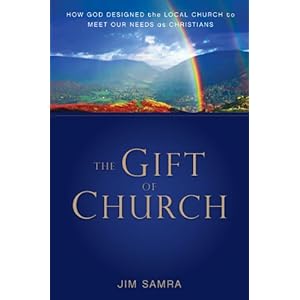
We are giving away a copy of The Gift of Church by Jim Samra. You can read the details of what you’ll find in the book and how to enter by clicking here.


For Further Reading:

1  What Good is God? by Philip Yancey

2  The Church Awakening by Chuck Swindoll

Know Your Goal

Seeing the church as a gift

October 15, 2010 by ScriptureDig 15 Comments

When we started this series, I wondered how these posts would hit those of you walking around with deep wounds from sinful actions of those around you in local churches.

It’s inevitable that there are some of you who fit that description.

And as we mentioned from the beginning, we understand. It is impossible to invest deeply in the local church and avoid being wounded. Sometimes we are wounded in a good way, as our pride and sin are cut open and exposed… sometimes we are wounded when those around us sin against us and leave deep scars on our hearts.

There is so much I would love to say to you if we had coffee in person. I would love to hear your story. And I would love to give you a book to read.

Whether you are a new believer in Jesus Christ and just learning the “ropes” of  investing in a local church, or a person who has grown up in churches and has battle wounds to show for it, or a person who is actively in ministry as a staff member, pastor’s wife, or other integral role… I cannot recommend this book highly enough.

You see, the church is a beautiful thing. It is full of broken people. It desperately needs the grace of God. And it is a gift from God to you.

In The Gift of Church, Jim Samra does a fantastic job of presenting the Biblical and practical reasons why we should treasure and value the church as a beautiful gift to us from God Himself. Samra never glosses over the very real issues that have plagued church life since the time of Paul… and oh, the stories that each of us could share to back up the fact that sin plagues our local churches still today.

But the church is a gift.

“We love the church because it is a gift from God. We participate in the church because God does. We do not give up on the church, because God refuses to.” – Jim Samra,

It is in the assembly of believers in our local church body where God’s presence is manifested in a unique and powerful way, where God speaks to us uniquely through the preaching and teaching of the Word, corporate worship, and prayer.

It is in the local church where we display the diversity of God’s people, assembled in unity – people of all walks of life, economic and educational backgrounds, age groups, and ethnicities gathered together as one.

It is in the local church where we find true communion – in a world with a coffee house on every corner, filled with people desperately seeking a community where they can know and be known… it is only within the church where we don’t just find community, but we are community.

It is the local church which functions as our spiritual mother, disciplining and reproving us, nurturing us, feeding us, raising us to maturity in Jesus Christ. God has uniquely designed the local church to function in this way, and no other group can truly take its place.

It is the local church where our service and giving and praise join together with those of like mind, creating a beautiful symphony of different giftings and abilities. We can do together what we could never accomplish alone.

It is the local church that functions as the visible Jesus in our world, displaying His grace to a lost world.

In Samra’s own words,

“The church is God’s church, and it is a result of his vision. We can and should take issue with the varying ways in which God’s vision for the church has been manipulated, perverted, and corrupted. We can and should acknowledge that the church has failed us and we have failed the church. But in the end, God’s vision for the church remains. The church is a creative act of God. God the Father designed and decreed the first creation, and he has designed and decreed the creation of the church…

Despite the apparent flaws that sin introduced into the world we live in, it is still a place of great beauty. The same is true of the church. Despite the presence of sin and the ongoing, persistent failures of the church, it remains a community of great beauty.” (137)

I highly, highly recommend this book. Read it yourself. Share it with your pastor as a gift for pastor appreciation month. Discuss it in your small group.

We also have some great news – Pastor Samra has graciously contributed a copy of the book to be given away to one of our treasured Scripture Dig readers!

To enter to win this giveaway (for yourself, your pastor, or someone else!), just leave us a comment and let us know what you treasure most about your local church. How has it impacted and enriched your walk with Christ?

*This giveaway will close at 10pm EST on Friday, October 22nd 2010. Winner will be chosen from the comments below using random.org.

Connection is Key to Service

October 14, 2010 by ScriptureDig 6 Comments

Yesterday, Sandra gave us a beautiful parallel as to why we need the local church. Today we are going to look at why we need to serve through a local body of believers.

I’m going to preface this post with a word to all born again believers. Whether you are involved in a church of 100 or 10,000 or are part of a group who is going organic or seeking out a homechurch, the biblical call to be connected is equally relevant.  The way you function may look a bit different, but the core components of the biblical model should remain the same. The purpose and role of each member should line up with Scripture, no matter where you meet or how many you meet with.

When we are saved – born again by the Living God – we are called to follow Christ. In fact, the term “Christian” was originally used by the people of Antioch to describe the believers there. Their new name describe them as followers of Christ or “Little Christs.” They were known to be doers of what Jesus did – to live like He lived – to serve like He served.

The same should be true for all who call themselves “Christians.”

In Matthew 10:45 Jesus declares one of His primary purposes in making His divinely human appearance on planet earth was to serve mankind.

“For even the Son of Man came not to be served but to serve others and to give his life as a ransom for many.”

So, in essence, we are saved to serve. We glorify God by the way we live out loud what Christ has done inside.

1 Corinthian 12 tells us the people who are born again and make up what we know as the church are given specific gifts that work in different ways in and through the body of Christ. Each gift is given as the Holy Spirit of God chooses.

As each part of the body is dependent upon the other parts of the body to function to its fullest, so too is the church dependent upon each member to function to its fullest.

Time and space does not allow me to go into the various gifts God gives – we’ll save that for future posts, but it’s important that we understand that our connection to a local body is key to our growth as well as our service.

My gifts may take me in a different direction of ministry than your gifts, but each gift is equally important and necessary within the local church and beyond its four walls.

Our unique giftedness is a divine decision which leaves no room for boasting, no room for feeling less than another believer and no room for frustration about another believer’s disinterest in our specific ministry or calling.

Just as a hand does not function as a detached member of the body, neither do we – the church. Whether God’s gifting has placed you in a position of ministry beyond the four walls of your local church or strictly within the context of your home church, connection is key to service.

Gifts determine our service. Calling distinguishes our service. Connection supports, enhances and validates our service.

If you ever have any doubt as to whether connection is necessary for believers, consider the following word from the Word:

“And let us consider how we may spur one another on toward love and good deeds. Let us not give up meeting together, as some are in the habit of doing, but let us encourage one another—and all the more as you see the Day approaching.” Hebrews 10:24-25

Bottom line – we need each other to live this Christian life out loud. We learn how to serve the world by serving each other first. Our local connection is the catalyst for service in and outside the body of Christ.

Do you struggle with understanding the need to be connected to a local church? Would you like to share how you’ve learned the importance of being connected or how your connection has made a difference in your life?

You Need a Local Church

October 13, 2010 by ScriptureDig 7 Comments

If I were going to make a list of reasons to live in Pennsylvania (where I live now), October would be at the top of my list. The weather, the apple orchards, and of course, the beautiful changing leaves. Why do the leaves change color? Basically, it is the mix of sun, rain, and temperature. If you were to take the beautiful maple tree in my yard and transplant it to Phoenix, it would not produce the same vibrant beauty it does here in Pennsylvania. Why? Because it’s only getting sun. But isn’t sun important to make the leaves change color? Yes. But it is only part of the process.
Just like trees need sun and rain and the right temperature for change, Christians also need the right “ingredients” for change. God created the perfect environment for our spiritual growth–the church.

Advancements in technology have created an artificial environment for Christian growth.  Love worship music? Download the latest praise album. Want to hear great preaching? Subscribe to podcasts by popular pastors. But these important parts, in isolation, are not enough. When we discussed the birth of the church, we saw what early believers did- “They devoted themselves to the apostles’ teaching and the fellowship, to the breaking of bread and the prayers” (Acts 2:42). There was preaching, there was worship, but there was more. And to get more, we need each other.

Paul David Tripp defines the local church as “an intentionally intrusive, Christ centered, grace-based, redemptive community.” A preacher on a podcast can’t be intrusive in your life. The worship team who recorded an album didn’t specifically have you in mind as part of their audience. For real growth, you need a local church. You need the sanctifying experiences you will only get there.

How has God used the local church in your spiritual growth?

For more on this topic:

  • “I’ve Never Been Mistaken for Brad Pitt“- a post by Tim Challies on the dangers of comparing your pastor to “celebrity” pastors you can listen to on-line or on the radio.
  • “Why Church Membership” from the True Woman blog.
  • Series from Desiring God on the local church, starting with “The Local Church: Indispensable.”

Can’t we all just get along?

October 12, 2010 by Julie 13 Comments

Saturday morning I sat on the sidelines of the soccer field,  compelled to listen as a woman approached a couple beside us. They spent the 3rd quarter sharing evaluations of local churches, including: opinions about building design, decor, song choice, refreshment availability, relationships with clubs, whether or not the teaching pastors are “good,” and what finally prompted them to “move on” … each time.  Little did they know the stranger beside them was praying and preparing about how to blog about “Can’t we all just get along?”

When I’m in countries where followers of Christ are few, I’m impressed by how they gather around what matters. When we’re in places where Christians & churches are common, our inner “consumer” rises up like ordering at Burger King = having it “your” way. But living with the perspective of “this little light of mine” in a dark world quickly reminds us of what core issues unite, and it frees us up to let peripheral issues take a backseat.

As I’ve worshiped in other lands and cultures, I’ve found the primary thing that matters is what we do with Jesus Christ. Just before Jesus announced He would build His Church on Peter, He asked His disciples:  “What about you? Who do you say I am? (Matt. 16:13-19) What we believe about Jesus is a first step to knowing if we can worship or work together. When we explored salvation in September, we took talked about who Jesus is, because everything else hinges on that. We have to know who He is to believe what He has done and will do.

  • Is Jesus God and man?
  • Is Jesus holy?
  • What did Jesus accomplish when He died?
  • Does Jesus live?

This key question brings up two other core questions:

  • What do I believe about God’s Word, the Bible?
  • What do I believe about man (myself)?

Sharing common convictions about core values allows us freedom to worship and serve together, just as differences in these foundations limit us. Sandra shared about how the Church began, described in Acts 2:42 with 4 core elements: teaching, fellowship, breaking bread, and prayer. Breaking of bread is referring to observing the Lord’s Supper, an act of worship. In his new book, the Church Awakening, Chuck Swindoll says, “You can have more than these four, but you cannot have less and still be a church.” Other things shouldn’t diminish the core four. Sadly, peripheral issues are often reasons people call a time-out … or stand on the sidelines of soccer AND church.

At the 4th quarter, the “church talk threesome” decided to get back to the game, but first they shook hands and introduced themselves. They shared all that without even knowing each other’s names. What would people hear if they sat next to us?

We CAN get along if we remember we’re small lights in darkness, and what matters most for the Bride of Christ is:  What do we do with Jesus Christ our groom?


Suggested reading: 

John 1:1-5;  1 John 5:20

The Church Awakening, Chuck Swindoll

Why all these denominations?

October 11, 2010 by ScriptureDig 16 Comments


image created at wordle.net


Baptist.  Methodist.  Non-denominational.  Liturgical.  Catholic.  Pentacostal.  Evangelical.  Lutheran.  Presbyterian.  Protestant.

Huh?

This transformation from one church to many has become a confusing maze in today’s world. Religion, denomination, worship style … and, for many, the understanding of what it all means seems out of grasp.

But hopefully, after today, you’ll feel a little more confident in understanding why we have so many different kinds of churches and what the primary differences are in their practices.

First, a couple of definitions:

Religion: a specific fundamental set of beliefs and practices generally agreed upon by a number of persons or sects: the Christian religion; the Buddhist religion.

Denomination: a religious group, usually including many local churches, often larger than a sect: the Lutheran denomination.

So, when we discuss the Church – the Body of Christ – we are speaking of the religion of Christianity.  When we discuss specific local congregations – First United Methodist Church or St. Mark’s Catholic Church – we are speaking of different denominations within the Christian faith.

Clear as mud?  Hopefully not!  Whether you attend a Catholic church or a Presbyterian church or an Assembly of God, your religion is Christian – as opposed to those worshipping at a mosque whose religion is Islam.

Within the Christian religion, we find there are two primary divisions:  Catholicism and Protestantism. We all agree that Christ is the Son of God, born of a virgin, lived a sinless life, was crucified, died, and rose again, reigning now at the right hand of the throne of God.  We also agree that man is born sinful and Christ’s death is the necessary sacrifice which enables us to have restored relationship with God.
Protestantism can be further divided into several sub-categories.  In order to maintain as simple an explanation as possible, we will use the following categories:

Liturgical

Evangelical

Pentacostal

Each of these divisions espouses shared theology including Sola Scriptura (by Scripture alone), Sola Fide (by faith alone), Sola Gratia (by grace alone), Solo Christo (through Christ alone), and Soli Deo Gloria (glory to God alone).  Additionally, the protestant denominations believe in the priesthood of the believer – eliminating the necessity of confession through a priest.

(Please remember this is a VERY simplified explanation!  For more detailed information on this topic, I recommend searching the specific topics on wikipedia and using other church history aids such as those found on Crosswalk.com).

Liturgical Churches

Typically the liturgical services most closely resemble the Catholic service.   Corporate worship includes the following elements – communal prayer, reading/hearing the Word (this can include a homily and generally involves readings from the Old Testament, Psalms, the Epistles and the Gospels), response of confession, passing the peace of Christ, and the Eucharist.  Liturgical churches rely on the church year to guide their Bible readings and specific emphases.  In addition, liturgical churches typically give great emphasis to learning of catechism, study of church history, and understanding doctrine.

Examples of liturgical denominations include Lutheran, Episcopal, Presbyterian, Eastern Orthodox and some Methodists.

Evangelical Churches

The evangelical denominations follow a conservative and literal interpretation of the Bible and generally have a conservative worldview.  As evidenced by the name, these  denominations place high priority on sharing the gospel with others.   Evangelical churches focus on building the body through the Great Commission and are active in missions giving and going. In addition, evangelical denominations place great emphasis on discipleship and personal spiritual growth.

Examples of evangelical denominations include most Baptists (including Southern Baptists), the Church of the Nazarene, Free Methodists, Mennonite Brethren, the Wesleyan Church, and some Methodists.

Pentacostal Churches

The pentacostal denominations place special emphasis on personal experience of God through the baptism and/or filling of the Holy Spirit. The focus of these churches is reflecting the same spiritual power, worship styles, and teachings of the early church as seen in Acts.   Pentacostal denominations are typically missions-minded and local churches in these denominations are active in supporting and sending missionaries.

Denominations who would be considered pentacostal include Assemblies of God, the Church of God (Cleveland, TN), and Foursquare churches.

In today’s Christian culture, the lines between many of these practices in the local churches are very blurry. It is not uncommon to see a liturgical bent in an evangelical church nor unusual for a pentacostal church to place great emphasis on personal spiritual disciplines.

Many have wondered if denominations are good or bad for the Gospel. It is confusing and complicated.  But, if we remember that God uses the image of Father and child to describe our relationship, we can understand that even children raised in the same home have differing lifestyles and personalities based on their temperament and experiences.  Different doesn’t mean wrong or worse.

The same is true with different denominations … We must make certain that we give highest priority to the Gospel and allow the differences within our family to give us greater depth and grace.

Join us tomorrow as we look at distinguishing core doctrinal beliefs from peripheral issues and “gray areas.”

Hopefully you were with us during our month-long focus on salvation. As we discussed during this series, no matter what church you belong to, how many generations of your family have been members, how frequently you attend, how actively you are involved, how much money you give… the real issue is whether or not you have placed your trust in Jesus as the one and only way to start a relationship with God and the only solution to the eternally-fatal problem of sin.

What is “church?”

October 7, 2010 by ScriptureDig 5 Comments

Do you remember that old kid’s rhyme we used to do with hand motions? Here’s the church; here’s the steeple; open the door and here’s all the people. Cute and fun to do with your kids, but it’s just plain wrong. That’s not what the Bible teaches about the church. Church is not a building. It’s not the activities we go to on Sunday morning.

Jesus founded of the church (Matt 16:18) and is its Head (Col 1:18; Eph 1:22-23).

Jesus used the primary Greek word we translate into “church” twice (Matt 16:18 and 18:17). Ekklesia is a congregation or assembly of individuals that have been “called out.” So, first and most importantly, the church is people. People called out by God. The word “church” can be used to refer to individual local churches and all believers world-wide.

In his book, Systematic Theology, Wayne Grudem defines the church this way: The church is the community of all true believers for all time. In this definition, Grudem refers to what biblical scholars call the “Church Invisible.” We can’t see the church the way God sees it. God sees all true believers of all nations, races, and points in history. Old Testament, New Testament, and today. This is the church as we will see it in eternity. When we get to heaven!

John Calvin defined the church as “Wherever we see the Word of God purely preached and heard, and the sacraments (baptism and Lord’s Supper) administered according to God’s institution, there, it is not to be doubted, a church of God exists.” Calvin’s definition explains the “Church Visible.” This is the current, functional church as we can see it today. The functional church is a local body of believers. Each member gifted and assembled together by Christ to carry out His purposes in their community and this world.

Paul gives us an excellent picture of the church in Ephesians 2:11-22. Here are the highlights:

  • Separated from Christ because of our sin. Lost, without hope and without God in this world.
  • But Christ provided forgiveness through His death. His blood washed us clean and brought us near to God.
  • Christ’s sacrifice made peace between us and God. Jesus also provides peace between people. Jew and Gentile. Believer and believer. So we can become one in Him.
  • All believers are one in Christ. One body with Christ as the Head.
  • Once foreigners, we are now citizens together of God’s household.
  • Each believer is part of the whole.
  • The church exists for the “praise of His glory” (Eph 1:12).
  • The church is God’s spiritual temple – the dwelling place of God. And Jesus is the Cornerstone that holds it together.

Word pictures and synonyms for Christ’s church fill the pages of the Bible. Watch for these as you spend time in God’s Word and your understanding of the Church will be enriched. Here is a sampling:

  • God’s Household (1 Tim 3:15)
  • Body of Christ (Rom 12:5; 1 Cor 12:12-13; Eph 4:15-16)
  • Bride of Christ (Eph 5:25-26; Rev 19:7)
  • Spiritual building/temple (Eph 2:19-22)
  • Chosen people, holy nation, people belonging to God (1 Peter 2:9)
  • God’s family (Eph 3:15)
  • God’s fellow workers, God’s field, God’s building (1 Cor 3:9)
  • Candlestick (Rev 1:20)

How do you feel about the Church? Jesus loved her enough to die for her (Eph 5:25-27). Christ purchased the Church with His own blood (Acts 20:28) so He could “rescue us from this evil age” (Gal 1:4). Believer, we should be champions and protectors of Jesus’ church. What can we do today to encourage and build her up?

From one church to many

October 6, 2010 by ScriptureDig 10 Comments

Image from http://www.heartandsoulreflections.com/

Yesterday, Sandra gave us a better understanding of how the Church got started during the feast of Pentecost. Fasten your seatbelt today, because we are going to take a turbo-speed overview of the early history of God’s work in and through the local church through the books of Acts and the epistles!

After Pentecost, we see the Church expanding at a phenomenal rate as more and more people came to understand that Jesus Christ was the Messiah they had been looking for, the Lamb of God who died on their behalf (Acts 2:46-47). As the apostles shared boldly with the public about the identity of this controversial Jesus (an annoyance the Jewish religious leaders had done their best to rid themselves of several months earlier), they began to face increasing persecution. In response to persecution, we find the believers in Jesus not hiding their faith, but praying for boldness to continue sharing truth (Acts 4:23-31).

The number of believers in Jesus living in Jerusalem continued to blossom and this first church met daily together in the temple for worship and also assembled in smaller groups in private homes (Acts 2:46). The apostles served as the leadership of the church, distributing donated goods and money to the poor (Acts 4:32-37), performing signs and wonders (Acts 4:12-16), and devoting themselves to prayer and to teaching the Word of God (Acts 6:4). As the number of believers greatly increased and the practical demand of caring for the needy in their midst became too much for the original twelve, other men were appointed as lay leaders to serve and support the church body (Acts 6:1-7).

In Acts chapters 6 and 7 we find the dramatic account of the arrest and stoning of Stephen and are introduced to a zealous and fiery young man by the name of Saul. Full of anger at the spread of what he viewed as a blasphemous twist of Judaism, Saul began a savage one-man crusade to destroy the church (Acts 8:3). In Acts 9, God literally stopped Saul in his tracks and showed him how blind he had been to the truth of Jesus; after this one encounter with the living Jesus Saul turned from the church’s number one enemy to God’s chosen instrument to proclaim truth and establish churches throughout the Roman empire.

As persecution increased in Jerusalem, believers in Jesus began to scatter to surrounding areas, carrying the Truth with them as they went – first to fellow Jews and then also to Gentiles (Acts 11:19-26). A thriving group of believers became established in Antioch, the first place where followers of Jesus Christ were called Christians; this group of believers was also referred to as a church and was taught and pastored by Barnabus and Saul.

Throughout the remainder of the book of Acts, we find Paul and his companions traveling throughout Asia Minor to share the Truth of Jesus with both Jews and Gentiles. These believers were not expected to fend for themselves – establishing local churches with spiritually qualified leadership was a critical part of their ministry (Acts 14:23). Established churches became actively involved in ministry themselves, sending people into ministry (Acts 15:22); established leaders were entrusted with the responsibility to guard the doctrinal purity of their local bodies (Acts 20:28).

Throughout the remainder of the New Testament, we find many letters (or “epistles”) to individual churches, mostly from Paul. Scanning a list of verses which reference the term “church” in the epistles quickly shows us the following:

  • There were many local churches with independent leadership who together formed the larger Church
  • The churches were urged to strive for unity, but never at the cost of doctrinal purity
  • Believers had been gifted by the Holy Spirit with specific spiritual gifts for the express purpose of building up their local churches
  • The churches were to be orderly with clearly appointed leadership and authority
  • Local churches collected money to support ministry and missions and meet needs of other believers
  • Christ is the head of the Church, and the Church is His body

Through these churches, believers were to be spiritually built up and taught, equipped for ministry and given opportunities to serve. These churches were the front-lines of the advance of the Gospel, being a light in their local communities and also sending out members from their midst to share the gospel and plant churches in new areas.

As we will continue to discuss tomorrow, the church is close to God’s heart; it is a vital part of His plan to form us into the image of Jesus, and it is His chosen vehicle to share Truth and unconditional love with the world. Dig into His Word on your own, and ask Him to reveal to you how very much He values the church!

The Birth of the Church

October 5, 2010 by ScriptureDig 8 Comments

The disciples stood staring at the clouds. Jesus just said the final words to His disciples, “You will receive power when the Holy Spirit has come upon you” and “You will be my witnesses.” Imagine the roller coaster of emotions they had felt in the previous weeks- starting with the beautiful fellowship of the last supper, the surprise at Jesus’ betrayal, the agony of the cross, the miracle of the resurrection, the final teaching of Jesus, and finally His ascension. Remember the episodes of  “Saved by the Bell” when Zach would call a time-out and the show would stop? If I were a disciple at that moment, I would want to call a time out. But the disciples can’t waste a minute.

Then two angels appear and essentially say, “Alright brothers, move on, nothing to see here!” And the next chapter of their lives began.

Acts 2 begins with the Holy Spirit descending just as Jesus had promised. The Holy Spirit worked both through the disciples as they spoke, and through the crowd as they listened and responded. Then Peter (who so often said the wrong thing at the wrong time in the Gospels) spoke to the crowd of thousands, and with the guidance of the Holy Spirit, spoke the right words at the right time. 2:37 says, “When they heard they were cut to the heart, and said to Peter and the rest of the disciples, ‘Brothers, what shall we do?'” Peter responded, “Repent and be baptized…” By the end of the the day of Pentecost, Scripture says there were about three thousand souls saved. The disciples may have wanted to call another time out at this point. What were they going to do with all these new brothers and sisters?

Acts 2:42 says, “They devoted themselves to the apostles’ teaching and the fellowship, to the breaking of bread and the prayers.” The first church was born.

Imagine yourself there on the “birth day” of the church. Like the three thousand who were gathered there, ask the Holy Spirit to move you. If you haven’t taken the first steps of repentance and baptism, we would love to talk more with you personally through email.

If you have taken those steps, don’t call a time-out. Devote yourself to the study of God’s Word, encourage and be encouraged by fellowship with other believers, share your blessings, and pray. The challenge Jesus gave to the disciples has not been completed. We must continue to be His witnesses to the ends of the earth. The church has a job to do!

« Previous Page
Next Page »

This Month’s Theme

  • Jesus is the Way
  • And He Shall Be Called Series Intro

Enter your email address to have new posts emailed to you:

We’ll come to you

Enter your email address to have new posts emailed to you

Categories

Bible Memory – Lent 2021

Memorizing Isaiah 12

Let the Children Come

Let the Children Come

Want more #HideHisWord resources?

Memorizing Psalm 1

Find Us on Facebook


Search

Recent Posts

  • Series Wrap-Up: The Lord Is My Light
  • His Marvelous Light
  • When the Darkness Deepens
  • Though I Sit in Darkness…
  • Let Your Light Shine
  • Life-Giving Light

Archives

© 2026 · Pretty Creative WordPress Theme by, Pretty Darn Cute Design