• Home
  • About
    • Our Contributors
    • Our Beliefs
  • Blog
  • Bible Studies
    • Scripture Dig
  • Archives
  • Shop
  • Advertise
  • Contact
    • Email
    • Facebook
    • Instagram
    • Pinterest
    • Twitter

Do Not Depart

Encouragement and Tools to Abide in God's Word

You are here: Home / Archives for Theology

Make a difference—it’s your ministry

April 11, 2012 by Lisa Burgess 15 Comments

Hurt happens

If you haven’t already experienced this today, it’s coming soon…

Somebody says something that grieves somebody else. Maybe intentionally, maybe not. Maybe it was by you, maybe it was to you. Either way, feelings are hurt or anger is stirred or withdrawal has happened.

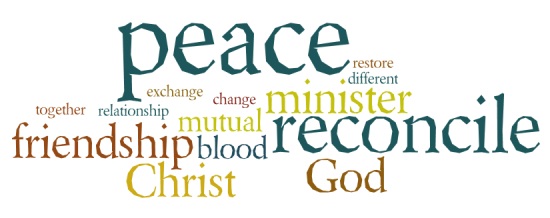
What now? God wants you to make the first move toward healing, regardless of who made the first cut. As you tell your kids, “Kiss and make up.” Or in grown-up lingo, be a “minister of reconciliation.”

Whatever you call it, it’s your calling.

God went first

God actually started it. He made the first move first.

Before we ever dreamed of being at peace with Him, He paved the path for it (Romans 5:10; Ephesians 2:12-13). Through Christ’s death and resurrection, He reconciled us to himself (2 Corinthians 5:19).

What does “reconciled” actually mean? It’s derived from the Greek word katallasso, which comes from allasso, meaning to make different; to change; to exchange one thing for another. So when God reconciled with you, He made your relationship with Him different; it was changed. Enmity was exchanged for friendship. Death for life (Romans 11:15).

Your turn

But don’t stop between God and you. Once you’re reconciled to Him, He wants you to keep it going. Your ministry of reconciliation means you help others connect to God, and help others connect to each other (2 Corinthians 5:18).

Don’t take this ministry lightly. Even if you don’t want to do it. Even if you’re the innocent one. Even if the one who hurt you doesn’t even care. Follow God’s example to step in first. Give grace as you’ve been given.

As far as it depends on you, seek to make peace with others (Romans 12:18), in situations when you’re the perpetrator and also when you’re the victim. Settle matters quickly with the one who hurt you (Matthew 5:23-24).

But not just so you will feel better (although you usually will). There’s an even larger reason: so the other person can be reconciled to God. Is there any greater act of love than connecting someone back to God (Galatians 6:1)?

Minister today

So about that disagreement you’ve been in or seen today—will you be the first to intercede for restoration? Through you, God is calling others. Make his appeal for peace. You are an ambassador, you know. A minister of reconciliation. Glorify the Father by making a difference!

We’re talking about theology terms this month. What does “reconciliation” mean to you? Need to reconcile with anyone? Practiced the ministry of reconciliation already this week? How do you know when to give up?
Death is Defeated

April 9, 2012 by Kathy Howard 1 Comment

Image from zardoz.net

Do you believe in life after death? If your answer is “yes,” then you agree with 72% of Americans.

Although this widely-held belief in an afterlife includes a wide range of unbiblical ideas such as reincarnation and communicating with the dead, it does demonstrate that we humans don’t want this present existence to be the end. We want more than just this physical life.

But death seems so final. How is “life after death” possible?

Yesterday we celebrated Easter to commemorate the resurrection of Jesus. The Bible clearly teaches that Jesus’ resurrection not only makes our own resurrection possible, but without it our Christian faith is “futile” and “useless.”

And if Christ has not been raised, our preaching is useless and so is your faith… And if Christ has not been raised, your faith is futile; you are still in your sins.    1 Corinthians 15:14, 17, NIV

Jesus’ death paid the penalty for our sins but His resurrection validated its sufficiency. If Christ has not been raised, then we are still dead in our sins, with no hope for eternity. If our faith is only good for this life, then it really is no good at all and we should be pitied (1 Corinthians 15:19).

But Christ has indeed been raised (1 Cor 15:20)! He has conquered death! Death and the grave have been swallowed up in victory! (See 1 Cor 15:54.)

Even before He was arrested Jesus knew that His death would not end in the grave. He anticipated His resurrection and what it would accomplish.

Jesus said to her, “I am the resurrection and the life. The one who believes in me will live, even though they die. John 11:25, NIV

Jesus’ resurrection not only broke death’s hold on our Savior, it also broke death’s hold on those who belong to Him and paved the way for our future. Here’s a summary of what Christ’s victory over death accomplished for us:

  • Confirms the forgiveness of our sins by His death (1 Cor 15:17). His resurrection proved His sacrifice was sufficient.
  • Broke the hold of death on us: Because Jesus conquered death it no  longer has a grip on us (1 Cor 15:54-57).
  • Paves the way for our own physical resurrection: Jesus was the “first fruits.” When He returns, those who belong to Him will also be raised (1 Cor 15:23).
  • Provides the example for our resurrection body: Our glorified body will bear the likeness of Jesus’ resurrected body (1 Cor 15:49).
  • Makes it possible for us to inherit the Kingdom of God: Our perishable physical body cannot inherit the imperishable, but our imperishable, resurrected bodies will be able to (1 Cor 15:50).

Praise God! Death has been swallowed up in victory!

Have you thought much about what Christ’s resurrection accomplished for you?

Is there a truth discussed above that you haven’t thought much about before now?

Recommended reading:

  • 1 Corinthians 15:12-58
  • Romans 6:1-14
  • 1 Thessalonians 4:13-18

Links to surveys on Americans’ beliefs about life after death:

  • The Barna Group (2003)
  • National Opinion Research Center (2008)

I Obey Because He Instructs Righteousness (Run to Him – Psalm 119)

March 31, 2012 by Katie Orr 2 Comments

Picky

Obedience.

It’s hard for my four year old. (It’s also hard for that four-year-old’s momma.)

Though I long to live a life of obedience to His commands, I struggle daily to keep my feet on the narrow path.

Obedience is not simply a choice of the will, as our efforts will only bring us so far. Our beliefs come in to play as well.

When I disobey I am ultimately saying that I know better—just like my four year old. Now, I might never say so with my mouth—that I know better than God—but I say it daily when I choose my own way.

You do too.

Disobedience, even in the smallest of choices, is at its core rebellion against the God of those commands.

When I choose selfishness instead of sacrifice, I sin. When I “vent” my frustrations about a difficult person instead of holding my tongue, I disobey. When my thoughts drift to discontentment and dwell in an attitude of ungratefulness, I rebel.

In each of these situations, I say “Katie knows best.”

Obedience is saying “God knows best.”

Holiness is not a series of do’s and don’ts, but conformity to the character of God and obedience to the will of God. – Jerry Bridges, The Pursuit of Holiness

The Beliefs of the Psalmist

Your testimonies are wonderful; therefore my soul keeps them. (Psalm 119:129)

The psalmist was not some super-Christian, who had more ability to obey than you or me. We have all been given everything we need for godliness (2 Peter 1). We just need to figure out what hinders us. Oftentimes it is because we don’t believe that God and His commands are good. The psalmist saw God’s commands as wonderful, and I fully believe that had all to do with his commitment to obedience.

Here is more of what the psalmist believed:

  • God’s words gives light and understanding. (Psalm 119:130)
  • His rules are forever right and faithful. (Psalm 119:138, 144)
  • God righteousness is everlasting. (Psalm 119:137,142)
  • His Word is very pure.  (Psalm 119:140)
  • His law is truth and well tried. (Psalm 119:142)

Because of these beliefs, the writer of this Psalm had a resolved commitment to the Word of God, and the God of those words. This commitment flows naturally into obedience.

The Actions of the Psalmist

Here are just a few actions I saw of the psalmist:

  • He longed for God’s commandments. (Psalm 119:131)
  • He prayed for God to teach him His statues, and direct his steps by the Word (Psalm 119:133, 135)
  • He loved the Word. (Psalm 119:140)
  • He delighted in God’s commands. DELIGHTED. (Psalm 119:35, 143)
  • He was determined to walk in obedience to God’s Word. (Psalm 119:33,34,57)

The psalmist understood the relationship between God and His commandments. They could not be separated. If He wanted to be near to God, He must walk in His commands. He saw God and His commandments as good, right, and trustworthy. That made all the difference in his obedience.

When we walk with the Lord

in the light of his word,

what a glory he sheds on our way!

While we do his good will,

he abides with us still,

and with all who will trust and obey.

Then in fellowship sweet we will sit at his feet,

or we’ll walk by his side in the way;

what he says we will do,

where he sends we will go;

never fear, only trust and obey.

Trust and obey, for there’s no other way to be happy in Jesus, but to trust and obey.

–John H. Sammis

What did you see in the verses you studied this week? Come and share with us what you learned!


Photo Credit

Is your faith on firm ground?

February 28, 2011 by ScriptureDig 4 Comments

Does what we believe about God, who He is, and how He works really matter in our lives? Not just yes, but absolutely yes! What we believe about God shapes our attitudes, determines our behavior, and fosters our motivations. For instance, if I believe that God is sovereign – that He has control over everything in this world – then I don’t have to fear the outcome of world events or events in my own life because I know that He is working in and through it all for His purposes.

All month long here at Scripture Dig we’ve been digging into doctrine. We examined Scripture to see what we should believe about God. Today, I want to share a resource with you that can help you use doctrine to build a faith strong enough to weather every storm of life. Unshakeable Faith is an 8-session Bible study that examines the life and teachings of Peter. God grew Peter from a fearful believer that denied Christ to a bold, fearless believer who was willing to die for his faith.

Unshakeable Faith discovers those faith characteristics God built into Peter’s life that helped him stand firm even in the face of martyrdom.

Over the last few years, many Christian women I love and admire have endured difficult circumstances such as life-threatening illness, divorce, death of a child, and financial hardship. The quality of their faith significantly affected how they endured these trials and how God worked in them for His glory. God strengthened and guided them through their close relationship with Jesus. This book includes some of their stories. Readers get to see how their faith keeps them standing firm.

A strong faith in Jesus Christ does work in real life!

This study also focuses on personal application. Learning about God, His ways, and what He desires for us is wonderful. But if we don’t apply what He teaches us, let it shape our lives, we fall short of the full purpose of study. Unshakeable Faith not only leads readers into learning God’s Word, but it also purposefully helps readers apply it. Doctrine – what we believe about God – does matter in our daily lives.

Is your faith strong enough to stand firm in trials? Do you want a faith that is truly unshakeable?

The study is available at most online bookstores and many Christian bookstores. If your local bookstore does not carry it more than likely they can order it for you. You can read a little more about the study on my website. Here are a few links to online stores.

Amazon

Christian Book

Barnes & Noble

New Hope Publishers

Attending your own funeral

February 24, 2011 by ScriptureDig 24 Comments

An evangelical Protestant Baptism by submersio...
Image via Wikipedia

We don’t like to talk about death.

Even as Christians, even when we know where we will go, where our loved ones are… the sight of the cold casket leaves us uncomfortable. Death is the enemy. It has been stealing away our days since the Garden of Eden.

And so, Jesus came that we might have life! That life, however, comes through death.

Jesus took those nails in His hands, hung suffering on the cross, gave up His life and died… so that we could live. When the tomb cracked open early on Resurrection Sunday morning, life – real life – had triumphed. Death, where is your victory? He is risen – alive! And He offers real life to us.

This life is a free gift that requires only one thing in return – we must die.

I have been crucified with Christ and I no longer live, but Christ lives in me. The life I live in the body, I live by faith in the Son of God, who loved me and gave himself for me.

Galatians 2:20

We must repent and believe, understanding that all of our sin makes us worthy of judgment, and absolutely nothing we do can be good enough to save us. Our sinful nature, our self-righteous attempts to justify ourselves, everything we cling to must be nailed to that cross as we grasp that it is only the death of Jesus that can save us. To cling to His life, we must die with Him.

Baptism is really a funeral service – a funeral service that celebrates real life! The baptism itself isn’t what brings you this life-through-death; no one is killed by their own funeral. Baptism is a loud and vivid proclamation that we have already repented of our sin, turned to Jesus Christ in belief, and have been made new.

Therefore, if anyone is in Christ, he is a new creation; the old has gone, the new has come!

2 Corinthians 5:17

In baptism we are symbolically “buried” and “raised to new life” to publicly state that our old self has been buried – and we have received real life through placing our trust in the death and resurrection of Jesus Christ.

We were therefore buried with him through baptism into death in order that, just as Christ was raised from the dead through the glory of the Father, we too may live a new life.

Romans 6:4

John Piper says it this way:

Baptism portrays what happened to us when we became Christians. This is what happened to us: we were united to Christ. His death became our death. We died with him. And in the same instant, his life became our life. We are now living out the life of Christ in us. And all this is experienced through faith.

This is what it means to be a Christian – to live in the reality of what our baptism portrays: day by day we look away from ourselves to God and say, “Because of Christ, your Son, I come to you. In him I belong to you. I am at home with you. He is my only hope of acceptance with you. I receive that acceptance anew every day. My hope is based on his death for me and my death in him. My life in him is a life of faith in you, Father. Because of him I trust your working in me and for me. The same power and glory that you used to raise him from the dead you will use to help me. In that promise of future grace I believe, and in that I hope. That is what makes my life new. O Christ, how I glory in what my baptism portrays! Thank you for dying my death for me and giving new life to me. Amen.”

This is what it means to be a Christian – to live in the reality of what our baptism portrays. If you haven’t attended your own funeral yet, I pray you will be making arrangements soon!

This post from Ann Voskamp is probably one of the most beautiful descriptions of baptism I have ever read. It is definitely worth your time.

It’s a Process (Es Un Proceso) – Or is it?

February 23, 2011 by ScriptureDig 13 Comments

Our first year on the mission field was spent in the classroom learning Spanish. Sometimes our brains would hit a wall and we’d get so frustrated. How could we reach a nation if we couldn’t even speak the language.

Our Spanish professor would consistently remind us, “Es un proceso” (“It’s a process”).

Many believe the doctrine of sanctification is like that…a process in which we become more holy as we grow in our Christian experience. And while that’s partially true, that’s not all there is to biblical sanctification.

The word sanctify or sanctification means to be set apart or dedicated to God. In fact, the words sanctify, saint and holy all carry the same basic root and definition. They all mean to be set apart or dedicated unto God.

If we’ve been born again, we’ve been set apart unto Him – sanctified – we’re saints – and He sees us as holy.

There are three aspects to sanctification. They are Positional Sanctification, Progressive (or Experiential) Sanctification and Ultimate Sanctification.

Positional Sancatification – Being set apart by God and for God whereby He sees us as holy and wholly His regardless of our conduct. Positional Sanctification takes place when we trust Christ as our Savior and Lord, accepting what He did on the cross in payment for our sin.

“And in accordance with this will [of God], we have been made holy (consecrated and sanctified) through the offering made once for all of the body of Jesus Christ (the Anointed One).” Hebrews 10:10 Amplified

Notice the tense of the verb used in Hebrews 10:10: have been made holy – it’s used in the perfect tense meaning it’s a completed work that happened in time past and cannot be changed.

From God’s perspective, we have been set apart, we have been made holy, we have been sanctified. It was a once and for all event that altered our eternal destiny.

How humbling and reassuring to know that we’ve been sanctified through the offering of the body of Christ…once for all. Our position doesn’t depend upon our works, our faithfulness, our godliness or our own strength. It’s a divine work in which God sets us apart for Himself – once and for all.

Progressive (or Experiential) Sanctification – The continual growing process in the life of a Christian whereby we set ourselves apart for God and allow Him to have His way in our hearts and lives. It is a constant yielding of ourselves unto God and to His will. This is what we normally think of when we think of Sanctification…it’s a process (es un proceso).

The Old Testament sacrificial system mirrors the concept of Progressive Sanctification. God’s people would ‘set apart’ their offering and present it unto the Lord. That ‘sanctification’ is echoed in Romans 12:1,2 and Romans 6:13 with the phrases, “yield yourselves’ and ‘present yourselves’.

We set ourselves apart by an act of our will so that we can be led by the Holy Spirit and be changed from one degree of glory to the next (2 Corinthians 3:18).

Positional Sanctification never changes. Progressive Sanctification never stops changing as long as we’re alive.

Ultimate Sanctification – When we die we will see Jesus as He is and we’ll be like Him. Sinless – deathless and brought to full spiritual maturity.

1  John 3:2 says, “Beloved, now we are children of God; and it has not yet been revealed what we shall be, but we know that when He is revealed, we shall be like Him, for we shall see Him as He is.”

And in Jude, we’re told that one day He will present us faultless before the presence of His glory. That’s Ultimate Sanctification.

Yes, sanctification is a process, but it’s oh-so-much more!

How does understanding the Positional, Progressive and Ultimate Sanctification help you in your Christian walk?

The right to become

February 22, 2011 by ScriptureDig 9 Comments

She appeared out of her poverty at my window, smiling, filthy, fingers outstretched. She acted like our moments were stolen, while we talked and delivered precious gifts of food, a t-shirt, crayons, a book about a Heavenly Father. As a street child, she was not welcome in the restaurant, and the guard chased her away each time. Before she could answer my questions or sit down, she was signaled away to her hidden master whose cruelty kept Rona enslaved. My little friend with only a piece of a name, no family, no hope. One single declaration could’ve changed her future, a declaration of adoption.

When God responds to our faith by justifying us , He declares us acceptable. Our old identity of condemnation is cast off, while, “to those who believed in his name, he gave the right to become children of God … born of God” (John 1:12).  Instead of oppression, “The Spirit you received does not make you slaves, so that you live in fear again; rather, the Spirit you received brought about your adoption to sonship. And by him we cry, “Abba, Father” (Rom. 8:15).  From spiritual poverty we’re invited out of sin’s slavery by God’s grace and legally adopted as children who cry “Daddy” to our Heavenly Father.

Life changes when we’re adopted. We join the family of the adopted, with brothers and sisters in Christ who aren’t separated by race or language or earthly distinction (Gal. 3:25-28).  As part of this family, our Father wants to bless those He’s redeemed, so He makes us heirs of His abundance (Rom. 8:17).  We become co-heirs with Jesus Christ, meaning our current life receives new blessings and provisions, but the fullness of our adoption has yet to be realized.

“Dear friends, now we are children of God, and what we will be has not yet been made known. But we know that when Christ appears, we shall be like him, for we shall see him as he is” (1 John 3:2). Our full inheritance as adopted sons is yet to be completed. Adoption is legally declared and grants us many benefits in this life, but so much more awaits (Rom. 8:23).

From out of the impoverished darkness of spiritual captivity, adoption grants us new identity as a child of God, a new place in the family of God, a new reality for life here on earth, and a new future with a full inheritance awaiting us. For the desperate, it’s a dream come true.

Several years after I  last saw Rona, I met a little girl with similar dark eyes and tiny fingers, while helping in a classroom. But she had colorful clothes and clean hair, matching shoes and a bow. She spontaneously danced around the room, taking every opportunity to hold hands and sit close; she was used to love and trusted easily. The little girl had been found as an infant, abandoned in a field, broken and disfigured, unwanted, but she had been scooped up and rescued. She received a new identity, a new family, a new life, and a new future. After school, she was welcomed with affection by her family. She had been adopted.

Physical adoption is an earthly glimpse of a divine rescue. There’s no need to stay in spiritual rags, beg for crumbs, and scurry back to a hateful master in darkness. Once “adopted,” we should never crawl back to our desperation again. Imagine the scope of affection, inheritance, and future hope we receive once rescued out of our spiritual poverty, embraced by the One who wants us to call Him “Abba,” and welcomed safely home!


Have you seen or experienced a glimpse of earthly adoption that whispers to you of the divine?

The just One who justifies

February 21, 2011 by ScriptureDig 15 Comments

Courtroom One Gavel
Image by Joe Gratz via Flickr

What do you think of when you picture standing before God’s throne for the first time?

Perhaps you tremble at the thought. You picture your knees knocking together, your hands shaking, waiting for the deepest, darkest parts of your heart, the most shameful moments of your life to be displayed on a giant screen for all to see. You picture God as judge, glaring down at you, gavel in hand. You are unworthy. You shudder as you await the verdict.

  • God is holy. He cannot allow sin in His presence.
  • God is just. He must punish sin.
  • God is also love. He desires all men to be saved.

Truly, we have all missed the mark. We are woefully far from God’s holy standards. But because of God’s glorious grace, if we repent and believe, the scene in  heaven will look very different. God is still judge, but we have miraculously been changed. For although we were once sinners, at the moment of our salvation we were justified.

But now a righteousness from God, apart from law, has been made known, to which the Law and the Prophets testify. This righteousness from God comes through faith in Jesus Christ to all who believe. There is no difference, for all have sinned and fall short of the glory of God, and are justified freely by his grace through the redemption that came by Christ Jesus. God presented him as a sacrifice of atonement, through faith in his blood. He did this to demonstrate his justice, because in his forbearance he had left the sins committed beforehand unpunished— he did it to demonstrate his justice at the present time, so as to be just and the one who justifies those who have faith in Jesus.

Romans 3:21-26

We had no righteousness of our own. Our righteousness is like filthy rags (Isa 64:6). Since the justice of God demands punishment of sin, since the holiness of God cannot allow unrighteousness in His presence, He offers to us the righteousness of Jesus Christ. The spotless, holy Lamb of God sacrificed Himself in our place. When we place our trust in Jesus Christ and receive His sacrifice on our behalf, everything changes. The courtroom of heaven no longer looms threateningly.

When the individual receives Christ he is placed in Christ. This is what makes him righteous. We are made the righteousness of God in Him. This righteousness overcomes our desperate, sinful condition, and measures up to all the demands of God’s holiness. – Charles C. Ryrie, Basic Theology

Standing before the throne of God in our desperate, sinful condition we are certainly deserving of His wrath and judgment. But when I stand before Him dressed in the righteousness of Christ, I have nothing to fear. My sin has been atoned for. No shameful scenes will be replayed for all eternity – they are washed away, forgotten; I stand before the throne declared righteous. I could never measure up to the demands of God’s holiness – but Jesus did so on my behalf.

I have been justified. It is just-as-if-I’d never sinned.

What wondrous love is this, O my soul!

What wondrous love is this that caused the Lord of bliss to bear the dreadful curse for my soul?

When I was sinking down, sinking down;

When I was sinking down beneath God’s righteous frown, Christ laid aside His crown for my soul.

To God and to the Lamb I will sing, I will sing;

To God and to the Lamb who is the great “I Am,” while millions join the theme I will sing.

Grace in the Sky Box

February 17, 2011 by ScriptureDig 13 Comments

The Scripture Dig team appreciates your prayers as we prepare to serve the Lord together at a retreat, April 8&9 in Pigeon Forge, TN. We will be teaching about our adoption by our Heavenly Father and what it means to be “in the Family.” If you would like information, just leave a comment, and we’ll be glad to email you details.

In my long braid days we were given tickets to the Sky Box for the Ice Capades. I remember wide chairs high above the crowds, enjoying the view. It was a view we couldn’t afforded for ourselves. We sampled sodas with round cubes in wide glasses, served with triangle roast beef sandwiches with enough meat on them to make mom frown.  The riches were unlike any we enjoyed in the “cheap seats.” Though they had no obligation, the company invited us to enjoy benefits we hadn’t earned and didn’t deserve. Our only distinction was being declared “welcome” by the owner who freely provided the riches of life in the Sky Box.


God is known for His joy in showering grace on His loved ones. He is known as “The LORD, the LORD, the compassionate and gracious God, slow to anger, abounding in love and faithfulness” (Exodus 34:6). Unlike privileges earned from hard work, the blessings bestowed out of grace are purely out of the loving desire of the Giver.

Salvation is that out of reach blessing we could never earn. It is only bestowed on us by the gracious Giver’s “unmerited favor.” Sin stands in the way of our access to the Sky Box of life, since “all have sinned and fall short of the glory of God,”  but “all are justified freely by his grace through the redemption that came by Christ Jesus” (Rom. 3:23-24).  By God’s undeserved kindness to us we’re accepted where we could not go alone, given access and blessing only possible with a Redeemer.


The Redeemer’s payment on our behalf was not deserved, yet “it is by grace you have been saved, through faith—and this is not from yourselves, it is the gift of God— not by works, so that no one can boast” (Ephesians 2:8-9). None of us can say we enjoy the distinction of salvation because of anything we have done. God knows we could not resist the urge to boast, so we know it’s all because of grace.

A simple acronym reminds us grace is God’s Riches At Christ’s Expense.

Too simple?

We enjoy the blessings of Heaven only because of the sacrifice of Heaven’s Son.

I was nervous when we were invited up to the Sky Box, expecting that no one like me would be there.  Somehow I expected they would all “belong” there, look different than I did, and act like “Sky Box People.”  But in reality it was filled with other people like me. People who had done nothing to deserve the privileges and gifts, people who had just received unmerited favor.  That’s the beauty of grace. Where sin is great, grace is greater (Rom. 5:20).  It’s when we’re sure we don’t deserve the riches that we’re ready for the grace.


Have you ever been to a Sky Box? There are thick triangle sandwiches with ruffled toothpicks, sodas with round cubes, wide seats with a great view, and servers to make sure you enjoy the benefits. And how about grace?  Have you enjoyed God’s grace?  You’ve been invited!!!!  And it’s better than the Sky Box.

Where Did Everything Come From?

February 14, 2011 by ScriptureDig 8 Comments

There is something in each of us that causes us to wonder where we come from, why we  are here and how everything else came into existence. Yet creation is one of the most hotly debated and challenged doctrines of the Christian faith.

While the Bible reveals our earth is about 6,000 years old, those who oppose the gospel date the earth at about 4.5 billion years old.  Quite a difference! But where did everything really come from? How did mankind come into existence? Why does it even matter?

You see, if biblical creation is not valid, then everything else we believe is at stake.

The first sentence in Scripture tells us that God is the Creator. “In the beginning God (prepared, formed, fashioned, and) created the heavens and the earth.” Genesis 1:1 (Amplified)

Last year, I wrote a post entitled, Created By God and For God in which I examined the first verb we find in Scripture, created. It’s the word bara’. And while there’s nothing surprising about its definition, the fact that it is always used in conjunction with God as the subject is foundational to the doctrine of creation.

Sandwiched between the biblical definition of faith and the roll call of faith is this verse…

“By faith we understand that the worlds [during the successive ages] were framed (fashioned, put in order, and equipped for their intended purpose) by the word of God, so that what we see was not made out of things which are visible.” Hebrews 11:3 (Amplified)

It is God who created all that exists. To believe that it could be anything else would require much more faith than it takes to simply trust that what God said is true. Although some still put their faith in the failed attempts of science to disprove the biblical account of creation, we believe the Word of the Living God.

Other than the ones already mentioned, let’s look at other verses that remind us that it is God who created the heavens and the earth and all living things:

Deuteronomy 4:32 – God created mankind

Psalm 102:18 – future generations will be created to praise Him

Psalm 148:1-14 – all creation is created to praise God

Isaiah 40 – God is not only the Creator and Sustainer, He is also the upholder of our weary souls

Isaiah 42:4 – God is the infallible Creator

Isaiah 45:11 – We are the work of His hands

Colossians 1:15-17 – He is before all things and Creator of all things

And while there is some debate as to the “hows” of creation even in Christian circles, there is no debate as to the “WHO”. As Galileo once said, “the Holy Ghost intended to teach us how to go to heaven, not how the heavens go.”

As you contemplate the certainty of creation, remember that you are a masterpiece, divinely designed from a heart of love and with a purpose in mind. The days you are given on Planted Earth are not random moments of existence. Like Esther, you were placed here for such a time as this. Carefully crafted by the Creator of all things – to glorify God – to impact a generation.

Knowing you were created matters because:

It reminds you that you are valuable – Psalm 139:13-18

It reminds you that God has a plan for your life – Jeremiah 1:3-6, Jeremiah 29:11

It reminds you that you have work to do while walking on Planet Earth – Ephesians 2:10

It reminds you that you are accountable – Hebrews 9:27

Knowing we were created by God and for God makes all the difference in the world. It give us peace, purpose and hope. I’m so amazed at the unfathomable love of God – that He would create us knowing He would have to die for us! Love so amazing!

Like David, I cry out, “LORD, what is man, that You take knowledge of him? Or the son of man, that You are mindful of him?”

And then I am reminded, I am His creation…and so are you!

How does knowing God created you affect your life?

Some great resources to help you dig deeper into the doctrine of creation are:

Strobel, Lee. The Case for a Creator: A Journalist Investigates Scientific Evidence That Points Toward God

Ross, Hugh. The Genesis Question: Scientific Advances and the Accuracy of Genesis

Websites: http://www.answersingenesis.org/ , http://www.icr.org/ , http://www.christiananswers.net/creation/

Holy Ghost Power

February 11, 2011 by ScriptureDig 9 Comments

Perhaps one of the most divisive topics in modern Christianity is the filling and work of the Holy Spirit.  I confess my own searching for clarity on this topic.   And while various denominations and preferences may disagree on the particulars of the Holy Spirit’s work in us, we all agree that the power of the Holy Spirit is great.


The first truth we must recognize about the Holy Spirit is His place in the Godhead.  Kathy gave a great description of the Trinity earlier this week.  God the Spirit is divine and holy and fully God.

The Spirit of God is found from the beginning of Scripture.   In Genesis 1:2 we find, “the Spirit of God was hovering over the face of the waters” (ESV).    Further in that chapter, we find this:

Then God said, “let us make man in our image, after our likeness …”  (v.26 ESV, emphasis added)

Our image, our likeness. This verse in The Amplified Bible says, “God said, Let Us [Father, Son, and Holy Spirit] make mankind in Our image, after Our likeness …”

Throughout the Old Testament we find the Spirit of God acting and speaking in many instances.   When we get into the New Testament, we learn more about the specific work of the Holy Spirit in our lives as believers.

  • The Holy Spirit is a gift from the Father.  {Luke 11:13}
  • The Holy Spirit will give us the words of defense when necessary.  {Luke 12:11-12}
  • The Holy Spirit fills us with power.  {Luke 24:49}
  • The Holy Spirit is our Comforter, Advocate, and Intercessor.  {John 14:16, 26}
  • The Holy Spirit lives within us and directs us.  {John 14:17, Romans 8:9-11, 1 Corinthians 3:16}
  • The Holy Spirit equips us to witness for  Christ.  {Acts 1:8}
  • The Holy Spirit is received by all believers upon salvation.  {Acts 2:38}
  • The Holy Spirit gives us boldness.  {Acts 4:31}
  • The Holy Spirit gives instruction.  {Acts 13:2, 16:6}
  • The Holy Spirit reveals the things of God to us.  {1 Corinthians 2:10-12}
  • The Holy Spirit gives each believer spiritual gifts.  {1 Corinthians 12:3-11, 13}
  • The Holy Spirit produces fruit in our lives.  {Galatians 5:22-23}
  • The Holy Spirit identifies us as belonging to God.  {Ephesians 4:30, 1 John 4:13}

Clearly, the Holy Spirit is plays an active role in the life of the believer.   We must submit ourselves to His guiding, instruction, and power in our lives in order to experience the fullness of what God desires for us as His children.

How have you experience the work and power of the Holy Spirit in your life?

Prophet, Priest & King – What The Offices of Christ Mean

February 10, 2011 by ScriptureDig 9 Comments

Threaded throughout the Bible are various names and titles of Christ. They reveal who He is and shed light on His character. But three very distinct titles define the offices in which He holds. Prophet, Priest and King.

Although many Christians aren’t aware of the significance and functions of these three very vital roles, they are foundational to the Christian faith. In the Old Testament, God’s people revered three major offices – prophet, priest and king. Jesus fulfilled each one.

PROPHET

A Prophet is one who reveals God to us and speaks to us on behalf of God. The first prophetic mention of a prophet as it relates to Christ is found in Deuteronomy 18:15, “The Lord your God will raise up for you a prophet like me from among you, from your countrymen, you shall listen to him.” Jesus affirmed Himself as a Prophet (Matt 13:57, Luke 13:33). In Acts 3:22-23, Peter spoke of Jesus as the Prophet who fulfilled Deuteronomy 18:15,18.

As the promised Prophet, Jesus was anointed with the Holy Spirit (Luke 4:18). He preached the gospel and worked miracles (Matthew 4:23, Matthew 11:5) and declared that He spoke that which God told Him to speak (John 12:49,50).

Throughout the ages, fallible men were given the privilege of communicating the truths of God. But when Jesus, the long awaited Prophet, appeared on Planet Earth there was no fear of error. It would be impossible for Jesus to miscommunicate God’s message to mankind because He is God.

Because He is the promised Prophet, we can trust Him. We know what He says is true and that which He has revealed to us about the Father is irrefutable.

PRIEST

A priest is one who stands as a mediator and offers a sacrifice for the sins of man to a holy God. The High Priest was one who would enter the Holy of Holies once a year and offer a sacrifice for sins on the Day of Atonement and place the blood of the sacrifice on the Ark of the Covenant. Jesus is not only a Priest, He is also the High Priest.

Jesus was a Priest after the order of Melchizedek (Hebrews 5:6, 6:20, 7:15-17, Psalm 110:4) – the first High Priest mentioned in Scripture. Abraham gave tithes to Melchizedek, who existed before the Aaronic priesthood was established. Melchizedek was a prefigure of Christ – a High Priest who was without father or mother, without beginning or end (Hebrews 7:2).

Jesus is a High Priest who understands the hurts of our hearts and the trials and temptations we face – a High Priest who has given us access to the throne of God (Hebrews 4:15-17). He has entered heaven where His own blood was given in payment for our sins. Once and for all (Hebrews 9:11-12).

Our glorious Savior has secured eternity for us by not only becoming the sacrifice for our sins, but by also being the High Priest who would intercede on our behalf. He entered the Heavenly tabernacle with His own precious blood and sat down on the right side of our Heavenly Father where He makes intercession for us (Hebrews 7:24-26).

Because Jesus is our High Priest and has shed His blood “once and for all”, we have eternal forgiveness of sin, access to the throne of the Living God and help in our time of need.

KING

A king is one who has the authority to rule and reign over a kingdom and over a group of people. The first prophetic mention of King Jesus is in Numbers 24:17 is also found in Psalm 2:5-7 as well as several other verses.

Jesus rules the universe yet His Kingdom is not of this world (John 18:36), it is everlasting (Luke 1:33). He is not only a king, He is the King of kings (Revelation 1:5, Revelation 19:16).

Because Jesus is King, we can rest in the fact that He protects us, fights our battles and has the authority to rule our lives. He is a righteous Ruler and a victorious King. Knowing that we’re on His side gives us the confidence to know that He will have His ultimate way. One day the battle will be over and all wrongs will be made right – our King will see to it.

Today, we just got a glimpse of the offices of Christ. The significance of these offices go far beyond anything I could share in one post. Yet, these roles of Christ are woven throughout Scripture. They tell us a little bit more about who Jesus is and what He came to do.

As Prophet, we can trust Jesus to reveal God to us like no one else can.

As Priest, we know He has been touched with the feelings of our infirmities. He has entered heaven with His own precious blood and is seated at the right hand of the Father making intercession for us.

As King, we find that although He rules the universe we have access to His throne 24/7. He rules in righteousness and He rules in love. He will never falter, never fail, never make a bad decision and never lose a battle. He is a King who calls us friends yet is worthy of our eternal worship.

How does knowing the offices of Christ ground you in your understanding of Christ? How does it help in your daily walk as a Christian?

The Word Became Flesh and Why that Matters

February 9, 2011 by ScriptureDig 10 Comments

In the beginning [before all time] was the Word (Christ), and the Word was with God, and the Word was God Himself.  He was present originally with God … And the Word (Christ) became flesh (human, incarnate) and tabernacled (fixed His tent of flesh, lived awhile) among us; and we [actually] saw His glory (His honor, His majesty), such glory as an only begotten son receives from his father, full of grace (favor, loving-kindness) and truth.   John 1:1-2, 14 AMP

Yesterday, as Kathy shared about the Trinity we were reminded of God the Son, Jesus Christ.  That He is fully God, divine in all ways.   Jesus was there at the Creation and He will be the rider, called Faithful and True, shared in Revelation 19.

For many, Jesus as fully God is easy … He healed people, calmed the seas, fed the thousands, and cast out demons.    We know the Old Testament’s prophecies of the Messiah, Son of God, Savior, Redeemer, and we read the New Testament seeing them fulfilled.

But, somehow, the idea of Jesus as fully man is far more difficult for us to wrap our minds around.  The Virgin Birth, King of Kings born in a manger, a toddler learning to walk, a child studying the prophets who foretold of His coming, a young  man learning a trade, a son working alongside his father … these are more challenging aspects of Christ’s life.

And yet, it is in His humanity, the Incarnation of Christ, that our redemption is secured. For it as a man that Christ became the fulfillment of the Law (Matthew 5:17).   As a man, full in His humanity, Christ felt hunger (Matthew 4:2), thirst (John 19:28), tiredness (John 4:6), sorrow (John 11:35), and anger (Mark 3:5).    Christ, as the Son of Man, endured every trial, temptation, and affliction that we may experience here in this fallen world (Hebrews 4:15) and yet He remained without sin.

His sinless human life is our redemption! For by living as a man, in every way experiencing every difficulty this fallen world brings and yet never sinning, Jesus became the only acceptable sacrifice, the payment, for our sin (Hebrews 9:12-14).

One of my favorite passages of Scripture is the first chapter of the Gospel of John … that God became flesh and dwelt – tabernacled – among us.   The Word became Flesh … and that matters because it is through that giving of the “only begotten Son” that we find the hope of eternal life.

How does the incarnation of Christ, that He was fully man, help you gain a greater understanding of salvation?

Mighty ones on guard

February 7, 2011 by ScriptureDig 11 Comments

Would you pray for the Scripture Dig team as we prepare to minister as a team at a retreat in Pigeon Forge, TN on April 8&9? We will teach about what it means to be “in the Family” of God and what difference it makes in our lives. Click HERE to find information or to register to join us. Registration closes March 6.

_ _ _ _ _ _ _ _ _ _ _ _ _ _ _ _ _ _ _ _ _ _ _ _ _ _ _ _ _ _ _ _ _ _ _ _ _ _ _ _ _ _ _ _ _ _ _ _ _ _ _ __ _

My heart was heavy as I wrote in my journal.  Our youngest battled fear as I sat in his dark room and encouraged him about heavenly hosts around us. We didn’t anticipate his confident joy in the morning, when he recalled in vivid detail the man who lay at his bed all night long.  Later that day I wrote, “Perhaps this really was his angel.”


In our culture we like to believe in what we can see, count, and explain. Supernatural things fall outside these categories, so we use them in children’s books, Jimmy Stewart movies, and stories from other countries. But God wants us to be mindful of the unseen. Have you ever wondered if your life was truly touched by the divine?

God’s Word says angelic intervention isn’t only possible, it’s certain.

Angels are beings created by God (Neh. 9:6), spirits without physical bodies (Heb. 1:14). Sometimes God allows people to see angels or allows them to take bodily form, like at the tomb of Jesus. God has sent them for divine appointments ranging from message delivery to commanding lions to freeing prisoners. As part of God’s creation, they were considered “good” and are described as “mighty ones who do his bidding, who obey his word” (Psalm 103:20).  Angels have the ability to make decisions (2 Peter 2:4), which led to a number of them being cast out of heaven with their leader, Lucifer.  Unlike mankind, God did not provide redemption to restore angels to Himself; they are not made in His image.

Angels are present and active around us, so we’re encouraged to “show hospitality to strangers, for thereby some have entertained angels unaware” (Heb. 13:2). As the leader of evil angels, demons, Satan lives to hinder those seeking to follow God (2 Cor. 4:4). Satan and his legions aren’t all powerful; they are able to be resisted through the power of Jesus Christ (James 4:7). Satan ultimately battles for victory, but Jesus conquered death and lives to reign eternally.  This makes Jesus worthy of our worship.

Angels are not meant to be objects of our praise (Isaiah 6:2-3), but they set an example of worship for us (Revelation 5:11,12). Hosts of angels declared the coming of Jesus to earth, hosts praise Him now, they’ll  accompany Him at His return, they’ll separate the wicked and righteous, and they’ll surround the Lamb’s throne uncontainable worship. Until then, we’re promised that angels guard us, lifting us with their hands, “lest you dash your foot against a stone” (Psalm 91:11-12). Angels are another evidence of God’s care for us and His sovereign involvement in our lives.

Angels are present as our witnesses and intercessors, servants of the Most High. They, too, long to know the secrets of God’s plan (1 Pt. 1:12).

Jeff and I have a story we love to tell our kids about a provision in our lives we can only explain as an angelic intervention, but I wonder how many more moments of our lives have been changed by God’s unseen divine servants, as He sent them to watch over us. One day we’ll know, and we’ll bow down beside them in grateful worship of our Father who sent His legions to guard us.

How does knowing God’s servant army of angels is present and active around you make you feel?

In His image

February 4, 2011 by ScriptureDig 8 Comments

Photo from our friend Cherie at http://www.heartandsoulreflections.com/

Yesterday, Sandra looked at the incommunicable attributes of God – “These are qualities of God that He does not share with creation. They are unique to Him. I like to think of these as the reasons God is God (and of course, the reasons I am not God!).”

God is utterly distinct from His creation – He is unique; nothing and no one can be equated with Him! Yet, as this completely independent, immutable, eternal, omnipresent God created this limited and temporal world bound by space and time, He imprinted His creation with shadows of His glory. In the midst of this new world He placed two created beings who were set apart from the rest of God’s creation. These human beings were created not just by God’s hand but also in His very image.

Then God said, “Let us make man in our image, in our likeness, and let them rule over the fish of the sea and the birds of the air, over the livestock, over all the earth, and over all the creatures that move along the ground.”

So God created man in his own image, in the image of God he created him; male and female he created them.

Genesis 1:26-27

In His image. This phrase does not mean that we were created to look like God physically, but rather that mankind was imprinted with “communicable attributes” of God – the reality of who He is is pictured on a small scale in His creation of humanity.

  • God is righteous and just, and we have a conscience and sense of justice.
  • God is sovereign, and He entrusts us with a will and responsibility.
  • God is a God who speaks, who communicates; we have thoughts and feelings and the ability to communicate them in a variety of ways.
  • God is love, and we have the capacity to love and be loved.
  • God is triune, and the persons of the Godhead exist in an eternal harmonious relationship; mankind is relational and created for relationships with other people.

So what? What difference does it make to understand God’s communicable attributes?

Mankind is fallen and sinful, but we are still in His image. He has entrusted us with the ability to make decisions, to choose our path, to cause real change and impact the world around us for good or for evil – and for the most part, He allows our actions and decisions to stand. Humanity was created for relationships, intended to show real love for one another as God Himself is love, intended to communicate powerfully and clearly with those around us, intended to steward this glorious earth that God created.

People are not inherently good, but they are inherently valuable.

Humanity has worth and value not because of what we produce or contribute, but because we have been created in His image. Even the unborn, who have not yet produced or contributed anything, or the elderly, ill, or disabled who may be viewed by our society as an inconvenient drain on resources. God has imprinted us with His image – it may be marred by sin or hidden by physical or mental limitations – but human life matters to God. It should matter to us.

Someday, those of us who know the Lord Jesus will stand in God’s presence free of sin, free of limitations in our glorified bodies. On that day, we will see Him in His glory, and His image will be clearly visible in His redeemed people.

Beloved, we are God’s children now, and what we will be has not yet appeared; but we know that when he appears we shall be like him, because we shall see him as he is. 1 John 1:2

All month we will be asking “so what?” about important doctrines in the Christian faith. So, what do you think? What difference do you think understanding the attributes God shares with humanity should make in our lives?

Are you there God?

February 2, 2011 by ScriptureDig 10 Comments

Have you ever stood on the shore with the waves lapping around your feet and felt insignificant due to a sense of something – or Someone – much greater than yourself? Have you ever gazed up at a mighty mountain peak only to become overwhelmed with the need to worship the One who formed it? That was your soul correctly responding to the glorious Creator as revealed in His creation.

“The heavens declare the glory of God; the skies proclaim the work of his hands. Day after day they pour forth speech; night after night they display knowledge. There is no speech or language where their voice is not heard” (Psalm 19:1-3).

This world and all the vast expanse of the heavens stand as an eloquent testimony to their powerful Creator. Their praise for the One who made them crosses all language barriers and cultures. Their declaration alone is enough evidence for the existence of God.

“For since the creation of the world God’s invisible qualities – his eternal power and divine nature – have been clearly seen, being understood from what has been made, so that men are without excuse” (Romans 1:20).

Even though the existence of God “is plain to them” (Romans 1:19), some humans refuse to recognize the Creator. Here are a few things that Paul writes about them in Romans chapter one:

  • They have invoked God’s wrath.
  • They suppress the truth by their wickedness.
  • They know God but refuse to give Him glory or thanksgiving.
  • Their thinking is futile and their hearts are foolish and dark.
  • They have chosen to worship created things rather than the Creator.

“The fool says in his heart, “There is no God.”  Psalm 14:1a

Without God whispering to our hearts, without God wooing us to Himself, we would all be “fools” denying His existence. The Scriptures tell us that no one seeks after God on her own; we each turn to our own way (Psalm 14:2-3). Even with the mighty testimony of creation we are sinful creatures who would choose to worship something other than the Creator. But praise God, He draws us to Himself and gives us the faith to believe (Eph 2:8).

Many who refuse to believe the testimony of creation would tell us that everything exists by chance. That life began in a puddle of primordial ooze and then evolved over time to become the intricate, complicated, wonderful world we live in today. Speaking from their “scientific intellect” and worldly “wisdom” they tell us that anyone who believes in a Creator is “simple” and just ignores all the scientific evidence. What they fail to acknowledge is that they do not speak for all of the scientific community.

Every reputable scientist does not believe evolution holds all the answers to the complexities of life. In fact, over 700 scientists holding Ph.D.s  in a wide range of scientific fields, have signed an official statement entitled “A Scientific Dissent from Darwinism.” The statement reads:

“We are skeptical of claims for the ability of random mutation and natural selection to account for the complexity of life. Careful examination of the evidence for Darwinian theory should be encouraged.”

You can find out more about the statement, why it has been published, and who has signed it here.

Belief in the existence of God is the beginning point for a life of faith and relationship with Christ. “And without faith it is impossible to please God, because anyone who comes to him, must believe that he exists and that he rewards those who earnestly seek him” (Heb 11:6). His creation is the foundational testimony to His existence. But it is just the beginning! Seek God. He promises to make Himself known to you. He will confirm His presence in your heart and mind. You will see Him at work all around you.

How does God personally confirm His presence in your life? How do you know that He exists?

« Previous Page
Next Page »

This Month’s Theme

  • Jesus is the Way
  • And He Shall Be Called Series Intro

Enter your email address to have new posts emailed to you:

We’ll come to you

Enter your email address to have new posts emailed to you

Categories

Bible Memory – Lent 2021

Memorizing Isaiah 12

Let the Children Come

Let the Children Come

Want more #HideHisWord resources?

Memorizing Psalm 1

Find Us on Facebook


Search

Recent Posts

  • Series Wrap-Up: The Lord Is My Light
  • His Marvelous Light
  • When the Darkness Deepens
  • Though I Sit in Darkness…
  • Let Your Light Shine
  • Life-Giving Light

Archives

© 2026 · Pretty Creative WordPress Theme by, Pretty Darn Cute Design