• Home
  • About
    • Our Contributors
    • Our Beliefs
  • Blog
  • Bible Studies
    • Scripture Dig
  • Archives
  • Shop
  • Advertise
  • Contact
    • Email
    • Facebook
    • Instagram
    • Pinterest
    • Twitter

Do Not Depart

Encouragement and Tools to Abide in God's Word

You are here: Home / Archives for worship

I Praise Because He is Worthy (Run to Him – Psalm 148)

April 14, 2012 by Katie Orr 2 Comments

Praise the Lord

We’ve been in Psalm 148 this week. Everytime I read it, I get this Seeds Family Worship song stuck in my head. (Click here if you can’t see the video.) It’s my daughter’s favorite Seed’s song, and she asks for it almost every time we get in the car. So I’ve listened to it…a lot.

Praise the Lord!

There is no mistaking the main command in Psalm 148!  We are to praise the Lord.
Praise the Lord

I looked at the Hebrew word for praise this week; it is halal. I love the insight looking at the original language gives:

…to shine…to make a show, to boast; and thus to be (clamorously) foolish; to rave…celebrate, commend…glory, give (light)…(sing, be worthy of) praise…renowned, shine. (Strong’s Concordance via eBible)

How to Praise the Lord

One fun Bible study tool is to insert these synonyms into the verses, to get a fuller meaning of the text. Let’s try it together!

Shine the Lord!
Make a show about the Lord!
Boast about the Lord!
Be clamorously foolish about the Lord!
Rave about the Lord!
Celebrate the Lord!
Commend the Lord!
Give glory to the Lord!

Doesn’t this give a better idea of what it means to praise the Lord?

Let them praise the name of the Lord!

What can you praise God for today? Share it in the comments below!

Oh sing to the Lord a new song;
sing to the Lord, all the earth!
Sing to the Lord, bless his name;
tell of his salvation from day to day.
Declare his glory among the nations,
his marvelous works among all the peoples!
For great is the Lord, and greatly to be praised!
(Psalm 96:1-4 ESV)

(And by the way, the picture above is the perfect dimensions for a free Facebook cover. To download it for free, just right click the picture to download!)


I Bless Him Because He Lavishes Love (Run to Him-Psalm 103)

March 23, 2012 by Julie 3 Comments

freedigitalphotos.net credit to Kongsky

A Story of Blessing

The texted words on my phone burst out in blessing:  “God is so awesome! Words can’t express the thankfulness I have. I pray that God blessed you as much as you’ve blessed me and my girls!”

I had just left a small one bedroom apartment after dropping off a brand new set of pots and pans, bags of food, a mixer and can opener, new sets of towels, and much, much more. They weren’t from me, but I delivered them from the open hands and hearts of the team of ladies who serve with me at the women’s shelter. One of “our girls” was moving out on her own, preparing for permanent reunion and restoration with her daughters. God allowed us to join Him in the work of piecing a life back together, and the heart of our loved one was full of blessing for the love her Heavenly Father showed her.

A Psalm of Blessing

Psalm 103 begins with the call for each soul in the community of the beloved to remember the benefits of God’s love and to cry out in praise. The audience included those who knew well the journey of the broken, how it feels to rise out of exile and survive at the mercy of a generous, divine hand. A list of the benefits (vv. 3-19) fed the amazement of those whose lives were pieced together with provision from the true God. He forgives, heals, redeems, crowns, satisfies, and cares for oppressed; He who knows and loves the helpless is slow to anger, full of grace and mercy. He lavishes love on those who have nothing to offer Him but praise.

A Love for the Broken

While we are weak and frail like the grass or flower (vv. 14-16), so undependable that we are compared to dust. But the Lord loves with steadfast love that remains committed and true (vv. 17-18). To the once exiled and presently broken, He extends love everlasting, calling us to keep his covenant and remember His ways. When we feel alone, His love can only be compared to the distance of the east to the west, the distance from earth to heaven, and the scope of a father’s love for his childrevv. 11-14). He doesn’t only love us; He lavishes us with awesome love with full awareness of who we are. Yes, God is so awesome!

Every journey includes failures and fresh starts, and we all survive at the mercy of a generous, divine hand. You may not need a toaster or a can opener or gently used coffee table. But how have YOU experienced the benefits of the east to west, earth to heaven, fatherly love of God? 

When standing amidst the broken pieces, fear Him, remember His promises, keep His commands, and enjoy His steadfast love. The God who knows and loves us in our weakness must be blessed!

Clean to the Fibers {Run to Him Psalm 51}

February 24, 2012 by Julie 6 Comments

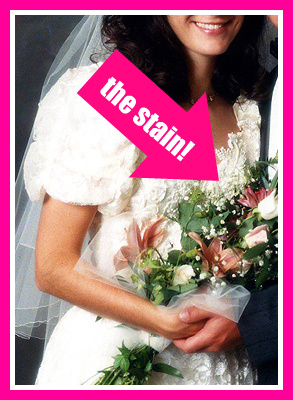
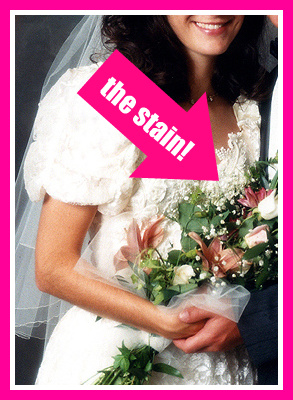
The pollen from my bouquet left a dark yellow stain on the neckline of my once pure white wedding dress. We went into crisis mode to renew the lace and prepare for presentation to my husband-to-be. With little time, there was no way to truly cleanse it; covering it up was the best we could do.

The Need for Repentance

None of us begins with a pure heart; we’re all born with a sin problem. We’re delivered to this world with a need for deliverance. When the prophet Nathan confronted David with his adultery and murder, the Psalmist’s sin stared him in the face. The King was “always aware” of his offense “against God,” so “evil to God,” recognizing he was born that way (v.5). David shared his individual longing to be made right in Psalm 51’s words, written for a congregational group to song together. The ceremonial system required worshipers to “wash” and “cleanse” themselves before coming into God’s presence.  Knowing he was undeserving, he appealed to the character of God, marked by steadfast love and abundant mercy.

  • David knew the scope of his offense and responded with a humble heart.
  • David knew the scope of God’s mercy and responded with a plea for deliverance.
  • David knew the scope of God’s love and responded with a worshipful heart.

Have mercy, wash me, cleanse me, purge me, wash me, hide your face, blot my sin, create a new heart, renew my spirit, don’t cast me away, don’t remove your Spirit, restore my joy, uphold me…. 

These are the words of a man who was sin-stained and knew it. These are the cries of a man who was unworthy to be in God’s presence and knew it. These are the pleas of a man who knew God’s mercy and love surpassed his dirtiness and evil. These are the hopes of a man who knew he could not make himself clean, but God could. Could these be your words?

Because He is the “God of my salvation” (v.14), He looks for more than a covering up of our outward stain; He wants inward purity demonstrated by outward obedience.  Cleansing prepares us to enter His presence. Without it, our dirty condition overflows to the whole community of believers. A gathering of the cleansed and forgiven cannot help but respond in worship to the One who mercifully gives what isn’t deserved.

The Joy of Restoration

David knew the joy of having his personal evil washed to a miraculously whiter-than snow condition. He felt the joy of having his contrite heart and broken spirit healed and accepted.  Deliverance from sin opens the door for freedom in worship, so he promised, “my tongue will sing aloud of your righteousness … and my mouth will declare your praise” (vv. 14-15). Worship is the song of a forgiven heart.

There was no time to cleanse my wedding dress. A heavy spray of hairspray, covered by a dousing of baby powder, masked the stain on my yellowed bridal lace. It was covered, but not clean.

God isn’t fooled by our attempts to cover up our sin. Only the God of our Salvation has the power to cleanse the deep fibers of our hearts and restore our broken spirit.  For those who know the joy of undeserved mercy, let’s join David’s congregation and sing the song of the forgiven hearts!

  • Do you have a humble heart that’s honest about your stained condition?
  • Have you appealed to God’s mercy with a plea for cleansing and to be upheld?
  • Are you taking time to worship God privately and with a group of other forgiven people?

God in Concert

May 24, 2011 by ScriptureDig 1 Comment

I love the picture Kristi paints in the blog below of corporate worship. Sometimes we forget that worship is both personal and corporate. We absolutely need both. God absolutely deserves both.

Originally posted on October 14th, 2010 at Kristi Stephens.com

“Experiencing God in the midst of an assembly, the gathered people of God – His church – is like hearing God in concert. We all, in different ways, experience God throughout our day as individuals: in our private devotional life, in the beauty of nature, and in our acts of service to the poor. But as wonderful and necessary as these experiences are, they do not replace the experience of God in concert. Like an iPod or portable music player, they replicate the music of the concert experience, but they cannot replace the concert itself. God is a master musician, and He is best experienced live in concert.

I’d like you to think about heaven for a moment. When the curtain is pulled back and we get a glimpse into the world of heaven in the book of Revelation, we see an enormous assembly-  a concert of living creatures, elders, and people of every tribe, nation, and tongue gathered together around the throne of God (Rev. 4-5; 7; 14). Heaven is not presented as a private recital of God’s glory. It’s not an individualistic experience. When the Bible speaks about the end-time return of Jesus Christ, we are told it is the marriage supper of the Lamb (Rev. 19) – a giant, celebratory, communal feast, not a series of private picnics. It’s a community experience…

When we assemble together as the church, we re-create the concert of heaven here on earth. Hebrews 12:18-29 teaches us that the gathering of God’s people is a re-creation of this heavenly experience. Just as Israel gathered around the temple and the tabernacle to re-create their foundational assembly at Mount Sinai, we do something similar when we gather as an assembled church. Instead of re-creating the assembly on Mount Sinai, we join our worship to the eternal worship of the assembled in heaven (Heb. 12:22-29).

Because we have come near to God in this heavenly assembly, we should ‘worship God with reverence and awe.’ (v. 28)” [Samra, 32-33]

This quote comes from an excellent book written by my parents’ pastor and friend, pastor Jim Samra from Calvary Church in Grand Rapids, Michigan. His book, The Gift of Church, is an excellent read – highly recommend it!

Recognizing and Responding to Who God Really Is

January 26, 2011 by ScriptureDig 7 Comments

The Bible is full of references to worship. Narrative accounts of individuals and groups offering worship to God. Commands to worship. Instructions for how and where to worship. The Psalms brim with references to praising and worshiping God… and yet we often seem to have a very fuzzy, if not distorted, understanding of what worship really is.

The word “Worship” is used 13 times in the Psalms.

  • The Hebrew word “Sachah” is used 12 of the 13 times – it means ‘to prostrate oneself (in homage to royalty or to God), to bow oneself down as an act of respect before a superior being. It meant to honor God with prayers, even without prostration of the body. However, those who used this mode of salutation often fell upon their knees and touched the ground with their foreheads. In short, it was a way of showing submission.’
  • The Hebrew word “Abad” is used once, and carries the idea of serving a master.

From Baker’s Evangelical Dictionary of Biblical Theology, Worship is described as “both an attitude and an act.” Referring to Jesus’ conversation with the woman at the well in John 4, it goes on to say,

All true worshipers must worship God in “spirit and in truth.” That is, true worship takes place on the inside, in the heart or spirit of the worshiper (cf. Psalm 45:1; 103:1-2). Worship pleasing to God must be unfeigned and transparent, offered with a humble and pure heart (Psalm 24:3-4; Isa 66:2).

But this is not enough. Worship “in truth” connects the heart or spirit of worship with the truth about God and his work of redemption as revealed in the person of Jesus Christ and the Scriptures. David understood the importance of worshiping in truth and the necessary linkage between “truth” and the Word of God when he wrote, “Teach me your way, O Lord, and I will walk in your truth; give me an undivided heart, that I may fear [i.e., worship] your name” (Psalm 86:11; cf. Psalm 145:18). Here both the Old and New Covenants agree! The true worship of God is essentially internal, a matter of the heart and spirit rooted in the knowledge of and obedience to the revealed Word of God.

In my words, I like to define worship as recognizing and responding to Who God really is.

We often think of worship as an experience, a feeling, a service we attend. Worship is much, much more than that. Worship begins as I understand truth about my God – as I study His Word, as I walk with Him and learn more of who He is and what He has done. As I learn more of Him, an attitude forms in my heart – an attitude of reverence, of submission, of humility and awe in His presence. True worship then turns this attitude into an act. I bow myself before Him, internally and possibly even externally, I offer Him myself as a sacrifice and obey Him!

What does this look like? In Celebration if Discipline, Foster suggests some steps into worship that are challenging to me. Consider with me how we might:

  • Learn to practice the presence of God daily. Pray continually throughout our days. Make a conscious effort to praise, thank, adore Him in the quietness of our hearts. Foster says, “All this will heighten your expectancy in public worship because the gathered experience of worship just becomes a continuation and an intensification of what you have been trying to do all week long.” Ann Voskamp continually challenges me along these lines – she has so much encouragement on her site if you struggle with this like I do!
  • Prepare ourselves for large-group worship. How often do we drag through the church doors on Sunday morning tired from staying up far too late the night before, distracted by rushing around finding missing kids’ shoes, frustrated by conflict with our spouse on the way? How much more would God move in our midst if we took the time to really prepare ourselves to worship with the Body, to treat that time as a truly sacred hour that must not be rushed through or slapped together haphazardly that day?
  • Get our eyes off of ourselves, our tastes, our preferences in corporate worship. Foster points out, “as an individual I must learn to let go of my agenda, of my concern, of my being blessed, of my hearing the word of God. The language of the gathered fellowship is not ‘I,’ but ‘we.’ There is a submission to the ways of God. There is a submission to one another in the Christian fellowship.” He challenges that we should accept even distractions and interruptions and give them back to God in praise rather than allowing them to cause us to be anxious and put off.
  • Understand that worship is an act of sacrifice. Sometimes we just don’t feel like it. Remember that worship is not about us and how we feel – it is about who God is and how worthy He is of our adoration and submission! No matter how I might feel, God is no less deserving of my attitude and act of worship both individually and corporately.

Are there certain habits or practices that have helped you focus on worship as an attitude rooted in Truth and an act of submission before Him?

The Corporate Disciplines – Doing Life Together

January 24, 2011 by ScriptureDig 4 Comments

As we enter our last week of study on the Spiritual Disciplines, we look at those that involve the Body.   These last Disciplines are certainly to be practiced privately but they are also to be shared practices.


Why does it matter if we practice these Disciplines in the collective?  What difference does it make? This week we will explore Confession, Worship, Guidance, and Celebration … visible, audible, hands-on, feet-to-the-pavement putting into practice the foundations laid through the Inward Disciplines of Prayer and Study, Fasting and Meditation, and then nurtured and grown through the Outward Disciplines of Simplicity and Solitude, Submission and Service.


These Corporate Disciplines guide us into functioning as the early church … doing life together.   As we learn the richness of Confession and the depth of Worship, the necessity of Guidance and the joy of Celebration, our understanding of the beauty of the Church, the vibrant Body of Christ, will undoubtedly grow and our recognition of our need for fellowship with one another will be increased.

Join us?

The Hunger of the Soul

January 13, 2011 by ScriptureDig 11 Comments

Image from wikipedia.org

What controls your heart? As human beings, we long for our appetites to be filled. We long to fill our stomachs, we long to be loved, we long for physical intimacy, we long for satisfaction and a feeling of peace; the list is long.

Since that fateful day in the Garden of Eden, Satan has worked in the life of every man and woman to tempt us, to call us to fulfill legitimate needs and desires God Himself placed in our hearts in illegitimate ways. For some this might simply be an unhealthy habit, and for others these things show themselves as full blown addictions.

  • Some long for satisfaction; they begin to use food as their drug of choice, numbing their pain or loneliness with so-called “comfort food.”
  • Some long for love and affirmation; they develop unhealthy and inappropriate relationships, or become addicted to the illusion of fame and influence within the world of social media.
  • Some long to be known, to be appreciated, to be valued, to be touched; they begin to use their bodies to try to win the long-sought love of another person.

Addictions of all kinds are powerful. They temporarily mask the deep hunger of our souls but leave us empty and wanting more. Perhaps neither you nor I have been labeled an “addict,” but I believe we’ve all been there on some level. Our hearts were hungry, and we attempted to fill that need with food, with shopping, with relationships, with chocolate or caffeine… when all along that hunger was meant to point us to the arms of the Father.

Fasting is a powerful form of personal worship that can loosen the bonds we have to these false sources of satisfaction. Fasting is not a dictated, regulated aspect within the New Covenant under Christ – it is a personal act of celebration within our walk with Him, an outgrowth of a desire to grow closer, commune deeper, to walk humbly with our God. It is a time when we focus on filling the deepest longings of our hearts from Him alone.

I appreciate that in his book Celebration of Discipline, Richard Foster carefully points out that fasting is never commanded in the Bible. However, Jesus’ words of instruction for “when you fast…” (Matthew 6:16) simply assume that we will! In addition, in Matthew 9:15 Jesus answers criticism against his disciples not fasting by saying, “How can the guests of the bridegroom mourn while he is with them? The time will come when the bridegroom will be taken from them; then they will fast.”

Foster states, “There is no way to escape the force of Jesus’ words in this passage. He made it clear that he expected his disciples to fast after he was gone. Although the words are not couched in the form of a command, that is only a semantic technicality. It is clear from this passage that Christ both upheld the Discipline of fasting and anticipated that his followers would do it.” (54)

There are many different kinds of fasts.  You may have heard of people fasting from everything from media to carbohydrates to fasting from solid foods.  If you are new to fasting and not sure where to start, I’d suggest that you think about where you turn when you’re uncomfortable.

If you’re having a rough day, what do you do?

  • Do you have “comfort foods” that you turn to?
  • Do you turn to facebook or twitter to share your frustrations with others online?
  • Do you pick up the phone to call someone?
  • Do you turn on the TV or radio as a distraction?
  • Do you go shopping?

Rather than turning to the Lord at our weakest, most vulnerable moments, do we stuff down our emotions or conviction with food, entertainment, socialization, noise?  How often do we fail to hear Him, fail to receive all that He offers us, because we have settled for a cheap substitute – an idol?

Fasting quiets the noise, the distraction, the cheap substitutes and allows us to learn how to “find rest, O my soul, in God alone.”

A few warnings:

1. DO NOT MAKE THIS LEGALISTIC. You might feel led to give up TV or perhaps fast from food for a set amount of time – and your spouse or friend may not.  That doesn’t mean they are less spiritual. You seek the Lord.  You prayerfully search your heart.  And you ask the Lord: “how can I grow closer to You, commune deeper with You, walk humbly with You?”

2. Fasting is primarily a form of personal worship. While there are times in Scripture when a group or a nation seeks the Lord together in times of corporate fasting and prayer, Jesus warns us in Matthew 6 against making a public spectacle of our fasting.

“When you fast, do not look somber as the hypocrites do, for they disfigure their faces to show others they are fasting. Truly I tell you, they have received their reward in full.  But when you fast, put oil on your head and wash your face, so that it will not be obvious to others that you are fasting, but only to your Father, who is unseen; and your Father, who sees what is done in secret, will reward you.” (Matthew 6:16-18, NIV)

If we are offering our times of fasting to the Lord as a personal act of worship, we should not feel the need to discuss this with others online, announce it or make it obvious to others when we are gathered together socially, or “recruit” others to join us. Even if we are looking for accountability, this should be done quietly and modestly.

3. Fasting is hard and will bring to light ugly and hidden parts of your heart. When we take away those “bandaids” of temporary relief and comfort, however shallow, we find our emotions and frustrations raw with nothing to stuff them down with. Those times of struggle are good if we allow them to drive us to God’s throne. Immerse yourself in prayer, in Scripture, in times of worship and resist the urge to find a new “bandaid!”

Have you found yourself turning to something other than God to fulfill legitimate needs? Have you fasted from those things in the past? How did the fast benefit your spiritual life?

Songs of Trust

December 23, 2010 by ScriptureDig 6 Comments

Weeks ago we leaned over the edge of November’s gratitude to look into December, and we reflected on Mary’s Song of a Grateful Heart. When Mary erupted into her chorus of praise, she had just arrived at the home of her relatives, Elizabeth and Zechariah. The two were both from priestly lines of Israel, and while Elizabeth exclaimed, “Blessed are you among women, and blessed is the fruit of your womb!” Zechariah met Mary’s arrival in silence.

The aged priest Zechariah wasn’t pouting or fulfilling a vow; he was in a season of trust training. Though his visiting relative was a female, young, and pregnant, the two actually had a lot in common. Mary’s song appears in Luke 1:46-55, and Zechariah’s song appears in Luke 1:68-79.

Grounded in God’s Word

The angel Gabriel visited both of these kinfolk. First, he told childless old Zechariah his wife would conceive and bear a son with divine purpose. Next, Gabriel revealed to Mary she would bear the promised Messiah, Son of Almighty God. Though decades apart in age and distant in location, each was Grounded in God’s Word before they encountered the extraordinary. Mary revealed an understanding of God’s acts, character, and words spoken to her forefathers. Zechariah refers to Old Testament prophecies (See these shared by Kathy) and the fulfillment of God’s promises. Before they knew they would be a unique part of God’s plan, these two knew God’s truth.

Stretched to Trust

Zechariah didn’t experience the pregnancy stretch marks Mary must’ve, but because of his unbelief, the aged father-to-be was stricken with silence for the duration of Elizabeth’s pregnancy. He emerged from the temple stunned and silent. Imagine being Elizabeth when Zechariah got home from work that day! The silent months were not without purpose, though, as God took the righteous man (Luke 1:6) and kneaded trust into his heart and life. Likewise, Mary was also presented with a shock worthy message, but she was blessed for believing.  Since God became flesh, we know that Mary carried Jesus in her womb for 9 months, months in which she traveled to her relatives’ home and then to Jerusalem to be counted in the census. It wasn’t a cake walk for a young, first time mom, but the months were not wasted, as God prepared her heart for what was to come, kneading that same trust into her heart. Perhaps those months of trust training explain why we don’t read, “And lo, there was no room for them, and Mary had a meltdown on the streets of Bethlehem.” These two were grounded in God’s truth and had a strong sense of trust.

Praise Song

Maybe it was a family trait, or maybe it’s just evidence of God’s work in a yielded heart.  Despite carrying the burden of extraordinary futures, along with challenges of silence and unwed pregnancy, both Zechariah and Mary exploded in songs of praise after their angelic encounters. We don’t read a chorus of complaint or even a refrain of reluctance. We read a song of praise.  Mary expresses hers when she arrives at the home or Zechariah and Elizabeth, and Zechariah expresses his when his voice is restored at John’s birth and naming. It’s as if they couldn’t wait to rejoice and to tell us why.

Mary: “My soul magnifies the Lord, and my spirit rejoices in God my Savior, for …”

Zechariah: “Blessed by the Lord God of Israel, for …”


They weren’t super human. Though they had been scripture digging before the announcements, each had questions about the revelations. Zechariah wanted to know, “How shall I know this?”  Mary asked, “How can this be…?” Wisdom from being Grounded in God’s Word prepared them to believe.  The Stretching of their Trust prepared them for their future, and their Praise Songs worshiped God for His faithfulness.

When trust grows, it produces praise.

  • If God wanted to use you in an extraordinary way, would you be grounded in His Word and ready?
  • God may be stretching you right now through difficult circumstances. Is your trust growing?
  • Look back on God’s acts in your life this year. Ask Him for opportunities to share a song of praise for His mighty deeds.

Lights, Trees, and Glittery Things

December 22, 2010 by ScriptureDig 6 Comments

Left over. Rejected. Unchosen. Some trees at the grocery store parking lot will not be adorned or adored; they will simply stand at a tilt in the quiet lot on Christmas morning.  What makes some trees significant and other meaningless? A tree is just a tree, unless we make it something more.

This time of year there’s little shortage of lights, trees, and glittery things. To be “significant” something has to be important or have meaning.  Those who celebrate the birth of Jesus during this season may find themselves asking if what they do to deck the halls can be significant. Anyone can hang a string of lights, trim a tree, or bring in the bling, but can these things be significant in this season?


Lights … December 25th was set aside for celebrating the Feast of the Unconquered Sun during the Roman period, and others have worshiped the light of our solar system throughout history. Light has long been significant to men for various reasons; people make light significant because of the meaning we attach to it.

We know the glory of the Lord shone around the heavenly host announcing the arrival of the Baby King. A beacon star led magi to worship the Light of the World.  Light is a beautiful part of the story of our redemption, and it deserves a “spotlight” in celebrating the coming of the Light into the darkness.

Trees … Trees have been spiritually significant to mankind, including Hindus, Buddhists, and Druids, but why is a tree significant to a follower of Jesus?  Do we need a tree in our celebration?  After all, the tree itself is not our salvation.  Is it significant?

Matthew 1:1-17 tells us of the family tree that grew with divine intention to prepare the way for the rightful King of Kings. Some people refer to this as the Jesse Tree. Jesse’s descendant, Jesus, grew to be the One who gave His life for His kingdom, offering Himself on an unforgiving tree a cross shape.  The coming of the Heavenly King to the lowly earth gives us the gift of one day enjoying the Tree of Life.  A tree is a beautiful part of the telling of our story.

Glittery Things …We need look no further than our own culture to see that mankind has always been enamored by things that glitter. Reports this holiday season say luxury jewelery sales have increased by almost 3% … even in a bad economy.  People love things that sparkle and shine. Satan has always capitalized on this weakness of ours, tempting us with the lust of our eyes.  Does it mean all that glitters is essentially rotten?

Scripture describes heaven and its hosts as beautiful, and a glittering home awaits those who follow the Babe in the manger. Gold was presented to the small Jesus, because it’s a worthy of a King.


We can be surrounded by lights, trees, and glittery things that have no significance. Just as any girl can wear a white dress in a wedding, only a bride with a pure heart gives her wedding dress its significance. The decking of the halls?  If we just do what everyone else does, our decor won’t mean anything more than that around us. Anyone can be common; anyone can decorate for Christmas, but if done thoughtfully, it can reflect the significance of our Jesus’ birth.


God created lights and trees and glittery things. Let’s not be common. Let’s use what He’s made and talk about them and enjoy them in honor of their Creator and our King Jesus! One day even the kings of earth will bring their precious things to honor Jesus in the Holy Jerusalem. The glory of God will illuminate it in a way our small lights now can only suggest.

Revelation 21:24

The nations will walk by its light, and the kings of the earth will bring their splendor into it.

As we celebrate the coming of Jesus this Christmas, let’s use the lights, trees, and glittery things to celebrate the Babe that came and what is still to come!

O Worship the King!

December 20, 2010 by ScriptureDig 5 Comments

What emotional response does Christmas foster in you? Joy? Peace? Love? Hope? The birth of Christ should produce these feelings in us. But what about worship? When you contemplate the arrival of the long-awaited Savior do you ever fall on your knees in worship?

The shepherds worshipped. They glorified and praised God for “all the things they had heard and seen” (Luke 2:20). The Magi worshipped. In fact, they spent several months traveling close to a thousand miles just to worship the baby King (Matt 2:2).

Today, let’s focus on two Jesus worshippers we often forget about – Simeon and Anna. Their story is told in Luke 2:21-40. (If you have time, read it now.) About forty days after Jesus’ birth, Mary and Joseph went to the temple in Jerusalem for Mary’s purification rite and to dedicate and redeem their first-born son.

At the temple, probably in the court of the women, the little family encountered these two faithful servants of God. The Gospel writer, Luke, describes Simeon as righteous and devout; filled with the Holy Spirit; and eagerly expecting the Messiah to come and rescue Israel. Luke also informs us that Anna, who had been a widow for 84 years, constantly worshipped in the temple through fasting and prayer.

As soon as they saw Jesus in the temple, Simeon and Anna realized that they had just laid eyes on the “redemption of Israel,” the promised One of God, the Messiah. They responded with worship – praise and thanksgiving to God for the fulfillment of His promise. (Here’s one of my blogs that lists OT prophecies fulfilled in Jesus.)

Simeon and Anna quickly responded with worship to God’s activity because their hearts were prepared and their eyes were open. Here are a few things I noticed about these two godly worshippers.

  • They trusted in God’s faithfulness to keep His promises.
  • They watched and waited for God’s activity with eager anticipation.
  • They were sensitive to the guidance of the Holy Spirit.

How often do we respond to God’s activity with worship? Are our hearts and minds prepared to look for and recognize His work around us?

God’s plan of salvation for all mankind was set in motion on that first Christmas. Jesus Christ, chosen to be our Savior before the creation of the world, stepped into time to carry out that plan. At just the right time and place in history he came. Without Christmas there would be no Easter. Without Jesus’ birth there would be no sacrifice for our sins. We would still be lost, separated from God for eternity. That should move us to fall on our faces in worship of the One who always keeps His promises.

Does Christmas move you to worship? How should we respond to God’s plan of redemption? Would you share your thoughts and hearts with us today?

Was Burl Ives right?

December 16, 2010 by ScriptureDig 5 Comments

Does the sound of Burl Ives’ voice take you back to childhood? “Silver and gold, silver and gold, everyone wishes for silver and gold … H ow do you measure its worth? Just by the pleasure it gives here on earth…”


Since we want Jesus to take center stage in our Christmas, we’ve considered how to celebrate in a Christ-centered way. Stephanie shared  Tips for a Christ Centered Christmas, and Teri Lynne gave ideas for Scripture-Centered Traditions.  There’s no shortage of holiday bling, and Burl Ives left no doubt silver and gold are part of complete Christmas celebrations.  Can we deck the halls and do it for God’s glory?


The people of Israel brought precious metals and jewels to adorn God’s temple. Even in the wilderness, the outside of the tabernacle was made of rough hides, but the inside was full of gold and precious things reflecting the One being worshiped.  He reveals where true value lies when He addresses our own adornment. God hasn’t put a ban on the beautiful.

Your adornment must not be merely external–braiding the hair, and wearing gold jewelry, or putting on dresses; but let it be the hidden person of the heart, with the imperishable quality of a gentle and quiet spirit, which is precious in the sight of God.  (1 Peter 3:3-4)

Instead of being wrong to deck and adorn, God wants our focus to be on a clean heart, focused on Him. He wants us to know that, while our eyes are attracted to beauty, He wants us to concentrate on what matters most.

How much better to get wisdom than    gold,    to get insight rather than    silver!    (Prov. 16:16)

Decking the halls helps us focus on the Reason for the Season, though the world’s bling can’t begin to reflect the majesty of the King who took on flesh and was born in Bethlehem.

For you know that it was not with perishable things such as    silver or gold    that you were redeemed from the empty way of life handed down to you from your ancestors,     but with the precious blood of Christ,     a lamb without blemish or defect.    (1 Pt. 1:18-19)

Instead of tossing out traditional Christmas decorations, begin with what God treasures and use beautiful things to draw attention to what’s on God’s mind.  As lovers of the Christ of Christmas, let’s be known for what we want as our centerpiece, not what we reject.

Suggestions for Decking the Halls with Meaning:

  • Show the Light has come to the world by stringing white lights, lighting a single white candle, or putting a light out in the darkness of your yard or forest.
  • The incarnation is a display of Christ’s humility. Place a golden crown on a bed of burlap as  centerpiece. Write Phil. 2:5-8 on a card and tuck it under the crown.
  • Jesus is God’s gift to the world; we see gifts of worship offered to Him. Wrap a royal gift as your table centerpiece, and when you give gifts to each other, talk about how it’s a reminder of God’s generous love gift to us.
  • Salvation rests on Christmas. Use the candy cane story to read together and discuss Jesus’ sacrifice. Use white lace on your counter top or table, placing a red amaryllis in the center to represent the blood of the baby who grew to be a man.

God doesn’t want us to eliminate adornment; He wants us to use it to celebrate what is truly to be treasured.

Burl Ives was not right. We don’t measure the value of silver and gold by our enjoyment. We can’t measure the majesty of the one it reflects, but we can celebrate Him with earthly expressions of our heavenly Babe King!

Silver and gold, silver and gold. Jesus our King deserves silver and gold.
We can not measure His worth, but we know He came to redeem men on earth.
Silver and gold, silver and gold, means so much more when we see
silver and gold decorations hung for the King of Kings!

Deck away, Scripture Dig friends, and may we glorify our Jesus in each beauty we display!

It’s Not What You Think It Is

October 25, 2010 by ScriptureDig 9 Comments

I am a die-hard Auburn Tigers football fan.  I have been known (ahem) to keep a whiteboard next to the couch on Saturdays with game times and channels so I could more effectively keep track of how every other game being played affected my Tigers.  I yell and jump around, do victory dances, and have been known to to leave the room after an exceptionally bad play.  I’m a lunatic … in fact, some might say I’m a fanatic.  Okay, honestly, some have said – including my husband who, when preaching a sermon on worship, used my football-insanity as an example of what worship looks like.   See, I’m changed on game days … watching Auburn play affects my countenance and it affects what I do and how I act when the game is over.

In the church, we need to understand the importance of worship. And recognize what worship is and is not.  Worship isn’t  “choruses” or hymns, pipe organs or electric guitars, standing or sitting, hands up or down … worship is far better defined as “Worth-Ship.”  And, as my husband likes to remind our church, we ALL give worth-ship to something.  In fact, we were created to do so.  The issue isn’t, “How do we worship?”  The real question is, “What or who do we worship?”

Isaiah 1 reveals to us what God intends our worship of Him to be.  God had clearly told the Israelites what He desired from them in terms of worship.  He had outlined a full sacrificial system designed not only to meet their need of forgiveness but also to meet their need for worship.  But, it was not their sacrifices He wanted … it was their hearts.

“The multitude of your sacrifices – what are they to me?” says the Lord.  “I have more than enough of burnt offerings, of rams and the fat of fattened animals.  I have no pleasure in the blood of bulls and lambs and goats.”  v. 11 NIV

They were doing what they had been commanded, what they had been instructed.  God continues by saying, “Stop bringing meaningless offerings! … I cannot bear your evil assemblies” (v. 13).  He tells them their festivals and feasts “have become a burden” and speaks of being weary of them (v.14).

In verse 15 we find this eye-opening statement:

“When you spread out your hands in prayer, I will hide my eyes from you; even if you offer prayers, I will not listen.”

Can you imagine God saying to us, “Enough!  Enough of your songs and dramas, enough of your creeds and rituals, enough of the pretense!”

That’s what God was saying to the Israelites.  They were in day-to-day life no different from any other people and yet they continued to do all those “things” they had been commanded.    And God said (and continues to say), “Enough!”

Then He gives us these beautiful words of hope:

“Stop doing what is wrong and learn to do right! Seek justice, encourage the oppressed.  Defend the cause of the fatherless, plead the case of the widow … Though your sins are like scarlet, they shall be white as snow; though they are red like crimson, they shall be as wool.”  (v.16 – 19)

Worshiping God isn’t about what we do in church … it’s about what we do when we leave. It doesn’t matter what songs are sung and what (if any!) instruments are a part.  Worship isn’t music style or preference and when we limit it to that, we miss the great joy of experiencing worship in spirit and in truth (John 4:23-24).   Worship, true worship, will always change us!

Just like the result of an Auburn football game affects what I do after the final whistle is blown, so worship – if it is real – will affect what we do after we have experienced it.

Have you experienced true worship?  How has that changed you?

Image: Jordan-Hare Stadium by Scott Fillmer

« Previous Page

This Month’s Theme

  • Jesus is the Way
  • And He Shall Be Called Series Intro

Enter your email address to have new posts emailed to you:

We’ll come to you

Enter your email address to have new posts emailed to you

Categories

Bible Memory – Lent 2021

Memorizing Isaiah 12

Let the Children Come

Let the Children Come

Want more #HideHisWord resources?

Memorizing Psalm 1

Find Us on Facebook


Search

Recent Posts

  • Series Wrap-Up: The Lord Is My Light
  • His Marvelous Light
  • When the Darkness Deepens
  • Though I Sit in Darkness…
  • Let Your Light Shine
  • Life-Giving Light

Archives

© 2026 · Pretty Creative WordPress Theme by, Pretty Darn Cute Design