• Home
  • About
    • Our Contributors
    • Our Beliefs
  • Blog
  • Bible Studies
    • Scripture Dig
  • Archives
  • Shop
  • Advertise
  • Contact
    • Email
    • Facebook
    • Instagram
    • Pinterest
    • Twitter

Do Not Depart

Encouragement and Tools to Abide in God's Word

You are here: Home / Blog

Jehovah Rapha-The God who Heals

July 19, 2012 by Heather 3 Comments

Welcome to Do Not Depart! Be sure to subscribe to the Do Not Depart RSS feed or email updates to receive regular encouragement and tools to abide in God's Word.

Welcome back to Do Not Depart! If you haven't already, subscribe to the Do Not Depart RSS feed or email updates to receive regular encouragement and tools to abide in God's Word. This post may include affiliate links. To read our full disclosure policy, click here. Thank you for supporting this site!

Three months prior I witnessed God’s goodness and deliverance of my fourth son. Yet months of sleepless nights, challenging children, and a traveling husband had left me weary. My time in the Living Water decreased when the demands of life increased.

It only took three days for the Israelites to forget about God’s goodness and deliverance.  Three days prior He delivered them from slavery and parted the Red Sea…

“Israel saw the great power that the Lord used against the Egyptians, so the people feared the Lord, and they believed in the Lord and in his servant Moses.” Exodus 14:31

But those three days were long. Walking in the wilderness. Finding no water. They were tired. They needed rest. More than anything they needed drinkable water.

Hidden Brokenness

When the Israelites finally found water. I imagine it looked normal. They didn’t realize it was “broken”. Not until someone bent over and took the first sip, discovering the bitter water (the name of the area was called “Marah” which means “bitter”, so perhaps the bitterness was obvious).

Having just witnessed the LORD perform an enormous miracle with water, shouldn’t they have believed the same God could restore this water? Heal it. Make it drinkable.

My injury was hidden. For two weeks I performed normal “mom of four young boys” activities. In addition, I started an intense weight-lifting program, ran on the treadmill, and stood for hours at my husband’s 20-year high school reunion. I was unaware of my need for healing until the evening I took off my sneakers and couldn’t stand up.

As I sat on the x-ray table, it struck me how normal my foot looked. No obvious injury. Only high-tech machinery could determine I had a stress fracture. The only way to heal a fracture was to stay off my foot for 2-3 weeks. Healing came from rest.

Healing despite grumbling

When I learned the prescribed remedy (2-3 weeks of rest), I cried. I just had a baby. I have 3 young boys. We live in a house with a second-story. How could I stay off my foot? How could I provide a healing environment? I grumbled. Big time.

Instead of remembering God’s power and provision just three days prior, the Israelites grumbled to Moses. But Moses knew where to turn. He cried out to the LORD and the LORD provided a remedy, a tree to throw in and purify the water.  The LORD said,

“If you listen carefully to the Lord your God and do what is right in his eyes, if you pay attention to his commands and keep all his decrees, I will not bring on you any of the diseases I brought on the Egyptians, for I am the Lord, who heals you.” (Exodus 15:26)

Soul Healing

An x-ray machine hadn’t diagnosed my fractured spirit. It was hidden under duties. In Hebrew, “rapha” means “to restore, to heal, to make healthful.” He “restored my soul” (Psalm 23:3).

The God who sees (El Roi) was kind to me. My mother-in-law, who was in town for mothers’ day, volunteered to stay and help. She fed us three meals a day (including breakfast in bed). She washed, folded and put-away laundry. She put boys to bed. She served while I healed.

While I rested my foot, I rested my soul. I sat with my boys and read books. I laughed instead of instructed. The Lord as healer, Jehovah Rapha, not only healed my hidden, fractured physical need; He provided rest for a weary soul.

“He heals the brokenhearted, and binds up their wounds.” Psalm 147:3

Scripture reveals Jehovah Rapha heals physical needs (2 Kings 20:1, 4-5), spiritual needs (Isaiah 53:5), and emotional needs (Psalm 147:3).  A tree “healed” the bitter waters for the Israelites. Jesus’ death on a wooden cross, delivered us from bitter souls and sin (1 Peter 2:24-25).

Are you wounded? Is it hidden to the normal eye? Do you desperately need a Physician? Have you asked Him to heal you?

Pray:

“Heal me, O LORD, and I shall be healed; save me, and I shall be saved, for you are my praise.” Jeremiah 17:14

 *If you are looking for a great book or study on the names of God, check out “LORD, I Want to Know You” by Kay Arthur.
Jehovah Shalom: Climb out of the winepress!

July 17, 2012 by Julie 4 Comments

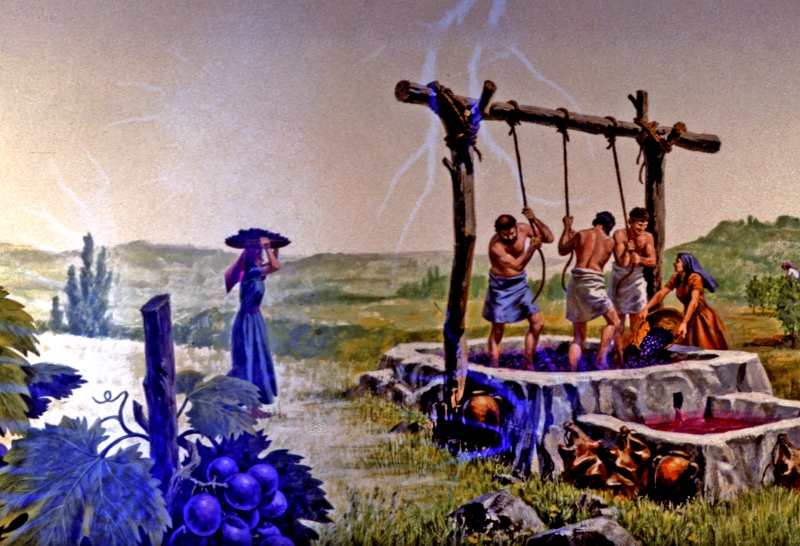
A winepress from Biblical times

He was the least important child in the least important family of his tribe, in a nation oppressed for seven long years. Watched by the angel of the Lord from beneath a tree, Gideon threshed wheat in hiding down in a winepress, where the Midianites wouldn’t find him or his precious grain. He believed God had forsaken them, despite their unfaithfulness to Him. When the Angel approached Gideon to declare God was with him, Gideon spoke the honest, desperate words of a man whose daily life had worn deep ruts in suffering’s path. “Please, sir, if the Lord is with us, why then has all this happened to us? And where are all his wonderful deeds that our fathers recounted to us …?” (Judges 6:13a).

Valley moments

Tired of being beaten down from his start on the lowest of places, Gideon asked what the honest among us will admit to wondering, “If God is with us, why is life so hard?”

Last week I created a spiritual life map of my journey with God. Some of my greatest discoveries about who God is came in my darkest places. I noticed that “valleys” were often followed by strength and advance. Gideon was in a low place when the angel of the Lord came and patiently answered his honest question. It wasn’t until the weary Israelite realized, “I have seen the angel of the Lord face to face” (v.22) that his desperation turned to fear. As if things weren’t bad enough, Gideon went from fragile to freaked out. Can you relate?

Peaceful moments

The Lord answered him where he was: “Peace be to you. Do not fear; you shall not die.” (v.23)
The only thing worse than being insignificant and insecure in the face of a marauding enemy is understanding how insignificant you are in the face of a holy God. Realizing he was part of a divine encounter with the God who had NOT forsaken him, Gideon built an altar of worship and named it for the discovery of his darkest moment: Jehovah-shalom. The Lord is peace. (Judges 6:11-24)

When we’re under attack, uncertain, in need, and painfully aware of our weakness, the world only offers illusions of temporary feelings suggesting peace. Jehovah-shalom IS peace, so He can promise, “Peace I leave with you; My peace I give to you; not as the world gives, do I give to you. Let not your heart be troubled, not let it be fearful” (John 14:27).

Past our understanding moments

Gideon couldn’t conceive of what happened in the wine press that day, stunned as he served meat and unleavened bread to the angel of the Lord. The peace he found “passed understanding;” he encountered true peace in the midst of hardship. He discovered what God offers each one of us reading now: real peace.

“… do not be anxious about anything, but in everything by prayer and supplication with thanksgiving let your requests be made known to God. And the peace of God, which surpasses all understanding, will guard your hearts and your minds in Christ Jesus” (Phil. 4:6-7).

Yes, it surpasses understanding, but it can guard our hearts and our discouraged thoughts when we find ourselves in the wine press, hiding from our hardships and fighting fear. We can know the peace of Jehovah-shalom. We are meant to know the peace of Jehovah-shalom.

Let’s climb out of the wine press and get down on our knees, so Jehovah Shalom can cover us in peace that’s out of this world!

Have you had a “wine press” experience when God gave you His peace?

El Roi–The God Who Sees Me

July 12, 2012 by Sandra Peoples 3 Comments

Have you ever felt like your problems weren’t actually your fault?

  • Someone else made a mistake at work, but you have to fix it.
  • Your husband wanted the new TV, but now you both have more credit card debt.
  • Your son told his teacher a lie, but you have to make it right with her.

Hagar had problems that weren’t her fault. She had obeyed her mistress Sarai and did what she was supposed to do. Now that Hagar was carrying Abram’s child, Sarai turned on her. She fled to the wilderness. The angel of the Lord met there. He told her she would bear a son and name him Ishmael, which means “God hears.”

Hagar responded, “So she called the name of the LORD who spoke to her, ‘You are a God of seeing,’ for she said, ‘Truly here I have seen him who looks after me’” (Genesis 16:13).

She called Him El Roi, the God who sees me. She named her son Ishmael, God hears.

Friends, we don’t have a god who is distant, or busy, or hands-off. He sees. He hears. He knows. When you feel you are in the wilderness, when your problems aren’t even your fault, He sees.

I’m the middle child, and as you may know, we are often ignored (I’m sure if you’re the oldest or youngest, you disagree, but all the other middle children know it’s true). In my teenage-angst I often thought, “No one notices me. They don’t even care.” Even as an adult there are times I think, “No one really gets it. They don’t even care.”

Then I remember God sees. He sees everything—the struggles, the triumphs, the lows, the highs. God hears. He hears everything—the cries, the laughter, the whispers.

If you feel invisible, know that you aren’t. Like Hagar, praise God for seeing and hearing you today.

Yahweh – He who is

July 10, 2012 by Kathy Howard 2 Comments

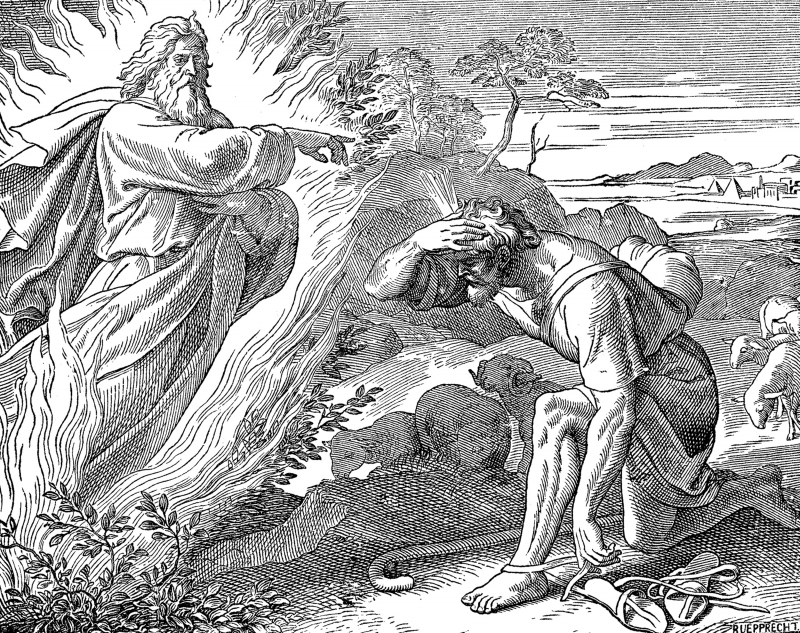
Yahweh, Moses and burning bush

This post originally appeared on Scripture Dig during a series on the Names of God.

There’s so much about God that I don’t understand. For instance, why He loves me and how He keeps the universe spinning along. But possibly the hardest thing to get my puny mind around is His eternal, self-sufficient existence.

There has never been a time that God was not, or a moment when He will not be. He exists because of Himself and He needs nothing outside of Himself.

God’s name “Yahweh” (also known by the Christian transliteration “Jehovah”) signifies His timeless, ever-present existence. The root word of Yahweh means “to exist,” “to be.” In fact, some scholars suggest that “I am that I am” in Exodus 3:14 would be better translated as “I am He who exists” or “I am He who is.”

The name God gave Himself

Yahweh, Moses and burning bush
Moses & burning bush, visualbiblealive.com

This is the name God gave when Moses asked Him:

“Suppose I go to the Israelites and say to them, ‘The God of your fathers has sent me to you,’ and they ask me, ‘What is his name?’ Then what shall I tell them?” (Exodus 3:13, NIV)

Since God’s name identifies his nature, when Moses requested his “name” he was asking about God’s character. Can we trust you to be with us? Can we believe that you can deliver us?

God’s answer: “Yahweh.” I am the One who exists. I have no source, yet I am the Source of everything. If nothing else was, still I would be.

God chose the name Yahweh for Himself. It is His personal name by which He related specifically to His chosen people. It is His covenant name, particularly in His relationship with the nation of Israel.

Yahweh is first found in the second chapter of Genesis. Abraham (Gen 12:8) knew God by this name. Adam probably did as well since we are told during the lifetime of his son, Seth “men began to call upon the name of the LORD (Gen 4:26).”

“The” Name

Yahweh is God’s most sacred name. Scripture speaks of it as “this glorious and fearful name” (Deut 28:58) or simply “the name” (Lev 24:11). The Jews would not speak it out of reverence, but generally substituted another name such as Adonai.

Because the sacred name was not spoken, precise pronunciation is uncertain. This problem is compounded by the fact that Hebrew was written without vowels until about 850 BC. YHWH or Yahweh, the personal name of God occurs more than 5,000 times in the Old Testament. In your Bible, it is typically designated by all caps: LORD.

According to the Theological Wordbook of the Old Testament, the name Yahweh connotes “God’s nearness, his concern for man, and the revelation of His redemptive covenant.” Oh, there is much in a name!

What does it mean to you personally that God is “He who exists?”

A Love Challenge that’s Bound to Change Things

July 9, 2012 by Lara 6 Comments

Our world throws away the broken. It’s what we do. We tend to look for the greener pastures. When people don’t meet our “needs” we think about tossing them to the side. At least I do. But that’s not Jesus, or His example of enduring love.


flickr photo credit


Jesus went to a cross and bled and died for people who hated Him. Then He rose to defeat the consequences of my sin. He intercedes for the wayward. He pursues the lost sheep. He moves towards His own rather than running the other way.

I long to love like Him. But…I can’t.

When left to me I hurt in return. I sling back the same insults. I think up the most effective revenge tactic. I revile when I’ve been reviled.

It’s only when I die to self that His love can come out. It’s only when I confess my insufficiency that His love can birth. It’s only when I believe Him to fill me by the indwelling power of His Spirit that I even remotely reflect my Lord.

People won’t always meet our expectations. They will misunderstand or misrepresent us. But love doesn’t stop just because that other person turns away. True love endures to the end.

It presses through the hard and digs deep in prayer, following Jesus’ example.

We can’t love like Jesus when left to us. It’s impossible. In our flesh, we’re too self-focused and needy. But He can love through us. The God of endurance and encouragement can enable us in spite of us. (Romans 15:5) What grace.


My challenge to us today is that we take one step in the direction of enduring love.


Just one. Let’s move towards that person we’re tempted to discard, enduring like our Lord.

 
So tell me, what will you do as an act of enduring love today?
 

Hiding His Word in My Heart {July Link-up}

July 6, 2012 by Lisa Burgess 2 Comments

Memorizing Bible verses is a spiritual discipline that reaps benefits not only in the moment but over and over in days ahead.

The writer of Psalm 119:11 hid the Lord’s word in his heart so he wouldn’t sin against Him. We, too, can intentionally place God’s teachings and promises inside us, both for now and for later.

I have hidden your word in my heart that I might not sin against you.
Psalm 119:11 (NIV)

Today let’s encourage each other with this practice. Please link a blog post you’ve written either recently or in the past about scripture memorization. 

Then visit other links as your time allows, even leaving the blessing of comments when possible.


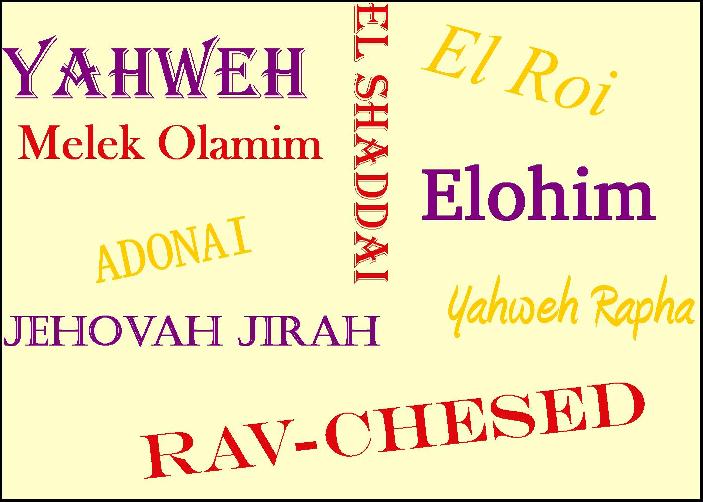
Names of God: Jehovah Rohi

July 5, 2012 by Teri Lynne Underwood 8 Comments

Names of God www.donotdepart.com

Names of God www.donotdepart.com

When fear regarding the cares of this world sets in, we must remember God’s promise to care for us. ~ Elizabeth George

Do you get afraid?  Or lonely?  Or intimidated?  Or uncertain?   Yeah, me too.   I find myself wandering through life wondering if I’ll ever be enough, have enough, do enough.   Some days  I look at all the things I’ve done – from dishes to laundry to car pool to blog posts – and I think, “I’ll have to do every single one of those things again tomorrow.”    And I wonder, “Does it matter?”   But really, deep inside, I’m really asking God, “Do I matter?”  

Maybe you can relate.  I imagine at some level we all have known that feeling.   We may know in our heads that we have a God who sees us (El Roi) but we feel in our hearts that we remain unseen.   We know in our heads that our God provides (Jehovah Jireh) but we look around and feel so very needy.   We know in our heads that God is there (Jehovah Shammah) but we still feel so very alone.

The Lord is my shepherd.

Psalm 23:1

These words have brought comfort to mourning families for centuries … but they offer us hope and truth as well.   These five words, “The Lord is my shepherd,” come from two Hebrew words:  Jehovah Rohi.

Jesus said, “I am the good shepherd; and I know My sheep, and I am known by My own” (John 10:14).

Jesus, our shepherd, is Jehovah Rohi, our Lord.

  • He feeds us … literally and spiritually.
  • He leads us … through still waters and through dark valleys … but He is with us each step.
  • He warns us … by His rod and staff we are guided and disciplined … because we are loved.

Today, will you slow down and read Psalm 23?   Cherish the promises of care and protection, provision and love, so freely offered to us.   What a great gift we have been given … to know Jehovah Rohi, the Lord is my shepherd.

How have you experienced the feeding, leading, and warning of the Lord in your life? 

Names of God: Jehovah Shammah

July 3, 2012 by Caroline 9 Comments

“The Lord of hosts is with us; the God of Jacob is our fortress.” – Psalm 46:11

Kathy opened this month’s study sharing the power and meaning behind names, especially as we study God’s names.

An article on Bible.org on the names of God states: “…giving glory to God is tied in with the knowledge of God (revelation of God), and knowing God personally (response to God).”

Giving glory is a reaction. God created us to glorify Him, and we eagerly do so because, as we get to know Him, we see His active nature, His compassion, and His love.

A God of Many Names

In our lives, we may receive many descriptive adjectives to our character. You might be calm, patient, and compassion. A friend might have a fierce, devoted personality. A coworker may be considered energetic, contemplative, or deliberate.

The Old and New Testaments describe our God as compassionate, loving, fatherly, strong, all-knowing, and more. He is a God of salvation, of justice, and of mercy.

Photo Credit

As we grow in our knowledge of Him and our experience in faith with Him, we see how active and present God is in our lives.

A Present God

As much as we know God’s interest in our lives, some days we just feel alone. Unattended. Forgotten.

When I plummet into days like these, God presents me with a reminder of a perhaps lesser-known one of His names – Jehovah Shammah, meaning “He is There.”

“Jehovah Shammah” only appears once in the Old Testament. In Ezekiel 48:35, the Israelites are building the new Jerusalem, which God instructs will be named “Jehovah Shammah.” The city itself reminds the people that God is present.

He was present in the past, leading the Israelites through generations of slavery, wandering, and growth. He was present in the specific plans His people carried out as they rebuilt Jerusalem. He is present now, as He guides us through living out His love. He offers His presence through us, acting through our hearts and delivering eternal hope.

This verse in Ezekiel ends the book, and what a way to end a book! The last note we read here proclaims “from that time on” God’s ever presence. He is always with us.

Matthew Henry’s Commentary says:

“…it is true of every good Christian; he dwells in God, and God in him; whatever soul has in it a living principle of grace, it may be truly said, The Lord is There.”

If, during my struggles and my worries, I stop and consider how God is with me, how much will that change my perspective? I can give those worries away when I remember He guides, protects, and journeys with me.

From now until forever, God is there.

“And I heard a loud voice from the throne saying, “Behold, the dwelling place of God is with man. He will dwell with them, and they will be his people, and God himself will be with them as their God.” – Revelation 21:3

May we live certain He is with us!


How have you experienced God’s presence? What verses remind you He is always there?

Love Like Him: Love bows low

July 2, 2012 by Julie 1 Comment

Return visit to my village servant-friend

Coffee bushes and papaya trees encircle her cinder block home; stitched tribal garments hang near the door, distinguishing her as an honored citizen and village elder. When I first visited, she was adorned in her finest, spending the hottest part of the day as our self-appointed caretaker. Highly regarded, she chose to lower herself in humble servitude, preparing trays of fruit, refreshing our water, inviting us to sit so she could give. Setting aside her own needs, she ministered to our fatigue. 1 Corinthians shows how love is patient and how it looks when I am full of love.  Love is in its glory when a person of honor bends low to serve another.

Jesus bowed Himself all the way from the throne of heaven to a woman’s womb, so He could serve mankind.  Humility is the opposite of rivalry and pride, intentionally putting oneself below your rightful level or position. While we usually frown on making comparisons, to take hold of a first-Corinthians-kind-of-love, let’s discover and embrace the comparisons of Philippians 2:1-8.

Love takes hold when God’s people are the same … united in mind and love. (v. 2) Paul invites readers to compare themselves and see if they agree and share the same humble thoughts and passions. Opinions direct our actions; we only strive together in humility when we choose to go low together.

Love counts others more significant than self … “more than” how we count our self. Despite His perfect nature and divine sonship, Jesus valued our lives above His own. To “count” is to contemplate and direct attention to the needs of another. How do your thoughts about your own value and your own life’s concerns compare to how you think about those of others?

Love includes the interests of others … not only our own. We do look out for own interests, but “not only” our own interests. Humility requires measuring how much energy, time, and passion we allot for our interests in comparison to looking out for others = not easy in a world empathetic to our right to “be good to yourself.” If “self” dominates our attention, we need a change of heart and mind.

Love has this mind … not the other mind. “This mind” is a mind like Christ. Our opinion of self and others drives the way we strive in life. Jesus so valued man that He lowered Himself into a human embryo, grew up through the life stages of a man, and offered His perfect self to the very ones He created. In an ultimate act of humility, He was “obedient to the point of death, even death on a cross” (Phil. 2:8). Jesus did the comparisons and saw that we are totally sinful, while He is totally perfect. Though the Person of greatest honor, He served beyond our wildest hope. He chose to be low. He chose to be obedient.

Jesus’ lowest moment was Love’s most glorious moment.

This summer I revisited my tribal friend to find her weak and suffering. Her hands trembled as she welcomed us into the coolness of her dim home with mat covered floors. With great effort, she brought trays of fruit and a costly bottle of water to minister to our needs, and she lowered herself to the floor to be with us. Love doesn’t insist on the place of honor. Our tongues spoke different words, but the language of her love was clear and strong. Love bows low in humble service to ones it values.

Following my humble friend home


When it comes to love, comparison challenges the hearts and minds of ones like me:  given to looking out for myself, seeking my own way, happy to give a “piece of my mind.” Do you dare to compare?

  • Do I have the “same mind” as other followers of Christ?
  • Do I think I’m “more significant” than others?
  • Do I look out for the interests of others, “not only” mine?
  • Do I have “this mind” of Christ or a selfish mind?

Let’s dare to compare with ones who bow low in love’s stance.  We’ll be in good company.


What’s in a name?

June 29, 2012 by Kathy Howard 3 Comments

Names of God

Did you have a nickname growing up? If so, you may have earned the moniker because of your personality, physical appearance, or a significant event in your life. For instance, years ago our pastor in Wyoming called our young daughter “Peaches” because her limited hair reminded him of the fuzz on a peach.

Choosing a Name

In ancient times, names held great significance. They were intimately connected to the essence of the person. Knowledge of a person’s name provided knowledge of their nature. Hebrew names particularly reflected the character or destiny of the individual.

Therefore, names were chosen carefully. For instance, God the Father used the angel to tell Joseph what to name His Son. In the first chapter of Matthew we learn the reason for the names. “Jesus” means “the LORD saves” and “Immanuel” means “God with us.” These names accurately reflect Jesus’ nature and purpose.

Names of God

Power of a Name

In the Bible, the many names of God express His character, nature, and ways. Although our finite minds can never fully know or understand our infinite God, we can learn more about God by studying His names in Scripture. God has chosen to reveal specific things about Himself and graciously help us better understand His character and nature through His names.

 “Suppose I go to the Israelites and say to them, ‘The God of your fathers has sent me to you,’ and they ask me, ‘What is his name?’ Then what shall I tell them?” (Exodus 3:13, NIV).

Here in Exodus 3, Moses asked God His name. The Hebrew word translated as “name” in verse 13 is “shem.” It can be a synonym for “reputation” or “fame.” Moses – and the rest of the Hebrews – needed a sense of God’s character and power. They needed to know if their God could deliver them from the hand of Pharaoh.

What situation do you face today that needs your God’s intervention? Perhaps you need to remember an aspect of His character. Maybe you need to contemplate His power and authority. Reflecting on His names will expand your understanding of our great God and build your trust in His provision.

July is Theology month at Do Not Depart

Throughout the month of July, the Do Not Depart team will be exploring some of the names of God found in Scripture. Our goal is to understand, embrace, and actively respond to the truths God reveals to us about Himself through His names. I can hardly wait!

Let’s talk now!

Let’s start talking about God’s names now! What is your favorite name for God in the Bible and why?

« Previous Page
Next Page »

This Month’s Theme

  • Jesus is the Way
  • And He Shall Be Called Series Intro

Enter your email address to have new posts emailed to you:

We’ll come to you

Enter your email address to have new posts emailed to you

Categories

Bible Memory – Lent 2021

Memorizing Isaiah 12

Let the Children Come

Let the Children Come

Want more #HideHisWord resources?

Memorizing Psalm 1

Find Us on Facebook


Search

Recent Posts

  • Series Wrap-Up: The Lord Is My Light
  • His Marvelous Light
  • When the Darkness Deepens
  • Though I Sit in Darkness…
  • Let Your Light Shine
  • Life-Giving Light

Archives

© 2026 · Pretty Creative WordPress Theme by, Pretty Darn Cute Design