
• Home
  • About
    • Our Contributors
    • Our Beliefs
  • Blog
  • Bible Studies
    • Scripture Dig
  • Archives
  • Shop
  • Advertise
  • Contact
    • Email
    • Facebook
    • Instagram
    • Pinterest
    • Twitter

Do Not Depart

Encouragement and Tools to Abide in God's Word

You are here: Home / Archives for psalms

Clean to the Fibers {Run to Him Psalm 51}

February 24, 2012 by Julie 6 Comments

The pollen from my bouquet left a dark yellow stain on the neckline of my once pure white wedding dress. We went into crisis mode to renew the lace and prepare for presentation to my husband-to-be. With little time, there was no way to truly cleanse it; covering it up was the best we could do.

The Need for Repentance

None of us begins with a pure heart; we’re all born with a sin problem. We’re delivered to this world with a need for deliverance. When the prophet Nathan confronted David with his adultery and murder, the Psalmist’s sin stared him in the face. The King was “always aware” of his offense “against God,” so “evil to God,” recognizing he was born that way (v.5). David shared his individual longing to be made right in Psalm 51’s words, written for a congregational group to song together. The ceremonial system required worshipers to “wash” and “cleanse” themselves before coming into God’s presence.  Knowing he was undeserving, he appealed to the character of God, marked by steadfast love and abundant mercy.

  • David knew the scope of his offense and responded with a humble heart.
  • David knew the scope of God’s mercy and responded with a plea for deliverance.
  • David knew the scope of God’s love and responded with a worshipful heart.

Have mercy, wash me, cleanse me, purge me, wash me, hide your face, blot my sin, create a new heart, renew my spirit, don’t cast me away, don’t remove your Spirit, restore my joy, uphold me…. 

These are the words of a man who was sin-stained and knew it. These are the cries of a man who was unworthy to be in God’s presence and knew it. These are the pleas of a man who knew God’s mercy and love surpassed his dirtiness and evil. These are the hopes of a man who knew he could not make himself clean, but God could. Could these be your words?

Because He is the “God of my salvation” (v.14), He looks for more than a covering up of our outward stain; He wants inward purity demonstrated by outward obedience.  Cleansing prepares us to enter His presence. Without it, our dirty condition overflows to the whole community of believers. A gathering of the cleansed and forgiven cannot help but respond in worship to the One who mercifully gives what isn’t deserved.

The Joy of Restoration

David knew the joy of having his personal evil washed to a miraculously whiter-than snow condition. He felt the joy of having his contrite heart and broken spirit healed and accepted.  Deliverance from sin opens the door for freedom in worship, so he promised, “my tongue will sing aloud of your righteousness … and my mouth will declare your praise” (vv. 14-15). Worship is the song of a forgiven heart.

There was no time to cleanse my wedding dress. A heavy spray of hairspray, covered by a dousing of baby powder, masked the stain on my yellowed bridal lace. It was covered, but not clean.

God isn’t fooled by our attempts to cover up our sin. Only the God of our Salvation has the power to cleanse the deep fibers of our hearts and restore our broken spirit.  For those who know the joy of undeserved mercy, let’s join David’s congregation and sing the song of the forgiven hearts!

  • Do you have a humble heart that’s honest about your stained condition?
  • Have you appealed to God’s mercy with a plea for cleansing and to be upheld?
  • Are you taking time to worship God privately and with a group of other forgiven people?

I Trust Because He Delivers {Run to Him Psalm 40}

February 17, 2012 by Caroline 10 Comments

Sitting in a hospital works wonders for one’s trust in God.

My husband and I have seen with our own eyes how God delivers people from pain, troubles, and sadness. It’s not that we won’t experience these hard things. We will see suffering in this life (Romans 5:1-5), but God always remains present for us to trust through the good and the rough. His answer may not always be what we expect, but we can rely on Him to give us what we need (Psalm 34:8-9).

Waiting While Crying Out

In Psalm 40, David waited and received answers from God on his previous troubles (Psalm 40:1). He witnessed God’s good deeds, deepening his knowledge of Him (Psalm 40:3) and set about praising Him.

“Such wonders of God demand a response (Psalm 40:5). No ritual will suffice (Psalm 40:6), only serious commitment to God’s will (Psalm 40:7-8).” (Source: New Bible Commentary, p. 512)

Image from Microsoft Clip Art

Yet, David still needed God’s help and deliverance (Psalm 40:11-13). Continuing to need God’s help did not cause David’s trust to suffer. Instead, he trusted all the more because he had witnessed God’s saving redemption. And because of that trust, he waited patiently while still crying out to God for His saving help. Trust breeds patience and that patience signifies deep trust. Oh, to have that trust!

The New Bible Commentary looks at David’s example of patient trust and summarizes: “How we react to life constitutes a potent testimony and nothing is more powerful than to maintain a simple attitude of waiting trust” (p. 512).

He Delivers

God’s love and faithfulness protects (Psalm 40:11). He gives not only His salvation and His physical protection, but His love and faithfulness protect our hearts, too.

Psalm 40:17 declares that God helps and delivers. We can trust even these words because we know His Word to be true (Psalm 33:4).

We always need God’s gracious help. And He is always willing to give it His children, who love Him, revere Him, and seek Him wholeheartedly. We can do all of this in trust because we see how He delivers. We have known from the beginning (Psalm 22:9-10) and in spite of those who mock the faith (Psalm 22:8) – God is trustworthy. I may want answers fast or a different path than what may be placed in front of me, but in and throughout it all, I have a God who opens my ears to hear His blessings (Psalm 40:6) and opens my heart to receive His love.

My prayer today is to trust like David shows us because God’s love and deliverance produces this praise-filled reliance:

“Be still before the LORD and wait patiently for him…” – Psalm 37:7


How have you personally seen God deliver? What else did you learn from this week’s Run To Him reading in Psalm 40?

Where are you safest? {Run to Him – Psalm 27}

February 3, 2012 by Lisa Burgess 23 Comments

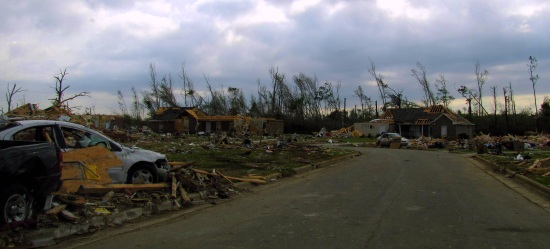
It’s been almost one year since tornadoes ripped through neighborhoods hauntingly close to mine. The weathermen had warned April 27 would be bad, but until my own trees and fence blew down, I didn’t believe them.

By the end of the day, it was a war zone. Wind versus everything else. On the outside, it appeared wind had won.

But on the inside—for those hidden in shelters—there was safety.

Who is the enemy?

David knew wars. Enemies surrounded him. Yet he had the audacity to ask, “Whom shall I fear? Of whom shall I be afraid?” (Psalm 27:1).

Um, I could make a list, David. A long list.

And not just for him, but for me, too. I’m leery of new situations, confrontational people, even hints of danger. And that’s not even counting “evildoers assailing me to eat up my flesh, my adversaries and foes” (Psalm 27:2).

So what do we do in times of danger, or perceived danger? In Alabama, many are buying tornado shelters. Our instinct is to protect ourselves from vulnerability.

But what did David ask?

David did one main thing. He asked the Lord, “Can I stay in Your presence?” (Psalm 27:4). There was safety. There was shelter.

In God’s presence, he could sing with joy, he could cry for guidance, he could learn His ways.

Can we be that dependent? Can we be vulnerable enough to stop striving after stronger fortresses, and instead trust the One already built for us?

Can we let go of trying to be more—if I pray more, study more, mop my kitchen floors more—and instead let God be more?

He didn’t tell us to build a spiritual storm shelter. He said He would hide us in His.
He didn’t say to bring our own tents. His can cover us just fine.
He didn’t even point toward a big rock and say climb up. He lifts us up and places us on top.

So what do we do?

Let’s start by repenting. Instead of wasting resources building our own walls of protection, let’s ask His forgiveness for our attempts at self-sufficiency. And become dependent instead.

Then let’s stand firmer in our faith. Can we let down our guard in a relationship that needs more authenticity? Perhaps we can try a new ministry, trusting He will lead us. Or maybe “waste” more time with Him, simply delighting in His presence.

If we want more peace, more rest, more confidence—and God to receive more glory—let’s live and love out of the home base of His shelter.

We don’t have to design it.
We don’t have to manufacture it.
We don’t even have to pay for it.

We just worship in it with joy. God is our shelter. Nowhere else can be safer.

For he will hide me in his shelter in the day of trouble;
he will conceal me under the cover of his tent;
he will lift me high upon a rock.
Psalm 27:5

Psalms Bible Study, How to run to God, Psalms study Is it easy or hard for you to abandon self-sufficiency? In what areas do you most realize your dependency on the Lord?

Please share something that helped you this week from Psalm 27.

The Danger of Compromise {Run To Him – Psalm 1}

January 20, 2012 by Lara 42 Comments

Compromise slowly progresses to full on rebellion. We see it in Psalm 1.

First we walk in the counsel of the world, turning one ear to society and pondering its perception of love, marriage, sex, or money. Like when I decide to watch some TV show that completely slanders my God. And I wince at the blasphemy. Until I linger. Until I watch it again.

Then our feet stop. We stand for a while, both ears listening to the world’s definition of truth. And what used to be preposterous now holds our attention. It boosts our self-ego and pets our pride, encouraging us to take a seat.


flickr photo credit: wonderlane

And if we continue to run from His arms of mercy, then we sit. We point and belittle what we once held dear. We turn our face from the One who designed us. And in the end we look like the scoffers hurling insults at that One being nailed to a wooden beam. And it can began with a single compromise.

I desire to be like that tree that bears fruit even in the midst of drought. I want my kids and husband to see His reflection in me. But unless my mind stays fixed on His Word and His ways I will become like the chaff that the wind drives away. (Psalm 1:4) Unless I delight in His Word, I will rebel. We will rebel.

So how do you remain diligent to delight in God’s Word?
What “rewards” have you seen in your own life as you choose to meditate on true things?
For those who participate in the “Run To Him” study, what did you glean from the text this week?

Barely Scraping By {Run to Him}

January 13, 2012 by Katie Orr 38 Comments

Buried deep as you can dig inside yourself
And covered with a perfect shell
Such a charming, beautiful exterior
Laced with brilliant smiles and shining eyes
Perfect posture, but you’re barely scraping by
But you’re barely scraping by

Buried deep as you can dig inside yourself
And hidden in the public eye
Such a stellar monument to loneliness
Laced with brilliant smiles and shining eyes
Perfect make-up, but you’re barely scraping by
But you’re barely scraping by…

The Places You Have Come to Fear the Most —Dashboard Confessional

These lyrics have resonated with me for years. I often try to put on this perfect shell—the appearance that all is great.

Don’t we all long to look a certain way, even if our emotions don’t match the way we perceive?

Even if we’re barely scraping by?

I am weary with my moaning;
every night I flood my bed with tears;
I drench my couch with my weeping.
(Psalm 6:6 ESV)

For my soul is full of troubles… (Psalm 88:3 ESV)

My heart is struck down like grass and has withered… (Psalm 102:4 ESV)

Weary from weeping.

Forsaken.

Full of troubles.

Struck down.

Emotion Photo Credit

The Psalms are full of raw, honest—sometimes scary—emotion.

What is it about us that we like to hide our true feelings? Wear the spiritual makeup; put on a pretty front.

What are we afraid of?

What am I afraid of?

Through the example of the psalmists, we are given quite a different model to follow, when it comes to how we handle our emotions, especially in how we approach God.

Well this is one time, well this is one time
That you can’t fake it hard enough to please everyone
Or anyone at all…or anyone at all
And the grave that you refuse to leave
The refuge that you’ve built to flee,
The places that you’ve come to fear the most,
Is the place that you have come to fear the most.

The Places You Have Come to Fear the Most —Dashboard Confessional

When we bury our emotions, we deny who we are, and the need we have for a Savior.

Why do we bury our feelings when we are already known?

He knows the deepest secrets and the darkest emotions—and He loves anyway.

So, instead of burying, ignoring, and faking it, let us open up, fess up, and run; crying out to the One who longs to soothe, heal, and forgive.

Let’s run to Him.

I love the Lord, because he has heard
my voice and my pleas for mercy.
Because he inclined his ear to me,
therefore I will call on him as long as I live

(Psalm 116:1-2 ESV)

Are you barely scraping by? Do you have spiritual makeup on? What (or who) are you hiding your emotions from? What keeps you from running to Him?

Let’s chat in the comments…

—————————

Psalms Bible Study, How to run to God, Psalms study We start up the Run to Him study on Monday. We’ll be studying a collection of Psalms over the next 13 weeks. We would love for you to join us! Click here to download the free printable Bible Study of the Psalms, and join us back here each Friday afternoon for a commentary on the Psalm we have studied all week.

If you haven’t already, be sure to subscribe to get posts delivered to your inbox, so you don’t miss a beat!

Run to Him Study Guide

January 8, 2012 by Katie Orr 34 Comments

Psalms Bible Study

The Study Guide is here!

This study guide includes a 5-day weekly quiet time plan, studying one Psalm a week, with options to add on scripture memory and 2 additional days of study. There is also a printable bookmark for easy access to the study schedule.

Anyone is welcome to join us in this study of the Psalms. We will be posting a supplemental Bible study on each Psalm on Friday afternoons. The study guide plan starts Monday, January 16th.

Click here to download the free Bible study printable.

Psalms Bible Study

Praying He uses this study to help us run to Him.

Christ in Old Testament Prophecy

November 15, 2011 by Sandra Peoples 2 Comments

Remember counting down the days until Christmas when you were a child? The anticipation? There were signs Christmas was coming: decorations, Christmas songs, and gifts showing up under the tree. Even if you were too young to find December 25th on the calendar, you knew when it was getting close.

Throughout the Old Testament, God’s people were eagerly anticipating the coming Savior. Through the biblical writers, God gave clues to when the God-man would arrive. We now call those prophetic passages—they point to a time to come. Today, in our series on Christ in the Old Testament, we’re going to look at a few of these passages.

The first mention of a Savior comes in Genesis 3:15, what we refer to as the protoevangelium, or first announcement of the gospel. In giving the curse, God says to the serpent, “I will put enmity between you and the woman, and between your offspring and her offspring; he shall bruise your head, and you shall bruise his heel” (Genesis 3:15). The New Testament tells us Christ overcame Satan, just as this passage predicted (see Hebrews 2:14; 1 John 3:8; Luke 10:18; John 12:31; 1 Cor. 15:24; Col. 2:15).

The prophet Isaiah spoke of the coming Savoir, predicting many details about His birth, life, and death. Here are just a few:

  • Isaiah 7:14 says He will be born of a virgin (see fulfillment in Luke 1:26-31).
  • Isaiah 9:7 says He will be an heir to the throne of David (Luke 1:32, 33).
  • Isaiah 40:3-5 says He will have His way prepared (by John the Baptist, John 1:19-28).
  • Isaiah 53:1, 3 says He will be widely rejected (John 12: 37, 38).
  • Isaiah 53: 6, 8 says He will be our substitute (Romans 5:6, 8)
  • Isaiah 53:9 says He will be buried in a rich man’s tomb (Matthew 27:57).

The book of Psalms also foretold of events that happened hundreds of years later at the cross:

  • Jesus was crucified (Psalm 22:16; Matthew 26:56).
  • His garments were divided (Psalm 22:18; Matthew 27:35).
  • He was given wine with gall (Psalm 69:21; Matthew 27:34, 48).
  • He cried out from the cross (Psalm 22:1; Mark 15:34).
  • He had no broken bones (Psalm 34:20; John 19:33).

We can praise God today for fulfilling the promise He gave for a Savior! His Word points to Christ as the promised one, the spotless lamb, our redeemer. Thank God today, because He still fulfills His promises to us!

Primary source used: The Woman’s Study Bible

Jehovah Rohi :: The Lord Is My Shepherd

October 31, 2011 by Teri Lynne Underwood 3 Comments


{First, a sincere apology for posting this a day later than expected.  I spent last weekend at a conference and Monday was spent trying to catch up on sleep and laundry and life with the family I missed terribly during my five days away.   Thank you for grace!}


image via microsoft clip art

When fear regarding the cares of this world sets in, we must remember God’s promise to care for us. ~ Elizabeth George

Do you get afraid?  Or lonely?  Or intimidated?  Or uncertain?   Yeah, me too.   I find myself wandering through life wondering if I’ll ever be enough, have enough, do enough.   Some days  I look at all the things I’ve done – from dishes to laundry to car pool to blog posts – and I think, “I’ll have to do every single one of those things again tomorrow.”    And I wonder, “Does it matter?”   But really, deep inside, I’m really asking God, “Do I matter?”

Maybe you can relate.  I imagine at some level we all have known that feeling.   We may know in our heads that we have a God who sees us (El Roi) but we feel in our hearts that we remain unseen.   We know in our heads that our God provides (Jehovah Jireh) but we look around and feel so very needy.   We know in our heads that God is there (Jehovah Shammah) but we still feel so very alone.

The Lord is my shepherd.

Psalm 23:1

These words have brought comfort to mourning families for centuries … but they offer us hope and truth as well.   These five words, “The Lord is my shepherd,” come from two Hebrew words:  Jehovah Rohi.

Jesus said, “I am the good shepherd; and I know My sheep, and I am known by My own” (John 10:14).

Jesus, our shepherd, is Jehovah Rohi, our Lord.

  • He feeds us … literally and spiritually.
  • He leads us … through still waters and through dark valleys … but He is with us each step.
  • He warns us … by His rod and staff we are guided and disciplined … because we are loved.

Today, will you slow down and read Psalm 23?   Cherish the promises of care and protection, provision and love, so freely offered to us.   What a great gift we have been given … to know Jehovah Rohi, the Lord is my shepherd.

How have you experienced the feeding, leading, and warning of the Lord in your life? 

Jehovah Rophe: The LORD Heals

October 19, 2011 by Teri Lynne Underwood 2 Comments

When they came to Marah, they could not drink the water of Marah because it was bitter; therefore it was named Marah.  And the people grumbled against Moses, saying, “What shall we drink?” And he cried to the LORD, and the LORD showed him a log and he threw it into the water, and the water became sweet.

There the LORD made for them a statute and a rule, and there He tested them, saying, “If you will diligently listen to the voice of the LORD your God, and do that which is right in His eyes, and give ear to His commandments and keep all His statutes, I will put none of the diseases on you that I put on the Egyptians, for I am the LORD, your healer.”

Exodus 15:23-26

Bitter water.  Doesn’t sound appealing at all, does it?

The Israelites had been freed from the bondage of slavery and now they were faced with bitter water.   Does your life ever feel that way?  One huge situation is finally resolved and then comes another … it can leave us overwhelmed and broken.

Elizabeth George writes:

What an object lesson this encounter with Jehovah-Rophe, the Lord who heals, must have been for the Israelites (and for us)!  God’s people were dying of thirst with only bitter, poisonous water on hand.  And God took their physical need and turned it into a spiritual issue.  Out of a bitter experience God revealed Himself in yet another sweet, comforting way, as “Jehovah heals.”

Jehovah Rophe, the LORD heals.   What a precious truth … and promise.

God’s healing is not just physical.   He also reaches down offers total healing … in all areas of our lives.

Consider these three ways God heals and examples of women in Scripture who were the recipients of His total healing.

1.  Physical Healing.    Remember the woman with the issue of blood?  Her story is told in Matthew 9.   She had been sick for years and used every bit of money she had to seek healing.   When Jesus passed by, she reached out and touched the hem of His garment.   I love this story!   She was healed immediately and completely!   Why?   Jesus said, “Take heart, daughter, your faith has made you well.”  (Matthew 9:22)     I am so thankful for a God who heals us physically.

2.  Emotional Healing.   Hannah.  The broken woman longing for a child, praying so fervently that the priest thought she was drunk.   Can you imagine her brokenness?    God heard the heart-felt prayers of a wounded woman.    And He answered them.  I think though the most beautiful part of this story is the change we see in Hannah … from a woman desperate to have a child to a woman willing to give her son back to the God who gave him to her.   That, my friends, is the power of God to heal us emotionally.   {You can read Hannah’s story in 1 Samuel 1 – 2.}

3.  Spiritual Healing.   The most profound healing God ever does in any of our lives is spiritual.  That moment when He moves us from death into life, when we become new creations, the old gone and the new in its place (2 Corinthians 5:17).   Mary Magdalene’s story is such a beautiful example of that total renewal, total healing.   From a woman possessed by seven demons (Luke 8:2) to the woman who first saw Christ after His resurrection (John 20:15) … Mary Magdalene offers us a poignant and powerful image of the full spiritual healing offered to each of us by Jehovah Rophe.

Are you in need of healing?   Are there some bitter waters in your life?  Will you call upon the God who heals and trust Him to mend the brokenness?

Praise the Lord!  For it is good to sing praises to our God; for it is pleasant, and a song of praise is fitting.  He heals the brokenhearted and binds up their wounds.   Psalm 147:1,3

Today, right now, Jehovah Rophe is offering you the gift of healing.   Will you embrace it?  And praise Him for this amazing gift?

~~~~~~~~~
The quote above is from this book by Elizabeth George. I highly recommend it for either personal study or for a group.

Cross country endurance

September 21, 2011 by Julie 8 Comments

Endurance only happens when there is a challenge, usually accompanied by some pain.


This fall I’m learning so much from cross country. I’m not the runner; I’m the mother of the runner, and as I watch and cheer, I’m observing. Last week a large group of girls gathered at the start, some shooting out fast from the line to take front positions, but they couldn’t sustain it. The winners were those who were committed to their goal, prepared to go the distance, and wise enough to set a good pace.


When was the last time God brought a painful challenge into your life as a wife? As if to work out the P31 gal’s endurance in my own heart in a fresh way, just yesterday the Lord led me to a low place. (You can read the nitty gritty here.) I wrestled between my fleshly desires and my godly ones. A hardship tempts us to cast aside the goal of godliness with excuses like, “That Proverbs 31 wife isn’t even realistic!” The pain suggests we weren’t prepared for something “that disappointing.” We might  be inclined to just flop down, burst into tears, and whine out our troubles as if we can not be victorious … aka “meltdown.”


In circumstances that stretch us in life and marriage, we do our husband’s good by resisting the urge to fall apart and striving, instead, to persevere in a godly response. In times of hardship, excellence endures.  A challenge involving pain gives us opportunity to do our husband “good” by contributing our endurance.

Oh, Lord, help us be women of excellence who:

  • commit to the goal of godliness, staying focused on that goal when we are under life’s assault
  • go the distance and embrace the extra mile it takes to be excellent
  • set a pace of wisdom we can sustain in our married life

P31 isn’t just a sprinter; she is diligent all day, she makes the most of her available time, she provides what her household needs, and sets her selfishness to do what’s best for her loved ones (vv. 14-15, 18).  On the cross country trail, as well as on the marriage trail, there will be women on the course who don’t take their training seriously, and it will show in their lack of victory and in the condition in which they cross the line, if they finish. It was show in their husband’s spirit, freedom, and prosperity. Is he carrying an extra load, or doing life alongside a woman of endurance?


There’s no doubt the course is hard, including challenges that promise pain. We’ll see it on the faces of those around us, and we’ll display it in our own. Marriage isn’t for those who lack commitment to the goal,  readiness to go the distance, and wisdom in pacing.  The teams that win are teams that endure. Let’s make our husbands glad we’re on their team!


What challenge has God allowed in your life to give you the chance to endure with your man?


24/7 Streamside ~ Psalm 1

July 7, 2011 by ScriptureDig 2 Comments

Understanding how verses 1-4 apply to me personally makes all the difference when I get to verse 5 … “Therefore…”  It’s like God hits the turn signal, it’s flashes a warning, and we turn in to the conclusion of Psalm 1.

If we grow beside living water, we bear fruit. God uproots us and tranplants us to life, but we have to reject wickedness and, instead, embrace truth constantly.

The wicked lead lives apart from God and produce nothing lasting. “Therefore,” the righteous are approved of by God; the wicked don’t stand firm in the judgment. It’s a turning point with an eternal difference.

—————————————————————————————————————————————————————-

Fast forward to the 21st century … How do I avoid walking/sitting/standing with the “wrong crowd?” God isn’t talking about avoiding the world.  Jesus said He doesn’t want us to be taken out of the world (John 17:14-16); He wants us to be salt and light IN the world (Matt. 5:13-14).  “Walking … sitting … standing” are active verbs revealing a decision to stay with people who reject God. Instead of accepting the companionship and counsel of wicked men (who haven’t turned to God), someone who seeks to be blessed won’t continue with and listen to/heed the wicked.  In our modern world this may mean:

  • not exchanging the truth of God for opinions found in books, blogs, tv, etc
  • not going to someone who doesn’t follow God for counsel, advice, or partnership
  • not spending regular time with someone who makes fun of, argues against, or shames God and His truth
  • not putting ourselves in a place to be influenced by someone who doesn’t delight in God’s Word

How do I meditate 24/7? Maybe this was realistic for someone herding sheep all day, but be come on?!?   Meditating really means searching for insight, continuing to try to know, staying with truth, and always returning to truths of God’s Word. (Kathy gave thoughts on meditation here.) This may look like:

  • reciting Psalm 101:3 each time I turn on the tv or computer – “I will set no worthless thing before my eyes … “
  • remembering the words of Psalm 4:8  when I return to a dark house at night and fight fears – “In peace I will both lie down and sleep,
    For You alone, O LORD, make me to dwell in safety.”   If I’m alone & feeling insecure, I may keep muttering this truth over and over until the Lord covers me in peace and brings me sleep.
  • reminding myself that “Some trust in chariots and some in horses, but we trust in the name of the Lord our God,” (Psalm 20:7) when I’m at a family gathering or school meeting or lunch with co-workers, and they’re laughing at people who need the “crutch” of believing in Jesus.

How do I stay by the stream? We live in arid times when men would rather wither than trust God and bear fruit for others. Strangely, it’s never been easier to access God’s Word! We have it in so many forms at the touch of a button or stroke of a finger, but we’re more distracted than ever. Enjoy drinking from God’s Word!

  • Invest money and time and thoughts to dig in and discover God’s truth and application to YOU in the 21st century.
  • Think about it throughout your day, in all events of life.
  • Memorize it, hiding it in your heart. (Psalm 119:9-10)
  • Talk about it with others who love God, and worship with others who follow Him.
  • Be a committed part of a church family that’s bearing fruit.

Sweet Scripture Dig friend, there’s no need to wither.     We’re meant to be living on God’s Word and bearing fruit!

Psalm 1 gives us a glimpse of treasures in the song book of God’s people. If you’d like to spend more time in select chapters over the next few weeks, join me at Come Have a Peace as we pass through this gateway chapter and look into the garden of the Book of Psalms.

What helps you most to stay close to the stream of living water?

Useless. Irritating. Chaff. ~ Psalm 1

July 6, 2011 by ScriptureDig Leave a Comment

Tossing chaff as seen from my window

From the window of our bedroom, I looked out across the rice fields surrounding a distant mountain. During harvest, people covered their faces and arms, threshing stalks of rice and separating sharp hulls of no use. As farmers tossed the stalks into the air, chaff filled the sky and was caught by a hot wind; it blew in from the fields and irritated our lungs and eyes. Useless. Irritating. Chaff.


Psalm 1 leaves us wondering about who first wrote its words. We’ve looked at observations and considered some meaning, but how did the words of the 6 verses apply to the original audience? As God breathed these words, what did He know about the early worshipers that made this song so powerful?

  • Water – Since the Psalms were first given to Israel as a national hymnal, the audience would’ve been made up of people familiar with  life in arid places. Precious water was the life blood of prosperity, and distance from it was the difference between life and death. To bear fruit, a plant has to be planted or transplanted to a place where it can live.
  • Covenant – They also knew that prosperity and perishing were part of the covenant God had made with them as a people. This was not brand new information, but it gave voice to their song of commitment. (Exodus 19:3-9)
  • Farming – Most of those listening knew first hand the labors of the field and the process of moving from planting to fruit bearing. To those in agricultural Palestine, a tree intentionally planted to flourish by a life giving  stream was a familiar contrast to the useless chaff removed during threshing, leaving behind the valuable grain as it was blown away in the wind.
  • Kings – The people of God who first sang this Psalm knew that a king has the right to approve of or prefer a man who please him. Many had suffered in captivity and knew the anguish of a disapproving king. As God’s chosen people, He has the right to receive or reject those in His kingdom.

The blessed man bears fruit, but the wicked man bears useless chaff.

“Scoffers” refused to follow the covenant given by the King to His people. At that time, that mean following the first 5 books we have, the Torah. Walking it’s truths led to either bearing fruit for others or perishing without being a benefit (Useless. Irritating. Chaff.)

God repeated the priority when His people prepared to cross into the land He promised them. He challenged Joshua, “This Book of the Law shall not depart from your mouth, but you shall meditate on it day and night, so that you may be careful to do according to all that is written in it. For then you will make your way prosperous, and then you will have good success” (Josh. 1:8).

The people who first sang Psalm 1 knew that to be prosperous, they must constantly consider and practice God’s holy Word.  Every harvest season, as they tossed grain into the air and watched chaff blow away, they would remember and be warned.

The blessed man bears fruit, but the wicked man bears useless chaff.

So what about the non-farmers of the 21st century? Does Psalm 1 apply to us?

Come back with me to the life-giving Word tomorrow,  and let’s make it personal.

Little things say a lot ~ Psalm 1

July 5, 2011 by ScriptureDig Leave a Comment

In the South Carolina low country, there are marshes and rivers and ponds, lined with haunting moss-draped live oaks from which Dogwood trees peak out like little girls in brightly colored party dresses. At first glance, it’s just a beautiful garden. Strolling along the pathways, however, the lives of people with titles like “Enslaved Africans, Overseer, Owner” unfold as you walk through the restored rice plantation. As you follow the garden walkways the story of the founding couple is woven through acres like the vines that cling to trees framing the canals; two people who loved the land, art, writing, and history had a vision to preserve something of great value. The garden is a collection of  what caused their hearts to sing and all they treasured.

————————————————————————————————————————————————————

The Psalms are deeply personal, yet mean to be sung corporately. They often give voice to what can not find expression within our own limits. Understand the meaning of the basic facts gives us a glimpse to why these treasures have been preserved for us to enter into.

What does it mean to be “blessed?” ~ showered with favor from the Lord; in it’s Latin form, the word “beatus” is the same that gives us the word for “beattitude” in the Sermon on the Mount of Matt. 5:3-11.  The Greek equivalent of the original Hebrew word means “blessed,” and it’s the same word used in James 1:12, where the we find, “Blessed is the man who remains steadfast under trial, for when he has stood the test he will receive the crown of life, which God has promised to those who love him.”

Sometimes the smallest things in the garden give me the most awe, and words are no different.  The word for “man” refers to a “specific person,” meaning this is the example of a specific person to be followed. In Hebrew it’s literally “the man.”  This is the example we are called to follow, that of “the blessed man.”

This man – this blessed one – resists moving with, stopping with, and staying with those who reject the instruction of God. He embraces God’s truth and focuses on it consistently.  To “meditate” on the law has the idea of “active pondering.”  This is not sitting uselessly, staring into space, emptying our minds. Instead, it is repeatedly remembering, thinking with focus, calling to mind again, staying with one thought, considering carefully …. While our world rushes on to the next idea, gets a “short link,” abbreviates, and flags for reading another time, meditating is making a decision to spend extended time resting in one place of truth until it soaks in and takes root.

Little things say so much. When verse 6 tells us the Lord “knows the way of the righteous,” it means He  looks with affection, approval, and preference on the righteous man.  It’s quite a contrast with the wicked man who will perish.  People are and will be known by God.  People do and will perish. God doesn’t want to keep us from discovering the truth of what makes the difference.  He invites us to step inside the gateway and understand.

Tomorrow … the tree and the chaff … and me.  Will you come with me? 

It’s just a little further inside the garden gate.

The gateway ~ Psalm 1

July 4, 2011 by ScriptureDig 2 Comments

As Tara and I entered the garden, we saw abundant plant life, a magnificent sculpture, and a pathway leading beyond. It was my first time to Brookgreen Gardens, and my dear friend was eager to share it with me. Approaching the entrance, the beauty drew me in, stirring my interest to see more, but the gateway itself was only a glimpse of all that awaited.

– – – – – – – – – – – – – – – – – – – – – – – – – – – – – –

Psalm 1 is what the ESV Study Bible calls “the gateway” to the Book of Psalms. This week we’ll spend four days lingering at the gateway to this Book, the song book of the people of God. If you want to know some background for the Psalter, I invite you to read here or to go here to note some of the landmarks that will help you journey further into the Book. If we take time to see the elements included in the first of the 150 Psalms, we prepare ourselves to appreciate and enjoy the beauty of what lies beyond the gateway.

To know this passage of 6 verses, it helps to observe the facts. Tomorrow we’ll consider more of the meaning of what we find in this first poem that was and is still meant to be sung.

This Psalm describes 2 kinds of men:  blessed men and wicked men.

Blessed men prosper.  Wicked men perish.

Blessed men do 5 actions in the first 3 verses:

  • walk not … in the counsel of the wicked
  • stand not … in the way of sinners
  • delight … in the law of the Lord (meaning the Torah, first 5 books, at the original time of writing)
  • meditate … on God’s law
  • prosper … in all he does

Wicked men do 2 actions in verse 5:

  • stand not … in the judgement
  • stand not … in the congregation of the righteous

There are 3 “but” statements:

  • Blessed men don’t linger in wickedness BUT delight in God’s word.
  • Wicked men are not like a prospering tree BUT are like chaff.
  • God approves of the righteous BUT the wicked will perish.

2 Similes are used in this poem:

  • Blessed man … like a tree that is by a stream, yields fruit, & doesn’t wither
  • Wicked man … like chaff blown away uselessly by the wind

Tomorrow we’ll reflect on what some of this means, but for today, let’s recognize that “the Lord knows the way of the righteous.”  Since there are 2 kinds of men, it’s important to know that God is fully aware of our hearts.

As I entered through the gate of the southern garden, I saw sculpture, plants, and architecture. I acknowledged the pieces, but uncovering their meaning amplified the beauty of the discovery.

Join me tomorrow as we pear further into the meaning of the facts in these 6 verses shaping the arch through which we enter the Book of Psalms. I encourage you to take time to read Psalm 1 aloud; find it here.  Better than that, would you memorize it with me over the next 4 days? It’s not a hard Psalm to commit to memory, and we already know the “pieces.”  The rest of the week, let’s look at questions like:

  • What makes the blessed man proper?
  • Why doesn’t the tree wither?
  • Why is chaff useless, and what is it, anyways?
  • What does it mean the “the Lord knows”?
  • What does it really mean to be “blessed”?
  • How in the world can you “meditate day and night”?!?!?!?
  • What does the counsel of the wicked and the seat of scoffers look like in the modern world?
  • What do you want to know about this Psalm?

I’ll see you tomorrow ….. just inside the gateway….

A Guide to Gratitude

November 16, 2010 by ScriptureDig 4 Comments

So far through our series on true thanksgiving, we have pondered the fact that gratitude springs from a heart of humility, it requires that we stop in our tracks and recognize God’s goodness to us, it calls us to ponder and respond to the goodness of God in the darkest of situations, it is grounded in true faith, it is based on God’s character and not on our circumstances, it necessitates that we rest in Him and pray.

So, if we are to offer God a sacrifice of true thanksgiving in good times and bad… how do we do this? What does it look like? If you’re in a dark season of life what can you truly thank God for this Thanksgiving season?

Psalm 100 is probably one of the most commonly read passages this time of year – it gives us a guide for both how and why we should gather before Him in thanks.

Shout for joy to the LORD, all the earth.
Worship the LORD with gladness; come before him with joyful songs.
Know that the LORD is God.
It is he who made us, and we are his; we are his people, the sheep of his pasture.

Enter his gates with thanksgiving and his courts with praise;
give thanks to him and praise his name.
For the LORD is good and his love endures forever;
his faithfulness continues through all generations.

WHY should we give Him thanks?

  • He alone is God! – Even in the darkest times of life we can take such comfort in the fact that God alone is God! He has never lost  control, and we can rest in His goodness and sovereignty.
  • He made us! – When was the last time you considered the intricacy of your hand, the amazing miracles of sight, hearing, touch? Have you pondered God’s workmanship in your children lately? We truly are fearfully and wonderfully made. [Psalm 139]
  • We are His people! – He made us, He loves us, He saved us, He delights in us – how can we not thank Him when we think of these astonishing truths?
  • We are the sheep of His pasture! – As a caring shepherd examines, knows, watches over his sheep, He knows us intimately and watches over us constantly. Oh, the delight we can take in His presence and care! [Psalm 23]
  • He is good! – Remember that even when life is not, God is good. I am so thankful that we can rest in this as fact!
  • His love endures forever! – He never will forget us, overlook us, put us aside, turn His back on us.
  • He is faithful! – His Word is trustworthy, His promises are faithful, His plans will never be shaken.

HOW should we give Him thanks?

  • Shout for joy! – Revel in Him! We have so much to praise Him for – belt it out in your car, in the shower, praise Him wherever you are!
  • Worship with gladness! – If we understand who God is and what worship really is, emotionless and meaningless repetition of words isn’t going to cut it. Ponder these truths and respond to Him from your heart!
  • Come before Him; enter His gates! – Don’t reserve “thanksgiving” for the 10 minutes before your Thanksgiving dinner. Make a conscious effort to come before Him in the quietness of your soul, spend time with Him, praise Him and thank Him in the sanctuary of the heart.
  • Know! – Some of us might not be “obvious” in our praise – our personalities might cause us to worship and praise Him in a more subdued manner. But all of us can bring Him the thanksgiving offering of faith – of knowing, beyond a shadow of a doubt, that He is God. Rest in the truth!
  • Praise His name! – Study and reflect on the names of God as we approach Thanksgiving and Christmas. He is Elohim, the all-powerful creator. He is El-Shaddai, the all sufficient one. He is El Roi, the God who sees us in the darkest and most solitary hours of our lives. Remember that true thanksgiving is rooted in who He is, not in our circumstances – the more we understand the ways and nature of our God, the more we have to praise and thank Him for!

We have so much to thank Him for this thanksgiving! How and why will you offer Him the sacrifice of true gratitude?

http://scripturedig.com/2010/11/10/he-is-good-even-when-life-is-not-he-is-good/

Repentance: The Power of Painful Prayers

August 23, 2010 by ScriptureDig 9 Comments

Perhaps the most gut-wrenching of all the Psalms, David’s prayer of repentance in Psalm 51 offers us a glimpse into the power of our most painful prayers.

Repentance can be the most challenging aspect of a disciple’s life. Turning from our sin and embracing the grace of forgiveness … that’s the hard work of faith.   Far easier for most of us is simply saying, “I’m sorry.”  The words come easy, gliding off our tongues … the heart-change however is far more complex.

David’s tawdry affair, cowardly behavior, vindictive murder … vile as it all was … are not the issues.  And so within our own lives we must come to this same realization … our lies and greed, selfishness and pride, those attitudes and actions, words and thoughts, they are not the focal point of this need for repentance.  The need for repentance stems from one thing only:  A heart separated from God.

Repentance is the cry for reconciliation, restoration.  And David understood that while his behaviors most assuredly hurt others (and would lead to consequences he could never have dreamed), it was his heart that needed healing.

In this Psalm I note three types of  power.

The Power of Sin

“For I know my transgressions, and my sin is ever before me.”  Psalm 51:3 NASB

We can never underestimate the grip of sin in our lives. Sneaky and subtle, sin in the believer’s life – any sin – causes shame, guilt, and fear … and when we allow it to remain unchecked, unconfessed, that sin grows in power in our hearts.  The voice of God, His whisperings and beckoning, fade as the call to sinful self shouts and promises greater things.

The prayer of repentance breaks the power of sin as we cry out truth over lie, life over death:  “Deliver me from bloodguiltiness, O God, Thou God of my salvation; then my tongue will joyfully sing of Thy righteousness” (Psalm 51:14 NASB).

The Power of Grace

“Create in me a clean heart, O God.  Renew a right spirit within me.”  Psalm 51:10 NLT

Grace … the precious gift of that which we do not deserve.   Did David deserve a clean heart after all he’d done?  After the deceitful and insidious acts he had committed?  No.  He did not deserve that cleansing, that renewal.  But do I deserve forgiveness for my own lying tongue?  My own prideful heart?  My selfishness?  Absolutely not.   Grace … amazing, wonderful grace.   “Grace that exceeds my sin and my guilt,” the old hymn promises.

“For the sin of this one man, Adam, caused death to rule over many. But even greater is God’s wonderful grace and His gift of righteousness, for all who receive it will live in triumph over sin and death through this one man, Jesus Christ.”  Romans 5:17

The prayer of repentance calls on the power of grace.

The Power of  Faith

“You would not be pleased with sacrifices, or I would bring them.  If I brought you a burnt offering, you would not accept it.  The sacrifice you want is a broken spirit.  A broken and repentant heart, O God, you will not despise.”  Psalm 51:16-17 NLT

The greatest power in these painful prayers of repentance is not the words we say.  After all, “talk is cheap.”  No, the greatest power in these prayers is that of faith.   The honest acknowledgment of the power sin has gained in our hearts and the humble acceptance of God’s grace and forgiveness for that sin is meaningless if we don’t ever move out of the pit. If we wallow in our shame and guilt, continuing to confess a sin that God has forgiven, continuing to move as though we were in the shackles, then we never experience the power of faith!  For it is faith that moves us into the freedom of repentance … that moves us to change, to make that 180 degree turn and walk in obedience.

The sacrificing and burnt offerings are easy … outward, seen.  But God is looking at our hearts … broken, contrite, repentant.   David knew this, for he had been chosen by God not for what was visible.  Remember the Lord’s words to Samuel as he looked over Jesse’s sons, “People judge by outward appearance, but the Lord looks at a person’s thoughts and intentions” (1 Samuel 16:7 NLT).

Friends, the power of these painful prayers is when we are moved, changed, and heart-well.

Is there a need for some painful prayers in your life?


« Previous Page

This Month’s Theme

  • Jesus is the Way
  • And He Shall Be Called Series Intro

Enter your email address to have new posts emailed to you:

We’ll come to you

Enter your email address to have new posts emailed to you

Categories

Bible Memory – Lent 2021

Memorizing Isaiah 12

Let the Children Come

Let the Children Come

Want more #HideHisWord resources?

Memorizing Psalm 1

Find Us on Facebook


Search

Recent Posts

  • Series Wrap-Up: The Lord Is My Light
  • His Marvelous Light
  • When the Darkness Deepens
  • Though I Sit in Darkness…
  • Let Your Light Shine
  • Life-Giving Light

Archives

© 2026 · Pretty Creative WordPress Theme by, Pretty Darn Cute Design