• Home
  • About
    • Our Contributors
    • Our Beliefs
  • Blog
  • Bible Studies
    • Scripture Dig
  • Archives
  • Shop
  • Advertise
  • Contact
    • Email
    • Facebook
    • Instagram
    • Pinterest
    • Twitter

Do Not Depart

Encouragement and Tools to Abide in God's Word

You are here: Home / Archives for Kathy Howard

Want to Shine? Then Stop Looking at “Me!”

March 10, 2015 by Kathy Howard 2 Comments

Shine like start

Shine like startOn Black Friday, November 2008, hundreds of out-of-control bargain hunters busted through the front doors of a Long Island Wal-Mart. The frenzied mob barreled through a line of employees in the entry knocking some to the ground and sending others fleeing for their lives. In the stampede, one young male employee was trampled to death.

No, they weren’t trying to escape a raging inferno or a madman with a gun. They just wanted to get to the bargains. A man lost his life because someone desperately wanted a big screen television.

We live in a self-absorbed culture. Our society teaches us to put ourselves first, to pamper ourselves, to step on others to get ahead. Figuratively, and apparently, literally.

Although extreme, this Black Friday tragedy is an example of our selfish sin nature in action. With no concern for others, each person selfishly acts to fulfill their own desires, charging ahead no matter whom might get hurt in the process. Every man – and woman – for himself.

What does it look like when everyone is looking out for “number one?” Simply take a look around. It’s the status quo for the good ‘ole USA.

But God operates on a different paradigm. His truth often – uh, make that usually – runs contrary to the accepted norm in the world around us.

Do we want to fit in with the world? Then we can simply keep putting ourselves and our own needs and desires first. We will blend right in with the darkness around us.

But what if we want to be a light in the darkness? What if we want to “shine like stars” and “hold out the word of life” to the lost souls around us? (See Philippians 2:15-16.)

The apostle Paul puts it this way in the second chapter of Philippians:

3 Don’t be selfish; don’t try to impress others. Be humble, thinking of others as better than yourselves. 4 Don’t look out only for your own interests, but take an interest in others, too. 5 You must have the same attitude that Christ Jesus had. Philippians 2:3-5, NLT

God calls us to live a counter-culture life:

  • Turn “me first” into “you first”
  • Turn “look what I can do” into “what can I do for you?”
  • Turn “pride” into “humility”

This is the way Jesus lived. And our attitudes should be like His. Yet, real discipleship doesn’t mean we just live like Jesus or follow His example. Real discipleship means we step out of the way and let Jesus live His life through us.

My old self has been crucified with Christ. It is no longer I who live, but Christ lives in me. So I live in this earthly body by trusting in the Son of God, who loved me and gave himself for me.  Galatians 2:20

You see, we have no real light of our own. We shine like stars when we allow The Light of the Word to shine through us (John 8:12).

Want to shine? Then stop looking at “me” and look at Him.

What one thing can you do today to stop looking at yourself?

Focus on Spiritual Gifts with a Wide-Angle Lens

May 6, 2014 by Kathy Howard 2 Comments

Spiritual Gifts focus

When I take photos of people I like to get in close, to focus on the face, and cut out much of the surroundings. I’ve gotten some great portraits that way. However, focusing tightly on one subject loses the greater context. We can’t know where they were or what they were doing or if there was anyone else around.

Spiritual Gifts focus

The church treats spiritual gifts that way sometimes. For instance, we might focus on a single gift, its importance, or its function. Or, we might focus on an individual’s set of gifts, what she’s equipped to do or not do, or where she might fit in the church.

While this kind of focus can be helpful, we need to also view spiritual gifts with the wide-angle lens to keep them in the proper context. If we don’t, one or more of these problems, abuses, and limitations will likely pop up:

  • We might use our “gifts” or “lack of a gift” as justification to disobey God’s call to service or to a specific task.
  • We might limit what God wants to do through our life.
  • We might miss out on participating in an amazing work of God.
  • We might fall into pride over the manifestation of the Spirit in our lives.
  • We might unconsciously shift the glory God deserves to ourselves.

No one who loves Jesus wants to be out-of-focus when it comes to spiritual gifts. So, before the Do Not Depart team focuses in on specific gifts throughout the month, let’s take a step back, snap on the wide-angle lens, and view them in the larger context.

4 There are different kinds of spiritual gifts, but the same Spirit is the source of them all. 5 There are different kinds of service, but we serve the same Lord. 6 God works in different ways, but it is the same God who does the work in all of us. 1 Corinthians 12:4-6, NLT

What is the Source of Spiritual Gifts?

The Holy Spirit is the sole source of spiritual gifts (1 Cor 12:4). Without the Holy Spirit, there are no spiritual gifts, only the physical talents and natural abilities God gifts to every human.

But, if you are in a saving relationship with Jesus Christ, then His Spirit resides within you (Romans 8:9-10). We don’t get a piece of Him. We get the whole kit and caboodle. The entire person of the Holy Spirit lives within believers, working through us to accomplish God’s purposes.

What are Spiritual Gifts?

According to the Bible, spiritual gifts are the way the Holy Spirit chooses to work through an individual to accomplish God’s purposes (1 Cor 12:6). The gifts are the way He reveals His presence in an individual life and uses them to serve the body of Christ (1 Cor 12:5,7).

Therefore, the gifts are the outflow of our relationship with the Holy Spirit. If our relationship is weak, the gifts will be weak. Whatever we’re “doing for God” will simply be in our own strength and power.

In the powerful little book, What’s So Spiritual About Your Gifts?, author Henry and Mel Blackaby elaborate on this truth:

“If we seek the gifts of the Spirit and not the Holy Spirit Himself, we’ll always focus on self. We must learn to understand that there are no gifts apart from an intimate relationship with the Spirit… If you do not walk in the Spirit, you do not have a spiritual gift. Apart from the Spirit, whatever “gifts” we display can only be our natural talents, drawing attention to self.”

What is the Purpose of Spiritual Gifts?

God gives individual believers gifts to be used for the good of the church. “Now to each one the manifestation of the Spirit is given for the common good” (1 Cor 12:7). Not so we can look good or do something great for God or feel useful.

Patti said it so well in her introductory post:

“God does not give us gifts to puff us up, or to make us feel inferior. His purpose in giving spiritual gifts is for us to use them for His glory, and for the good of others. In selfless service using our God-given gifts, we love actively and show Jesus Christ in the world.”

As we each use the gifts God has given us, the members of the body will get what they need and we’ll grow into spiritual maturity together. As each one does her part, the body will be built up in love and increasingly reveal Jesus to the world. (See Ephesians 4:12-16.)

Who Has the Power?

Too often we limit what God may want to do through us because we’re focusing on the gifts instead of the Giver. Have you ever said “no” to God because He asked you to do something that fell outside the realm of your “gifting.”

Believer, the Source of the gifts resides within us! The power He exerts through us to accomplish God’s purposes is the very same power that raised Jesus from the dead! (See Ephesians 1:19-20.) Nothing God asks of us can ever fall outside the realm of His resurrection power!

Oh sweet believer, let’s focus on the Giver and not the gifts. When we do, we will be operating in His power, for His purposes. And He will get all the glory!

How could our understanding and use of spiritual gifts change when we use the wide-angle lens?


Singing Mountains and Clapping Trees

March 26, 2014 by Kathy Howard 1 Comment

Isaiah 55:12-13

I would not have wanted Isaiah’s job. For 60 years he went to work every day to warn God’s people of His coming judgment on their unrepentant sin. The job must have had great benefits, because he stuck with it until the end.

Even though Isaiah’s message and contained a lot of “gloom and doom,” life-giving portions of it promised God’s restoration and ultimate salvation. All this month, we’ve focused on chapter 55, one of those hope-filled sections of Isaiah’s prophecy.

Isaiah 55:12-13

Today, we’ll finish the chapter with verses 12 and 13. But let’s get a running start. Here is Isaiah 55:10-13 from the NLT:

10“The rain and snow come down from the heavens and stay on the ground to water the earth. They cause the grain to grow, producing seed for the farmer and bread for the hungry. 11 It is the same with my word. I send it out, and it always produces fruit. It will accomplish all I want it to, and it will prosper everywhere I send it.

12 You will live in joy and peace. The mountains and hills will burst into song, and the trees of the field will clap their hands! 13 Where once there were thorns, cypress trees will grow. Where nettles grew, myrtles will sprout up. These events will bring great honor to the Lord’s name; they will be an everlasting sign of his power and love.”

God’s Word will fulfill God’s purposes. I love that we can trust this promise!

I also love that God intends for His Word to bring His people joy and peace. When we receive and accept His Word in our lives it will fill us with His joy and peace. God’s Word will restore and refresh.

Where grief and sadness once grew, His abundant love will take root and a song will burst forth from our lips. Where sadness once ruled, God’s power will reign and our feet will begin to dance to the Father’s heart beat.

Is your life overgrown with thorns and briers? Immerse yourself in God’s Word today. The mountains will  begin to sing and the trees will clap their hands!

Do You Ever Feel Like a Nameless Face in a Crowd?

October 15, 2013 by Kathy Howard 4 Comments

The Widow's Offering

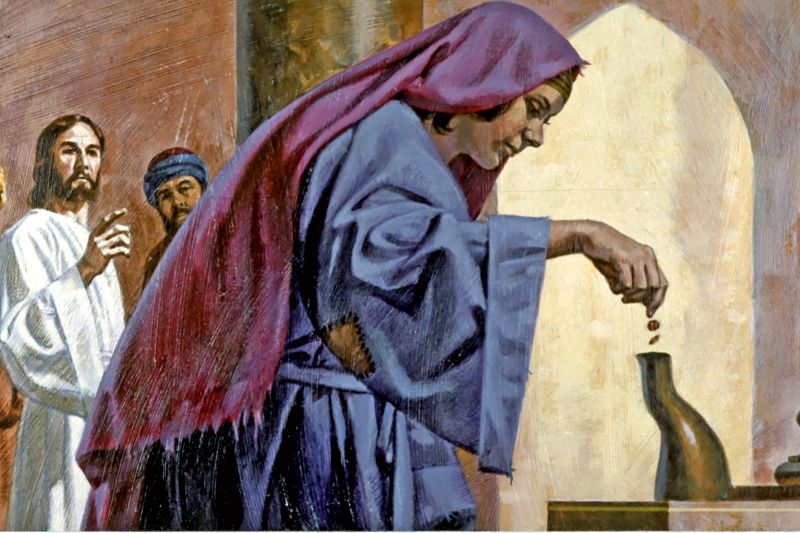
Do you ever feel insignificant? I imagine this woman did. She was just one poor, lonely widow in the crowd that day. She probably felt invisible among the happy families and important religious leaders and rich people in their fancy clothes.

The Bible doesn’t even tell us her name. The Gospel of Mark only takes five verses to tell us her story:

41 Jesus sat down opposite the place where the offerings were put and watched the crowd putting their money into the temple treasury. Many rich people threw in large amounts. 42 But a poor widow came and put in two very small copper coins, worth only a few cents. 43 Calling his disciples to him, Jesus said, “Truly I tell you, this poor widow has put more into the treasury than all the others. 44 They all gave out of their wealth; but she, out of her poverty, put in everything—all she had to live on.” Mark 12:41-44, NIV

Jesus didn’t take note of the many rich or powerful or well-dressed or important people who gave an offering that day. It wasn’t even a man He called to the attention of His disciples. Instead, He noticed the poor widow.

How many others do you think noticed her that day in the Temple court? Probably not very many. Instead, the crowds noticed the rich people who threw large amounts into the offering boxes. Their silver coins would have made a loud clanking noise as they hit the other coins in the box. Can you hear it?

The Widow's Offering The widow lovingly tossed two small copper coins into the box. It was nothing by the world’s standards, but it was everything she had. No one else heard the sound they made. No one else, but Jesus. To Jesus, it was the sound of faith. Out of all the worshipers that day in the temple, Jesus noticed her. He even called His disciples over so He could point her out to them. And He praised her for giving all she had.

Those two copper coins was everything the widow had to her name. This one act tells us so much about her. She treasured God more than she treasured her next meal. She had complete trust in God’s faithfulness to provide. And she was willing to place her very life in God’s hands.

Tiny by the world’s standards, her offering was huge to God. Her demonstration of faith was what mattered. Jesus saw her faith. Jesus felt her heart. And Jesus knew her name.

Do you sometimes feel insignificant? Do you ever wonder what you have to offer Jesus? Do you feel like your efforts for the Kingdom are meager?

Sister, be encouraged! You are significant to Jesus. He sees your heart. He knows your name. Whatever you have to give impacts His Kingdom. And all He wants from you is you!

On what occasions do you feel insignificant, lost in the crowd? How does this story remind you of God’s truth?

3 Tips for Understanding Proverbs

September 10, 2013 by Kathy Howard 3 Comments

proverbs

proverbsWisdom literature comes in a variety of forms, but the best know is probably the “proverb.” Proverbs are easy to remember and often fun to say. For instance, men love to quote Proverbs 21:9: “Better to live on a corner of the roof than share a house with a quarrelsome wife.” (Ladies, unfortunately this is sad, but true!)

However, believers today often misunderstand or misuse this ancient form of wisdom writing. In today’s post, we will briefly define a proverb and then consider 3 interpretive tips that will help us understand this practical advice for living.

What is a proverb?

A proverb is an observation of life stated in a memorable way. It is a “persuasive saying proven true by experience” (“Encountering the Old Testament” by Arnold and Beyer, page 314). Proverbs are not unique to the Bible. Many ancient cultures made us of this literary device.

However, for the ancient Israelite, the purpose of a proverb was to “apply the principles of Israel’s covenant faith to everyday attitudes, activities, and relationships”  (“Old Testament Survey” by Lasor, Hubbard, and Bush, page 460). Biblical proverbs are also an observation of life, but they also acknowledge that true wisdom comes from God (Proverbs 1:7).

How can we understand the Proverbs?

Like the rest of Scripture, the Proverbs must be understood in light of their purpose, literary genre, context, and original meaning. Proverbs are a unique literary style and cannot be interpreted in the same way we do a historical book or an epistle.

Although the tips below are just a tip of the hermeneutical iceberg, they will get us off to a great start in understanding the Proverbs and applying their wisdom to our lives.

3 Tips to understanding Proverbs

1.    Principles, Not Promises

A biblical proverb seeks to apply God’s wisdom to the situations of life. They are guidelines for living, general principles, not promises from God. While generally accurate, they do not take into account every possible scenario or individual circumstance. Therefore, they are not guarantees of a certain outcome, but rather point hearers to the best chance for success. One well-know example is Proverbs 22:6:

“Start children off on the way they should go, and even when they are old they will not turn from it.”

Many of us have known Christian parents who claimed this verse as a promise and then were disillusioned when a child turned away from God and never returned. This demonstrates how important it is to understand the nature of a proverb.

 2.    Pithy Poetry

A proverb is a saying that encapsulates a broad observation about life. Its primary goal is to state an important, simple truth about life in easy-to-remember terms. Consider Proverbs 27:6:

“Wounds from a friend can be trusted, but an enemy multiplies kisses.”

Brief and memorable, this proverb is about something much deeper than flesh wounds and kisses. True friends tell us the truth for our good, even when it hurts. “Enemies” simply tell us what we want to hear or butter us up to get something they want.

Let’s look beyond the surface and past the simple, catchy words of a proverb to find the deeper truth. Then let’s apply that godly wisdom to our lives.

3. Proper Perspective

These ancient proverbs are based on ancient standards. They usually speak of simple desires and basic needs. Yet, often we subconsciously impose our modern, Western mindset and values.

“Whoever gives heed to instruction prospers, and blessed is the one who trusts in the Lord” (Proverbs 16:20).

Just imagine how the influence of our affluent culture can affect our understanding of “prospers” and “blessed.” The typical ancient Israelite considered himself blessed if he had shelter and enough food.

We could talk a lot more about proverbs. However, if we remember these 3 tips, we will be well on our way to wise living!

Did any of these 3 surprise you? In light of these 3 tips, have been misunderstanding a particular proverb?


21 Spiritual Things to Pray for Other Christians

August 13, 2013 by Kathy Howard 5 Comments

I can easily think of concrete, physical things to pray for the people in my life. Things like physical healing, a needed job, and help in school. But how often do we pray for spiritual things?

We Christians often spend far more time praying for issues that are fleeting and temporary and far less time praying about things that are eternal. Why is that?

I believe one of the biggest reasons is that we simply don’t know how to pray this way or what to pray for. At least that’s been my top reason. So, a couple of years ago I scoured Scripture looking for ways I could pray for others that would have eternal, lasting impact.

The list below is just a sampling from Scripture, but it’s a great start! I’ve also provided a pdf version (21 Spiritual Things to Pray for Other Christians )you can print and keep in your Bible or journal. I would also love to hear what spiritual things you pray for others.

  1. Thank God for them – Romans 1:8, 1 Corinthians 1:4, Philippians 1:3
  2. God’s mercy – 1 Timothy 1:2
  3. Protection from evil people – Romans 15:31, 2 Thessalonians 3:2
  4. Protection from Satan – John 17:5, 2 Thessalonians 3:3
  5. Opportunity to witness – Colossians 4:3
  6. Courage in witnessing – Ephesians 6:19-20
  7. Right words and clarity in witnessing – Ephesians 6:19; Colossians 4:4
  8. Spiritual strength/growth – 2 Corinthians 13:7-9, Colossians 1:11, 2 Thessalonians 2:17
  9. Increased love & unity – John 17:21, Philippians 1:9, 1 Thessalonians 3:12
  10. Better understanding of God’s love – Ephesians 3:17-19, 2 Thessalonians 3:5
  11. Joy, peace, comfort, and encouragement – Colossians 1:11, 2 Thessalonians 1:2; 2:16-17
  12. To know God better – Colossians 1:10, Ephesians 1:17
  13. Increased spiritual wisdom & discernment – Ephesians 1:17, Philippians 1:9-10, Colossians 1:9
  14. Knowledge and understanding of God’s will for their life – Colossians 1:9
  15. To be holy, pure, and blameless – John 17:17, Philippians 1:10, 1 Thessalonians 5:23
  16. To live a life that pleases God and honors Him – Colossians 1:10
  17. To obediently follow God’s will – Colossians 4:12
  18. To grow in righteousness and Christ-like character – Philippians 1:11
  19. Live a life of good works that produces spiritual fruit – Colossians 1:10
  20. Full understanding of their eternal inheritance – Ephesians 1:18
  21. Stand firm in God’s truth – Ephesians 4:15

Let’s share! What Scriptures or spiritual prayers do you lift up for others?


7 Days of Devotions for Your Family Vacation

June 11, 2013 by Kathy Howard 11 Comments

Family devotions, travel

When our kids were young we did a lot of cross-country driving. Combine little money for airfare with living far away from grandparents and you’ve got at least two long days in the car – one way.

It’s not easy to keep 3 kids under 10 restrained in the back seat for hours on end. I did everything I could think of to keep the kiddos occupied. Lots of snacks – healthy and not so healthy. Games like I Spy and 20 Questions. Books and toys.

Travel time, whether it’s by plane, train, or automobile, does provide a great opportunity to teach our kids about God. But we must be purposeful. Don’t skip the Word, when you skip town!

Family devotions, travel When Julie introduced our June theme she said:

Vacations are not only times for adventure, rest, and relationship. Vacations are also opportunities for a fresh infusion of truth into our tired lives.

The Do Not Depart team wants to help you do just that by providing tools you can use. Today, the tool is a 7-day devotional guide you can use during your family vacation. Do it in the car, on the beach, or around the campfire, but take the opportunity to get in God’s Word together.

Each Scripture reading is about a biblical journey. Questions are provided each day to get your family talking together about the truth presented in each story. Download the guide. Print it off and pack it. It won’t take up much space!

What are some things you’ve done in the past to keep yourself and your family in the Word when you travel?

4 Ways to be Like Nana Lois

May 14, 2013 by Kathy Howard 8 Comments

Spiritual legacy, sincere faith

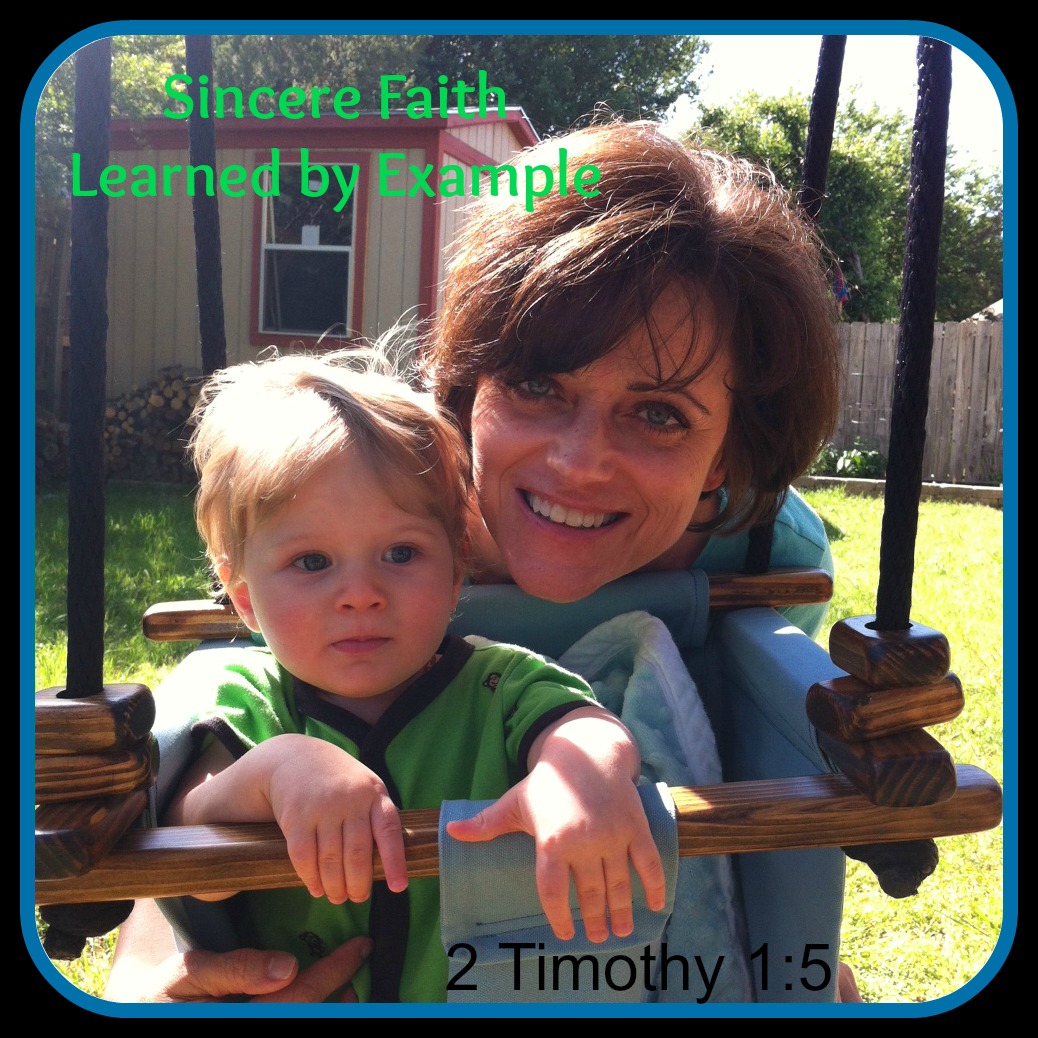
Call me Nana.

The first question my daughter asked when she and her husband announced the pending arrival of our first grandchild was “What do you want the baby to call you?”

They loved my husband’s tongue-in-cheek suggestion for his grandfather name. “Boss” stuck immediately. But every equally cool grandmother name suggestion from me got shot down.

Oh well, any name will be music to my ears when it comes from Micah’s mouth.

Being “Nana” is both a great joy and a weighty responsibility. My God-given job of teaching a new generation about Him did not end when my own children left home. Instead it’s a generational partnership of parents, grandparents, aunts, uncles, and beyond.

Spiritual legacy, sincere faith

Sincere Faith

Timothy is a great example of this generational faith partnership in action. In his second letter to the young pastor, the apostle Paul describes Timothy’s faith this way:

 I have been reminded of your sincere faith, which first lived in your grandmother Lois and in your mother Eunice and, I am persuaded, now lives in you also.

2 Timothy 1:5, NIV

Timothy’s faith was not cultural or casual. No hint of hypocrisy or pretense. His faith in Christ defined him. And this “sincere faith” began in his grandmother and continued in his mother. That’s what this Nana wants for her grandchildren.

Lois’ faith wasn’t just talk. Her character and behavior matched what she said she believed. Consistently. Every day. Even when she was stressed. Even when another car cut her off with Timothy in the back seat.

Lois’ life proved to Timothy the truth of what she taught him.

Purposeful Teaching

Timothy learned the Scripture from both his mother and grandmother from his beginning. The word Paul uses in 2 Timothy 3:15 to describe Timothy’s age can refer to an unborn child, a newborn child, or an infant. These two faithful women did not waste any time teaching Timothy about God.

 But as for you, continue in what you have learned and have become convinced of, because you know those from whom you learned it, and how from infancy you have known the Holy Scriptures, which are able to make you wise for salvation through faith in Christ Jesus. 2 Timothy 3:14-15, NIV

 Lois and Eunice intentionally taught Timothy in the ways of God. They helped him form a habit of faith through constant use and practice. Their teaching encouraged Timothy’s salvation, spiritual growth, and equipping for ministry (2 Timothy 3:15-17).

4 Characteristics of Nana Lois’ Passed-Down Faith

Lois, the New Testament Nana, is a great example for us. If we want to pass a vibrant legacy of faith to our children and grandchildren, here are a few things we can do:

  1. Insure our own faith is “sincere.”
  2. Accept and embrace this God-given responsibility.
  3. Start at day one. It’s never too early.
  4. Have a plan. Be purposeful and intentional in teaching them the things of God.

Micah hasn’t quite got the hang of “Nana.” Maybe I should change my name to “Lois.”

What else do you see from Lois’ example we can implement in our own lives?

Surrendering My Calendar

April 25, 2013 by Kathy Howard 8 Comments

My time belongs to God

On my way to check out at Hobby Lobby I glanced down an aisle to my right. A cart stood in the middle of the floor, but it was the young woman that caught my attention. She sat slumped on the edge of the bottom shelf with her head in one hand and a cell phone in the other. Her body posture, her tears, and the Holy Spirit revealed her distress.

I had a decision to make. My body and my mind were already headed for the door and the rest of my day. But the Spirit of God within me had ordained different plans.

My time belongs to God

A year ago I might not have stopped. I may have simply thrown up a prayer as I passed by. After all – I would have told myself – what could I really offer? This woman wouldn’t want help from a stranger.

But God has been consistently pressing a truth into my heart and mind over the last several months. My whole life belongs to Him – including my time. He has shown me that I need to hold my calendar more loosely than I do. I can make plans, but I need to remember God has every right to intercept them for His purposes (Proverbs 19:21).

The Holy Spirit gently reminded me of this truth that day in Hobby Lobby. The to-do list could wait. Dinner could be a little late. Those things were insignificant compared to a divine appointment.

I approached the woman and slowly squatted beside her. “Is everything okay? You look like you’ve just gotten some bad news.” She glanced up at me and choked back a sob.

“Can I do something to help you?” She only shook her head.

Lord, I’m not sure what to do here. She won’t – or can’t talk with me.

Ask if you can pray for her now.

“Would it be okay if I prayed for you?”

She looked surprised, but nodded. I laid my hand on her arm and prayed for her out loud right there on the candle aisle.

After the “amen” she mumbled a thank you and assured me once again there wasn’t anything else I could do. I paid for my purchases and headed home. I may have checked one less thing off my to-do list that day, but I surrendered the time to God and got to participate in His plans. It doesn’t really matter that I don’t know the outcome.

Lest you think me super-spiritual, I must confess that I don’t always give Him my calendar so freely. In fact, I tend to hold it tightly in my hot little fist. My type A personality likes to plan my day, week, and month and then follow my plan to get everything accomplished. I cringe to think about the many opportunities I’ve missed to participate in what God is doing because I wouldn’t allow Him to interrupt my day.

surrenderThat’s exactly why God keeps reinforcing the lesson that everything I have is His. I have been bought and paid for with the precious blood of Christ (1 Cor 6:19-20; 1 Peter 1:18-19). My soul, my body, my mind – and yes, my time – all belong to God. He has plans and purposes for my life far more important than mine.

I long to be increasingly more sensitive to the Holy Spirit’s leading. I want to completely surrender my life – and my calendar – to Him. Lord, keep teaching me…

Throughout the month of April, we’ve been sharing about surrender here at Do Not Depart. Each of us has shared about areas particularly difficult to give up to God’s control. If you are a believer, your life is not your own. It belongs to God. Every part of it. I pray we can all give in to sweet surrender.

What is that one thing you have the most trouble surrendering to God? Why do you think that is?


I Dwell, He Strengthens (Run to Him – Psalm 84)

March 16, 2012 by Kathy Howard 12 Comments

image from 303magazine.com

Do you ever have a deep, intense craving? I often find myself drooling over the cartons of Blue Bell Ice Cream at my local grocery store. (If you aren’t familiar with Blue Bell, it may be because this creamy, decadent indulgence is only available in 20 states. But it’s worth moving to Texas for!)

No other kind of frozen treat will do. No other brand of ice cream will suffice. It must be Blue Bell and it must be a lot of Blue Bell.

In Psalm 84, the psalmist expresses a yearning that can only be satisfied by the presence of God. Nothing and no one else will satiate the deep longing of his soul. He is so desperate to be with God, he would trade 1,000 days of being anywhere else for just one day of being with the LORD.

In his book “Reflections on the Psalms,” C.S. Lewis calls this an “appetite for God.” Do we have an appetite for God that can only be satisfied in His presence?

According to biblical scholars, this psalm may have been sung by pilgrims on their way to the temple. Any Jews that lived outside Jerusalem made pilgrimages to the temple three times a year – for Passover, Feast of Tabernacles, and Pentecost. The temple symbolized God’s presence. These pilgrimages into the presence of God were considered rare and special. During the journey they anticipated the blessing and joy of once again being close to Yahweh.

You and I don’t have to travel long distances or wait for months to enter His presence. As believers we can enjoy constant communion with our holy God. His presence is a place of safety and security. Like the sparrow who built a nest near the altar, the LORD Almighty welcomes and protects the lowly and weak.

As I studied this psalm, I was impacted by the transforming power of God’s presence. Just this one chapter alone shows us at least three ways His nearness satisfies our longings.

  1. When we are vulnerable, He makes us safe and secure.
  2. When we are weak, He fills us with His strength.
  3. When we have need, He provides in abundance.

I particularly love verse 7:

They go from strength to strength, till each appears before God in Zion.

Our lives are a pilgrimage to heaven where we will finally see our Savior face-to-face. Meanwhile, He brings us “from strength to strength,” giving us what we need to take that next step of obedience, whetting our appetites for the full and glorious revelation of His presence.

What does your soul yearn for? Have you tasted the sweet presence of God? Do you long for more?

Context is King!

March 12, 2012 by Kathy Howard 18 Comments

“Stop, you’re killing me!”

Which of the following scenes produced the statement above?

  • A teenage boy won’t stop tickling his little sister.
  • A middle-aged woman just scored 75 points against her Scrabble partner.
  • A masked man is beating a defenseless elderly woman.

Does it matter? Absolutely! In the first two cases, the statement is meant to be teasing and playful. But the last scenario is life and death and someone needs to call the police!

Context does indeed matter in our daily life and in our study of God’s Word.

The Apostle Paul writing on a clay tablet. www.visualbiblealive.com

Unfortunately, many Christians fail to consider the context of a biblical passage before they come to a conclusion about what it means. As one of my seminary professors used to say, “A passage can never mean what it never meant.” In other words, every verse in the Bible has the same meaning today that it had when it was written. It may have unlimited applications depending on the individual and her circumstances. But God’s meaning never changes.

But here’s our problem: “the Bible was written in a foreign language to people who lived a long time ago in a different part of the world with a different way of life.”[i] In order to discover the original – and therefore current – meaning, we must consider the original context of the passage.

Biblical Context to Consider

Although numerous volumes have been written on the subject, there are a few things we can quickly consider to help us deal correctly with God’s Word.

  1. Literary Genre – Is the book you are studying poetry, wisdom, prophecy, narrative, or apocalyptic literature? The genre of the book affects the interpretation. For instance, narrative simply tells us what happened and not necessarily what we are supposed to do in a given situation. And wisdom literature, like Proverbs, states general life principles and not solid promises of God.
  2. Literary Context – Every sentence is part of a paragraph. Every paragraph is part of a larger passage. Every passage is part of an entire book. We cannot assign meaning to a verse without considering the greater context. For instance, knowing that Jacob stole the birthright from his brother Esau in Genesis 25 and Esua’s blessing from his father in chapter 27 helps us understand why Jacob was afraid of him in chapter 32.
  3. The Context of the Book – It matters who the author was, who he was writing to, and why he was writing. For instance, knowing that the author of the book of James was the half-brother of Jesus and not James the Apostle, definitely changes the way we understand the letter.
  4. Historical-Cultural Background – Every book of the Bible was written in a specific time in history, to a specific people, in the midst of a specific set of circumstances. We cannot accurately understand them outside of that context. The political climate, current customs, and speech idioms are just a few of the things that impact the original meaning of a passage. For instance, the book of Hebrews is packed with references to Jewish religious practices. Its rich meaning will be lost on us unless we go back and study things like the Day of Atonement and the Levitical priesthood.

A few resources to help with context

We cannot begin to cover everything here, but if you’d like to look deeper into the context as you study, here are a few suggestions:

  1. Read the introduction to a Bible book in your study Bible.
  2. Get a good Bible Dictionary. I have a copy of Eerdman’s Dictionary of the Bible.
  3. Another great resource is the two-volume set of The IVP Bible Background Commentary.
  4. Bible handbook like the classic Halley’s Bible Handbook 

Have you ever misunderstood God’s Word because you failed to consider the context? What is a verse that you think is regularly taken out of context?


[i] Introduction to Biblical Interpretation, Klein, Blomberg, Hubbard, Word Publishing, 1993, pg. 155.

This Month’s Theme

  • Jesus is the Way
  • And He Shall Be Called Series Intro

Enter your email address to have new posts emailed to you:

We’ll come to you

Enter your email address to have new posts emailed to you

Categories

Bible Memory – Lent 2021

Memorizing Isaiah 12

Let the Children Come

Let the Children Come

Want more #HideHisWord resources?

Memorizing Psalm 1

Find Us on Facebook


Search

Recent Posts

  • Series Wrap-Up: The Lord Is My Light
  • His Marvelous Light
  • When the Darkness Deepens
  • Though I Sit in Darkness…
  • Let Your Light Shine
  • Life-Giving Light

Archives

© 2026 · Pretty Creative WordPress Theme by, Pretty Darn Cute Design