• Home
  • About
    • Our Contributors
    • Our Beliefs
  • Blog
  • Bible Studies
    • Scripture Dig
  • Archives
  • Shop
  • Advertise
  • Contact
    • Email
    • Facebook
    • Instagram
    • Pinterest
    • Twitter

Do Not Depart

Encouragement and Tools to Abide in God's Word

You are here: Home / Archives for bible study

Bound with Love, Ruled by Peace

November 19, 2020 by Jennifer Hong Leave a Comment

Bound with Love

This month we’re studying Colossians 3:1-17 in a series called Renewed: Putting on the New Self. Today we’re looking at verses 14 and 15, with hearts bound with love and ruled by peace.

Bound with Love

On Tuesday, Cheli talked about what God calls us to “put on” as we adorn ourselves in Christ’s character. After addressing compassion, kindness, humility, meekness, patience, and forgiveness, verse 14 now tells us to put love on over, covering, all of the rest.

“And above all these put on love, which binds everything together in perfect harmony.” Colossians 3:14

Agape love is described here as the bond that joins everything together into mature perfection, producing harmony.

Mmmmmm, Chili

It may be the little drop in temperature that’s finally hit Houston, or simply that I’m hungry, but this verse leaves me thinking, “just like a bowl of good chili.”  Chili is one of those dishes that takes on more flavor the longer it cooks and is even better served the second day.  It needs time to really meld flavors from various ingredients (yes, even the pulsed vegetables I hide in there) into one tomato-and-chili-powder-infused bowl of goodness.

Like a good bowl of chili, love is comprised of a multitude of elements that can exist apart from it but don’t have the same harmony of flavor until they are unified in love. In seeking the best for another, agape love adds a new overtone to each virtue such that they work harmoniously together. 

1 Corinthians 13:1-3  tells us that without love, other virtues holds no value, and verses 4-7 expound on the many facets of love:

Love is patient and kind; love does not envy or boast; it is not arrogant or rude. It does not insist on its own way; it is not irritable or resentful; it does not rejoice at wrongdoing, but rejoices with the truth. Love bears all things, believes all things, hopes all things, endures all things. (1 Corinthians 13:4-7)

With patience, kindness, humility, grace, and hope melded together in love, the body of Christ is brought into mature unity and harmony.

Ruled by Peace

Next, we are to add in peace, which holds power to direct our hearts and our ways.

And let the peace of Christ rule in your hearts, to which indeed you were called in one body. And be thankful. (Colossians 3:15)

What does it look like to be ruled by peace? It is following Jesus with the deep assurance that nothing lost compares to that gained by following Him. It is resting in God’s grace, no longer striving to keep up appearances of perfection or legalism. It is trusting God’s justice to prevail when present injustice stings. What does a heart ruled by peace mean to you?

And Be Thankful

The word for “thankful” here connotes a mindfulness of the grace extended to us by God. It is more than thankful for the things we are given; it’s an awareness of what has been bestowed on us, leaving us both humble and content.

Love, Peace, and Gratitude… but How?

I am amazed to see what is packed into these two little verses: Put on love. Be ruled by peace. By contentedly thankful. Wow. That can certainly transform our home. But how? We’re certainly trying.

Here, we look not to the next verse but back to the introduction. Colossians 1:1-2 tell us to seek and set our hearts on that which is above — heavenly, eternal. Our hearts grow in love, peace, and gratitude when our eyes lift from our present circumstances up to worship our Lord and delight in the things of God. 

Before taking on the rest of the day, let’s take a moment to fix our eyes on Jesus. Great Is Thy Faithfulness is one of my favorite hymns for focusing my heart.


Bible Study From the Outside In

October 22, 2020 by Jennifer Hong Leave a Comment

Bible Study from the Outside In

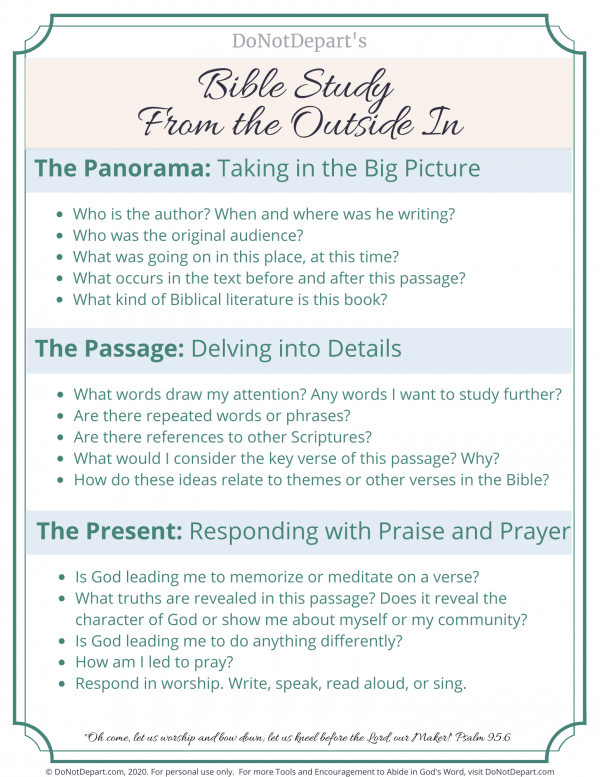
This month has been full of great insights on Bible study as the team has shared insights and favorite tools for Bible study. Today, I’m sharing how I approach a new passage when preparing to write or teach a Bible study, working from the outside in.

Have you ever tried spotting a far-off bird with high-magnification binoculars? Binoculars can reveal great detail, but it can be surprisingly difficult to get even a stationary bird into view. If you don’t get oriented to the view in front of you first, you can find yourself looking at a mess of branches, leaves, and sky without any feathers in sight. When my children join me on a bird walk, I encourage them to first get a good look at the bird with the naked eye before lifting their binoculars. Where is it sitting? What branches or landmarks might help you find it once you’re zoomed in close? Once we’re oriented to the big picture, we can more effectively use our up-close tools.

Bible Study from the Outside In

When I begin studying a Bible passage in preparation to teach or write, I approach it a bit like I approach bird watching. After reading through the passage initially, I back up and take a wide-angle view of the context before I zoom in on the details.

Working From the Outside In

As I approach Bible study from the outside in, I think of three concentric circles. First I begin with the panorama, the wide angle view that gathers Biblical and historical context. Then, I move in closer, to the passage itself, observing specific details. Finally, moving further in, I prayerfully contemplate what the Lord is showing me in the present. How do these words shed light and truth on my understanding of God, myself, or my community?

1. The Panorama: Taking in the Big Picture

The first circle is the panorama, the big picture with lots of context. Keeping in mind the Bible’s overarching story of redemption, I also begin learning about the historical and Biblical background for my passage and the book of the Bible in which it’s found.

What do I know about the author and about his original audience? Am I reading a Psalm of worship written by King David, or an account of creation recorded by Moses? Were these words written to the Nation of Israel during a time of rebellion, or to a church wrestling with legalism? What else was going on at the time?

I often use the ESV Introductions to review basic details about the author, time, and place, and I  consider the applicable genre of Scripture. As part of the big picture context, I also try to read as much as I can of the surrounding Scripture. What had the author been addressing just prior to this passage?

As I study, I always keep a running list of questions. They may guide my study now or be a topic to delve further into later.

2. The Passage: Delving into Details

The second circle is the passage itself. Reading it once again for overall meaning and theme, I then begin looking more closely at the words.

Do you like to write as you read? It can be helpful to print out a copy of the verses to begin circling, underlining, and drawling arrows between words that relate to one another. What words are repeated, emphasized, or draw your attention?

Bible Hub and Blue Letter Bible are good resources for looking up the original Hebrew or Greek words for further study, and Lisa introduced us to E-Sword in her post this month. Bible Hub is also helpful for looking up other related verses, listed as cross-references in the parallel versions view. These might be Old Testament quotations or citations, or verses with similar phrasing.

As I pray for understanding and read through the passage another time, I pick out a key verse. If I had to pick one, which most embodies the meaning in this passage?

3. The Present: Responding with Praise and Prayer

And now, having gathered information and perspective from both outside of the text and from the passage itself, it’s time to pray again and quiet my heart to both receive and respond to the Word.

Ask the Lord what He would have you take away from your time with these verses. 

“If any of you lacks wisdom, let him ask God, who gives generously to all without reproach, and it will be given him.” James 1:5

There are so many ways we may respond to a passage of Scripture. It may be a quiet reading aloud, written journaling, or a hymn of praise. There may be conviction and confession, or a new sense of gratitude. You may be led to approach the Lord in faith with prayers for grace or healing.

Here is a printable with a few questions to guide your Bible Study From the Outside In.

Bible Study from the Outside In

As you receive His Word, be reminded that the Lord is good. May God bless your study.

Know that the Lord, he is God!
It is he who made us, and we are his;
we are his people, and the sheep of his pasture.
Enter his gates with thanksgiving,
and his courts with praise!
Give thanks to him; bless his name!
For the Lord is good;
his steadfast love endures forever,
and his faithfulness to all generations.
Psalm 100:3-5


Scribbles & Doodles & Reading Aloud

October 13, 2020 by Jaime Hilton Leave a Comment

Making Time to Study the Word


Life often moves at a breakneck pace. Whatever season you’re in, I imagine you’ve got a lot on your plate, calling for your attention. 

I am in a season of raising children (toddlers, teens, and a few in between!) and developing my career. The latter, I am grateful to admit, calls for some pretty dedicated time to study the Bible. But in this season of busyness (which is not so different from other seasons of busyness) I find I must make time to cultivate my relationship with Jesus. Like every other important relationship in life, I have to be intentional about how I spend my time and carve out opportunities to enjoy and engage with the One who is my Savior, Redeemer, and Friend. Thankfully, unlike other relationships, He is willing to meet me where I am. 

Here are three things I’m doing to make time and space in my heart and mind.

Scribbles

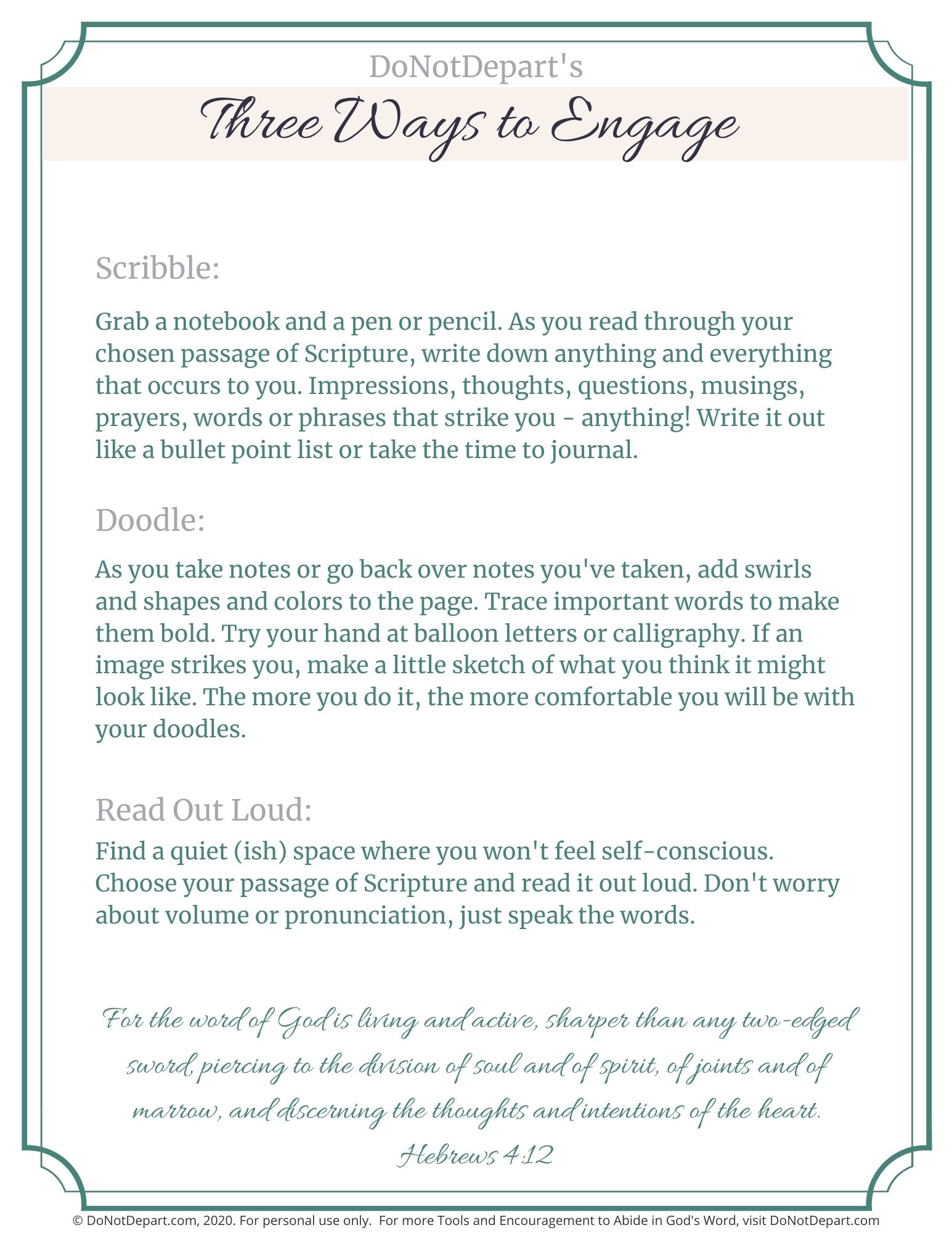
My first step when I approach a text, either for personal study or professional, is to read it with fresh eyes and rapid log, aka Scribble, my initial thoughts, questions, and impressions. Rapid log is a term from the Bullet Journal tradition. It means jotting down your thoughts, bullet-point style, as it occurs to you. 

This initial step serves to clear my mind of any assumptions or associations I have. I stress that it is an initial first step because it is essential to go back through those notes and seek out the truth about what those stories mean. As Ali mentioned in her post, sometimes all we have is a few moments to jot down our thoughts, but someday we will get the time to dig deeper. 

My scribbles are a way to engage with the text with an open heart. Sometimes I will paraphrase what I’ve read, to see if I’m understanding it. Sometimes I will write down the exact Scripture, and occasionally I will…

Doodle!

When it comes to art, I’ve always been better with words and speech. My ability to communicate visually is somewhat lacking. I can sketch a pretty decent snail when called upon to do so, but even that is hit and miss. 

Yet my hands love to be busy, especially when I’m listening to a sermon or podcast, or even going back over my scribbled notes.  I find my pen working over the letters, making shapes, and sketches of things that are standing out to me. 

What surprised me one day was realizing that what appeared to be mindless doodling was actually helping me remember and connect to what I was studying! The doodles help me to slow down and sit in the words. 

Like scribbling, doodling it is only a piece of Bible study, incomplete on its own, but part of a rich, intentional, process of growing closer to the Lord.  

Reading Aloud

Finally, another way I like to engage with the text is by reading it out loud.  I do this in my room or at the table while my children are eating breakfast. Sometimes they listen, sometimes they don’t, but I speak the words anyway.  

In this text from Deuteronomy, the Lord instructs future kings to engage with Scripture by writing and reading it:

“When he is seated on his royal throne, he is to write a copy of this instruction for himself on a scroll in the presence of the Levitical priests. It is to remain with him, and he is to read from it all the days of his life, so that he may learn to fear the LORD his God, to observe all the words of this instruction, and to do these statutes.” Deuteronomy 17:18-19

The Hebrew word for “read” (here and in many other verses) is “qara” (pronounced car-uh). It means “to call out, summon, invite, name, utter aloud”. It’s a hugely different picture than what I usually have in my mind when I think of reading, which is what I have always done when I want to be alone! 

Like scribbling and doodling, reading the words out loud helps me to slow down and take them in, allowing me to engage fully with whatever it is the Holy Spirit is teaching me. 

How do you engage with Scripture? #SnapshotsofBibleStudyClick To Tweet

I love the Word of God. I love learning the history and culture of the people in the ancient world. I love digging into the language and discovering how God is timeless and unchangeable. Mostly, I love that He chooses to engage with us, where and when we are if only we will take the time to engage with Him. 

“For the word of God is living and active, sharper than any two-edged sword, piercing to the division of soul and of spirit, of joints and of marrow, and discerning the thoughts and intentions of the heart.” Hebrews 4:12

Are you willing to give one of these tricks a try? Here is a Three Ways to Engage Printable to help you incorporate scribbling, doodling, or reading aloud into your time with the Word. Share your experience with us in the comments or on the Facebook Community Page!

Finding the (Almost) Perfect Bible Study Spot

October 8, 2020 by Ali Shaw 1 Comment

This post is intended to help you find the (almost) perfect Bible study spot. It’s the first post in our series, Life-long Learners, where we share glimpses of our processes for studying the word. We hope to offer you encouragement, inspiration, and resources for your own times of study!

I love to read and study God’s Word!

I started reading my Bible when I was very young. I remember reading in my KJV illustrated Bible as early as 5 years old. Of course, I wasn’t really old enough to read most of the words, but I loved opening my full length Bible and hunting down the illustrations of Jesus feeding the 5,000 and Jesus walking on the water. When I was about 8 years old, I’d stay up late, pouring over the pages. In middle school, I would read the Bible aloud to the wall, just because I loved to hear the words out loud. But, it really wasn’t until high school that I began studying.

Over the past almost 30 years, my studying has changed, developed, grown, and changed more. Some of that is just the result of maturing spiritually. Some, though, is simply because different seasons have brought different dynamics and presented various challenges to my studies. All of it has been a journey of walking with the Savior and meeting with Him over the pages of His Word.

As these changes and this growth have taken place, I’ve adjusted the location of my studies. Here are three tips for finding the (almost) perfect spot to do your Bible studies, based on your current season. (“Almost” perfect because we all know that a perfect spot doesn’t exist, this side of heaven!)


Season: The Busy “Snacker”

In this season of life you are tired and on the go! Taking the kids to one event after another, waking to feed that baby in the middle of the night, or maybe headed out the door to care for aging parents. Life is busy and you are hungry! But long hours of time in the Word sounds like a dream too good to be true. Where and how can you have a productive Bible study session?


Spot: When you are in a season that is beyond your control externally, remember, God still wants you to be still and know that He is God. Find a quiet spot if you can (because your life probably isn’t quiet and you’re likely hungry for this). Maybe it’s in your bed in the morning, before your feet ever hit the floor? Because you know once they do they’ll be running non-stop! Or, you may need a portable, on-the-go spot (like your car) where you can have a few minutes of uninterrupted study. Here are some other ideas:

  • Put a verse on your phone’s lock screen. When you wake up, lay in bed and read it several times. (Lockscreen = less distractions!) Try to memorize it, then look for something to apply (do) and something to pray.
  • Listen to an audio Bible while you get ready for work. Turn the listening into study by stating out loud what you’ve learned and what passage you listened to.
  • Study God’s Word by listening to a Bible study podcast or sermon in the car. 
  • At the breakfast table, read a few verses and write down quick questions that you’ll look into “someday” when you have time. (Then, someday, actually look them up.)
  • On your lunch break, or when the baby naps, read a short Bible passage and look for truths, promises, and commands.
  • Leave 5 minutes early for work, or plan to be home 5 minutes “late.” Before you get out of the car, spend those 5 minutes studying and praying about a short passage.


Season: Time for Tea

In this season, you have the time to devote to your voracious appetite for Scripture. Maybe you are unmarried, have no kids, or you have kids who are older. You just seem to be in a quiet season and can finally devote larger blocks of time to digging in deep! You are ready to read, absorb, discover, apply, and gain good Bible literacy.


Spot: If you have Time for Tea you might have (finally?) have time to devote to studying God’s Word each day, meet with a small group, do some homework, grab coffee with your Bible study teacher, and hop back into the Word to get some questions answered. (Not all in one day!) A great place for you to do your work is at a table, desk, or spread out on the couch or floor. You’ll likely have your Bible open, need space for your Bible study book, notebook or journal, pens, and coffee. You’ll want room to spread out all your things, write thoughtful responses, and look things up. Comfort is important because you may be here a while, but you’ll also need a functional space. You may even need access to a computer to do light research.


Here are some ideas:

  • Set up a permanent area where you’ll have space. (This could be a corner or a room or closet)
  • No space for a permanent area? Set up a portable “office.” Use a bin or basket to store your materials. Tuck them away and bring them out each day.
  • Look for a quiet spot with no distractions, since you’ll be there a while.
  • Ask yourself: Do I need music? Do I need a window? Or do these things steal my focus?
  • Do I need a table top, desk, or lap desk? Do I need a comfy chair and blanket, or do I need to study in a more “academic” environment? 
  • In addition to the above suggestions, don’t forget to think outside the box. A portable “office” can be taken outside, to a coffee shop, and so on. Or, use your nightstand and bed and study when you first wake up or before you go to sleep.


Season: Delighting in Dessert

Are you delighted by the dessert of God’s Word–  lingering on the sweetness of the honey-filled Word? You may be interested in theology, context studies, original languages and word studies, intended audience, verse mapping, and more. You may have a whole notebook of things you’ve learned and things you are studying. You likely have multiple reference books, or you have access to study books and resources online.


Spot: If you are “delighting in dessert” you know you need space– and maybe multiple spaces. You may need access to multiple resources and a computer almost every time you sit down so you can do deep research. You’ll need a table top surface to put your reference books, notebooks, and studies on as you work. You may even be prepping for classes that you lead. If your space gets crowded, consider a separate, comfy spot for prayer, away from the “work-zone” of your place of study. 


  • As God has taken you deeper into His Word and you have the time to spend, you’ve likely realized what space is (or spaces are) most comfortable for you. You might have a permanent area or a portable “office.” 
  • You may need an office bookshelf to store reference books and studies.
  • Ask: Do I need a separate prayer spot, away from my work zone? 
  • Ask: Do I need a separate spot for “my” time with God, away from my work zone? (This is helpful if you are a teacher who finds herself often studying to pour into others. Don’t forget your personal “me time” with God!)


Seasons

These seasons above sound cut and dry. But we all know that real life isn’t like that. Sometimes we find ourselves in a snacking (busier than usual) season but we’re snacking on dessert… or maybe we have time on our hands and yet we aren’t spiritually hungering like we should. Or maybe we look at ourselves and see that we’re a mix of all seasons at the same time. Those sorts of things happen. That’s life!

The seasons also sound like they progress in spiritual maturity. In a way, sure, they can— but not entirely. We all know spiritually mature women with little time, or who get surprised by seasons where external factors press in so hard there is little time to devote to study. Bible study time in and of itself is absolutely not the sole indicator of spiritual depth or maturity.

Seasons change and the question isn’t, “Will I hunger?” The question really is, “What will I do with my hunger? How will I let Jesus satisfy it?”

What season am I in? How does that affect where I’ll do my Bible study? How do I chose the (almost) perfect spot? #LifelongLearners

Click To Tweet


Solutions?

As we think creatively, we can come up with solutions for our season and find a good place to study the way He’s leading us.

Over the years, I have studied God’s Word:

  • On my couch or in a recliner
  • In a rocking chair holding a baby
  • In bed
  • Beside my bed on the floor (I call this the “wake up and roll out” technique. I mastered this at one point because it was my only opportunity!)
  • At the kitchen table
  • At a work table
  • At a desk
  • At the computer
  • While getting ready in the morning
  • On podcasts or audio Bible in the car 
  • At a coffee shop
  • On the beach
  • Using my phone
  • Using a big study Bible
  • In a hospital
  • In the floor, sprawled out
  • Using a whiteboard
  • With lots of reference books
  • With no reference books
  • With worship music playing
  • With nothing but quiet… because I needed it so badly.


(I only mention this list to give you ideas. I’m sure you could create a similar list!) 

It’s interesting to look at this list and remember the season I was in at the time. There’s a lot of places where I remember joys and happiness, and there are others where I recall busy-living, frustrations, sleeplessness, and even some pain. My season definitely affected the location I chose to do my study sessions.

What season are you in? (Or what combination of seasons?) What place can you choose, or what changes do you need to make, in order to continue having a fruitful study time? Do you need to add something? Eliminate something? Think outside the box?

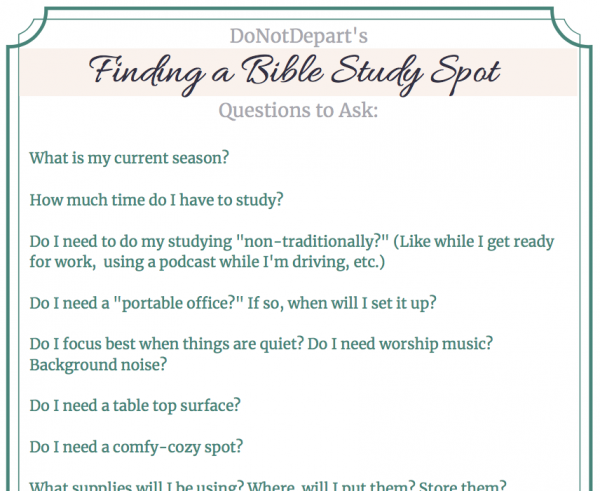
If you’d like to think through the process of finding the (almost) perfect spot, here’s a printable for you:
CLICK HERE:  Finding a Bible Study Spot
We hope it helps!


Challenge yourself today. You’ll never regret devoting yourself to the Lord through studying His Word. It is always a fruitful time, regardless of your season.

May you be blessed greatly as you meet with Christ over the pages of His Word!

In Him,
Ali


Life Long Learners: A New Series

October 6, 2020 by Jaime Hilton Leave a Comment

As a brand new homeschool mom (about five years ago) I devoured blogs and emails that shared personal snapshots describing how other home school’s operated. My favorite question for other homeschoolers was some version of “what does this look life for you?”

As I examined all the varied approaches, I grew to appreciate how vastly creative God is, providing so uniquely for each of us and allowing us our own opportunities to uniquely glorify Him.

Our experiences were often very different, but in sharing our stories, I found solidarity, inspiration, and connections to more resources than I could access on my own. I was not alone in my struggles! Veteran homeschool moms had lots of tips, tricks, and hacks about how to do things. Newer moms had fresh ideas and passion. Though I spent hours and hours researching different curriculums and methods, nothing was nearly as helpful as hearing the firsthand experience of those surrounding me in the trenches of parenting and schooling. Our kids varied in age. One person’s ideal day was another person’s worst nightmare. But in our goal for educating our children, we grew into a united community. We became the iron, sharpening iron (Proverbs 27:17).

Bible study is so important. It’s how God reveals Himself to us (John 1:1-5). But it can be intimidating too. I’ve been studying the Bible for most of my life and still feel like I’m only scratching the surface. Ecclesiastes 4:9-10 reminds us, “Two are better than one, because they have a good reward for their toil. For if they fall, one will lift up his fellow. But woe to him who is alone when he falls and has not another to lift him up!” 

This month on the blog we’re going to give you a peek behind the curtain of our processes. We’ll share our favorite resources for Bible study and how we use them. We’ll give you a glimpse of what it looks like to take a topic or a Scripture and turn it into a devotional.

“As each has received a gift, use it to serve one another, as good stewards of God’s varied grace:” 1 Peter 4:10

I hope you will find encouragement, inspiration, and resources for your own times of study!

Be sure to share what you’re loving and learning with the Do Not Depart Facebook Community!

Bible Study Notebook: Double-Entry Journal Sheets

August 22, 2019 by Kelli LaFram 1 Comment

Double-Entry Journal

There are a number of wonderful Bible studies available that have been written and published by great Bible teachers. There are some amazing online tools available for word study and reading or listening to Bible commentary. However, there are times in our lives when we just want to open our Bibles and listen to what the Lord wants to say directly to us. Enter the double-entry journal. 

Double-Entry Journal

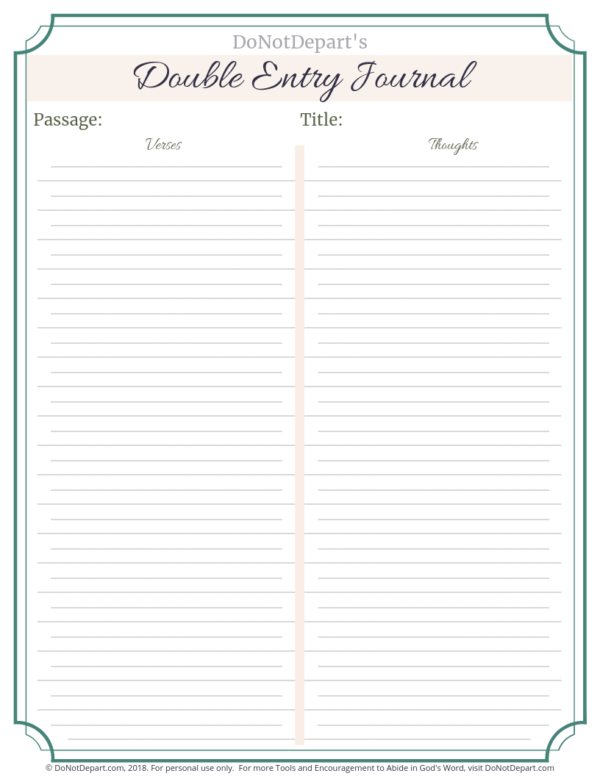
Today’s printable is a double-entry journal page and is a great tool for building a Bible study notebook. It will help us record and meditate on all that comes to our minds as we enjoy God’s word.


I can’t take credit for this simple study tool. I’m not sure who originally came up with the double-entry journal, but I started using it years ago during my personal Bible study. I enjoy it because it is simple and flexible. 

How to Use a Double-Entry Journal

Here’s how it works:

  1. Print out several double entry journal pages (or see this post on how to convert a spiral notebook to a double-entry journal). 
  2. Fill in the passage and the passage title at the top of the page. 
  3. In the left column, write out word-for-word the any verses that grab your attention. (NOTE: You could also opt to write out the entire passage you are studying. This requires more printed journal pages, but also promotes greater concentration on God’s words.)
  4. As ideas, questions, other verses, song lyrics, prayers or praises come to mind write them in the right column next to verse that triggered your thought. 

Benefits of a Double-Entry Journal

Using a double entry journal can encourage you to slow down and truly meditate on Gods word. This simple technique helps you to:

  • know, understand, and remember Scripture;
  • connect what you are reading to your prior knowledge of the Bible;
  • express the feeling, thoughts, and/or questions you have;
  • think critically about and refine what you believe about God and His word;
  • respond in prayer or praise to God’s heart for; and
  • recognize sin and repent. 

A double-entry journal section will be a great addition to your Bible study notebook. Regularly recording your time with God in such a way can become a habit that is rich and rewarding. Give it a try for a week or two. Then come back and leave a comment letting us all know what you think. 

Only by grace,

Kelli

Download the double-entry journal page.

Get all the Bible Study Notebook printable here.

Here’s a simple & flexible way to meditate on God’s word. Free printables! #BuildaBiblenotebook

Click To Tweet

Bible Study Notebook: Speaker Notes Printable

August 13, 2019 by Jaime Hilton Leave a Comment

All this month we are building a notebook to help us organize our Bible study. Did you grab your book study page and check out this guide to putting your book together?

I don’t know about you, but for many years I had a problem. I would hear a great message at church or a conference, or even a podcast. I would furiously scrawl notes on whatever scrap of paper I could find, then stuff the notes into my Bible or bookbag. Every few months I would have to clean out the pile of church bulletins, envelopes, and other random pieces of paper containing notes that no longer held any meaning because they had no context. It was messy and frustrating. I wasn’t getting as much out of the messages as I should because my notes didn’t have anywhere to live. Rather than contributing to my overall study of the Bible, they remained a disconnected piece of my spiritual walk.

Keeping a Bible study notebook with a section for speaker notes is one way you can connect what you’ve heard with the other things you’re learning. The practice of organizing your notes is an opportunity to review and remember the points that made an impact. The more we go over things, the more they become ingrained in our minds and eventually, our hearts.

Why Take Notes?

If you think of Bible study as feeding your faith, listening to a sermon or a special message from a speaker might be akin to a dinner party at a friend’s house. It’s as much about the fellowship as it is about the food, which is probably presented differently, perhaps more formally. It might even be a dish that’s more exotic than your usual fare and while you thoroughly enjoy it, you probably won’t be adding it to your own rotation of recipes.

Ultimately, even though the food is different and the presentation is different, it all works together with the other things you’ve eaten throughout the day to nourish and energize your body.

Similarly, I might be reading through Exodus while my church is studying Hebrews. Even though we are not looking at the same passages of Scripture, the Holy Spirit may use what I hear in the sermon to clarify or deepen my understanding of Exodus. The Bible is made up of separate books telling one connected story. You might be pleasantly surprised at how each unique flavor comes together to nourish and energize your faith.

Dress It Up

I like to use doodles when I’m taking notes. Something about keeping my hands busy helps my mind stay engaged while I’m listening. But I also find it useful to highlight keywords, verses or quotes I want to remember or questions I want to research later.  The doodles decorating my page later serve to draw my eye back to the things that first caught my attention.

Be sure to get your copy of the Speaker Notes Printable and let your sermon notes season your Bible study!

Share
Pin3
Tweet
3 Shares

Can I Have Yours? {Dagon’s Story and Ours}

May 17, 2018 by Lisa Burgess 30 Comments

Can I Have Yours?

When I want what you have but God didn’t intend it for me, it will fall flat. Like Dagon. We’re connecting our stories with Old Testament stories this month.

Can I Have Yours?

I’ll Have What They’re Having, Please

She was born this January.

As typical grandparents, we were thrilled to get out first grandchild. As expected, she was beautiful and sweet and the best thing ever.

But the problem was location.

When I was younger and raising my own small children, my parents lived down the road. Even though I was a stay-at-home mom, if I had a dentist appointment or a dinner date with my husband, I could drop the girls off at my parents’ house at a moment’s notice. And because they lived so close, my parents came to our girls’ school functions and saw them often, along with their other grandchildren who all lived nearby.

I dreamed for the same proximity with my own grandchildren. It’s what I see with my brother and his grandchildren who live in the same town. It’s also true for my sister and her first grandchild born last year.


I want what they have.


But that’s not my reality.

Bring Me the Box

It reminds me of this story from the Old Testament book of 1 Samuel (read the whole thing in 1 Samuel 4-6; it’s a crazy story!).

It was a time of war between the Israelites and the Philistines. The Philistines were dominating. After the Philistines killed 4,000 Israelites in battle, the Israelites brought in their secret weapon: the ark of the covenant.

The ark was a portable sacred chest, the Israelites most prized possession. It was covered in gold. It contained a copy of the Ten Commandments and a sample of manna. Its lid was the Mercy Seat.

This holy box signified the very presence of God. It was their protective talisman.

The Philistines knew this about the ark, too. When they saw it coming, they were thrown into a panic. But instead of the ark’s presence bringing them bad luck, the Philistines continued to win. In addition to killing 30,000 Israelites, they also stole the ark of the covenant for themselves.

They wanted something that was not theirs. They thought they could grab God’s promise for someone else and make it their own.

But God and His promises don’t work that way.


The details God plans for one person are not the same as He plans for another.


What God planned for my siblings—to have their grandchildren live close by—is not the plan He is working in my life.

Dagon Falls Down

Here’s what happened next to the ark.

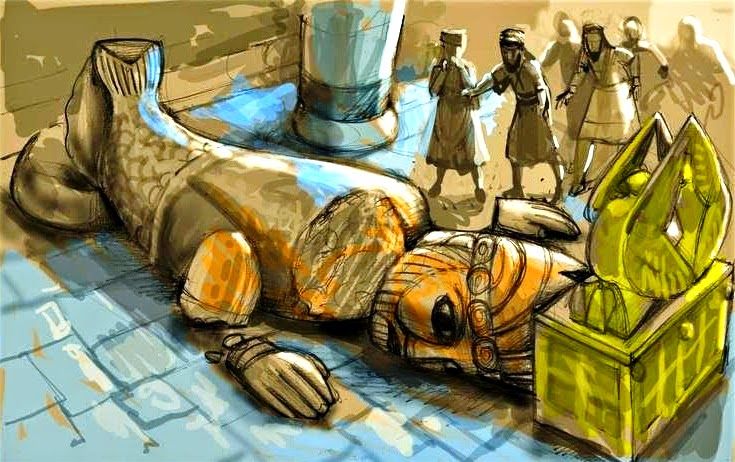
The Philistines returned home. They placed the ark in their own sacred temple, at the feet of their own god, Dagon, the pagan deity of corn and the father of the god Baal. Dagon was half-man, half-fish.

dagon-fish

But surprise!

The next morning, the people walked into the temple to discover Dagon on the ground. Dagon now lay at the foot of the ark.

They propped Dagon back up, only to discover him bowing in the same position again the next morning. Dagon’s head and hands were broken off, again at the foot of the ark.

dagon falls down at ark

What could this mean? Bad news followed more bad news. The Philistines became stricken with tumors. Rats began to overtake their city. Fear ensued.


They no longer wanted someone else’s treasure.


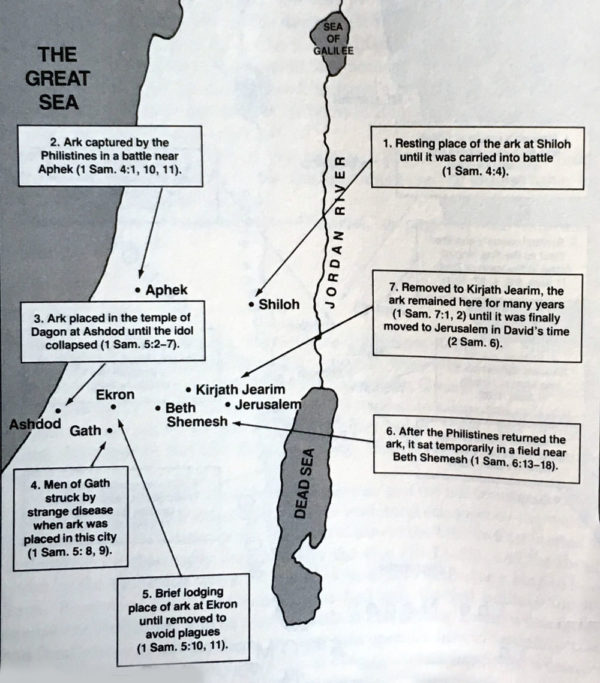
They passed off the ark to other Philistines in the city of Gath. But again, tumors came. People died. They moved the ark to another city, Ekron. But the same thing happened to them.

ark captured dagon
Nelson’s Complete Book of Bible Maps and Charts 1993 by Thomas Nelson, Inc.

After seven months, the religious leaders held a meeting. How can we get rid of this ark? It’s not good for us. It brings no blessings to our people.

They decided to send it back to the Israelites, along with a gift of five golden rats and five golden tumors. (Yes, this story gets better and better; read the remainder yourself.)

A Lesson for Us?

God puts individual gifts in each of our lives. These gifts are personally designed uniquely for us.

When we want other people’s gifts for ourselves instead, those gifts will fall flat, just like the imitation god Dagon fell flat at the foot of the ark.

  • What God intends for others is for their good.
  • What God intends for you is for your good.
  • Be content with your own treasures.

That’s what I’m learning with my granddaughter.

While she doesn’t live in my hometown like I’d prefer, she’s only three hours away. (I’ve learned to say “only” because many grandparents live across the world from their grandchildren.)

Maybe I’ll be better as a 3-hour away grandmother than I would be as a 3-mile away grandmother. Maybe I’d be too smothering or intrusive if she lived closer. Maybe, maybe there are reasons I can’t understand.


I don’t have to know details. I only have to trust God.


Three hours is close enough for me to drive down often. My daughter and son-in-law invite me frequently for overnight visits. So far, I’ve likely totaled more hours with our grandbaby living at a distance than I might have spent if she lived next door.

grandbaby 2018

Our relationship may not look like the one my own children had with their nearby grandparents. Or that my siblings have with their grandchildren.

But that’s okay. I don’t need to idolize the plan God has for their lives. I don’t need to wish it were my own.

I want instead to be grateful for the grace God keeps giving me (which includes a dependable vehicle, money for gas, and available time).

May we each worship God in the life He’s put before us, not in a dream He has for someone else.

Whether or not these plans look like we imagined, we can trust God to be in them with us.

His presence is the holy thing we need.

When we want what isn’t ours, it falls flat. Look at Dagon. #BelovedStoriesOT

Click To Tweet

When have you wanted what someone else has? What happened? Please share in the comments.

(P. S. If you’re a long-distance grandparent, please share any tips you have! I love hearing your ideas.)

We Choose So That We May Live

December 1, 2017 by Patti Brown Leave a Comment

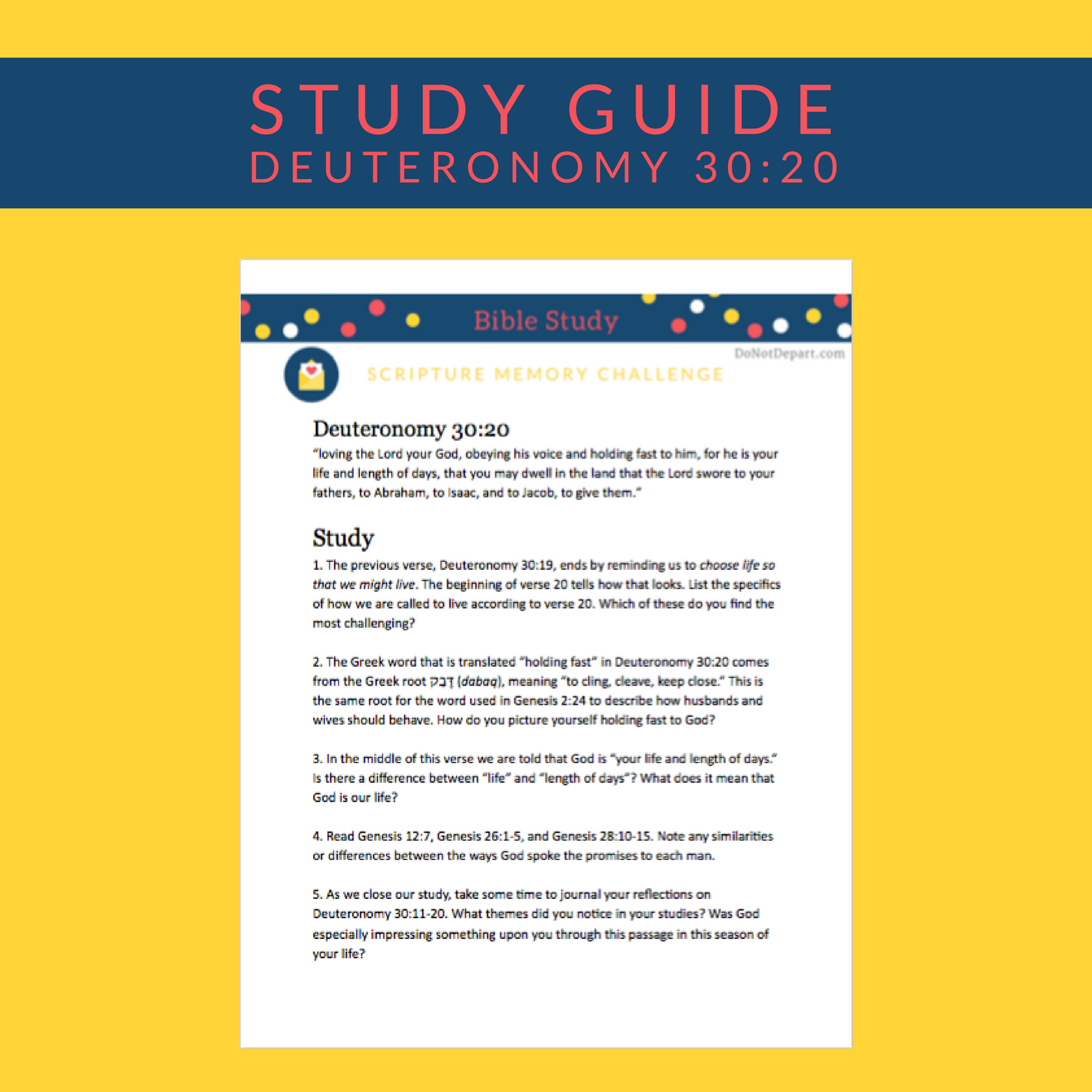
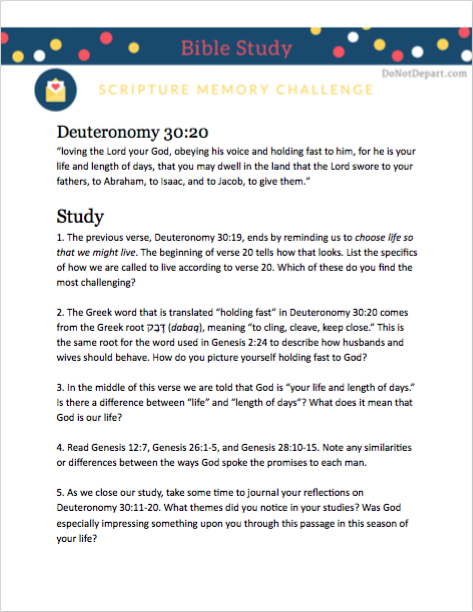
Study Guide for Deuteronomy 30:20

Study Guide for Deuteronomy 30:20
Can you believe we have come to the last verse of Deuteronomy 30?

For ten weeks we have been studying how near God’s command, His Word, and His heart are to us. We have been meditating on the truth that He has commanded us to love, and so we must choose.

We must choose to love. We must choose to obey. We must choose the blessing.

We must choose Him, so that we may truly live.

Study Guide for Deuteronomy 30:20

 Download the study guide for Deuteronomy 30:20

We choose Him so that we may truly live.

Click To Tweet

Download our study guide for Deuteronomy 30:20

Click To Tweet

How to Study the Bible Like a Theologian

July 19, 2017 by Ali Shaw 2 Comments

{I’m excited to have Alyssa J. Howard on the blog today! I met Alyssa when she joined the HelloMornings Bible study writing team. Her insight, knowledge, and heart for serving the Lord truly bless me. It’s been a joy to co-write with her and I’m thrilled that she’s sharing something with us at DoNotDepart!  -Ali}

I have studied the Bible my whole life. I grew up in a Christian home and attended a Christian school for most of my childhood. So when God put it on my heart to attend seminary, I assumed I knew what to expect. Obviously, I would study the Bible more thoroughly than ever before, but nothing could have prepared me for how I would be challenged both mentally and spiritually.

During my two years in graduate school, I studied the Bible in a whole new way. Up until that point, my study times consisted of prayer, Bible reading, journaling, and occasionally browsing commentaries for further insight. And there is nothing wrong with this type of study. In fact, it is my primary way of studying today. But here are some of the things I learned along the way that challenged me to dive deeper.


  • Translation matters. Before seminary, I was aware that some translations were more literal than others. But I had no idea how important translation was to Bible study.  Did you know that there are actually hundreds of English translations of the Bible? While I firmly believe that the Bible is the perfect Word of God, I do know that our translations aren’t perfect. We do the best we can, but in the end, we have to understand how translation affects what we’re reading. In my personal study, I try to look at several translations when diving into a particular passage – some more literal and others that are thought-for-thought.


  • Context is more than simply reading the verses around a particular passage. We speak a lot about “reading in context” when it comes to Scripture. Otherwise, we run the risk of misinterpreting a verse. But it’s not enough to read the entire chapter. We need to understand the author’s original intention as well as how the original reader would have interpreted their words. 

A professor once told me that a text cannot mean something it would have never meant to the original audience. In other words, we need to put ourselves in the mindset of the first-century believers to fully understand what the New Testament is saying. Yes, God’s Word is alive and active. It is still relevant and speaks to us today. But that doesn’t take away from the fact that most of the New Testament is made up of letters written to first-century churches addressing specific issues within their churches. The Bible was relevant and alive for them too. If we know nothing about first-century culture, how can we expect to fully understand everything Paul and the other New Testament writers were trying to convey?

With that in mind, we also need to remember that the Bible wasn’t written with chapter and verse numbers. Paul’s letter to the Romans wasn’t divided up into nice and neat divisions with headings like we find in our modern Bibles. It was a letter, meant to be read in its entirety from start to finish. So when we strive to read the Bible in context, we need to keep this in mind. The whole book matters.


  • Theology isn’t just for theologians. Some would argue that Paul was the first Christian theologian. His letters are full of extraordinarily deep theology! Yet he wasn’t speaking to world-renowned scholars or writing a thesis paper. He was writing personal letters to everyday church folk like you and me. He expected his readers to have the desire to grow… to learn more about God and who He is each and every day.


I’ve met many theologians in my life, and the majority had one important thing in common – a passion and love for God’s Word. They longed to move beyond the surface and dive deeper into the Bible.

You want to go deeper, ask more questions, and rely on the Holy Spirit more to guide you. You study His Word with passion and strive to know everything you can about your heavenly Father because in the end… He is your everything.


Therefore let us leave the elementary doctrine of Christ and go on to maturity… – Hebrews 6:1a (ESV)


How to Study the Bible Like a Theologian. Tips and how-to’s from @alyssajhoward

Click To Tweet

Theology isn’t just for theologians. It’s for us, too! Read more @DoNotDepart @alyssajhoward

Click To Tweet

Alyssa J Howard is a wife and stay-at-home mom to two young girls. She lives with her family in the Pacific Northwest where she loves to bake, run, drink coffee, and play with her two young daughters. Alyssa first fell in love with writing while earning her Master of Arts degree in theological studies through Liberty Theological Seminary, and she has been writing about Jesus and the Christian life for the past three years at alyssajhoward.com.

Connect with Alyssa on  Facebook,    Twitter,   or   Pinterest.

You can also check out Alyssa’s work in New Beginnings: Lessons on New Mercies and God’s Goodness and At My Savior’s Feet: Life-changing Lessons from the Master Storyteller, both available in print and Kindle formats on Amazon.

Timothy – A Young Man for God

May 18, 2017 by Patti Brown Leave a Comment

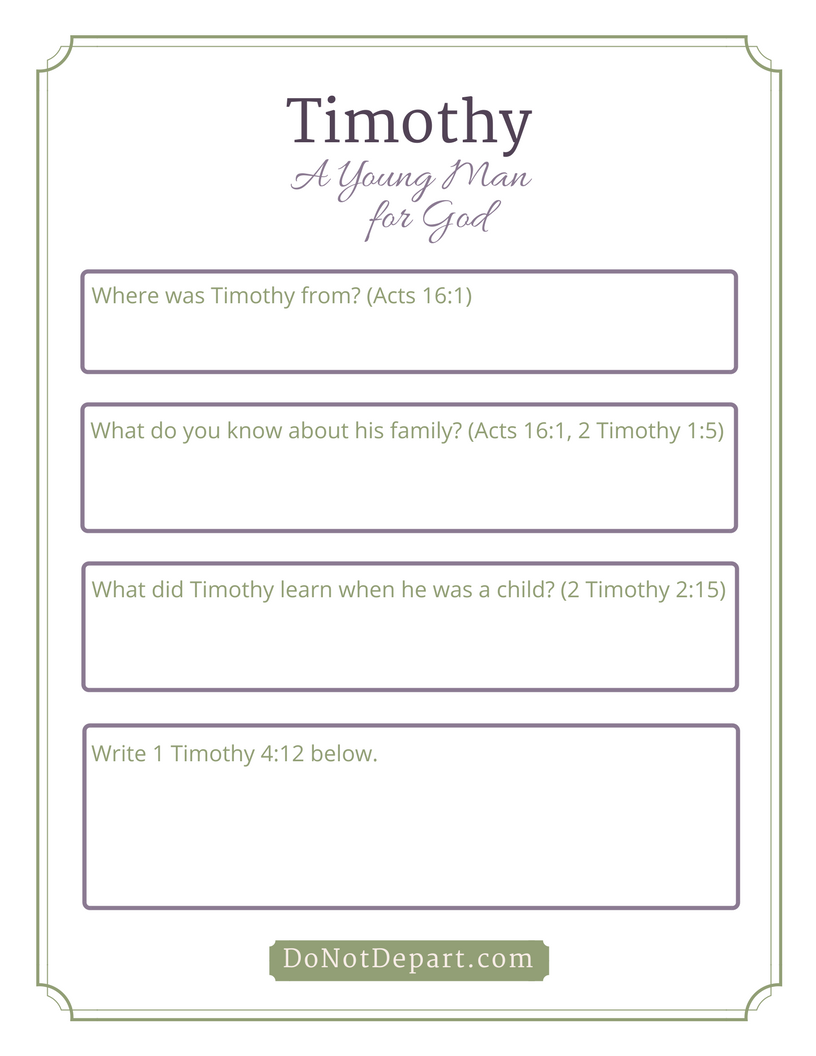
Simple Bible worksheet for children about Timothy

Even the youngest child can have a deep and abiding faith. It is unfortunate when adults dismiss the sincerity of a young people’s faith, or their passionate ideas for serving God, simply because of their age. Thankfully Paul did not succumb to this error.

Timothy was a young believer when he became acquainted with Paul. Timothy’s name means “one who honors God,” and he spent his life trying to do just that.

We first meet Timothy in the Bible in Acts 16:1-3. We learn from this that his mother was a Christian but his father was not. Later, in 2 Timothy 1:5, we learn that Timothy’s mother’s name was Eunice, and that his grandmother Lois was also a believer.

Timothy was such a steady companion of Paul’s throughout the years that his name appears as co-author of six of the New Testament letters (2 Corinthians, Philippians, Colossians, both letters to the Thessalonians, and Philemon).

Ultimately Timothy become a leader in the Church at Ephesus, and two of the books of the New Testament (1 Timothy and 2 Timothy) are letters Paul wrote to him.

In his first letter to Timothy, Paul encouraged him: “Don’t let anyone look down on you because you are young, but set an example for the believers in speech, in conduct, in love, in faith and in purity.” (1 Timothy 4:12, NIV)

It is important for children to know that God does not look at their size, or their age, or their hair color, or anything else external about them. He looks at their heart. God knew Timothy’s heart was with Him.

Simple Bible worksheet for children about Timothy
Use our simple printable worksheet to start a discussion with the children in your life about Timothy, and encourage them in their faith journey to set an example for those in their lives.

Let The Children Come - DoNotDepart.com
Save

Save

Jesus, Our Forever High Priest

July 19, 2016 by Kelli LaFram 1 Comment

our forever High Priest

So also Christ did not glorify Himself to become High Priest, but it was He who said to Him:

“You are My Son, Today I have begotten You.”

As He also says in another place:

“You are a priest forever according to the order of Melchizedek.” (Hebrews 5:5-6, KNJV)

The writer of the book of Hebrews was addressing a group of Christian Jews. These Christians, because they had grown up Jewish, would have been quite familiar with the Levitical priesthood. Meaning, they believed that the high priest must come from the line of Aaron (Exodus 28-29). They also knew that the high priest had the responsibility to offer “both gifts and sacrifices for sin” (Hebrews 5:3). To them, these were the religious practices needed to honor God.

Then enters Jesus.

Put yourself in the shoes of these Christian Jews for a minute. They were being told “it is finished” (John 19:30). That their works of righteousness were not good enough and no longer needed. That this Man named Jesus, who wasn’t even from Aaron’s family line, had offered thee ultimate sacrifice on their behalf. That every sin they had committed, were committing or would commit was atoned for. The old covenant they had grown up with, everything they thought they knew about pleasing God was done away with. And a new covenant was in it’s place.

This may have been a hard pill to swallow, right?

So what did the author of Hebrews do with this hard pill, this hard truth? He didn’t sugar-coat it, he Scripture-coated it. And the Scripture he used they most likely knew by heart.

“You are My Son, Today I have begotten You.” (Psalm 2:7)

The Levites were servants of God, but Jesus was His Son. And He was begotten, at the day of His resurrection, for this purpose — to be the High Priest. God had appointed many high priests in the past, but this time it was different. This time He appointed His Son and His Son was more than special. How? We see it in the next coating of Scripture.


“You are a priest forever according to the order of Melchizedek.” (Psalm 110:4)

Jesus wasn’t a temporary high priest. He was (and is!) the forever High Priest because He was according to the order of Melchizedek. Jesus may not have been a Levite as the Jews thought all high priests needed to be, but that didn’t disqualify Him. Jesus, a Priest forever, was according to an order that had been around much longer than the Levitical order.

For this Melchizedek, king of Salem, priest of the Most High God, who met Abraham returning from the slaughter of the kings and blessed him, to whom also Abraham gave a tenth part of all, first being translated “king of righteousness,” and then also king of Salem, meaning “king of peace,” without father, without mother, without genealogy, having neither beginning of days nor end of life, but made like the Son of God, remains a priest continually. (Hebrews 7:1-3, also see Genesis 14)

Why is this important?

You may be wondering why all this is important. You may be thinking yeah, I already know all this. So what? Well, the what is in the why. Why was the letter to the Hebrews even written? Why did these Christian need to be told about Christ as their High Priest?

Why? Because they were beginning to question what Jesus did for them. They were beginning to wonder if what He did really was enough. They wanted to know if they need to go back to the old way of doing things, the old works-based way to make up for their sins and attempt to please God. And I know many Christians today who begin to question and wonder and want to know the same thing — is more needed?

I doubt many of us would consider reinstating the sacrifices from the Old Testament, but we are still very similar to these Jewish Christians. There is a deep rooted belief in many of us that says we must do more if God is to be pleased with us. This belief simply isn’t true.

Instead of animal sacrifices we often think we need to do things like read our Bibles, pray, go to church, be kind, be patient, etc in order to make God happy. We stress ourselves out working and working for something we already have — God’s approval.

Don’t get me wrong, reading our Bibles, praying and attending church are all wonderful. They are necessary for fellowship with our Savior, but they are not what earns us salvation. They are not what justify us before God. It is only through faith in Jesus Christ that we are saved and pleasing to God the Father.

It is my prayer today that we understand this: that because we have Jesus, our forever High Priest we have a forever smile from our Father in heaven. No more is needed. Our sins are washed away. We have right standing before God. There is nothing left to do. It truly is finished.


Friends,

Please remember that I am human and flawed and my thoughts on this passage and others may not always be right. Please hold what I write up against the Word of God and listen to the Holy Spirit as He speaks to you directly.

Only by grace,

Kelli


Action steps:

  1. Jot down a few of things that you “do” for Christ. Consider your motives. Are you trying to earn favor or are these things done in response to His love?
  2. Read more on the order of Melchizedek. Check out Hebrews 7, Genesis 14, and this mini Bible study.
  3. Listen to and sing old hymns, such as What Can Wash Away My Sin, There Is Power In the Blood, and How Deep The Father’s Love For Us.
Why was the letter to the Hebrews even written? http://wp.me/p1Su7F-3Sp @donotdepart

Click To Tweet

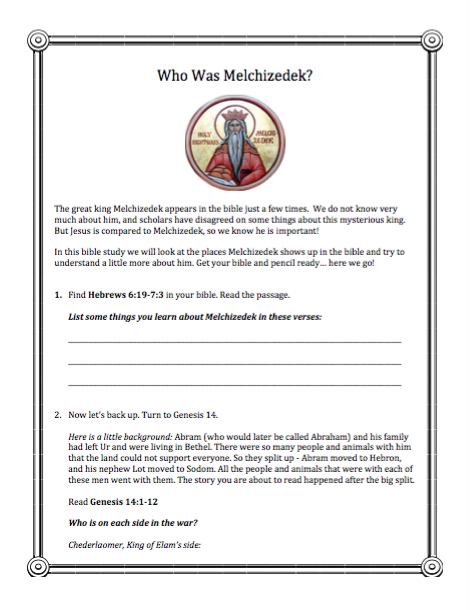
Who Was Melchizedek? (A Mini-Bible Study for Kids)

July 15, 2016 by Patti Brown 1 Comment

Who Was Melchizedek? (A Mini BIble Study for Kids) - download this free printable bible study from DoNotDepart.com


Who Was Melchizedek? (A Mini BIble Study for Kids) - download this free printable bible study from DoNotDepart.com
Have you ever been reading along in the bible and suddenly bump into a name that seems to be coming out of nowhere? Knowing figures from the Old Testament greatly informs our understanding of the New Testament. And the name Melchizedek is an important one in the book of Hebrews.

There is not a lot known about Melchizedek, but the fact that Jesus is compared to him means he is worth the time to study! He also shows up in Genesis right after a pretty amazing battle, so his story can be a fun one for kids to dig into. Just download and print this short bible study:

Who Was Melchizedek? (A Mini BIble Study for Kids) - download this free printable bible study from DoNotDepart.com
I recommend you work through the study yourself first, or do it alongside your children, so that you can be involved in discussions with them about Melchizedek and the light his life sheds on the person of Jesus. If you have younger children, focus on reading the scripture passages together. You could have them illustrate parts of the Genesis story we reference, after you read it aloud.

If you come across any awesome kid-friendly references on Melchizedek, please share them in the comments so other families can find them too!

Download “Who Was Melchizedek”, a free bible study for kids! #LetTheChildrenCome #JesusAsHighPriest

Click To Tweet

Let the Children Come - monthly feature on helping children to abide in God's Word via DoNotDepart.com
 

Jesus as High Priests - new series on Hebrews 4:14-5:14

You’ve Been Called – Light Up as a Priest

July 14, 2016 by Lisa Burgess 32 Comments

Dark-Times-Bright-Light

When times seem darkest, your light—however small or dim—shines brightest.

We’ve been asked to arrive at church on Sunday mornings at 8 a.m. for a final practice of our worship songs. It means I set my alarm a little earlier than I’d like. But when I arrive at 8, it seems they’re not ready for us.

Should I just sleep later and arrive later, despite the request? I’ve been considering it. Until last Sunday . . . .

When times seek darkest light shines brightest

Priestly Duties

Sometimes we look around us and see a mess. Fighting in the streets. Mud-throwing from political candidates. Hatred on social media.

Is there any point in trying to make a difference? Or should we all just sleep in?

I wonder how the high priest felt back in the old days. Twice every day—every single day, rain or shine—he had to enter the tabernacle and light the candles in the holy place (Exodus 30:7-8). Who would even notice? Could he slide by and just do it once a day if he was sick or tired or busy?

He had other duties, too. Important ones, like offering sacrifices for the people’s sins. Offering gifts to God on their behalf. Remaining ritually clean beyond anything required by other people.

Yet the sincerest of the priests did it. Why? Because he was called by God to do it. And he took that call seriously.

Called, Not Self-Appointed

As we continue our study in Hebrews 4:14-5:14 this month, we come across these two verses:

“Because of this he is obligated to offer sacrifice for his own sins just as he does for those of the people. And no one takes this honor for himself, but only when called by God, just as Aaron was.”
Hebrews 5:3-4

We read that the high priest (beginning with Aaron) was invited by name, by God, to lead the people to God Himself.

He had holy garments put on him, was anointed, and consecrated so he could serve the Lord as a priest (Exodus 40:13).

What an honor! In times of trouble and confusion, he was to be a light for the people, shining the presence of God.

Me, Too?

But it gets crazier . . . These also are messy days of trouble and confusion. Who is God calling to shine His presence into the dark places now?

You and me!

We are priests, too.

  • A royal priesthood (1 Peter 2:9)
  • Children of light (Ephesians 5:8)
  • City on a hill (Matthew 5:14)

As believers in Jesus we have been washed with water, clothed with righteousness, anointed with Jesus’s blood, and set apart for His work so we can serve Him as a priest.

What are our opportunities? Like the priests of old, we are:

  • To shine brightly (Matthew 5:16),
  • To offer thanks to God for the good gifts He’s given (Hebrews 13:15),
  • To point others to Jesus (Ephesians 3:9), the Highest Priest of all (Hebrews 7:27), who heals our pains and washes our sins.

Is becoming a priest an honor we bestow on ourselves? No. We have been invited to wear the Name, not self-appointed. We’ve been called by God to love our family, our friends, even our enemies. Not through our goodness, but through His grace.

We have been strategically positioned to answer the world’s call for help.

When our lights shine, those around us can see clearer themselves, can feel more hopeful about their own lives, and can live more purposeful lives for the glory of the Father.

Priesthood of Honor

Being a priest isn’t always easy. Such as getting up earlier when we’re asked to.

I was reminded last Sunday that arriving at 8 a.m. was about more than singing practice. It was about being a true priest. Arriving early in the sanctuary, we could straighten up the chairs, clean paper off the floor, walk the aisles and pray for souls that would soon be seated there.

We were to prepare the place where God’s people would be gathering.

Be a priest. It’s an honor. And a responsibility.

But we’ve been chosen. Let’s light up and go do it.

To Do This Week

  1. Read by candlelight.
    Light a candle to remember to shine as you read Hebrews 4:14-5:14.
  2. Write it out.
    If you’re writing the text by hand this month (see Ali’s suggestion), add in Hebrews 5:3-4.
  3. Three Dark/Three Light.
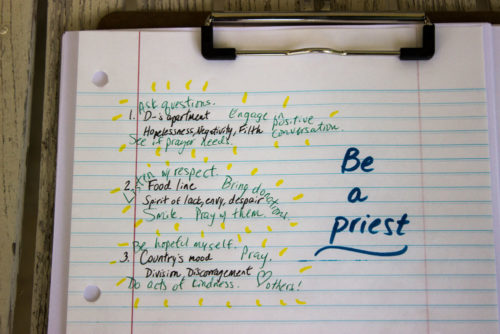
    Write down 3 dark places in your sphere of influence. Pray about 3 or more things you can do this week to bring the light of Jesus to those dark places. Write them brightly on top of and around the dark places.
    be-a-priest
  4. Advance it.
    Spread hope in your conversations and be a light in your actions this week!
  5. More priestly material?
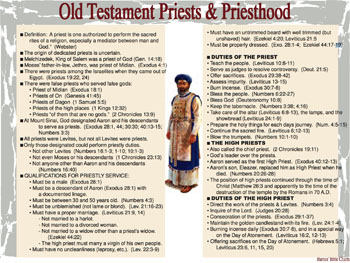
    Check out this chart, “Old Testament Priests & Priesthood.”

    Old Testament Priests
    Barnes Bible Charts
You’ve been called. Light up. Be a priest. #Hebrews5 #JesusAsHighPriest

Click To Tweet

Do you feel like a priest? Where do you see hopelessness? Where would you most like to shine a light?  Please share your thoughts in the comments.

Jesus as High Priests - new series on Hebrews 4:14-5:14

7 Prayers for When You Feel Discouraged – Plus a New Resource!

April 22, 2016 by Lindsey 14 Comments

7 Prayers for When You Feel Discouraged

Goodness, this life is hard sometimes. It’s easy to get discouraged and to wonder why God isn’t fixing your situation.

I’ve wondered it more than a time or two in the past few years. My husband and I lost four babies over a span of three years.

During that time, there were many instances when I wondered what to pray…how to pray. I didn’t want to pray for a healthy baby and then be disappointed yet again if God chose not to grant that desire.

What I learned in that time was that even though life is hard, God is still here with us.

He’s with us in the hard.

Here are 7 prayers I prayed often during that time.

7 Prayers for When You Feel Discouraged

7 Prayers for When You Feel Discouraged:

  1. That God will make His presence known to you.

What we need most when we’re feeling discouraged by life is not an answer to what the future holds (though that would be nice) but to know we’re not alone.

That’s why this prayer is so important.

  1. That you will stand firm in the faith.

It’s tempting in the midst of a struggle to question God. There’s nothing wrong with questioning Him (David and Job questioned God a lot, after all), but pray God will help you stand firm even in the midst of your questions.

  1. That God will bring people into your life who will encourage you.

God often uses the body of believers to encourage His children. He uses them to be His hands and feet. Ask for God to bring these people into your life. 

  1. That you will shine your light well, even when times are tough.

There’s a quote I’ve seen on Pinterest lately that says this: “Broken crayons still color.” It’s absolutely true. A broken crayon can still color the same as an unbroken one.

You and I, likewise, can still color the lives of those around us…even when we’re hurting. Pray you would do this well.

  1. That God would use this hard situation for your good and for His glory.

Rick Warren once said that “your greatest ministry will likely come from your greatest pain.”

It’s true, isn’t it? God often redeems our pain by using it to minister to others. Pray for God to use your hard situation to bring about something good in you (Romans 8:28) and in the Kingdom.

  1. That God Himself would encourage your Spirit through His Word.

Ask God to point you to Scriptures that will encourage your Spirit.

  1. That you would be unbeaten by this trial.

After one of our miscarriages, I remember telling God I would not allow Satan to win this battle. I would not let him beat me.

Pray for the same kind of determination.

What other prayers would you add to this list?

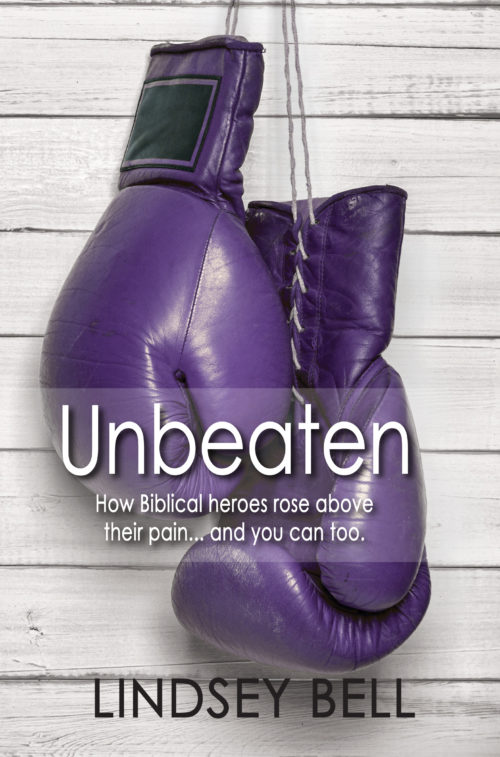
This post is part of Lindsey’s blog tour to celebrate her new Bible study and devotional, Unbeaten: How Biblical Heroes Rose Above Their Pain (and you can too).

To celebrate her book, she’s giving away a HUGE bundle of books! Leave a comment on this post to be entered to win. You can get more entries by commenting on other blogs in the tour as well. Get a full list of participating blogs here. 

About Unbeaten:

Unbeaten: Must-read Bible study and devotional book! Why does life have to be so hard? If you’ve ever asked this question, you’re not alone. Difficult times often leave Christians searching the Bible for answers to some of life’s most difficult questions.

Questions like:

Does God hear me when I pray?

Why isn’t He doing anything?

Does He even care?

In Unbeaten: How Biblical Heroes Rose Above Their Pain (and you can too), Lindsey Bell walks with readers through the stories of men and women in the Bible who went through difficult situations. In this 10-week Bible study and devotional, she addresses many of these questions and helps readers learn how they too can be unbeaten.

About Lindsey Bell:

Lindsey Bell Lindsey Bell is the author of the Bible study and devotional, Unbeaten, and of the parenting devotional, Searching for Sanity. She’s a stay-at-home mother of two silly boys, a minister’s wife, an avid reader, and a lover of all things chocolate. Lindsey writes weekly at www.lindseymbell.com about faith, family, and learning to love the life she’s been given.


7 Prayers for When You Feel Discouraged @LindseyMBell

Click To Tweet

A New Resource for When You Feel Discouraged @LindseyMBell

Click To Tweet

Plan to Abide – Wrap Up

January 28, 2016 by Patti Brown Leave a Comment

Plan to spend more time this year in God's Word and pursuing a growing relationship with Jesus Christ. Find resources to help you plan in this month's series "Plan to Abide."

Plan to spend more time this year in God's Word and pursuing a growing relationship with Jesus Christ. Find resources to help you plan in this month's series "Plan to Abide."
How are you going to abide in God’s Word this year? Have you made a plan yet?

We hope that you have discovered some new resources throughout this month’s series Plan to Abide. Be sure to check out each of our posts:

  • Make a plan to read the entire bible, or a portion of it, this year. Ali has suggestions in her post on bible reading plans.
  • While bible reading is an essential part of a believer’s growth, bible study helps you dig deeper and really connect on a personal level. Caroline lists ten bible studies to consider delving into.
  • Have you tried bible journaling? Lisa offers lots of ideas for how you can incorporate this practice into your plan to abide in God’s Word!
  • Does it seem odd to plan to pray? Yet life can get so busy – having a plan may be just the thing you need to keep prayer a daily habit.
  • Lindsey shares six tips to help you memorize scripture – a spiritual discipline that can bear beautiful fruit this year.
  • Make a plan for the children in your life too! I offer kid-friendly suggestions for all five of the above topics in my post Kids in the Word – Plan to Abide.

Is there anything you are looking to add to your plan this year? We would love to help you find the perfect resources! Just leave a comment and our team will share our best suggestions.

#PlanToAbide in 2016 – a list of #bible resources!

Click To Tweet


Next Page »

This Month’s Theme

  • Jesus is the Way
  • And He Shall Be Called Series Intro

Enter your email address to have new posts emailed to you:

We’ll come to you

Enter your email address to have new posts emailed to you

Categories

Bible Memory – Lent 2021

Memorizing Isaiah 12

Let the Children Come

Let the Children Come

Want more #HideHisWord resources?

Memorizing Psalm 1

Find Us on Facebook


Search

Recent Posts

  • Series Wrap-Up: The Lord Is My Light
  • His Marvelous Light
  • When the Darkness Deepens
  • Though I Sit in Darkness…
  • Let Your Light Shine
  • Life-Giving Light

Archives

© 2026 · Pretty Creative WordPress Theme by, Pretty Darn Cute Design