• Home
  • About
    • Our Contributors
    • Our Beliefs
  • Blog
  • Bible Studies
    • Scripture Dig
  • Archives
  • Shop
  • Advertise
  • Contact
    • Email
    • Facebook
    • Instagram
    • Pinterest
    • Twitter

Do Not Depart

Encouragement and Tools to Abide in God's Word

You are here: Home / Archives for names of God

And He Shall Be Called Series Intro

January 6, 2022 by Jaime Hilton Leave a Comment

What child is this? As we pack up our Christmas decorations and turn our eyes to what the new year brings, it’s worth remembering that the baby in the manger did not stay a baby. He grew in wisdom and stature to be a teacher and shepherd who brought the kingdom of heaven to earth, fulfilling the Law and Prophets. A suffering servant who humbly and innocently took on the sin of the world in order to make a way for us to live in a restored relationship with God. A king who defeated death and bought our freedom. 
In December we celebrate the birth of the Messiah, the one they named Jesus, “for he will save his people from their sins.” (Matthew 1:21)

Let’s start the year reflecting on the name that is above all names, Jesus, who is the same, yesterday, today, and forever (Hebrews 13:8).

“Therefore God has highly exalted him and bestowed on him the name that is above every name, so that at the name of Jesus every knee should bow, in heaven and on earth and under the earth, and every tongue confess that Jesus Christ is Lord, to the glory of God the Father.” Philippians 2:9-11
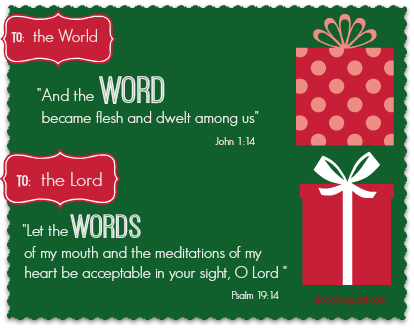
Celebrate the Word with our words

December 19, 2013 by Julie Leave a Comment

Word became flesh

As we praise, as we share, as we converse, as we witness … may our words be an offering to the Word who became like us, to live among us, and then give His life for us.
Word became flesh

Adonai – Lord of lords

July 26, 2012 by Kathy Howard 2 Comments

Paris, Lord

This post originally appeared on Scripture Dig during a series on the Names of God.

This time last week I was walking the streets of Paris. I had the wonderful opportunity for a two-day layover on my way home from teaching for two weeks in Moldova. My traveling companion and I visited many of the well-known sites such as the Eiffel Tower, Notre Dame, and the Louvre.

Paris, Lord
A view of the Seine from the top of Notre Dame

The long, rich history of this beautiful city probably struck me more than anything else. For more than 4,000 years, earthly leaders have fought over this geographic area. Powerful rulers like Julius Caesar, Charlemagne, and Napoleon Bonaparte have laid claim to the city on the Seine. Because they had power and authority over Paris, they could be considered “lord” over the city.

Many people in the Bible were also called “lord.” This title of respect was used by Sarah to refer to her husband Abraham and by David to refer to King Saul. The Hebrew word translated as “lord” in the Old Testament is the singular noun “adon.” Adon is used hundreds of times to refer to a human in a position of leadership. It means “lord, master, owner, ruler, commander, or one with a position of authority.” It signifies the relationship between the authority and those under the lord’s authority.

But no matter how great these earthly lords, there is One greater. Our God is Lord of lords and King of kings. The Hebrew word translated as “Lord” (with a capital “L” rather than a lower case “l”) in the Old Testament is “adonay” or “Adonai.” It is a plural noun with a first person singular suffix. Adonai, the plural form of adon, denotes intensity. God is not simply a lord. He is the Lord of lords. Napoleon may have been lord of Paris, but God is the Lord of everything. Notice the distinction in Psalm 136:

Give thanks to the Lord of lords, for his steadfast love endures forever. Psalm 136:3, NIV

When you read the Bible, watch for “Lord” with the capital “L” as opposed to “lord” with the lowercase “l.” That is Adonai. Very early in the history of Israel, devout Jews began to use Adonai as a substitute for God’s covenant name Yahweh. Since “Yahweh” was too holy to be spoken, they would say Adonai instead. (For more information on Yahweh, see an earlier post.) In Scripture, these two names are sometimes used together. In the verse below “LORD” in all caps is Yahweh in the Hebrew. “Lord” is Adonai.

For I know that the LORD is great, and that our Lord is above all gods. Psalm 135:5, NIV

How should the truth that God is “Lord” impact us today? Remember that “Lord” describes the nature of a relationship. If God is Lord then we are His vassals. If God is Master, then we are His servants. The Psalms tell us our Lord acts with everlasting kindness (136:3) and that His understanding is infinite (147:5). Our God is not a lord that merely subdues. He is the Lord that rules in all power, authority, and love.

Let’s express our devotion today to the Lord of lords and the King of kings. Share your words of praise!

Jehovah Rapha-The God who Heals

July 19, 2012 by Heather 3 Comments

Three months prior I witnessed God’s goodness and deliverance of my fourth son. Yet months of sleepless nights, challenging children, and a traveling husband had left me weary. My time in the Living Water decreased when the demands of life increased.

It only took three days for the Israelites to forget about God’s goodness and deliverance.  Three days prior He delivered them from slavery and parted the Red Sea…

“Israel saw the great power that the Lord used against the Egyptians, so the people feared the Lord, and they believed in the Lord and in his servant Moses.” Exodus 14:31

But those three days were long. Walking in the wilderness. Finding no water. They were tired. They needed rest. More than anything they needed drinkable water.

Hidden Brokenness

When the Israelites finally found water. I imagine it looked normal. They didn’t realize it was “broken”. Not until someone bent over and took the first sip, discovering the bitter water (the name of the area was called “Marah” which means “bitter”, so perhaps the bitterness was obvious).

Having just witnessed the LORD perform an enormous miracle with water, shouldn’t they have believed the same God could restore this water? Heal it. Make it drinkable.

My injury was hidden. For two weeks I performed normal “mom of four young boys” activities. In addition, I started an intense weight-lifting program, ran on the treadmill, and stood for hours at my husband’s 20-year high school reunion. I was unaware of my need for healing until the evening I took off my sneakers and couldn’t stand up.

As I sat on the x-ray table, it struck me how normal my foot looked. No obvious injury. Only high-tech machinery could determine I had a stress fracture. The only way to heal a fracture was to stay off my foot for 2-3 weeks. Healing came from rest.

Healing despite grumbling

When I learned the prescribed remedy (2-3 weeks of rest), I cried. I just had a baby. I have 3 young boys. We live in a house with a second-story. How could I stay off my foot? How could I provide a healing environment? I grumbled. Big time.

Instead of remembering God’s power and provision just three days prior, the Israelites grumbled to Moses. But Moses knew where to turn. He cried out to the LORD and the LORD provided a remedy, a tree to throw in and purify the water.  The LORD said,

“If you listen carefully to the Lord your God and do what is right in his eyes, if you pay attention to his commands and keep all his decrees, I will not bring on you any of the diseases I brought on the Egyptians, for I am the Lord, who heals you.” (Exodus 15:26)

Soul Healing

An x-ray machine hadn’t diagnosed my fractured spirit. It was hidden under duties. In Hebrew, “rapha” means “to restore, to heal, to make healthful.” He “restored my soul” (Psalm 23:3).

The God who sees (El Roi) was kind to me. My mother-in-law, who was in town for mothers’ day, volunteered to stay and help. She fed us three meals a day (including breakfast in bed). She washed, folded and put-away laundry. She put boys to bed. She served while I healed.

While I rested my foot, I rested my soul. I sat with my boys and read books. I laughed instead of instructed. The Lord as healer, Jehovah Rapha, not only healed my hidden, fractured physical need; He provided rest for a weary soul.

“He heals the brokenhearted, and binds up their wounds.” Psalm 147:3

Scripture reveals Jehovah Rapha heals physical needs (2 Kings 20:1, 4-5), spiritual needs (Isaiah 53:5), and emotional needs (Psalm 147:3).  A tree “healed” the bitter waters for the Israelites. Jesus’ death on a wooden cross, delivered us from bitter souls and sin (1 Peter 2:24-25).

Are you wounded? Is it hidden to the normal eye? Do you desperately need a Physician? Have you asked Him to heal you?

Pray:

“Heal me, O LORD, and I shall be healed; save me, and I shall be saved, for you are my praise.” Jeremiah 17:14

 *If you are looking for a great book or study on the names of God, check out “LORD, I Want to Know You” by Kay Arthur.

Jehovah Shalom: Climb out of the winepress!

July 17, 2012 by Julie 4 Comments

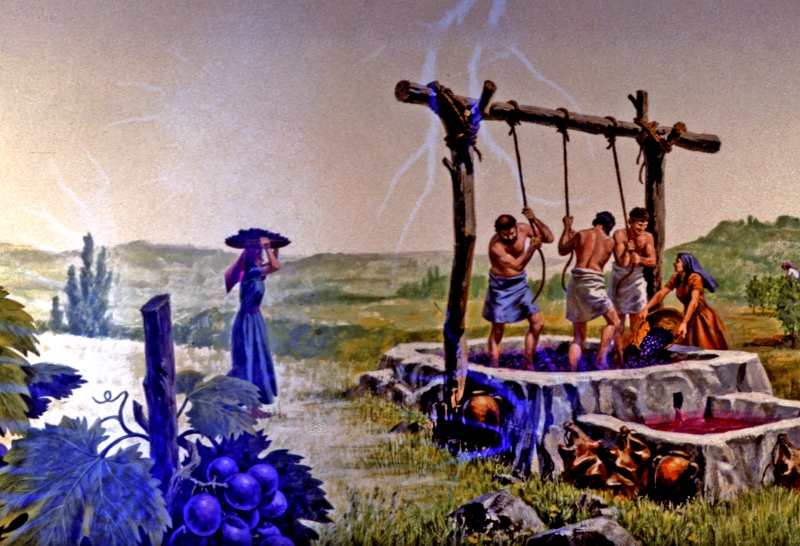
A winepress from Biblical times

He was the least important child in the least important family of his tribe, in a nation oppressed for seven long years. Watched by the angel of the Lord from beneath a tree, Gideon threshed wheat in hiding down in a winepress, where the Midianites wouldn’t find him or his precious grain. He believed God had forsaken them, despite their unfaithfulness to Him. When the Angel approached Gideon to declare God was with him, Gideon spoke the honest, desperate words of a man whose daily life had worn deep ruts in suffering’s path. “Please, sir, if the Lord is with us, why then has all this happened to us? And where are all his wonderful deeds that our fathers recounted to us …?” (Judges 6:13a).

Valley moments

Tired of being beaten down from his start on the lowest of places, Gideon asked what the honest among us will admit to wondering, “If God is with us, why is life so hard?”

Last week I created a spiritual life map of my journey with God. Some of my greatest discoveries about who God is came in my darkest places. I noticed that “valleys” were often followed by strength and advance. Gideon was in a low place when the angel of the Lord came and patiently answered his honest question. It wasn’t until the weary Israelite realized, “I have seen the angel of the Lord face to face” (v.22) that his desperation turned to fear. As if things weren’t bad enough, Gideon went from fragile to freaked out. Can you relate?

Peaceful moments

The Lord answered him where he was: “Peace be to you. Do not fear; you shall not die.” (v.23)
The only thing worse than being insignificant and insecure in the face of a marauding enemy is understanding how insignificant you are in the face of a holy God. Realizing he was part of a divine encounter with the God who had NOT forsaken him, Gideon built an altar of worship and named it for the discovery of his darkest moment: Jehovah-shalom. The Lord is peace. (Judges 6:11-24)

When we’re under attack, uncertain, in need, and painfully aware of our weakness, the world only offers illusions of temporary feelings suggesting peace. Jehovah-shalom IS peace, so He can promise, “Peace I leave with you; My peace I give to you; not as the world gives, do I give to you. Let not your heart be troubled, not let it be fearful” (John 14:27).

Past our understanding moments

Gideon couldn’t conceive of what happened in the wine press that day, stunned as he served meat and unleavened bread to the angel of the Lord. The peace he found “passed understanding;” he encountered true peace in the midst of hardship. He discovered what God offers each one of us reading now: real peace.

“… do not be anxious about anything, but in everything by prayer and supplication with thanksgiving let your requests be made known to God. And the peace of God, which surpasses all understanding, will guard your hearts and your minds in Christ Jesus” (Phil. 4:6-7).

Yes, it surpasses understanding, but it can guard our hearts and our discouraged thoughts when we find ourselves in the wine press, hiding from our hardships and fighting fear. We can know the peace of Jehovah-shalom. We are meant to know the peace of Jehovah-shalom.

Let’s climb out of the wine press and get down on our knees, so Jehovah Shalom can cover us in peace that’s out of this world!

Have you had a “wine press” experience when God gave you His peace?

Yahweh – He who is

July 10, 2012 by Kathy Howard 2 Comments

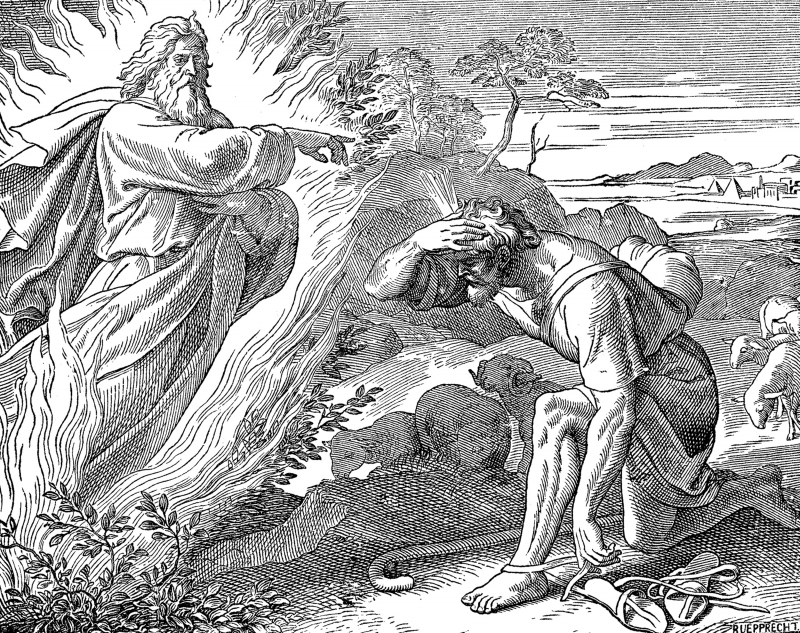
Yahweh, Moses and burning bush

This post originally appeared on Scripture Dig during a series on the Names of God.

There’s so much about God that I don’t understand. For instance, why He loves me and how He keeps the universe spinning along. But possibly the hardest thing to get my puny mind around is His eternal, self-sufficient existence.

There has never been a time that God was not, or a moment when He will not be. He exists because of Himself and He needs nothing outside of Himself.

God’s name “Yahweh” (also known by the Christian transliteration “Jehovah”) signifies His timeless, ever-present existence. The root word of Yahweh means “to exist,” “to be.” In fact, some scholars suggest that “I am that I am” in Exodus 3:14 would be better translated as “I am He who exists” or “I am He who is.”

The name God gave Himself

Yahweh, Moses and burning bush
Moses & burning bush, visualbiblealive.com

This is the name God gave when Moses asked Him:

“Suppose I go to the Israelites and say to them, ‘The God of your fathers has sent me to you,’ and they ask me, ‘What is his name?’ Then what shall I tell them?” (Exodus 3:13, NIV)

Since God’s name identifies his nature, when Moses requested his “name” he was asking about God’s character. Can we trust you to be with us? Can we believe that you can deliver us?

God’s answer: “Yahweh.” I am the One who exists. I have no source, yet I am the Source of everything. If nothing else was, still I would be.

God chose the name Yahweh for Himself. It is His personal name by which He related specifically to His chosen people. It is His covenant name, particularly in His relationship with the nation of Israel.

Yahweh is first found in the second chapter of Genesis. Abraham (Gen 12:8) knew God by this name. Adam probably did as well since we are told during the lifetime of his son, Seth “men began to call upon the name of the LORD (Gen 4:26).”

“The” Name

Yahweh is God’s most sacred name. Scripture speaks of it as “this glorious and fearful name” (Deut 28:58) or simply “the name” (Lev 24:11). The Jews would not speak it out of reverence, but generally substituted another name such as Adonai.

Because the sacred name was not spoken, precise pronunciation is uncertain. This problem is compounded by the fact that Hebrew was written without vowels until about 850 BC. YHWH or Yahweh, the personal name of God occurs more than 5,000 times in the Old Testament. In your Bible, it is typically designated by all caps: LORD.

According to the Theological Wordbook of the Old Testament, the name Yahweh connotes “God’s nearness, his concern for man, and the revelation of His redemptive covenant.” Oh, there is much in a name!

What does it mean to you personally that God is “He who exists?”

Names of God: Jehovah Shammah

July 3, 2012 by Caroline 9 Comments

“The Lord of hosts is with us; the God of Jacob is our fortress.” – Psalm 46:11

Kathy opened this month’s study sharing the power and meaning behind names, especially as we study God’s names.

An article on Bible.org on the names of God states: “…giving glory to God is tied in with the knowledge of God (revelation of God), and knowing God personally (response to God).”

Giving glory is a reaction. God created us to glorify Him, and we eagerly do so because, as we get to know Him, we see His active nature, His compassion, and His love.

A God of Many Names

In our lives, we may receive many descriptive adjectives to our character. You might be calm, patient, and compassion. A friend might have a fierce, devoted personality. A coworker may be considered energetic, contemplative, or deliberate.

The Old and New Testaments describe our God as compassionate, loving, fatherly, strong, all-knowing, and more. He is a God of salvation, of justice, and of mercy.

Photo Credit

As we grow in our knowledge of Him and our experience in faith with Him, we see how active and present God is in our lives.

A Present God

As much as we know God’s interest in our lives, some days we just feel alone. Unattended. Forgotten.

When I plummet into days like these, God presents me with a reminder of a perhaps lesser-known one of His names – Jehovah Shammah, meaning “He is There.”

“Jehovah Shammah” only appears once in the Old Testament. In Ezekiel 48:35, the Israelites are building the new Jerusalem, which God instructs will be named “Jehovah Shammah.” The city itself reminds the people that God is present.

He was present in the past, leading the Israelites through generations of slavery, wandering, and growth. He was present in the specific plans His people carried out as they rebuilt Jerusalem. He is present now, as He guides us through living out His love. He offers His presence through us, acting through our hearts and delivering eternal hope.

This verse in Ezekiel ends the book, and what a way to end a book! The last note we read here proclaims “from that time on” God’s ever presence. He is always with us.

Matthew Henry’s Commentary says:

“…it is true of every good Christian; he dwells in God, and God in him; whatever soul has in it a living principle of grace, it may be truly said, The Lord is There.”

If, during my struggles and my worries, I stop and consider how God is with me, how much will that change my perspective? I can give those worries away when I remember He guides, protects, and journeys with me.

From now until forever, God is there.

“And I heard a loud voice from the throne saying, “Behold, the dwelling place of God is with man. He will dwell with them, and they will be his people, and God himself will be with them as their God.” – Revelation 21:3

May we live certain He is with us!


How have you experienced God’s presence? What verses remind you He is always there?

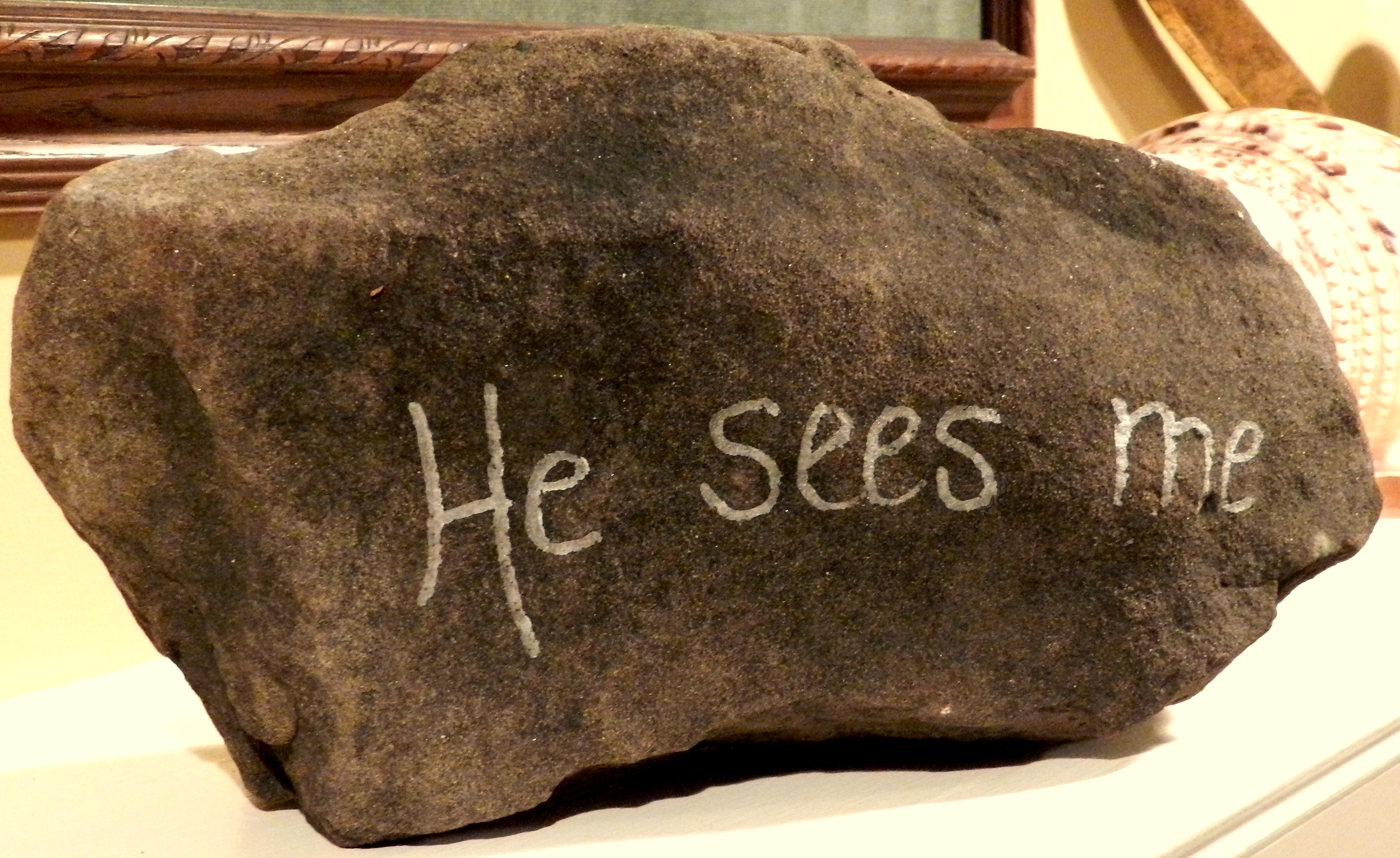
Here I Raise My Ebenezer: He sees me

May 15, 2012 by Julie 4 Comments

Some events are festivals of God’s provisions, providing enough Ebenezer stones to build a monument. For women who experience the carrying and bearing a life, birth is often such an event. From the monument of our first child’s coming that looms large in our family story, I want to draw out one small stone. It’s in the choosing, studying, and holding of a single stone that we remember the divine nature of the details.

No one will ever accuse me of being “medically minded;” I read little of What to Expect When You’re Expecting. After all, women have done this for millenia; what could be new? When early morning pangs were followed by a reddish gush, we nervously called the doctor, I took a quick shower, and we headed into zero degree darkness to the hospital. Empty, silent roads calmed our excitement and nagging questions. Waddling past the curb, a nurse met us at the doors and invited me to plop into a wheelchair.

Automatic doors ushered us in to the room where only one couple waited. Friends from church! What emergency brought them there in the middle of the night? Without insurance, their little one had an ear infection, forcing them to the ER. They were just leaving as we entered. Since she was a nurse and knew my due date, Cheryl peppered us with quick questions. Our naive, inexperienced answers landed heavily on her medical ears; she hid her fears as she squeezed my hand and told me they would be praying and waiting for news. We had no idea that we were in need of extraordinary prayers.

As they elevator doors closed, the couple hurried to a phone to call our sleeping pastor. Everything moved so fast … the wheelchair, the doctor, the cold iodine over my stomach, and Jeff’s face fading from my sight amidst shouts and orders. There had been no time to call anyone or to let our family members hours away know that the first grandchild was struggling for life.

God put the right person .. at the right place … at the right time … to know our need before we even knew.

El Roi, the God who sees, was not caught by surprise. He had not missed the events. We were caught unprepared by the urgency, our loneliness, and our ignorance. But He was already ahead of us, fulfilling His promise through His people.

“When you pass through the waters, I will be with you; and through the rivers, they shall not overwhelm you; when you walk through fire you shall not be burned, and the flame shall not consume you” (Isaiah 43:2).

He did not leave us or forsake us in our darkest valley; He sent His people on ahead in the guise of a child’s ear infection, so that an informed woman of faith was at the doors to greet us and know our need before we knew it. God provided for an army of prayer warriors to be engaged when we had no knowledge or time to enlist one for ourselves.

It’s a single stone in a monument of God’s great work in the life of our daughter, and it deserves to be lifted out, studied, and held with gratitude. I could show the other stones in this monument we remember when we say “JoHanna,” but I don’t want any others to overshadow this single stone of remembering God’s tender provision.

God put the right person at the right place at the right time to know our need before we even knew it.

Dear Lord,

Thank you for seeing what’s before us and for providing what we needed, even when we didn’t know. I’m so grateful for how YOU enlisted the prayers of Your people on our behalf. We are truly never alone, never out of Your sight, never passing through the waters without You there. Here I raise this Ebenezer to remember Your tender lovingkindness.

“Son of Man” for “Children of God”

November 9, 2011 by Julie 3 Comments

A name reveals much about who we are; the names of Christ are no different. The Christmas story begins in Genesis 3:15 when God told Satan the offspring of the woman would one day overcome him. At that point, He was nameless to us, except for the  “need for seed,” the seed of man.


In giving a unique promise to Abram, Adam’s descendant, God assured him of blessing. By initiating a covenant relationship with Abram, God said that in him “all the families of the earth shall be blessed” (Gen. 12: 3).  It foreshadowed the One seed who would descend from Abram to save the world:  Jesus. In chapter 15 God assured childless Abram that his descendants would multiply like stars. The flesh of an animal was cut, providing a wall of blood to pass through as the covenant was sealed. In chapter 17 God changed Abram’s name to Abraham, showing he would be the “father” of many nations. A new name often accompanies a covenant relationship of oneness and reveals a new identity. No longer was Abram simply the father of his own family; he was divinely chosen as father of many nations and ancestor of the One who would fulfill God’s Gen. 3:15 promise.  Everyone would be impacted by Father Abraham’s descendant.

Son of God became Son of Man

Like Abraham’s name changed when he entered a covenant relationship, so did that of Jesus Son of God. “And the Word became flesh and dwelt among us, and we have seen his glory, glory as of the only Son from the Father, full of grace and truth” (John 1:14).   When Jesus was born, He humbled himself in a way I can not comprehend, but He provided us the benefit of sharing in His glory. He came as the Son of God, the holy One from heaven, the Prince of Peace. Reaching out for a relationship with man meant complete humility for Him, even down to changing His name.

I’m able to take on the name “child of God,” because Jesus took on the name “Son of Man.”

“Son of Man.” Such a human name to bear, if you’re the Son of God. Such an earthly name, when you’re heavenly. Such a low name, when you’re God Most High. Yet when He entered into a covenant love with us, He took on a new name to identify with us in our flesh: Son of Man.

“And if you are Christ’s, then you are Abraham’s offspring, heirs according to promise” (Gal. 3:29).

“But when thefullness of time had come, God sent forth his Son, born of woman, born under the law,  to redeem those who were under the law, so that we might receive adoption as sons. And because you are sons, God has sent the Spirit of his Son into our hearts, crying, “Abba! Father!” So you are no longer a slave, but a son, and if a son, then an heir through God” (Gal. 4:4-7).


In the Old Testament, Abrahamreceived a new name, and God promised all of Abraham’s descendants would share in his blessing.  The name change revealed identity change! If we are Christ’s, then we’re offspring of Abraham, his heirs.


When Jesus took on the form of a man, His new name revealed a change! As flesh and blood, Jesus put on mankind and became the sacrificial Lamb, so we could put Him on. Our covenant exchange of names provided blessing for us. He took on more than our name; the Lamb of God took on our sins.  He also took on the understanding of what it means to be tempted and tried like those who are “but dust.” How comforting to know the Son of Man understands.  We can be “children of God,” because Jesus became the “Son of Man.”


Because He is the Son of Man, I am a child of God, heir of righteousness, daughter of the King, son not slave, pure not dirty, forgiven not condemned, and redeemed not guilty.  No doubt, the covenant exchange of names works in our favor, but I’m so thankful to the Son of Man through whom all the nations of the world are blessed.


How would you finish this sentence:  Because He became the Son of Man, I am ____________ instead of _____________?

Jehovah Sabaoth – The Lord of Hosts

October 28, 2011 by Stephanie Shott 18 Comments


Have you ever wished you could just call on someone who would not only fight your battles but calm your fearful and frazzled heart too? Have you ever wanted to just throw your hands up in the air, give up and let someone else take care of things?

Well, you can! His name is Jehovah Sabaoth.

Today, we have the privilege of shedding some light on a name many are not very familiar with. His name is Jehovah Sabaoth and as we peel back the layers of that magnificent name, we will once again be reminded that the God we serve is so much greater than our finite minds can comprehend!

Jehovah Sabaoth (The Lord of Hosts) is mentioned over 270 times making it the most frequently used compound name of God in Scripture. This profound name means the Almighty, Sovereign, Self-Existent God over all the multitudes (whether an army, the sun, moon and stars, or creation itself).

First mentioned in 1 Samuel 1:3, we find Hannah’s husband, Elkanah, making annual trips to the temple to sacrifice to the LORD of Hosts. Just a few short verses later we find a barren and heartbroken Hannah making a covenant with the LORD of Hosts as she cried out for Him to hear her prayer and give her a child. (1 Samuel 1:11)

Hannah may have longed for her womb as well as her arms to be filled with a sweet little bundle of joy, but the previous verses (1 Samuel 1:6-7) give us a better idea of why she prayed such a desperate prayer. She not only wanted to experience the joy of being a mother but she also wanted to be able to silence the persistent mocking of Peninnah. So she called on the LORD of Hosts to win a war she could not win on her own.

In 1 Samuel 17:45, we find just prior to pegging Goliath with a pebble, David boldly proclaimed, “You come to me with a sword and with a spear and with a javelin, but I come to you in the name of the LORD of hosts, the God of the armies of Israel, whom you have defied.”

And in 2 Samuel 5:10, we find – “And David became greater and greater, for the LORD, the God of hosts, was with him.”

  • In Psalm 24:10, The LORD of Hosts is the King of glory and in Psalm 46:7 He is our Fortress.
  • In Psalm 59:5, He is called upon to vindicate His people.
  • In Isaiah 51:15 we see He controls the sea and the waves.
  • In Isaiah 54:5 He is our husband and in Zechariah 4:6, He declares that He alone wins our battles when He tells Zerubbabel, “Not by might, nor by power, but by my Spirit, says the LORD of hosts.”
  • And in Isaiah’s life-altering, mouth-shutting vision of the Lord, he heard the Seraphim speaking to one another, crying out, “Holy, holy, holy is the LORD of hosts; the whole earth is full of his glory!” (Isaiah 6:3)

Throughout Scripture we find this LORD of Hosts as our ever present defender, the Sovereign and Holy God over all the universe who sees us, loves us and moves mountains on our behalf. He fights our battles, wins our wars and is the refuge we can run to in time of need. He is Jehovah-Sabaoth!

There is nothing He cannot do, nothing He does not know, nothing He cannot control, no enemy He cannot defeat, no heart He can not heal, no mouth He can not shut, no miracle He cannot perform. And how beautiful to know He longs to work in our lives and on our behalf as the LORD of Hosts!

What battle have you been trying to fight on your own? Like Hannah, will you call upon the LORD of Hosts to do what only He can do and vindicate you in the process? How does knowing that God is the LORD of Hosts help you in your circumstances?


Adonai – The Lord of lords

October 26, 2011 by Kathy Howard 4 Comments

This time last week I was walking the streets of Paris. I had the wonderful opportunity for a two-day layover on my way home from teaching for two weeks in Moldova. My traveling companion and I visited many of the well-known sites such as the Eiffel Tower, Notre Dame, and the Louvre.

Statue of Napoleon inside the Hotel de Invalides in Paris

The long, rich history of this beautiful city probably struck me more than anything else. For more than 4,000 years earthly leaders have fought over this geographic area. Powerful rulers like Julius Caesar, Charlemagne, and Napoleon Bonaparte have laid claim to the city on the Seine. Because they had power and authority over Paris, they could be considered “lord” over the city.

Many people in the Bible were also called “lord.” This title of respect was used by Sarah to refer to her husband Abraham and by David to refer to King Saul. The Hebrew word translated as “lord” in the Old Testament is the singular noun “adon.” Adon is used hundreds of times to refer to a human in a position of leadership. It means “lord, master, owner, ruler, commander, or one with a position of authority.” It signifies the relationship between the authority and those under the lord’s authority.

But no matter how great these earthly lords, there is One greater. Our God is Lord of lords and King of kings. The Hebrew word translated as “Lord” (with a capital “L” rather than a lower case “l”) in the Old Testament is “adonay” or “Adonai.” It is a plural noun with a first person singular suffix. Adonai, the plural form of adon, denotes intensity. God is not simply a lord. He is the Lord of lords. Napoleon may have been lord of Paris, but God is the Lord of everything.

Psalm 136:3 shows this distinction:

Give thanks to the Lord of lords, for his steadfast love endures forever.

When you read the Bible, watch for “Lord” with the capital “L” as opposed to “lord” with the lowercase “l.” That is Adonai. Very early in the history of Israel, devout Jews began to use Adonai as a substitute for God’s covenant name Yahweh. Since “Yahweh” was too holy to be spoken, they would say Adonai instead. (For more information on Yahweh, see an earlier post.) In Scripture, these two names are sometimes used together. In the verse below “LORD” in all caps is Yahweh in the Hebrews. “Lord” is Adonai.

For I know that the LORD is great, and that our Lord is above all gods. Psalm 135:5

How should the truth that God is “Lord” impact us today? Remember that “Lord” describes the nature of a relationship. If God is Lord then I we are His vassals. If God is Master, then we are His servants. The Psalms tell us our Lord acts with everlasting kindness (136:3) and that is understanding is infinite (147:5). Our God is not a lord that merely subdues. He is the Lord that rules in all power, authority, and love.

Let’s express our devotion today to the Lord of lords and the King of kings. Share your words of praise!


Climb out of the wine press! ~ Jehovah-shalom

October 24, 2011 by Julie 2 Comments


He was the least important child in the least important family of his tribe, in a nation oppressed for seven long years. Watched by the angel of the Lord from beneath a tree, Gideon threshed wheat in hiding, where the Midianites wouldn’t find him or his precious grain. He believed God had forsaken them, despite their unfaithfulness to Him. When the Angel approached Gideon to declare God was with him, Gideon spoke the honest, desperate words of a man whose daily life had worn deep ruts in suffering’s path. “Please, sir, if the Lord is with us, why then has all this happened to us? And where are all his wonderful deeds that our fathers recounted to us …?” (Judges 6:13a).


Tired of being beaten down from his start on the lowest of places, Gideon asked what the honest among us will admit to wondering, “If God is with us, why is life so hard?”


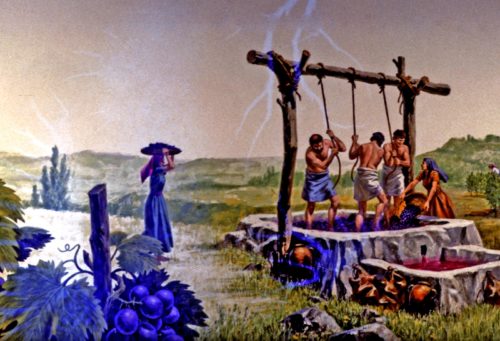
VisualBibleAlive.com


Last week I created a spiritual life map of my journey with God. Some of my greatest discoveries about who God is came in my darkest places. I noticed that “valleys” were often followed by strength and advance. Gideon was in a low place when the angel of the Lord came and patiently answered his honest question. It wasn’t until the weary Israelite realized, “I have seen the angel of the Lord face to face” (v.22) that his desperation turned to fear. As if things weren’t bad enough, Gideon went from fragile to freaked out. Can you relate?

The Lord answered him where he was:      “Peace be to you. Do not fear; you shall not die.”    (v.23)

The only thing worse than being insignificant and insecure in the face of a marauding enemy is understanding how insignificant you are in the face of a holy God. Realizing he was part of a divine encounter with the God who had NOT forsaken him, Gideon built an altar of worship and named it for the discovery of his darkest moment: Jehovah-shalom.  The Lord is peace. (Judges 6:11-24)


When we’re under attack, uncertain, in need, and painfully aware of our weakness, the world only offers illusions of temporary feelings suggesting peace. Jehovah-shalom IS peace, so He can promise, “Peace I leave with you; My peace I give to you; not as the world gives, do I give to you. Let not your heart be troubled, not let it be fearful” (John 14:27).


Gideon couldn’t conceive of what happened in the wine press that day, stunned as he served meat and unleavened bread to the angel of the Lord. The peace he found “passed understanding;” he encountered true peace in the midst of hardship. He discovered what God offers each one of us reading now:  real peace.

“… do not be anxious about anything, but in everything by prayer and supplication with thanksgiving let your requests be made known to God.  And the peace of God, which surpasses all understanding, will guard your hearts and your minds in Christ Jesus”   (Phil. 4:6-7).

 Yes, it surpasses understanding, but it can guard our hearts and our discouraged thoughts when we find ourselves in the wine press, hiding from our hardships and fighting fear. We can know the peace of Jehovah-shalom. We are meant to know the peace of Jehovah-shalom.

Let’s climb out of the wine press and get down on our knees, so He can cover us in peace that’s out of this world!

Jehovah Rophe: The LORD Heals

October 19, 2011 by Teri Lynne Underwood 2 Comments

When they came to Marah, they could not drink the water of Marah because it was bitter; therefore it was named Marah.  And the people grumbled against Moses, saying, “What shall we drink?” And he cried to the LORD, and the LORD showed him a log and he threw it into the water, and the water became sweet.

There the LORD made for them a statute and a rule, and there He tested them, saying, “If you will diligently listen to the voice of the LORD your God, and do that which is right in His eyes, and give ear to His commandments and keep all His statutes, I will put none of the diseases on you that I put on the Egyptians, for I am the LORD, your healer.”

Exodus 15:23-26

Bitter water.  Doesn’t sound appealing at all, does it?

The Israelites had been freed from the bondage of slavery and now they were faced with bitter water.   Does your life ever feel that way?  One huge situation is finally resolved and then comes another … it can leave us overwhelmed and broken.

Elizabeth George writes:

What an object lesson this encounter with Jehovah-Rophe, the Lord who heals, must have been for the Israelites (and for us)!  God’s people were dying of thirst with only bitter, poisonous water on hand.  And God took their physical need and turned it into a spiritual issue.  Out of a bitter experience God revealed Himself in yet another sweet, comforting way, as “Jehovah heals.”

Jehovah Rophe, the LORD heals.   What a precious truth … and promise.

God’s healing is not just physical.   He also reaches down offers total healing … in all areas of our lives.

Consider these three ways God heals and examples of women in Scripture who were the recipients of His total healing.

1.  Physical Healing.    Remember the woman with the issue of blood?  Her story is told in Matthew 9.   She had been sick for years and used every bit of money she had to seek healing.   When Jesus passed by, she reached out and touched the hem of His garment.   I love this story!   She was healed immediately and completely!   Why?   Jesus said, “Take heart, daughter, your faith has made you well.”  (Matthew 9:22)     I am so thankful for a God who heals us physically.

2.  Emotional Healing.   Hannah.  The broken woman longing for a child, praying so fervently that the priest thought she was drunk.   Can you imagine her brokenness?    God heard the heart-felt prayers of a wounded woman.    And He answered them.  I think though the most beautiful part of this story is the change we see in Hannah … from a woman desperate to have a child to a woman willing to give her son back to the God who gave him to her.   That, my friends, is the power of God to heal us emotionally.   {You can read Hannah’s story in 1 Samuel 1 – 2.}

3.  Spiritual Healing.   The most profound healing God ever does in any of our lives is spiritual.  That moment when He moves us from death into life, when we become new creations, the old gone and the new in its place (2 Corinthians 5:17).   Mary Magdalene’s story is such a beautiful example of that total renewal, total healing.   From a woman possessed by seven demons (Luke 8:2) to the woman who first saw Christ after His resurrection (John 20:15) … Mary Magdalene offers us a poignant and powerful image of the full spiritual healing offered to each of us by Jehovah Rophe.

Are you in need of healing?   Are there some bitter waters in your life?  Will you call upon the God who heals and trust Him to mend the brokenness?

Praise the Lord!  For it is good to sing praises to our God; for it is pleasant, and a song of praise is fitting.  He heals the brokenhearted and binds up their wounds.   Psalm 147:1,3

Today, right now, Jehovah Rophe is offering you the gift of healing.   Will you embrace it?  And praise Him for this amazing gift?

~~~~~~~~~
The quote above is from this book by Elizabeth George. I highly recommend it for either personal study or for a group.

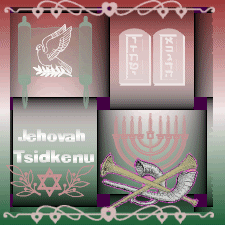
Jehovah-Tsidkenu – The LORD Our Righteousness

October 17, 2011 by Stephanie Shott 9 Comments

Jesus, Pilate and Job all presented questions in Scripture that every heart must answer:

And he asked them,”But who do you say that I am?” (Mark 8:29)

Pilate said to them, “Then what shall I do with Jesus who is called Christ?”  (Matthew 27:22)

“How then can man be righteous before God?” (Job 25:4)

Today, while we will concentrate on Job’s question, we will consider all three. 

Image from Photobucket

Just on the heels of dealing with the sin of the unfaithful priest, in Jeremiah 23:6 Jehovah introduced Himself by a brand new name…Jehovah-Tsidkenu. It’s only used one other time in Scripture and is also tucked in the pages of Jeremiah (Jeremiah 33:16).  It is a name God gives Himself and a name He gives His children.

What we are about to examine is some intriguing stuff, sweet friends. No story told can equal the beauty in which God unveils Himself to His people. So stay with me as we follow the trail of truth God leaves to lead us to Himself!

Jeremiah was speaking to a nation whose king was wicked. His name was Zedekiah, which means Jehovah is Righteous. His original name was Mattaniah (Gift of God) but when his father, Nebuchadnezzar,  made him king, he changed his son’s name to Zedekiah.

It was a familiar story. God had blessed His people but it didn’t take long before they had turned their backs on Him and began to sin.

God’s eyes were not blind to Zedekiah’s wickedness and He told him through Jeremiah the prophet, “I myself will fight against you with outstretched hand and strong arm, in anger and in fury and in great wrath.” (Jeremiah 21:5)

God’s eyes were not blind to His children’s sin either and in Jeremiah 32:30, God declares, “For the children of Israel and the children of Judah have done nothing but evil in my sight from their youth. “

In both Scripture references where God uses the name, Jehovah-Tsidkenu, He gives us a astounding parallel. He is our merciful God who delights in His people and chooses to bring redemption, restoration and righteousness to His wayward children.

  • In the first mention (Jeremiah 23:6) God promises to exchange the one who should have lived up to his name as a righteous king who trusted Jehovah (Zedekiah) with THE LORD WHO IS OUR RIGHTEOUSNESS. That promise was fulfilled in Jesus Christ who the Bible states – is our righteousness (1 Corinthians 1:30, 2 Corinthians 5:21, Philippians 3:9). Jesus is the New Testament fulfillment of the Old Testament name, Jehovah-Tsidkenu – In contrast to Zedekiah (the unrighteous king), Jesus is the Righteous King who is also our righteousness.
  • The second mention (Jeremiah 33:16) is to change the whole nation from wayward and wicked hearts and give them a new heart as well as a new name, Jehovah-Tsidkenu. Because of Christ, we can become just as righteous as He is. Just as the nation was named Jehovah-Tsidkenu, He names us the same.
Isaiah 64:6 tells us…
“But we are all as an unclean thing, and all our righteousnesses are as filthy rags; and we all do fade as a leaf; and our iniquities, like the wind, have taken us away.”
But because Jesus has become our righteousness, when we receive Him, we become as righteous as He is in our Heavenly Father’s site. We put on His robe of righteousness (Isaiah 61:10) and when the Living God looks at us, He sees us just as perfect and just as pure as He sees His Son (Romans 5:21).
Knowing that God is our righteousness is not only good news for the unbeliever who turns from their sin and turns to God through faith in Christ, but it is also good news for the believer, who like the children of Israel, sometimes find themselves wandering far from the One they love. Jehovah-Tsidkenu remains our righteousness – even when we aren’t behaving so righteously.
Who He is in us establishes us positionally though practically we may be acting otherwise. We remain righteous in His sight, even when we behave badly. Yet because He is in us, He changes the desires of our hearts to be righteous in deed, knowing that our righteousness came at oh-so great a cost and stems from oh-so great a love.
  • Job’s question has been answered by The LORD Our Righteousness. Only Jehovah-Tsidkenu canmake a man righteous. But we must each personally answer the eternity-deciding questions posed by Jesus and Pilate.
  • Jesus asked…”But who do you say that I am?” (Mark 8:29) (Is He the Son of God – the Righteous One with Healing on His wings – the Christ?)
  • Pilate replied… “Then what shall I do with Jesus who is called Christ?”  (Matthew 27:22) (Have you let Him be your Righteousness? If not, will you?)

Have you answered those questions yet? How does knowing Jesus is our righteousness affect your day to day actions?


What is your name again?

October 14, 2011 by Kathy Howard 3 Comments

There’s so much about God that I don’t understand. For instance, why He loves me and how He keeps the universe spinning along. But possibly the hardest thing to get my puny mind around is His eternal, self-sufficient existence.

There has never been a time that God was not, or a moment when He will not be. He exists because of Himself and He needs nothing outside of Himself.

God’s name “Yahweh” (also known by the Christian transliteration “Jehovah”) signifies His timeless, ever-present existence. The root word of Yahweh means “to exist,” “to be.” In fact, some scholars suggest that “I am that I am” in Exodus 3:14 would be better translated as “I am He who exists” or “I am He who is.”

illustration by visualbiblealive.com

This is the name God gave when Moses asked Him:

“Suppose I go to the Israelites and say to them, ‘The God of your fathers has sent me to you,’ and they ask me, ‘What is his name?’ Then what shall I tell them?” (Exodus 3:13, NIV)

Since God’s name identifies his nature, when Moses requested his “name” he was asking about God’s character. Can we trust you to be with us? Can we believe that you can deliver us?

God’s answer: “Yahweh.” I am the One who exists. I have no source, yet I am the Source of everything. If nothing else was, still I would be.

God chose the name Yahweh for Himself. It is His personal name by which He related specifically to His chosen people. It is His covenant name, particularly in His relationship with the nation of Israel.

Yahweh is first found in the second chapter of Genesis. Abraham (Gen 12:8) knew God by this name. Adam probably did as well since we are told during the lifetime of his son, Seth “men began to call upon the name of the LORD (Gen 4:26).”

Yahweh is God’s most sacred name. Scripture speaks of it as “this glorious and fearful name” (Deut 28:58) or simply “the name” (Lev 24:11). The Jews would not speak it out of reverence, but generally substituted another name such as Adonai.

Because the sacred name was not spoken, precise pronunciation is uncertain. This problem is compounded by the fact that Hebrew was written without vowels until about 850 BC. YHWH or Yahweh, the personal name of God occurs more than 5,000 times in the Old Testament. In your Bible, it is typically designated by all caps: LORD.

According to the Theological Wordbook of the Old Testament, the name Yahweh connotes “God’s nearness, his concern for man, and the revelation of His redemptive covenant.” Oh, there is much in a name!

What does it mean to you personally that God is “He who exists?”

Beyond crumbling

October 12, 2011 by Julie 3 Comments

Centuries old bricks...

Yesterday morning I met friends for coffee to talk about a ministry close to our hearts; we met in an historical building turned coffee shop, perched on a sidewalk lining a brick street that has witnessed centuries of change. I love the sound of the old wooden floors, the aged bricks like faces who once filled the rooms, and the high ceilings that have echoed generations of voices. Sitting in the soft leather chair, I reflected on how much time has passed in the seasoned structure … and yet how little.

Ancient Corinth, crumbling after 1000s of yrs ...


When we attempt to reach out to the past, the time we can touch is so recent. Time is only familiar in our own lifetime. Even when I’ve had the privilege of walking on streets that are thousands of years old, I notice they still  crumble and decay; they are not everlasting.

God is not simply “historical” or aged or seasoned; He is the Ancient of Days. The God of the universe is eternal and without end.  While a name in our day makes us distinct from another person, a name in Biblical times revealed identity and carried the weight of authority and power. As God shared His names in the story of scripture, He unveiled who He is and what He’s like. Like a person’s portrait, God’s names illustrate His character. To know His names is to know Him.


As a result of God’s blessing in his life, Abraham was recognized as prosperous; King Abimelech made a covenant with him to insure peace, since it was obvious that God was with Abraham. After the agreement was forged, Abraham planted a tamarisk tree at Beersheba and called out to God, using the name “El Olam” for the first time. (Gen. 21:22-34) He acknowledged “The Everlasting God,” the God who is eternal. “Olam” is the quality of being everlasting and unable to deteriorate, change, or crumble.


After Abraham recognized God’s “everlastingness,” God tested him with the call to sacrifice his only son Isaac. Abraham’s greatest test followed his understanding of God’s timelessness. To “get this” about God results in the ability to trust Him in the hardest places, even at an altar where we lay down our treasure. To know that God is eternal and everlasting is to know that He exists before the hardships of our past, beneath the trouble of today, and beyond the possibilities of our future.

Trust in the LORD forever, for the LORD GOD is an everlasting rock.  ~ Isaiah 26:4

In other words, be confident and believe in Jehovah the Self-Existent One, because Jehovah is the Olam rock, the Rock who is perpetual, indefinite, eternal, forever.

Someday the old walls of my historic coffee shop will buckle, the aged bricks will crumble, the preserved glass will cease to be preserved, and my body own will wear out and run down.  But our God, El Olam, has and will live unchanged forever. We can trust the God with a name like that!

Lord, you have been our dwelling place in all generations.
Before the mountains were brought forth, or ever you had formed the earth and the world, from everlasting to everlasting you are God. ~ Psalm 90:1-2


How would you finish this sentence?

I can trust El Olam with my __________________, because He is everlasting before, beneath, and beyond where I am living today.


Next Page »

This Month’s Theme

  • Jesus is the Way
  • And He Shall Be Called Series Intro

Enter your email address to have new posts emailed to you:

We’ll come to you

Enter your email address to have new posts emailed to you

Categories

Bible Memory – Lent 2021

Memorizing Isaiah 12

Let the Children Come

Let the Children Come

Want more #HideHisWord resources?

Memorizing Psalm 1

Find Us on Facebook


Search

Recent Posts

  • Series Wrap-Up: The Lord Is My Light
  • His Marvelous Light
  • When the Darkness Deepens
  • Though I Sit in Darkness…
  • Let Your Light Shine
  • Life-Giving Light

Archives

© 2026 · Pretty Creative WordPress Theme by, Pretty Darn Cute Design