• Home
  • About
    • Our Contributors
    • Our Beliefs
  • Blog
  • Bible Studies
    • Scripture Dig
  • Archives
  • Shop
  • Advertise
  • Contact
    • Email
    • Facebook
    • Instagram
    • Pinterest
    • Twitter

Do Not Depart

Encouragement and Tools to Abide in God's Word

You are here: Home / Blog

Always Chosen and Loved

July 18, 2013 by Caroline 2 Comments

Always Chosen and Loved via Do Not Depart

Welcome to Do Not Depart! Be sure to subscribe to the Do Not Depart RSS feed or email updates to receive regular encouragement and tools to abide in God's Word.

Welcome back to Do Not Depart! If you haven't already, subscribe to the Do Not Depart RSS feed or email updates to receive regular encouragement and tools to abide in God's Word. This post may include affiliate links. To read our full disclosure policy, click here. Thank you for supporting this site!

“For you formed my inward parts;
    you knitted me together in my mother’s womb.
I praise you, for I am fearfully and wonderfully made.
Wonderful are your works;
    my soul knows it very well.” – Psalm 139:13-14

I used to deal with self-esteem issues in middle school, particularly regarding my abilities and my appearance. I realized how foolish that was in high school, but still desired “better” for my physical health. Later, as my husband and I worked out together, I obtained a fitness- and health-related degree, and I then began birthing babies, I finally realized how amazing our bodies are and fretted much, much less on comparing my appearance to another.

But, recently, I caught myself glancing in the mirror and immediately thinking “disgusting.”

Or, worse, kicking myself whenever I fail (which occurs way more often than I look in the mirror).

It’s times like these when I need to read, read, and re-read Scripture to solidify its meaning.Always Chosen and Loved via Do Not Depart
And sometimes I need to read and re-read my own posts, like this one from last year:

“God chose us before the foundation of world. Does that baffle anyone else’s mind? He chose us. Us. You. Me. Them. Not only did He choose – in love – but He chose us for the purpose of becoming holy before Him.”

Please read the rest of that post by clicking here. (Go ahead and read it. It’s not too long, and it’s worth the read. It’s worth the re-read for me, at least. If you want to see more posts from the “I Am Adopted” theme we wrote on that month, click here or visit our “adopted” Pinterest board here.)

We are always chosen and loved. Yesterday, last year, today, tomorrow. Loved by the God who created us.

How does this knowledge change your day today? Please click here to share your thoughts, prayers, and favorite verses in the comments.

Want more reminders of God’s truth and love? We gather ideas on our “Inspiration” board on Pinterest.

Studying the Bible {for Little Learners}

July 17, 2013 by Guest Post 7 Comments

Let The Children Come Resources - a list of many resources for varying learning styles
(Disclosure: Affiliate links are included in this post. Please see the end of the post for details. Thanks for supporting this site!)
Let The Children Come Resources - a list of many resources for varying learning styles

That lovely spring day, as I was sitting in the lecture hall, the professor was saying something about COGS (that’s “Cost of Goods Sold” to you non-finance majors), income statements, cash flow statements, equity, and all that fun stuff. While the professor lectured, I, of course, was looking around the classroom, checking the time, doodling on the margin of my notebook–anything but taking in the words that he spoke. It wasn’t that I was bored with the subject (what can be more fun than studying finance!), but I was not and am still not much of an auditory learner! (I did pass the class, and go on to get my business degree.) I can’t even listen to audiobooks. Once I got home and I read through the chapter, it made more sense to me. There were charts and numbers to look at on the pages.

Kids are exactly the same way when it comes to learning. Some learn better through reading, and others by doing. Although there are serious topics that we can discuss about in the Bible, we also have to make it fun and interesting for kids (and adults) to want to learn it.

As a former Child Development student (yes, I almost also was on my way to getting this degree), we were taught about all the different learning styles. There are even combinations of the learning styles too. Today, I want to share with you three learning styles, and a few resources that are available for those types of learners.

Visual Learners

Visual learners learn best through seeing things. Maps, charts, sign language/hand motions, videos, outlines, flashcards, notes, and highlighting are all things that are helpful for visual learners to absorb the information.Jesus Storybook Bible cover image

Resources for visual learners

  • DVDs – [amazon_link id=”B00BBJ63IM” target=”_blank” ]What’s in the Bible DVD series[/amazon_link]
  • Bible Storybooks – [amazon_link id=”1414348304″ target=”_blank” ]My First Hands-On Bible[/amazon_link], [amazon_link id=”B007UQ46P2″ target=”_blank” ]The Beginner’s Bible[/amazon_link], [amazon_link id=”B007WRPUFE” target=”_blank” ]The Jesus Storybook Bible[/amazon_link]
  • Game –  [amazon_link id=”B000CR7J32″ target=”_blank” ]Superbook[/amazon_link]

Auditory Learners

Auditory learners learn best through hearing things. They like things read out loud or set to music. Audiobooks, videos, and discussion are great ways to engage auditory learners.

Resources for auditory learners

Seeds Family Vol 7 album image

  • CDs – Seeds Family Worship, [amazon_link id=”B0002XVKLI” target=”_blank” ]PraiseBaby[/amazon_link], Songs for Saplings
  • Podcasts – Daily Audio Bible, Adventures in Odyssey

Tactile/Kinesthetic Learners

Tactile/kinesthetic learners learn best through through experiencing/doing things. Games, sports activities, experiments, role-playing, building models, crafts, dance, adventure books, field trips, and memory games are great for teaching a tactile learner.

Resources for tactile/kinesthetic learners

    • Awana clubs – Leaders teach creative Bible lessons using skits, visual, puppets, object lessons
    • Art – [amazon_link id=”B004PZWV08″ target=”_blank” ]See the Light[/amazon_link] (Drawing Children to Him), Mike’s Inspiration Station
    • Vacation Bible School during the summer
    • Putting on a play
Here are a few other resources and ideas that help guide kids in learning about the Bible or Biblical character:
  • We Choose Virtues
  • Journaling
  • GrapeVine Studies – Stick Figuring through the Bible
  • The American Bible Challenge on Gameshow Network
What resources have you found useful in teaching kids about the Bible? Share your ideas in the comments!

Joyce is a business major turned PreK teacher turned stay-at-home mommy to 2 little girls (ages 5 and 2.5.) She likes to dabble in a little bit of everything, from writing newsletters (for our family and for MOPS) to crafting to trying out new recipes…basically just trying new things.

She loves God, family and friends, date nights, board games, books, and blogging. You can visit her over at Keeping Up with the Moys.

Disclosure: Some affiliate links are present. If you click on those links and then purchase the item, we will receive a small commission. Regardless, we only share products we personally support, love, and think you would benefit from, too. Thank you in advance for supporting this ministry!

Throw Out the Bad Fruit – Fruit of the Spirit, Lesson 3

July 16, 2013 by Kathy Howard 2 Comments

Fruit of the Spirit, Galatians 5

This is the 3rd lesson in a study on “The Fruit of the Spirit.” Access the first and second lessons. Download today’s lesson in a PDF.

If you’ve had any experience with a GPS or use a navigation system for driving directions then you are familiar with the following phrases:

  • Recalculating
  • Make a legal u-turn as soon as possible

My anxiety level rises dramatically when I hear that little computerized voice. In layman’s terms, “recalculating” means “You aren’t following my directions!” And the command to make a u-turn means, “You’re going the wrong way! Turn around immediately and go the other way!”

Plant: What does fleshly fruit look like?

Like these GPS warnings to drivers, certain things should raise a red flag in our faith if they are present in our lives. In Galatians, Paul refers to these signs as “acts of the sinful nature.” These attitudes and behaviors are contrary to the Spirit and what He wants to produce in our lives.

Read Galatians 5:19-21 from the New Living Translation below.

19 When you follow the desires of your sinful nature, the results are very clear: sexual immorality, impurity, lustful pleasures, 20 idolatry, sorcery, hostility, quarreling, jealousy, outbursts of anger, selfish ambition, dissension, division, 21 envy, drunkenness, wild parties, and other sins like these. Let me tell you again, as I have before, that anyone living that sort of life will not inherit the Kingdom of God.  Galatians 5:19-21, NLT

Cultivate: Is our life growing any fruit of the flesh?

Circle any fruit of the sinful nature in the passage above that sometimes pop up in your life.

This list in Galatians is not exhaustive. Paul merely gave the believers in Galatia a sample of the fruit of the flesh. And everyone will struggle with different things. Let’s read two more passages from Paul’s letters to broaden our understanding of “the acts of the sinful nature.”

Read the following passages (maybe in more than one translation) and list any attitudes or behaviors that your sinful nature tends to produce.

Ephesians 4:22-32 and 5:1-7:

Colossians 3:5-10:

The presence of these attitudes and behaviors reveal that sometimes we allow our sinful nature to win a spiritual battle. If you’re like most Christians – including me – your life does produce some fleshly fruit from time to time. We still occasionally choose our own way over God’s and reject the “way out” He promises to provide when we’re tempted (1 Corinthians 10:13).

Grow: What can we do to get rid of the bad fruit?

Believer, whether our lives have produced a handful of fleshly fruit or an abundant crop, God’s desire for us is less “acts of the sinful nature” and more “fruit of the Spirit.” In the remainder of this lesson we are going to prepare our lives for the Spirit’s harvest by weeding out the bad fruit and tilling our heart for the Spirit’s work.

Read James 4:1-10.

Jesus’ brother James wrote to Christians caught in a cycle of sin. They had proudly rejected the leadership of the Spirit and chosen their own way. Distance from God, difficult relationships with God’s people, and a harvest of fleshly fruit were the result. But James commanded a remedy. I can hear him saying, “Make a legal u-turn as soon as possible!”

List phrases and words (vs 1-4) that describe their relationship with God and other believers.


Look back through verses 6-10 and list all the verbs you can spot that describe the actions a Christian should take when we’ve chosen our own way over God’s (I spotted 10).


These actions characterize true repentance. Sometimes Christians merely give lip service to repentance. But until we humble ourselves before God, grieve over our sin, and turn away from it we have not experienced real repentance. We must make a u-turn!

Read 1 John 1:9. How does God promise to respond to our repentance?


Today’s lesson has been very personal – and maybe even painful. We all have bad fruit in our lives. But, praise God, He does indeed allow u-turns! Take some time this week to sit quietly with God and work through getting rid of the fleshly fruit.

Let’s talk more about the process of repentance. Was there anything in James 4:6-10 about repentance that surprised you? Maybe an attitude God calls us to adopt or an action you previously have not considered part of repentance.

Romans 8:28 – Who is it for? {Memory Classics}

July 15, 2013 by Lisa Burgess 7 Comments

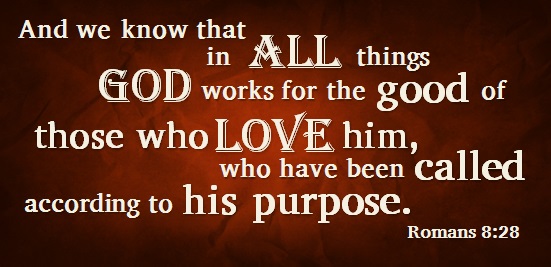
All things work together for good. Who wouldn’t want that promise? It’s reassuring when life is hard or times look confusing.

Paul put two qualifiers on who that promise is for:

  1. those who love God
  2. those called according to his purpose

So if you’re a believer, know this promise is for you!

Trust that good will happen because God is for you to conform you to the image of His Son (Romans 8:29, 31).

We invite you this week to memorize with us and use this verse to discover more reasons to praise God through your circumstances.

How have you experienced the truth of Romans 8:28?
What circumstance do you need to apply this to now?
Please leave a comment below and join the conversation on our memory group Facebook page.

Reminding myself of the dangers of “busy”

July 11, 2013 by Julie Leave a Comment

“Half way through” has a way of making me stop and think. July 4th has a way of making me stop and consider how I’m using my summer, since it’s “half way through.” Our daughter is off to college in one month; we’ll have one son at home. As far as launching kids go, you might say we are “half way through.” It’s healthy to stop in the middle to look back on where we’ve been, how we’re doing, and where we’re going from here. This month at Do Not Depart, we’re considering the fruit our lives bear, but we’re also sharing some of our favorite posts from the first half of the year. When I started looking back at my posts, I landed all the way back in January.  God used my own words to remind me of the danger of being too busy to do the most important things.

“There’s one more thing,” the plumber said, “Do you know where your main water cut off is?” Indicted by his simple question, I wondered how I could have ignored something so basic, especially when we’ve had a major “water episode.”

“What would you do if you needed to turn off your water?” He asked.

“Call you? Call my husband? Call my neighbor?” I smiled. He wasn’t charmed.

“I’m going to show you where your water source is. You don’t want to wait until you need it to find out where it is.”

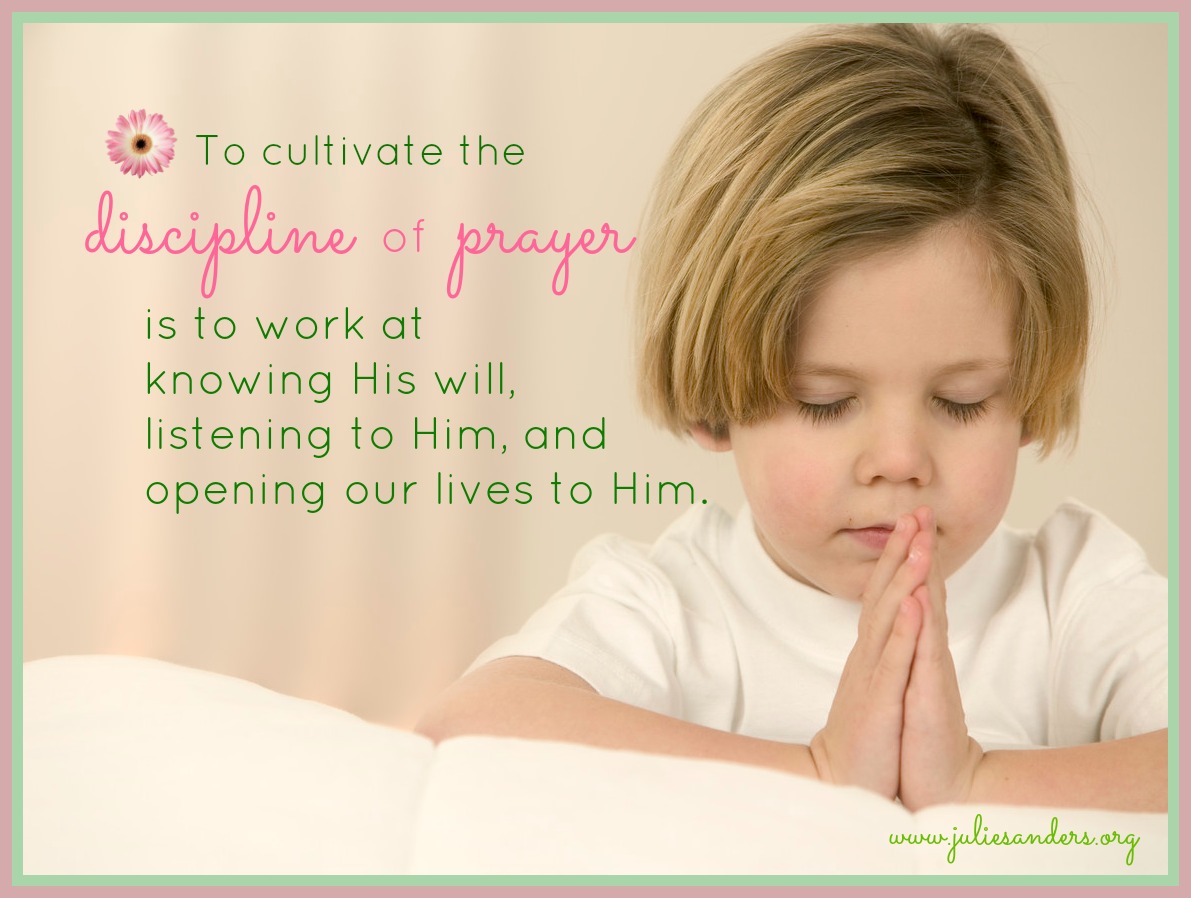
If you haven’t cultivated prayer’s knee-worn path before a flood rushes in, now is a good time to begin. We don’t want to wait until we need it to find out where it is. Theologian Armin Gesswein said, “God’s throne is the busiest place in all the universe because everything centers there. Yet, the lack of prayer on earth keeps it from operating at full capacity.” Most of us say we’re too busy to pray. I was once too busy to find the water source in our house, and I paid a high price. Read the rest …


“I love the LORD, because he has heard my voice and my pleas for mercy. Because he inclined his ear to me, therefore I will call on him as long as I live” (Ps. 116:1-2).

We’re just half way through the year. It’s a great time to take a step on the knee-worn prayer path. Check out our tools like Prayer Calendars or A Prayer Album for Women on the Go.

What is “Fruit?” – Fruit of the Spirit, Lesson 2

July 9, 2013 by Kathy Howard 1 Comment

Fruit of the Spirit, Galatians 5
This is the second lesson in our Summer Study, “The Fruit of the Spirit: Plant, Culivate, & Grow.” You can see the introductory/first lesson here.  You can also download today’s lesson as a PDF to print!
When my kids were little they loved watching Veggie Tales. Their favorite Veggie Tale characters were Bob and Larry – a tomato and cucumber, respectively. If you are also a Veggie Tales fan, you might want to sit down because I am about to shake things up. Larry and Bob aren’t vegetables! To be botanically correct, tomatoes and cucumbers are fruits!It doesn’t matter if we consider a tomato to be a fruit or a vegetable. But we do need a good understanding of the “fruit of the Spirit.” Over the next few weeks we will plant God’s truth about spiritual fruit in our hearts, cultivate our lives to receive it, and take action to help it grow! Today we’ll take a closer look at what the “fruit of the Spirit” is and consider our spiritual battle.

Read our focal passage, Galatians 5:16-26.

The word “fruit” used in Galatians 5:22 is the Greek word “karpos.” According to Mounces Complete Expository Dictionary, “karpos” refers to the natural product of something that is alive. Literally, it’s used of the product of trees, vines, and crops. But it’s also used metaphorically to refer to the natural product of a spiritual being. Paul uses it to contrast what our sinful natures naturally produce with what the Holy Spirit naturally produces.

Plant: Prerequisite to Growing Spiritual Fruit

The obvious prerequisite to producing the “fruit of the Spirit” is the presence of the Spirit. Let’s see what the Bible says about the indwelling presence of the Holy Spirit and His work in us.

Read Ephesians 1:13-14. Check all the statements that apply.

___ We receive the Holy Spirit through faith in Christ.
___ The Holy Spirit “marks” us as belonging to God.
___ The Spirit is our “guarantee” that we will receive all God’s promises.

When we place our faith in Jesus as Savior and Lord, God guarantees our salvation by placing His Spirit within us. Every Christian is indwelled by the Holy Spirit (See Romans 8:9-11).

Cultivate: Two Key Facts about the Fruit of the Spirit

Let’s get a better understanding of the Fruit of the Spirit by exploring two key facts.

Fact #1: “Fruit” is the natural by-product of the Spirit in a Christian’s life.

Read 2 Cor 3:17-18. According to verse 18, what is the work of the Spirit in a believer’s life?

From the moment of salvation until the end of our lives on this earth, the Spirit of God works in believers to transform our nature and character into that of Christ’s. Therefore, the Holy Spirit is constantly working to rid our lives of the “acts of the sinful nature” (Gal 5:19) and conform us into the image of Christ. “Fruit of the Spirit” is evidence that our character is becoming like Christ’s.

Fact #2: “Fruit of the Spirit” is not the same as “spiritual gifts.”

Although the Spirit is the source of both His “gifts” and “fruit”, they are not the same. There are a multitude of various gifts but an individual only receives what the Holy Spirit determines to give (1 Cor 12:4-11). However the “fruit” of the Spirit should be common to all Christians. The word “karpos” is singular signifying that “fruit” is a unified whole. As we grow in Christ- likeness we will produce all the characteristics of His nature.

Grow: Prepare for Battle

If we want our lives to be filled with the fruit of the Spirit, we must realize there’s a spiritual battle going on inside every Christian. Our sinful human nature wants to satisfy our selfish desires. The indwelling Holy Spirit calls us to follow Him. Who will win?

Read Galatians 5:16-18. Describe this spiritual battle in your own words.

Read Eph 1:18-21. List words and phrases that describe the power of the Holy Spirit within you?

Read the following verses and record God’s promises to you.

       2 Peter 1:3-4 –

       1 Corinthians 10:13 –

We have a weapon of unlimited power on our side. Our fleshly nature does not have to win. Satan can appeal to our sinful desires, but his power over us is limited. We have a greater power at work in us. We have the power to resist our fleshly desires through the presence of the indwelling Holy Spirit.

Look back at Galatians 5:16-19. We have a choice to make. What is it?

We can choose to refuse our sinful nature. The powerful presence of the Holy Spirit supplies us with the power to be obedient to God. We can choose God’s “way out.”

Let’s talk: Think about the last time you faced a spiritual battle. What was it? Did you allow your flesh to win or did you walk in the power of the Holy Spirit? If you gave in to sin, can you identify the “way out” God offered?


How do you end the Lord’s Prayer? {Memory Classics}

July 8, 2013 by Lisa Burgess 5 Comments

This week we’re memorizing (or refreshing) the last verses of the Lord’s Prayer.

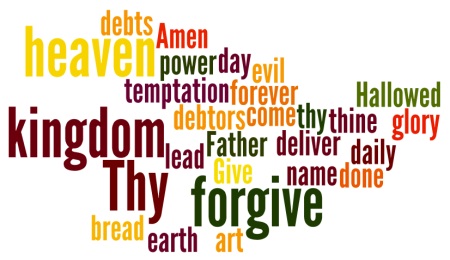
12  And forgive us our debts, as we forgive our debtors.
13  And lead us not into temptation, but deliver us from evil: For thine is the kingdom, and the power, and the glory, for ever. Amen.
Matthew 6:12-13 (KJV)

Depending on which gospel account or which translation you’re reading, there are two different endings to the Lord’s Prayer.

Luke stops with, “And lead us not into temptation; but deliver us from evil” (Luke 11:4 KJV). But Matthew’s account sometimes includes one more sentence: “For thine is the kingdom, and the power, and the glory, for ever. Amen” (Matthew 6:13 KJV).

Because many scholars say the last sentence is not included in the oldest and best manuscripts of the book of Matthew, it’s often not considered authentic. My personal favorite translation—English Standard Version—doesn’t include it at all in Matthew 6:13.

So what do we do with it?

Some just omit the last sentence when they recite the Lord’s Prayer; others continue to say it.

I personally include it because it is valid truth I want to affirm—His IS the kingdom and the power and the glory forever!—and whether or not Jesus spoke those actual words to His disciples, I can mean them when I pray. But if others choose not to, I understand that as well.

What about you? How did you first learn the Lord’s Prayer?
Do you include the last sentence?
What words or phrases stand out to you as personally meaningful in this prayer?

Please share your thoughts below and with our Facebook group.

When you need to decide: Five scriptures to help

July 4, 2013 by Lisa Burgess 6 Comments

How many decisions do you make in a day?

You can breeze through many on autopilot.
But occasionally one will paralyze you.

When you get stuck—you want to make the God-honoring choice but you don’t know which it is!—what do you do next?

Let these five principles from scripture help:

1. Tune out distractions and tune in God

The unfolding of your words gives light; it imparts understanding to the simple.
Psalm 119:130

First turn down the noise—social media, TV, busyness—that may be drowning out a clearer answer to your prayers. Then press in hard to hear God.

If your hearing has gone bad from poor spiritual habits, build those back up. Search the scriptures for godly principles that apply to your dilemma. Look for God’s character in the stories you read and see how you can best mirror His character with the choice you need to make.

2. Seek godly counsel from others

Listen to advice and accept instruction, that you may gain wisdom in the future.
Proverbs 19:20

Look to see who God has already placed in your life you can consult. Who among your spiritual friends has walked this path? Is there a mature Christian in your family who can advise you? Are there experts in the field—in person, in print—that you’ve yet to meet who can give you additional information?

Notice threads of similar advice and principles you may have overlooked in your initial thinking.

3. Narrow down your choices

And whatever you do, in word or deed, do everything in the name of the Lord Jesus, giving thanks to God the Father through him.
Colossians 3:17

Now lay out your options, crossing off ones least likely to honor God, and circling ones most likely to bring Him glory.

Humbly confront your motives: do certain choices appeal more to YOU than to Him (James 4:3)? Eliminate options more about saving face and keeping control than about pleasing the Father.

If certain choices are time-contingent, and the pace seems out of God’s timing—either too rushed or too prolonged—discard those as well. While waiting on the Lord may be difficult (Psalm 27:14), He can build up your strength during the wait (Isaiah 40:31).

4. Do something

But be doers of the word, and not hearers only, deceiving yourselves.
James 1:22

On  the other hand, if you’re only waiting because you’re too scared to act, set fear aside and step out in faith (Joshua 1:9).

If you’ve sought God through prayer, Bible study, godly counsel, and time, stop delaying the decision and just make it! Trust that God is true to His word—you ask in faith for wisdom; He generously supplies it (James 1:5-6).

5. Give thanks for the results He’ll bring

The LORD is my strength and my shield; in him my heart trusts, and I am helped; my heart exults, and with my song I give thanks to him.
Psalm 28:7

Instead of second-guessing the decision you’ve now made, give thanks for it. Look forward to how God will bless it. Believe He will work good out of your choice (Romans 8:28). Rest in the peace He’s sending to guard your heart and mind (Philippians 4:6-7).

As you enhance your spiritual sensitivity to God’s guidance, making decisions still won’t always come easily, but you can grow in your confidence that the Lord is leading you.

He will bless your obedience as you strive to honor Him with your choices.

Trust in the LORD with all your heart, and do not lean on your own understanding. In all your ways acknowledge him, and he will make straight your paths.
Proverbs 3:5-6

Do you have a hard decision you’re trying to make right now?
What helps you decide when you don’t know what to do?
Are there special scriptures you turn to? Please share!

revised from the archives

Beautiful Books on Christian Living

July 3, 2013 by Caroline Leave a Comment

(Heads up: This post includes affiliate links. See the bottom of the post for full disclosure. Thanks for supporting this site!)

We have another resource for you!

The Bundle of the Week site is offering 5 ebooks on Christian Living for just $7.40!
BundleoftheWeek.com, 5 eBooks for $7.40!

This week’s bundle is packed full of tools and encouragement for living a life of active faith. Discover and embrace your identity in Christ, the path to truly forgiving those who have hurt you and simple ways to let your light shine through this inspiring collection of ebooks and devotionals.

Get this bundle for 60% off this week only.

Complete by Arabah Joy
Research shows it takes only 21 days to change the way we think. In Complete, Arabah Joy takes readers on a 21 day journey to think about themselves truthfully: that in Christ, we are complete. This journey takes readers through practical daily applications such as targeted scripture memory, visualization, exercises to renew the mind and address fear, and much more.

Shine by Trina Cress
In Shine: The Beginner’s Guide to Living More Intentionally for God Everyday, Trina shares ideas and inspirations for letting our lights shine in our own little worlds and in the world at large through simple acts like starting a conversation with a stranger, giving unexpectedly, and living intentionally for Christ everyday.

Holey, Wholly, Holy by Kris Camealy
Though the season of Lent occurs once a calendar year, the reality is, as Christians, we live the Lenten experience again and again. In Holey, Wholly, Holy: A Lenten Journey of Refinement, Kris walks along side the believer and offers encouragement and hope for the journey from holey (broken in sin) to wholly (surrendered unto God) to holy (claiming the gift of grace through Christ). This ebook is for anyone who longs to grow closer to Christ, and hungers to accept that grace that His resurrection offers! (Kris has guest posted for us two times before!)

Desires of My Heart by Heather Bixler
So many believers walk their Christian walk without really knowing what it means to delight in the Lord. In Desires of My Heart, a devotional based on Psalm 37:4, Heather helps readers work to get past the barriers that are inhibiting their walk with the Lord, while also encouraging them to live a life guided by The Holy Spirit.

31 Days of Forgiveness by Tracie Stier-Johnson
In 31 Days of Forgiveness, Tracie leads us on a biblical and compassionate walk through the depths of our hurt, pain, unforgiveness, bitterness, resentment, and anger. If you commit to walking this journey, God will redeem your pain—pain you may not know you’re carrying—and your life will never be the same.

The Christian Living bundle is only available through 8am EST on Monday, July 8th. Get yours today:

BundleoftheWeek.com, 5 eBooks for $7.40!

What are your favorite Christian living books or ebooks?

Disclosure: This post contains affiliate links. If you click on these links and then choose to purchase the ebook bundle, we will receive a small commission at no extra cost to you. Thank you for supporting this site!

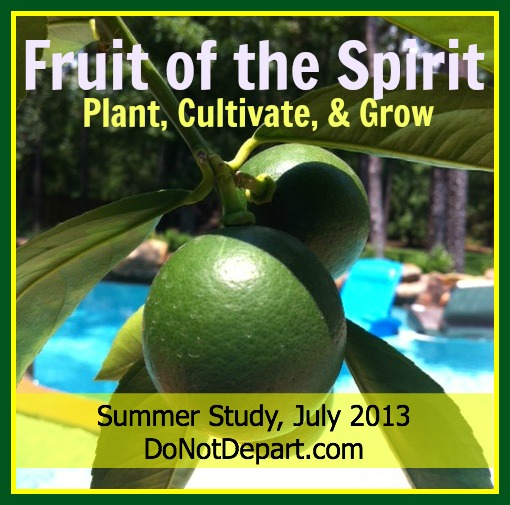
“Fruit of the Spirit” Summer Study – You’re Invited!

July 2, 2013 by Kathy Howard 8 Comments

Fruit of the Spirit, Galatians 5

Last year, I planted two fruit trees – one lemon and one lime. I carefully placed them in large pots on the patio using the soil recommended by the nursery for citrus trees. Both received the same amount of sun and water. Both bloomed. Both had numerous visits from bees and butterflies.

The two trees have had the same care and nurturing, but the fruit production has been drastically different. The lemons seem to be growing overnight. The flexible young tree branches curve down under their weight. My husband and I anticipate large slices of the tangy fruit for our iced tea later in the summer.

In contrast, the limes look pitiful. When the blooms faded, tiny little fruit balls emerged, but only two or three have grown much. Many have turned brown and dropped off. God intended for both trees to grow fruit, but only one is fulfilling its purpose.

God also intends for us, His children, to bear fruit. According to Jesus, when we follow Him closely our lives will produce “much” fruit (John 15:5). Is your life producing an abundant harvest or are you in serious need of some spiritual fertilizer?


You Are invited!

This month here at Do Not Depart, we will be studying the fruit of the Spirit. You are invited to join us each Tuesday as we explore Galatians 5:16-26 and related passages. Whether we need some major pruning or just a little shaping up, all of us could benefit from studying and applying what God’s Word says about the fruit of the Spirit.

Here are a few things we’ll learn in Fruit of the Spirit: Plant, Cultivate, & Grow

  • What are the characteristics of a “fruitless” life?
  • What does it mean to “live by the Spirit?”
  • Just what is “fruit” anyway?
  • Am I “fruity?”
  • What should the fruit of the Spirit look like in my life?
  • How can I improve my harvest?

Each week as we study together we will Plant God’s truth in our hearts, Cultivate our own lives to receive that truth, and take action to help it Grow! The study will be in blog format and also available as a PDF download. Today, we combine the intro post and an optional study on the context of the book of Galatians.

Where do we begin? Context of Galatians

The way God chooses to apply the truths found in His Word can vary with the individual and their circumstance. However the meaning of a biblical passage never changes. It will always mean what God originally intended for it to mean. Before we can make application to our lives we must have a good grasp of the original meaning by considering the larger context. (For more information on biblical context read “Context is King.”)

Galatians is a letter written to a specific people at a specific point in history for a specific purpose. Therefore, we need to know who, when, and why to understand the meaning. (Download the PDF of today’s lesson on the context of Galatians.)

As you work through today’s lesson, you’ll discover that some of Paul’s original audience struggled with legalism and some were abusing their freedom in Christ by indulging sinful desires.

Let’s discuss this today. So far in your Christian life do you feel you have been influenced more by the “law,” your own nature, or by the Spirit? (We may not have the influence of the Mosaic Law, but the “do’s” and “don’ts” or religion are still prominent.)


« Previous Page
Next Page »

This Month’s Theme

  • Jesus is the Way
  • And He Shall Be Called Series Intro

Enter your email address to have new posts emailed to you:

We’ll come to you

Enter your email address to have new posts emailed to you

Categories

Bible Memory – Lent 2021

Memorizing Isaiah 12

Let the Children Come

Let the Children Come

Want more #HideHisWord resources?

Memorizing Psalm 1

Find Us on Facebook


Search

Recent Posts

  • Series Wrap-Up: The Lord Is My Light
  • His Marvelous Light
  • When the Darkness Deepens
  • Though I Sit in Darkness…
  • Let Your Light Shine
  • Life-Giving Light

Archives

© 2026 · Pretty Creative WordPress Theme by, Pretty Darn Cute Design