• Home
  • About
    • Our Contributors
    • Our Beliefs
  • Blog
  • Bible Studies
    • Scripture Dig
  • Archives
  • Shop
  • Advertise
  • Contact
    • Email
    • Facebook
    • Instagram
    • Pinterest
    • Twitter

Do Not Depart

Encouragement and Tools to Abide in God's Word

You are here: Home / Blog

Make a difference—it’s your ministry

April 11, 2012 by Lisa Burgess 15 Comments

Welcome to Do Not Depart! Be sure to subscribe to the Do Not Depart RSS feed or email updates to receive regular encouragement and tools to abide in God's Word.

Welcome back to Do Not Depart! If you haven't already, subscribe to the Do Not Depart RSS feed or email updates to receive regular encouragement and tools to abide in God's Word. This post may include affiliate links. To read our full disclosure policy, click here. Thank you for supporting this site!

Hurt happens

If you haven’t already experienced this today, it’s coming soon…

Somebody says something that grieves somebody else. Maybe intentionally, maybe not. Maybe it was by you, maybe it was to you. Either way, feelings are hurt or anger is stirred or withdrawal has happened.

What now? God wants you to make the first move toward healing, regardless of who made the first cut. As you tell your kids, “Kiss and make up.” Or in grown-up lingo, be a “minister of reconciliation.”

Whatever you call it, it’s your calling.

God went first

God actually started it. He made the first move first.

Before we ever dreamed of being at peace with Him, He paved the path for it (Romans 5:10; Ephesians 2:12-13). Through Christ’s death and resurrection, He reconciled us to himself (2 Corinthians 5:19).

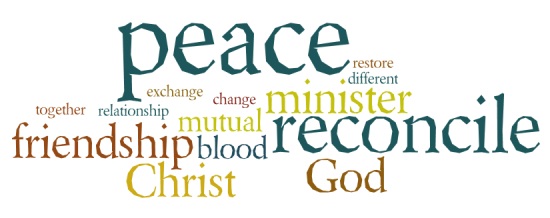
What does “reconciled” actually mean? It’s derived from the Greek word katallasso, which comes from allasso, meaning to make different; to change; to exchange one thing for another. So when God reconciled with you, He made your relationship with Him different; it was changed. Enmity was exchanged for friendship. Death for life (Romans 11:15).

Your turn

But don’t stop between God and you. Once you’re reconciled to Him, He wants you to keep it going. Your ministry of reconciliation means you help others connect to God, and help others connect to each other (2 Corinthians 5:18).

Don’t take this ministry lightly. Even if you don’t want to do it. Even if you’re the innocent one. Even if the one who hurt you doesn’t even care. Follow God’s example to step in first. Give grace as you’ve been given.

As far as it depends on you, seek to make peace with others (Romans 12:18), in situations when you’re the perpetrator and also when you’re the victim. Settle matters quickly with the one who hurt you (Matthew 5:23-24).

But not just so you will feel better (although you usually will). There’s an even larger reason: so the other person can be reconciled to God. Is there any greater act of love than connecting someone back to God (Galatians 6:1)?

Minister today

So about that disagreement you’ve been in or seen today—will you be the first to intercede for restoration? Through you, God is calling others. Make his appeal for peace. You are an ambassador, you know. A minister of reconciliation. Glorify the Father by making a difference!

We’re talking about theology terms this month. What does “reconciliation” mean to you? Need to reconcile with anyone? Practiced the ministry of reconciliation already this week? How do you know when to give up?
Death is Defeated

April 9, 2012 by Kathy Howard 1 Comment

Image from zardoz.net

Do you believe in life after death? If your answer is “yes,” then you agree with 72% of Americans.

Although this widely-held belief in an afterlife includes a wide range of unbiblical ideas such as reincarnation and communicating with the dead, it does demonstrate that we humans don’t want this present existence to be the end. We want more than just this physical life.

But death seems so final. How is “life after death” possible?

Yesterday we celebrated Easter to commemorate the resurrection of Jesus. The Bible clearly teaches that Jesus’ resurrection not only makes our own resurrection possible, but without it our Christian faith is “futile” and “useless.”

And if Christ has not been raised, our preaching is useless and so is your faith… And if Christ has not been raised, your faith is futile; you are still in your sins.    1 Corinthians 15:14, 17, NIV

Jesus’ death paid the penalty for our sins but His resurrection validated its sufficiency. If Christ has not been raised, then we are still dead in our sins, with no hope for eternity. If our faith is only good for this life, then it really is no good at all and we should be pitied (1 Corinthians 15:19).

But Christ has indeed been raised (1 Cor 15:20)! He has conquered death! Death and the grave have been swallowed up in victory! (See 1 Cor 15:54.)

Even before He was arrested Jesus knew that His death would not end in the grave. He anticipated His resurrection and what it would accomplish.

Jesus said to her, “I am the resurrection and the life. The one who believes in me will live, even though they die. John 11:25, NIV

Jesus’ resurrection not only broke death’s hold on our Savior, it also broke death’s hold on those who belong to Him and paved the way for our future. Here’s a summary of what Christ’s victory over death accomplished for us:

  • Confirms the forgiveness of our sins by His death (1 Cor 15:17). His resurrection proved His sacrifice was sufficient.
  • Broke the hold of death on us: Because Jesus conquered death it no  longer has a grip on us (1 Cor 15:54-57).
  • Paves the way for our own physical resurrection: Jesus was the “first fruits.” When He returns, those who belong to Him will also be raised (1 Cor 15:23).
  • Provides the example for our resurrection body: Our glorified body will bear the likeness of Jesus’ resurrected body (1 Cor 15:49).
  • Makes it possible for us to inherit the Kingdom of God: Our perishable physical body cannot inherit the imperishable, but our imperishable, resurrected bodies will be able to (1 Cor 15:50).

Praise God! Death has been swallowed up in victory!

Have you thought much about what Christ’s resurrection accomplished for you?

Is there a truth discussed above that you haven’t thought much about before now?

Recommended reading:

  • 1 Corinthians 15:12-58
  • Romans 6:1-14
  • 1 Thessalonians 4:13-18

Links to surveys on Americans’ beliefs about life after death:

  • The Barna Group (2003)
  • National Opinion Research Center (2008)

I Rest Because He Perfectly Knows (Run to Him – Psalm 139)

April 6, 2012 by Patti Brown 6 Comments

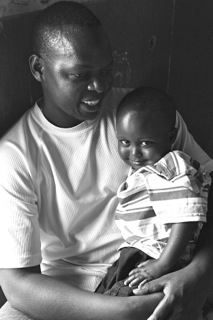
on father's lap

I fling my feet over the side of the bed, take a deep breath, and another day of running begins.

The days are so crowded with to-do’s that I have begun to leave a trail of important things, lost or forgotten. A credit card. A wallet. A ham for Easter dinner sitting in its bag at the grocery checkout. Left behind in my haste to run down that list.

Some days I feel desperate for rest.

And yes, there is a physical exhaustion. But that is not all. There is this deep tiredness, a deep need for stillness and true rest.

Rest in knowing that who I am is enough.

Only one place for that rest… in Him.

I linger in Psalm 139 and marvel. Because He knows who I am. All run-around busy, wanting to serve, distracted by the tiniest wildflower, silly, impatient, little girl-ish, forgetful, hair askew, tired…

on father's lap
photo by Espen Faugstad

He knows

  • what I do (v. 2-3)
  • what I think (v. 2)
  • what I will say (v. 4)

There is nowhere to hide from Him

  • not in heaven (v.8)
  • not in Sheol (v. 8)
  • not to the east (the dawn v. 9)
  • not to the west (the sea v. 9)
  • not in darkness (v. 11-12)

And He has known me from the moment He first created me in my mother’s womb (v. 15-16).

I am so known, I need to not fear inviting His scrutiny (v. 23), because if He finds a hurtful way in me I can trust Him to lead me in His ways (v.24).

Relieved and reminded, I rest. Rest in Him, knowing that I am known.

I rest, knowing that I am provided for. He makes me lie down in green pastures. He leads me beside quiet waters – Psalm 23:2.

I rest, knowing that I am protected. In God I have put my trust, I shall not be afraid – Psalm 56:11.

Secure like a little girl on her daddy’s lap… known, provided for, protected.

I rest, knowing that He knows me, every inch of who I am, all my broken and ugly and messy bits, and He still chose to die for me.

Willingly went to the cross. For the girl who loses her wallet, who snaps at the people she loves, who doesn’t always put Him first.

For one will scarcely die for a righteous person—though perhaps for a good person one would dare even to die— but God shows his love for us in that while we were still sinners, Christ died for us.  – Romans 5:7-8

I rest because I am wanted and loved. Who I am is enough, because He is enough.

Were you as blessed by Psalm 139 as I was this week? What did God show you in your study of this Psalm? As Easter approaches, join me in praising Jesus for dying for us, knowing full well every bit of our sin!


Fenced In? Theology of Forgiveness

April 4, 2012 by Teri Lynne Underwood 1 Comment

Some parts of Scripture leave me feeling fenced in, unable to maneuver, incapable of escape.  Passages concerning forgiveness are among these “cause me to hyperventilate” Scriptures.  Forgiveness is hard stuff.  The idea that receiving forgiveness from God is connected to extending forgiveness to others, well, that fence seems too high to scale most of the time.

www.terilynneu.com

For if you forgive others their trespasses, your heavenly Father will also forgive you, but if you do not forgive others their trespasses, neither will your Father forgive your trespasses.  Matthew 6:14-15 

Why did Jesus say our forgiveness by God is predicated on our willingness to forgive others?  Did He really mean that God will not forgive us if we don’t forgive those who wrong us?     Or maybe He was pointing to a deeper, heart truth:  We fail to grasp the depth of forgiveness received until we extend great forgiveness to others.

Jackie Kendall speaks to the reality of our identity as both forgiven and forgiver:

(W)e have the grace-given capacity to forgive.  It is imperative to recall this as well: not only are we offended, but we all offend.

Free Yourself to Love: the Liberating Power of Forgiveness, p. 21, emphasis in original

Jesus offered the well-known “seventy times seven” call to forgiveness after a parable about a servant forgiven a great debt and yet unwilling to then forgive the much-lesser debt of another.   We are called to identify ourselves with this greatly-forgiven and realize the debt we owe our King is infinitely beyond our ability to repay … and thus we have no just cause to withhold forgiveness from another.

That all sounds good in theory, right?  But sometimes people deeply wound us, so deeply there is no restoration possible or restitution to make amends.   How do we forgive then?  WHY do we forgive then?

How?  We make a choice.  We determine to be obedient and walk in the grace we have been given.

How?  We make the choice over and over.  This is where the seventy times seven comes in.  We continue to choose forgiveness even when we don’t want to and don’t feel like it.   We make the decision to extend mercy even when we’d rather, as my husband says, hoard grace.

The “How?” we generally understand.  It’s the “Why?” that leaves us baffled.

Why offer forgiveness?  Why does it matter?

Why?   Because we need to forgive in order to experience healing.

From another of my favorite books, Kitchen Table Counseling, by Muriel L. Cook and Shelly Cook Volkhardt:

I’ve learned that a lack of forgiveness is the root of most problems.  In almost every problem situation, after peeling off the layers of grief or distress, I find a wounded spirit or unresolved resentment.  (40).

Forgiving is what heals us.  We get that mixed up, don’t we?  We convince ourselves that it’s the apology that leads to our healing.  But it’s not.   It’s forgiving – even without the apology – that changes and restores our hearts.   Yes, we like the apology but we must learn that it is not vital to our wholeness.  But forgiveness is.

It is in forgiving, with or without the other party’s apology or desire for healing, that we experience the freedom of living in God’s plan for His children.  Again from Kitchen Table Counseling:

What appears to be a condition on His forgiveness is actually a demonstration of His love … God’s commandment to us to forgive was not given out of the meanness of His heart, nor was it meant to make life hard for us.  Its purpose is to set us free.  (40-45)

Forgiveness isn’t a fence holding us in … it’s a gate opening to the abundant life God has for us.   Through forgiving we imitate Christ.  Through forgiving, we find healing.  Through forgiving, we find freedom.

Have you ever felt fenced in by the command to forgive?  How have you learned to extend forgiveness?

Hiding His Word in My Heart {April Link-Up}

April 3, 2012 by Lisa Burgess 3 Comments

It’s time to share!

Have you been memorizing scripture this past month? Tell us about it. As with any spiritual discipline, Bible memorization can be filled with ups and downs, but as fellow travelers on this journey, we never walk alone.

Please link any blog post(s) you’ve written or videoed the past month about ANY verses you’ve worked on. Buttons are here. As time allows, also visit others on the list. Then come back throughout April to add more and read more.

If you’re NOT memorizing anything, or want to add to your current memory work, join us for a special 50-day challenge between Easter and Pentecost to meditate on and memorize John 1:1-14. Resources and details here.


The Gift of Hope

April 2, 2012 by Caroline Leave a Comment

“Now faith is confidence in what we hope for and assurance about what we do not see.” -Hebrews 11:1 (NIV)

As Easter approaches, we’re focusing on the meaning of these holy days and endeavoring to see what Christ’s death and resurrection accomplished and reveals for His followers.

Though it can be hard to grasp goodness through tragedy, Christ’s death signified fulfillment of prophecy. His resurrection continued that completion, and in doing so, solidifies our faith and our hope in what is to come.

Fulfillment of Prophecy

The Old Testament prophets proclaimed Christ’s future death and resurrection. And they knew the power of such an act. (I feel blessed to have hindsight now, along with commentaries, bible dictionaries, and scholars much smarter than I am to point these truths out!) Moses prophesied of Christ’s coming (Deuteronomy 18:15-19). John writes in his gospel of Christ’s death fulfilling some of the Old Testament prophecies of these events (John 19:35-37).

Christ prophesies His own death and resurrection (Mark 8:31, Mark 9:30-32, Mark 10:33-34). His disciples didn’t understand why the Christ had to die and what that resurrection meant. When the resurrection did occur, some of the believers doubted others’ witnesses of the resurrected Christ (Mark 16:14), but once they remembered His words (Luke 24:8) and understood, their faith soared with the hope only He could give.

For the first century Christ followers, Christ’s death and subsequent resurrection restored and invigorated their hope. This major fulfillment of prophecy proved even more that we have a God we can trust to make true His promises (Hebrews 6:16-20). As Paul explains in 1 Corinthians 15:14-17, if Christ did not rise from the dead, our gospel, our good news, our faith is in vain. But if the resurrection is true (as Christians know it to be), prophecy is fulfilled, our God is shown trustworthy yet again, and our faith proved true.

God sent His own Son to die for all humans’ sins – past, present, and future – so that we can live in Him. He didn’t just say He promised us life, He acted, He did. Christ’s resurrection (which could only occur after His physical death) shouted, See? I am the Truth and the Life. You can trust and believe and love because I love you.

What We Do With Hope

This gift of hope, this certain expectation of the promises of God, is to be worn as a saving helmet (1 Thessalonians 5:8), a tool essential in fighting the current battle against evil.

Because we receive this hope through faith by grace, we can choose to repent, return and renew to Him (Acts 3:18-20). With this hope, we receive and share His everlasting love.

“This grace was given us in Christ Jesus before the beginning of time, but it has now been revealed through the appearing of our Savior, Christ Jesus, who has destroyed death and has brought life and immortality to light through the gospel.” – 2 Timothy 1:9b-10 (NIV)


How does Christ’s death and resurrection shower you with hope of what is to come in Him?

Chocolate bunnies, plastic eggs, and the Cross

March 31, 2012 by Kathy Howard 3 Comments

image from candyblog.net

Easter is just a week away. Plastic eggs, chocolate bunnies, colorful baskets, and my favorite — Cadbury Mini Eggs — fill the stores.

But is that the best Easter has to offer us today? We get a new dress, stuff ourselves with chocolate, and maybe go to church. Or is there more?

Easter commemorates the death and resurrection of Jesus. This one weekend in human history changed everything. During April, here at Do Not Depart, we will be exploring the impact Christ’s actions have on our life now and eternally. What did Jesus’ death accomplish for us? What victory did His resurrection gain? And how should that affect us in our daily lives?

Let’s start talking now! What did Christ’s death and resurrection accomplish for you?


If you are looking for a way to celebrate a Christ-centered Easter with your family, a great resource is Katie’s newly released 8-day Easter plan: Find More Jesus: How to Make Easter All About Jesus.

I Obey Because He Instructs Righteousness (Run to Him – Psalm 119)

March 31, 2012 by Katie Orr 2 Comments

Picky

Obedience.

It’s hard for my four year old. (It’s also hard for that four-year-old’s momma.)

Though I long to live a life of obedience to His commands, I struggle daily to keep my feet on the narrow path.

Obedience is not simply a choice of the will, as our efforts will only bring us so far. Our beliefs come in to play as well.

When I disobey I am ultimately saying that I know better—just like my four year old. Now, I might never say so with my mouth—that I know better than God—but I say it daily when I choose my own way.

You do too.

Disobedience, even in the smallest of choices, is at its core rebellion against the God of those commands.

When I choose selfishness instead of sacrifice, I sin. When I “vent” my frustrations about a difficult person instead of holding my tongue, I disobey. When my thoughts drift to discontentment and dwell in an attitude of ungratefulness, I rebel.

In each of these situations, I say “Katie knows best.”

Obedience is saying “God knows best.”

Holiness is not a series of do’s and don’ts, but conformity to the character of God and obedience to the will of God. – Jerry Bridges, The Pursuit of Holiness

The Beliefs of the Psalmist

Your testimonies are wonderful; therefore my soul keeps them. (Psalm 119:129)

The psalmist was not some super-Christian, who had more ability to obey than you or me. We have all been given everything we need for godliness (2 Peter 1). We just need to figure out what hinders us. Oftentimes it is because we don’t believe that God and His commands are good. The psalmist saw God’s commands as wonderful, and I fully believe that had all to do with his commitment to obedience.

Here is more of what the psalmist believed:

  • God’s words gives light and understanding. (Psalm 119:130)
  • His rules are forever right and faithful. (Psalm 119:138, 144)
  • God righteousness is everlasting. (Psalm 119:137,142)
  • His Word is very pure.  (Psalm 119:140)
  • His law is truth and well tried. (Psalm 119:142)

Because of these beliefs, the writer of this Psalm had a resolved commitment to the Word of God, and the God of those words. This commitment flows naturally into obedience.

The Actions of the Psalmist

Here are just a few actions I saw of the psalmist:

  • He longed for God’s commandments. (Psalm 119:131)
  • He prayed for God to teach him His statues, and direct his steps by the Word (Psalm 119:133, 135)
  • He loved the Word. (Psalm 119:140)
  • He delighted in God’s commands. DELIGHTED. (Psalm 119:35, 143)
  • He was determined to walk in obedience to God’s Word. (Psalm 119:33,34,57)

The psalmist understood the relationship between God and His commandments. They could not be separated. If He wanted to be near to God, He must walk in His commands. He saw God and His commandments as good, right, and trustworthy. That made all the difference in his obedience.

When we walk with the Lord

in the light of his word,

what a glory he sheds on our way!

While we do his good will,

he abides with us still,

and with all who will trust and obey.

Then in fellowship sweet we will sit at his feet,

or we’ll walk by his side in the way;

what he says we will do,

where he sends we will go;

never fear, only trust and obey.

Trust and obey, for there’s no other way to be happy in Jesus, but to trust and obey.

–John H. Sammis

What did you see in the verses you studied this week? Come and share with us what you learned!


Photo Credit

The Life-Changing Power of God’s Word {Guest Post}

March 29, 2012 by Do Not Depart 9 Comments

By Brooke Espinoza

I would rather lay my soul asoak in half a dozen verses all day than rinse my hand in several chapters. -Charles Spurgeon

Though even a quick rinse in God’s Word will not return void, God gives us several motivating reasons to abide in His Word.

Photo credit

God’s Word is powerful!

I am just in awe of how great our God is that He literally spoke the entire universe into existence! The psalmist proclaimed in Psalm 33:6, “By the word of the Lord the heavens were made, and all the host of them by the breath of His mouth.”

Likewise, when a Roman centurion came to Jesus and asked Him to heal his dying servant, Jesus was happy to go with him to his home, but the centurion answered, “Lord, I am not worthy that You should come under my roof. But only speak a word, and my servant will be healed.” (Matthew 8:8) This man knew the incredible power of God’s Word! As a result of his great faith in God’s Word, the Roman centurion’s beloved servant was healed that very hour.

God’s Word is life-changing!

Psalm 1 shows the incredible transformation that is promised to anyone whose love for God’s Word drives them to abide in His Word day and night.

“He shall be like a tree
Planted by the rivers of water,
That brings forth its fruit in its season,
Whose leaf also shall not wither;
And whatever he does shall prosper.” Psalm 1:3

Just from this one verse we see the life changing power of God’s Word. This person is characterized:

  • Like a tree—a symbol of strength and uprightness
  • Planted by the rivers of water—fixed and abiding in the refreshing rivers of water
  • That brings forth its fruit in its season—a fruitful life
  • Whose leaf also shall not wither—with roots so deep into the Living Water, even the heat of trials shall not cause this tree’s leaves to wither
  • And whatever he does shall prosper—a prosperous life

God’s Word is mighty!

Just looking solely at Psalm 119, look at what it proclaims are just some of the awesome ways God uses His Word in our life when we take the time to be in it.

  • To bless us (v2)
  • To cleanse us (v9)
  • To give us counsel (v24)
  • To revive us (v25)
  • To strengthen us (v28)
  • To give us a ready answer (v42)
  • To give us hope (v49)
  • To comfort us in our afflictions (v50)
  • To give us life (v93)
  • To make us wiser than our enemies (v98)
  • To give us more understanding than all our teachers (v99)
  • To give us a lamp for our feet and a light to our path (v105)
  • To give us great peace (165)
  • To keep us from stumbling (v165)
  • To deliver us (v170)

Knowing the amazing life-changing power of God’s Word, I know what is at stake if I feel pressure from the day’s schedule to rush through my devotions or skip them all together. So on the days that I’m pressed for time, but still want to spend quality time in God’s Word, I will listen to my favorite audio Bible, The Word of Promise (NKJV) and take my memory verse for the day with me on a 3 x 5 card and meditate on it throughout my day when “my hands are busy, but my mind is free” as Janet Pope says in her book, His Word in My Heart.

Whether we spend time in God’s Word by reading it, studying it, listening to it, mediating on it, or memorizing it, what’s important is that we spent time in it. And when we do, oh will we be blessed!

What Bible verses have had the greatest impact on your life? Let us know in the comments


Brooke blogs at Rivers of Water, a site dedicated to encourage and equip Christian women to fully trust in God and His Word so when their faith is tested, through trials, they will not be shaken. She has a Bachelors degree in Biblical Studies from Calvary Chapel Bible College, and is passionate about studying and memorizing Scripture.

Bible Concordances: Study Tools for Word Lovers

March 28, 2012 by Patti Brown 9 Comments

Concordance - Joy

Have you ever found yourself in the midst of a conversation when a scripture comes to mind…

“That reminds me of a verse! The one about the things you should think about? How does that go… whatever is lovely, whatever is true, um….”

…but you can’t quite remember it? You need a concordance!


What is a concordance?

A concordance is essentially a bible index. You may even have a small concordance in the back of your bible.

Concordances are comprised of lists of scriptures organized by word. In a full concordance, you will find lists of English words, Hebrew words, and Greek words.

Many concordances eliminate small, frequently used words such as “an” and “the”.  An exhaustive concordance includes even these common-use words.


Why should you use a concordance?

  • To find a scripture and its context. As long as you know a single word in a scripture, you can find the full scripture using a concordance.
  • To better understand the meaning of a verse when the word choice is confusing. When I find myself baffled by a word choice, I like to go to my concordance, look up the word, then find all the instances of the exact original word being used. Then I look up the Hebrew or Greek word in each of its other contexts to gain a fuller understanding of the original meaning.
  • To explore a particular word that has special importance to you. Word studies can illuminate a topic near to your heart. Words I have studied in the past include patience, tongue, and joy.  For the last five years or so I have chosen a word or scripture in January to define the coming year. This year it was courage, and as you might guess, I’m in the midst of a word study on courage. I have made some surprising discoveries about what gives a believer courage thanks to my concordance!


How do you use a concordance?

If you are using a print version, first you will look up the English word that you are seeking.  For example, if you wanted to learn more about joy in the bible, you would start here in a Strong’s Concordance:


Concordance - Joy


Each word in the original language is assigned a number. In this part of the list of verses in which joy appears, there are three different original words: 8057, 2305 and 2304.

If you are just trying to find a scripture, you’ve arrived, but if you want to delve further into a word’s meaning, you’ll note the number then go look up the word numerically in the original language dictionary.

There are separate sections for Hebrew words (from the Old Testament) and Greek words (from the New Testament.) This may be confusing at first since each numerically ordered word list starts at the number 1. Be sure to turn to the correct list when you look up your word.

Here is Strong’s number 8057 simchah in the Hebrew/Chaldee dictionary:


Concordance - Simchah


For a deeper understanding of the meaning of the word, you can also use a bible dictionary.  Some concordances include bible dictionaries with much more detailed definitions.

You may also find lists of people and places in your concordance, and even topical lists…


Concordance - Topical


I have a great deal of affection for my massive [amazon_link id=”1418541699″ target=”_blank” ]Strong’s Exhaustive Concordance[/amazon_link], because it has warmed my lap through many a precious quiet time. But with the advent of digital technology, bible word searches have become easier than ever, both online and through bible software.


Which concordance should you use?

Concordances are associated with a specific English translation. So if you primarily use the ESV bible you will find it most fruitful to use an ESV concordance; a KJV concordance with a KJV bible; and so on.

  • Print concordances – [amazon_link id=”1418541699″ target=”_blank” container=”” container_class=”” ]Strong’s[/amazon_link] is based on the KJV; it has now been made available for the [amazon_link id=”0310262844″ target=”_blank” ]NASB[/amazon_link] as well; for the ESV try the [amazon_link id=”1581343868″ target=”_blank” ]Crossway Comprehensive[/amazon_link], but note that it lacks the Greek and Hebrew words, so is primarily useful for locating scripture.
  • Online concordances – concordances.org, biblestudytools.com
  • Concordance software – concordances are often included as part of bible software packages like e-sword or Logos.


Have you ever used a concordance?  Share your favorite resource in the comments!

« Previous Page
Next Page »

This Month’s Theme

  • Jesus is the Way
  • And He Shall Be Called Series Intro

Enter your email address to have new posts emailed to you:

We’ll come to you

Enter your email address to have new posts emailed to you

Categories

Bible Memory – Lent 2021

Memorizing Isaiah 12

Let the Children Come

Let the Children Come

Want more #HideHisWord resources?

Memorizing Psalm 1

Find Us on Facebook


Search

Recent Posts

  • Series Wrap-Up: The Lord Is My Light
  • His Marvelous Light
  • When the Darkness Deepens
  • Though I Sit in Darkness…
  • Let Your Light Shine
  • Life-Giving Light

Archives

© 2026 · Pretty Creative WordPress Theme by, Pretty Darn Cute Design