• Home
  • About
    • Our Contributors
    • Our Beliefs
  • Blog
  • Bible Studies
    • Scripture Dig
  • Archives
  • Shop
  • Advertise
  • Contact
    • Email
    • Facebook
    • Instagram
    • Pinterest
    • Twitter

Do Not Depart

Encouragement and Tools to Abide in God's Word

You are here: Home / Archives for tips

Four Tips for Scripture Memory

January 1, 2012 by Katie Orr 22 Comments

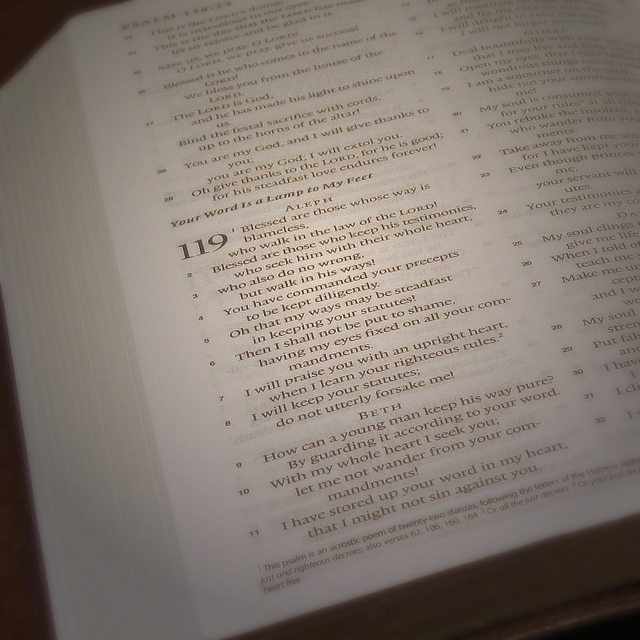
Psalm 119, James 3, Psalm 1—these are not verses I’ve memorized, but just some of the verses I have (unsuccessfully) attempted to memorize!

Bible, Psalm 119

Photo Credit

I’ve tried the whole memorization thing for years. Each attempt I dove head first, setting aside time every day to read, memorize and review my verses. Each time, I didn’t make it past 5 verses.

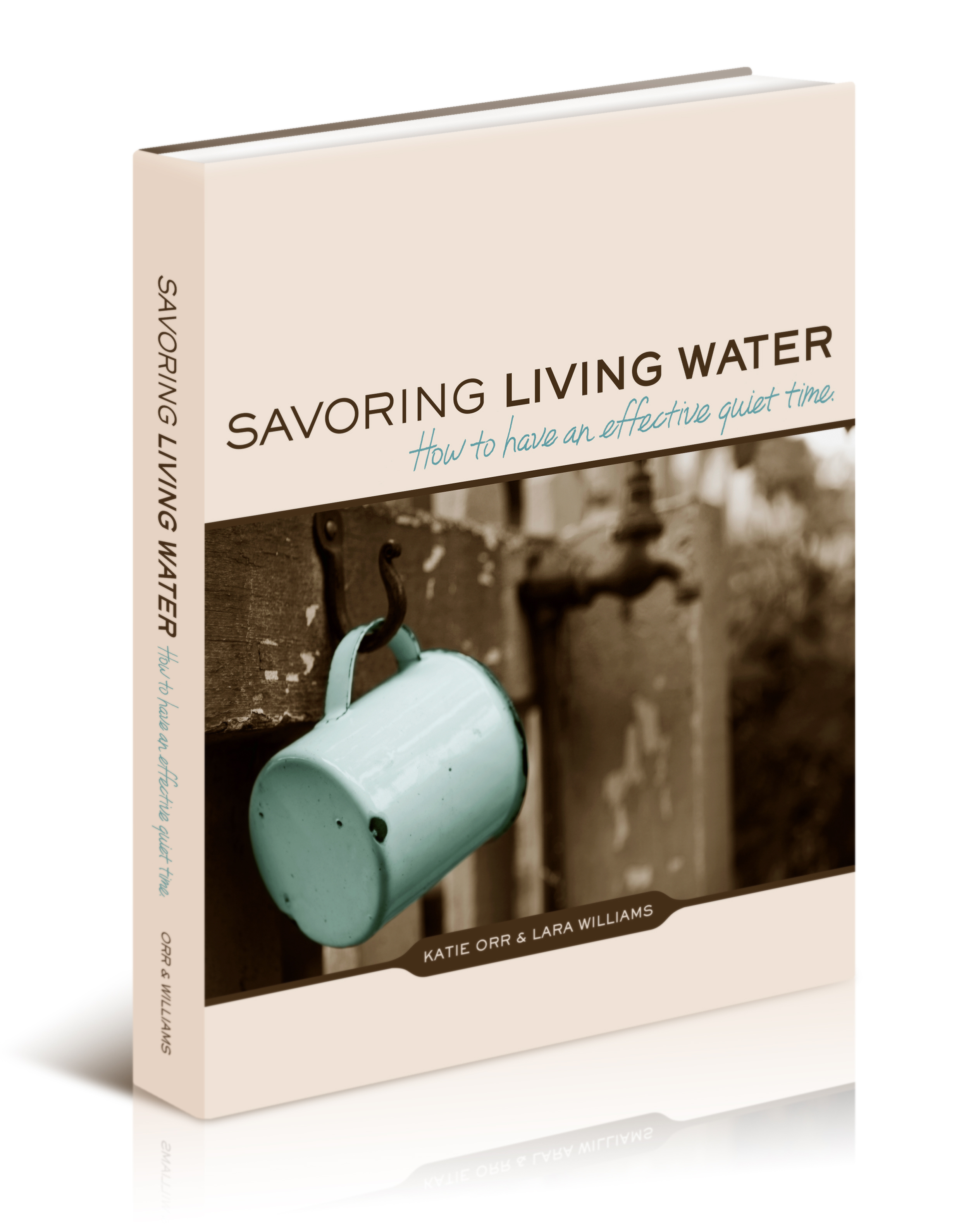
After distancing myself from the sting of what I felt was failure, and then doing a bit of research, I have established a four-pronged attack which I have found (finally!) successful in the area of Scripture memorization. (The following is a shortened excerpt from Savoring Living Water: How to have an effective quiet time by Lara Williams and myself.)

Hear it.

We need to hear His Word. In order to have that passage stick into our minds and bury into our hearts, our ears need to hear it over and over again.

I keep the audio version of my current memorization passage on my computer and on my phone. When my hands are busy but my mind is free to listen, I play the track. I listen while I drive. I listen while I clean toilets. I listen while I fold towels. I hear it.

Write it.

Something happens in my brain when my pen hits the paper. Writing things down helps me remember. It helps me remember what I need from the grocery store, and it helps me remember the Scripture I want to memorize.

Each week I take non-­‐fancy, white 4×6 index cards and write out my verse or passage. I typically write it four times on four different cards so I can keep them in four different places.

I also like to write out the verse or passage in my journal every morning. Beneath my prayers of repentance and my words of thanksgiving, I write His Word.

Repetition causes remembrance.

See it.

I take those index cards and post them on my fridge, computer, shower door, and car dashboard. They serve as constant reminders of the truths for which my soul desperately thirsts. Seeing the verses imprints His Word upon my mind.

Speak it.

There is power in the spoken word. When we speak our verses out-­loud they embed deeper into our hearts. This aspect is absolutely vital to successful memorization.

As I “hear” my verses while I fold the never-ending laundry, I talk with the recording. If it’s a new verse, I say it a half second behind the track. If I know the verse, I say it alongside the audio.

Speaking my verses solidifies the words in my mind and shows where I need to review. Speaking them enables me to remember.

If you find yourself stuck in your scripture memory efforts, try adding a few of these approaches to your routine and see if it helps!

Are you memorizing Scripture? Have you tried hearing it, writing it, and speaking it? What has worked for you? Share your struggles and tips below in the comments!

Written a post this month about scripture memory? Link it up below. We hope you’ll visit some other blogs, be encouraged, and leave some comments along the way!

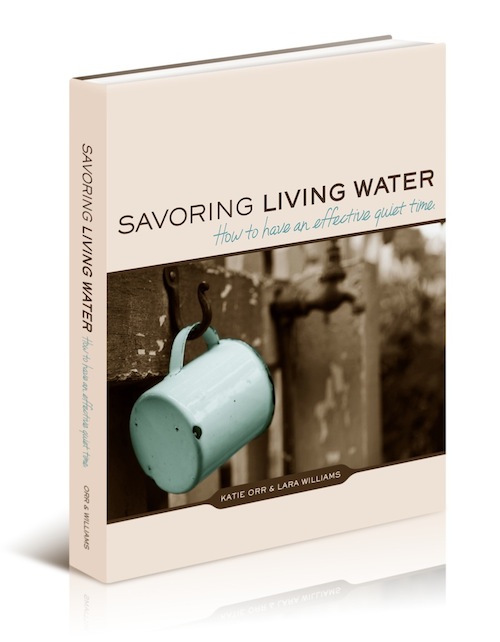


For more tips and encouragement on how to connect with God through Scripture memory, journalling and personal Bible study, Savoring Living Water is available for immediate download to your computer, Kindle, and Nook. Second edition paperback copies are also available for pre-order, and will be shipped mid-January.


4 Ways to Give Away the Word

October 11, 2011 by Lisa Burgess 9 Comments

Behold, I bring you good news of great joy that will be for all the people.
Luke 2:10

We’re diligent to take the Word in. Through daily Bible readings, sermons, books, memorizations, songs.


But how diligent are we to give it back out?

The Gospel—it is Good News!—isn’t meant to sit passively inside us. The Word is alive and active (Hebrews 4:12). What God gives to us He wants us to share with others, not hoard for ourselves.

Do not neglect to do good and to share what you have, for such sacrifices are pleasing to God.
Hebrews 13:16

So how can we give the Word away?
How can we bless others with the words of God so they also can be encouraged and equipped?

4 Ways to Give Away the Word

1. Give through casual conversations

Some believers are naturals at weaving in scriptures throughout their conversations with others. They make relevant connections between everyday conversations and applicable Bible verses, without being preachy. It doesn’t come as naturally to me, but we all can grow in this by becoming more intentional to share what we’ve received.

2. Give through writing

When we’re writing an e-mail or a birthday card, can’t we also jot down a scripture that would be meaningful to the recipient? We have opportunities multiple times a day—either on paper or on-line—to sweeten our correspondence with holy words. Think Facebook, blogs, Twitter, texts, letters, post-it notes. My friend Linda even writes scriptures on her blue jeans. We can let scriptures decorate our homes, our cars, our t-shirts, testifying for Jesus everywhere we go.

3. Give through teaching

This one may seem obvious, but sometimes we drift from using the Word even in Bible classes. Let’s check our curriculum periodically to make sure God’s Word is receiving top billing. Whether teaching straight from a book in the Bible or with the aid of another’s writings, studying scriptures with others is a direct way to pour out biblical truths, strengthening each other’s faith.

4. Give through worship and prayer

God has blessed us with His words; can’t we bless Him back with them? We can include His inspired words in our praise to Him and our prayers to Him, either alone or when we’re gathered with others. It’s easy to find songs that come straight from scripture or we can create our own. As we read through the Psalms or any text, we can echo the words as our own prayers, straight from the heart.

Let’s keep the rivers of living water flowing, not just into us, but through us and out to others.

Jesus cried out, “If anyone thirsts, let him come to me and drink. Whoever believes in me, as the Scripture has said, ‘Out of his heart will flow rivers of living water.'”
John 7:37-38

How do you spread the Word?
Which ways are hardest for you? Easiest?

Related:

Look into The Seed Company. They translate the Bible into native tongues for people around the world.

Welcome to the Story {Book Review}

September 18, 2011 by Katie Orr Leave a Comment

When you read the Bible do you wonder how all the pieces of scripture are related to one another?

Do you struggle with understanding how the whole of God’s Word can apply to your life?

Are you a bit intimidated by theology? Do the words soteriology and eschatology make your head spin?

If so, I have just the book for you!

Welcome to the Story: Reading, Loving and Living God’s Word is an easy-to-read, enjoyable book which hits on the big picture of what the Bible is all about.

Creation. Fall. Redemption. Restoration.

These four pieces to the plotline pop up all over the pages of Scripture. Getting the big picture of this biblical narrative helps make sense of all the various details in Scripture, as well as all the details of theology.

If you are unfamiliar with these major themes and how they are weaved throughout all of the Bible, this will be a helpful read for you. As we understand better how all of Scripture fits into these themes it affects our reading, studying and applying of the Bible.

In Welcome to the Story, Nichols also hits on important doctrines such as “already/not yet,” the cultural mandate, incarnational ministry and more. If these are foreign concepts to you, this book will be a great introduction for you.

After giving us a bird’s-eye-view, Nichols then gives us helpful tips on how to read and apply God’s story to our lives.

Included are tips on how to learn to love the Word of God, steps towards a transformed mind, and a “cheat sheet” for reading the Bible.

Welcome to the Story is available for purchase over at Crossway.

Disclosure: I was given a copy of Welcome to the Story, in exchange for my review. Opinions stated are mine.

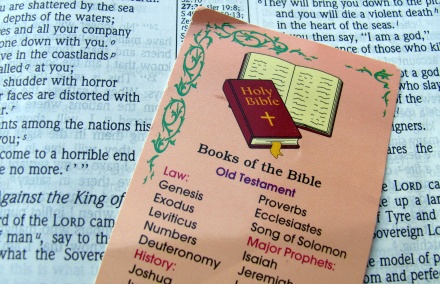
Do you know the bones of your Bible?

September 13, 2011 by Lisa Burgess 17 Comments

I stayed in a hotel last week. I wanted to know the weekend’s weather. But I couldn’t find The Weather Channel.

So I had to laboriously flip through the channels, one by one, until I found it.

Do you ever drive through a new city but can’t find a radio station you want?  Or go to your library but can’t locate Juvenile Biographies?

Or been asked to read Micah 6:8 aloud in Sunday School, but you can’t find it (it’s after Jonah, before Nahum)?

Just how well do we know the bones of our Bible?

But this is 2011, we whine. My Bible is on my iPhone; I look up a verse by typing in the name.

Or I can google a few key words and find the scripture I need. Or if I have to, I can always flip to the Table of Contents in my hardcopy Bible.

Who needs to memorize the books of the Bible anymore?

We do!
And now as much as ever.

When we trade in our human memory for a digital one, we lose advantages of knowing our way around a Bible.

Why learn the bones?

1. See the big picture
Without knowing the overall skeleton, you can lose sight of the central theme of God’s consistent love that holds the Bible together. When you work a jigsaw puzzle, you look at the picture on the box first–and often, then you put the edge pieces in place for its structure.

2. Delight in details
But while the Bible is one big love story about God, it’s also a series. Many smaller stories are captured in its 66 individual books. Each story holds value. By keeping books in context (Song of Solomon is a book of poetry; Ezekiel is a major prophet), you can more accurately interpret what you’re reading and can better apply it to your life.

3. Look for help
Once you know the general order of the books, you can look more efficiently for specific helps. If you have a friend in deep mourning, direct her to the Psalms for comfort. Or if you’re struggling with a child’s rebellion, turn to Proverbs for wisdom.  Be prepared for opportunities.

4. Use it easier
The more familiar you are with the books (Luke come before Acts), the easier it is to find your way around. You’ll be less frustrated when looking up verses to share and you’ll waste less time in your studies.

5. Find your story
Will you be more Christlike by memorizing the books of the Bible? Probably not. But the more you know the book, the more you’ll know the Author.  And you’ll discover easier how he wants YOU to participate in the story.

Where to start

Begin with the big bones. Memorize how the library is set up: two main divisions (Old and New Testaments), then subdivided into smaller sections (books of Law, books of History, etc). While these are man-made categories, they’re still helpful in interpreting that poetry books are more metaphorical, for example, and that Pauline epistles are doctrinally-rich and very practical.

Then, if you haven’t already, memorize all 66 books. It’s not too late. And it’s not that difficult (music helps greatly!).

To go even deeper, learn a summary from each book; read more about the approximate 40 authors; put together a timeline.

God has breathed life into the bones of the Bible.
It’s his book for our lifetime.
Let’s put it in our heart for eternity.

“For where your treasure is, there your heart will be also.”
Matthew 6:21

Resources

Some of my favorites:
Bible Gateway – a searchable online Bible in over 100 versions
E-Sword – free downloadable Bible study software
Katie’s top 10 online Bible study tools
66 Love Letters by Dr. Larry Crabb
What the Bible Is All About for Young Explorers based on the classic by Dr. Henrietta Mears
Reproducible Maps, Charts, Time Lines & Illustrations by Gospel Light

How familiar are you with the overall structure of the Bible?
Are you teaching your children the books of the Bible?
What’s your favorite Bible study resource? Please share!

Savoring Living Water is (Almost) Here!

September 12, 2011 by Do Not Depart 2 Comments

Lara and Katie have been busy working on their new ebook, Savoring Living Water: How to have an effective quiet time.

The ebook releases tomorrow, and they have loads of fun things planned. You’ll want to be the first in line to snag your copy of Savoring Living Water as soon as it is available!

Be sure to check out their (Lara’s and Katie’s) posts today for more info on what’s in store. (It may involve prizes!)

A challenge, a link-up and a giveaway!

August 3, 2011 by Katie Orr

I shared last week about my struggle of connecting what I know to what I feel and as I wait for this dark cloud to dissipate. His word gives me hope. I have found particular comfort from the Lord through Psalm 143 and feel a leading to hide these truths in my heart.

A Challenge

I would love for you to join me in the challenge to memorize Psalm 143 in the month of August, 2011! Jumping in with others is a great source of accountability and encouragement to me. So, help a girl out?

I plan to take it at a pace of four verses a week This will take three weeks, leaving some time at the end of the month to solidify it all (and a buffer in case I get behind!) If you choose to join in the challenge, you are welcome to go at any pace you would like.

There are three tools which were invaluable to me when I memorized Philippians:

  • Audio recordings of the verses.
  • Seeing the passage again and again.
  • The first letter of each word aid.

So, I’ve recorded Psalm 143. I really wanted a recording with the verse numbers stated. This will help tremendously when I want to reference the verse later on. (Please be kind…I am not a professional recording artist!) You are welcome to use these recordings for your personal memorization efforts. Just click on the link to play them. To download them, right click the file and save it to your computer.

Psalm 143:1-4

Psalm 143:5-8

Psalm 143:9-12

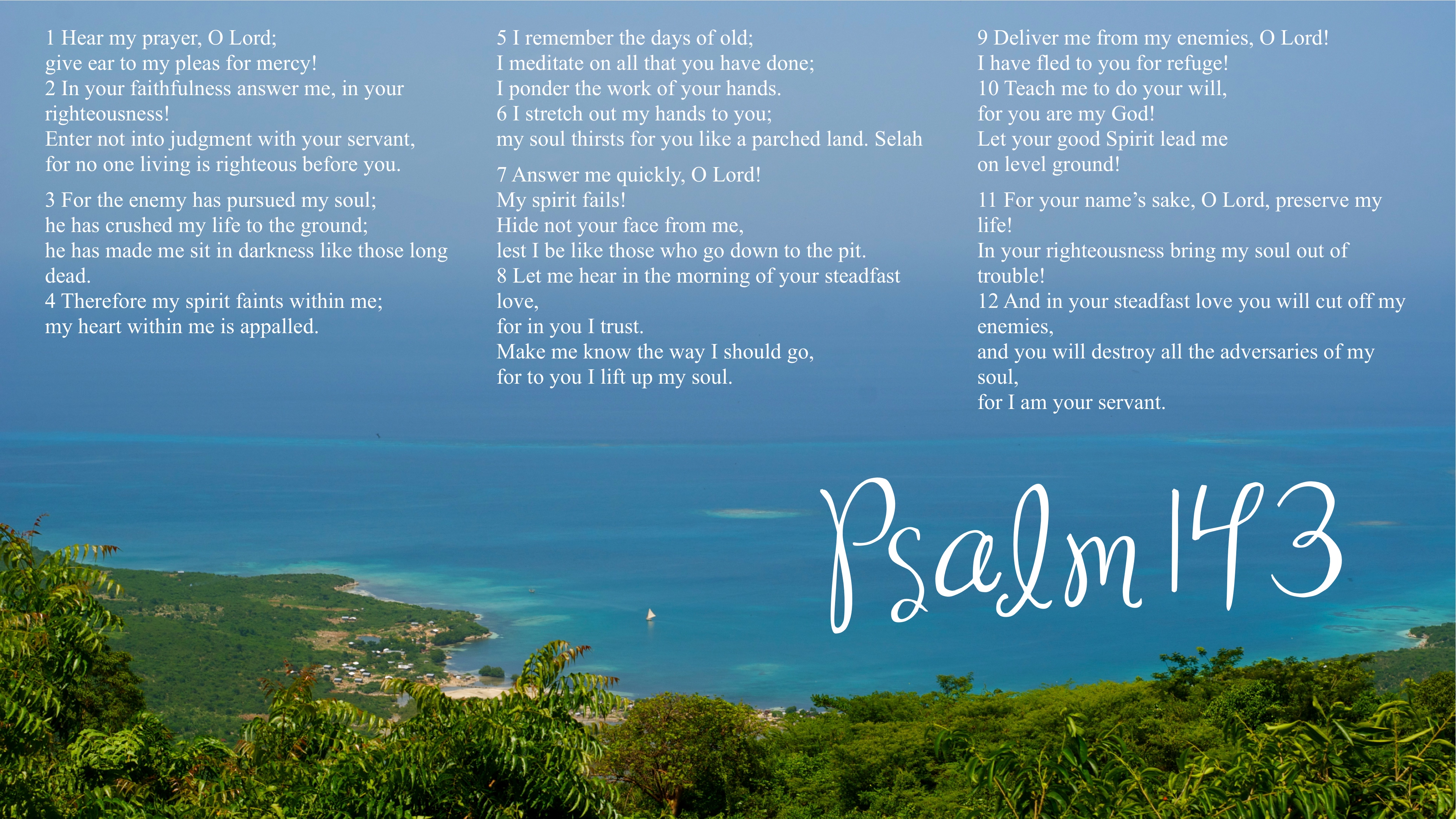
I also made up this wallpaper for my computer. Every time I see it I am reminded to review the verses; and it is pretty! (This was a picture from our mission trip to Haiti.) You are welcome to use this wall paper for your own computer, just click on the picture and right-click to save the image.

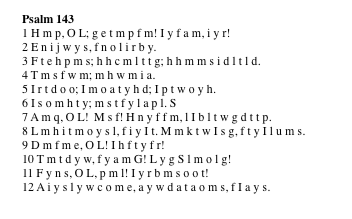
Here are the “first letters”. I like to print them up and put them in the shower (in a ziploc baggie!) You can read more about how the “first letters” work here.

My letter cards from Philippians

Here are more tips and suggestions for the journey:

  • Hide His Word challenge
  • Ten Tips to Boost Your Memory

A Giveaway

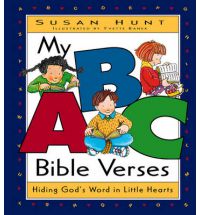
Angie over at Crossway books has agreed to provide a copy of My ABC Bible Verses. We have this book, and love it. My sweet Anna memorizing her first verses using this book. She recited them here (SO cute.) To enter to win your own copy of this book, all you have to do is leave a comment. For extra entries you can do any number of the following:

  • Link-up a post
  • Tweet about this giveaway
  • Like this post on Facebook (use the “Like” button, its easy!)
  • Subscribe to Do Not Depart
  • Like Do Not Depart on Facebook

Be sure to leave a comment for each action you take, to receive the extra entry. The Giveaway will end Friday night at 11pm EST. Giveaway is closed.


Where did that song come from?

July 12, 2011 by Lisa Burgess 12 Comments

There are certain songs I just can’t sing anymore (the above isn’t one of them).

I may love the style and may even have beautiful memories attached to them, but when I really think them through, I don’t want to hear those words leaving my mouth headed to God’s ear.

Because they’re bad theology.

And I am talking about religious songs here. Granted, most songs that make it into our church services are there (hopefully!) because they hold God’s truths. And many songs that we sing along with on our Christian radio stations are also God-honoring.

But you can’t depend on it. Before you let the words stream out of your mouth, think them through. Are they pleasing to God? Are they true? Do they echo scripture?

This isn’t about worship wars, the debate between traditional hymns versus contemporary praise music. This is bigger than that. This is about accurate content versus false. Truth versus lies.

Lyrics matter.

Songs we sing will either reinforce good theology or perpetuate bad theology.

Use songs as prompts for more Bible study. Take a song you absolutely love and trace its message back to its biblical roots. Then jot the scripture reference in your hymnal or CD insert, and write the song title in the margin of your Bible by that verse.

While songs that come straight from scripture are easiest to track (I love those!), don’t rule out studying those whose themes don’t necessarily match word for word passages.

Stuart Townend is a current songwriter who expounds on the central gospel theme in many of his songs. He has penned such greats as “In Christ Alone”, “The Power of the Cross”, “The King of Love”, “Beautiful Savior”.

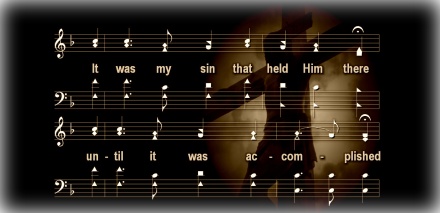
“How Deep the Father’s Love” is one of my favorites for the way Townend weaves the story of redemption in his strong and emotional lyrics. Here are a few stanzas and a few scriptures:

How deep the Father’s love for us
How vast beyond all measure
That He should give His only Son
To make a wretch His treasure
(See Ephesians 3:18-19; John 3:16; Psalm 135:4)

How great the pain of searing loss
The Father turns His face away
As wounds which mar the chosen One
Bring many sons to glory
(See Matthew 27:46; Luke 23:35; Hebrews 2:10)

I will not boast in anything
No gifts, no power, no wisdom
But I will boast in Jesus Christ
His death and resurrection
(See Galatians 6:14)

In contrast, when I was a child my church sang many songs about “work.”

…Work thro’ the morning hours
Work while the dew is sparkling
Work ‘mid spring flow’rs

…O land of rest, for thee I sigh!
When will the moment come

…To the work! To the work!
Toiling on, toiling on, toiling on

…Thro’ the long and toilsome day
‘Neath a blazing, burning sun
Bear the heat, pursue your way
Till your task is done
Work, work for Jesus
Work, work today

Yes, we are to work for Jesus (1 Corinthians 15:58). Many scriptures point to this. But the message I picked up from these songs was to work for my salvation instead of rest in Christ’s work of salvation (Hebrews 10:10,14; Matthew 11:28-29).

So when I hear those songs now, I can’t sing them in good conscience.

Some songs might only need a word change here or there to make the song biblically sound. At my church we’ve tweaked “Days of Elijah” from:

And these are the days of Your servant David
Rebuilding a temple of praise

to

And these are the days of Your servant Ezra
Rebuilding a temple of praise

because we know King David wasn’t allowed to build the temple even the first time (1 Chronicles 22:8), and Ezra was in charge of rebuilding the second temple (Ezra 7).

Occasionally I’ll just drop out from singing a stanza if I can’t sing the lyrics sincerely. And my friend Linda often changes the group pronouns to the more personal “I” when she sings.

So be diligent and study the words you sing to yourself, to God, to others. We’re just as accountable for the words we sing as the words we speak. Let’s use words of songs as the powerful tools they are to teach and encourage each other (Colossians 3:16) as we praise and give thanks to our Father.

Further reading:
10 Principles for Congregational Singing, Part 1, Part 2

How has a song helped you? What is one of your favorites?

How to Make a Bible Notebook

June 14, 2011 by Lisa Burgess 101 Comments

UPDATE: Want more information on building a Bible notebook? Please see our newest posts and printables here.

* * *

Why do you study the Bible?

If you’re like me, you have many reasons. To know God more. To be transformed into his image. To learn to love others better. To build a stronger faith in Jesus. To reflect his glory. To solidify truth in your heart.

But if you read the Bible and immediately forget what you learn, how effective is that (James 1:23-24)?

God often commanded the Israelites to write things down, and their faithfulness to the written Word means we have accurate scriptures today.

We all know that one effective way to retain what you read is to write it down. In a place you can find again.

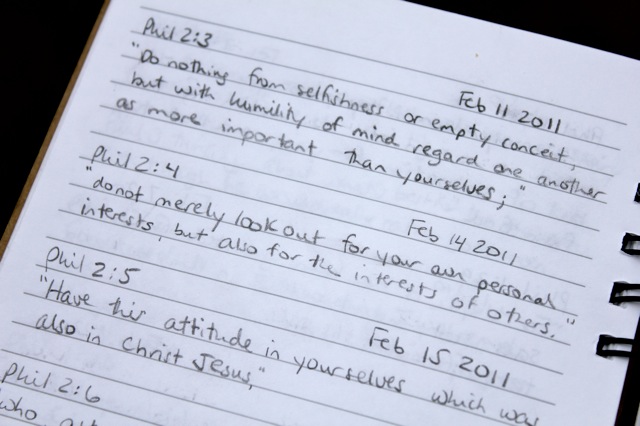
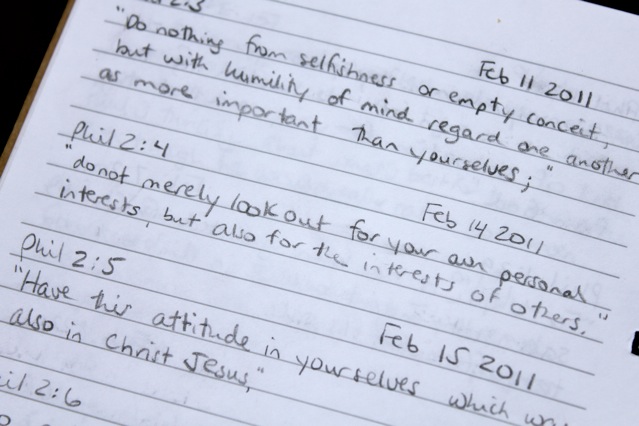
Creating a personal Bible notebook works for me. While I still keep separate notebooks for specific purposes (like my Philippians memory book), I use one 3-ring binder to hold the bulk of my daily studies.

For example, eight years ago I began copying by hand and journaling one verse per day from my daily Bible reading. I wrote what the truth revealed about God and how it applied to me at the time.

Now that I’m going through the Bible for the fourth time with this method, I am benefiting from having all my previous notes sorted by book/chapter so I can easily flip through my notebook and be reminded of what I learned from the past three readings.

Having easy access to lessons God has already taught us through his Word in past situations builds our confidence in his faithfulness in our current and future circumstances.

Things you need:

  • 3-ring binder
  • Notebook paper
  • Insertable tab dividers
  • 3-hole punch
  • Sheet protectors (optional)

Decorate your binder to make it personal, then pack in plenty of paper and several dividers.

Next, decide on the categories you want and make tabs for each. I use these.

Tabs:

  • Bible Notes
  • Memory Verses
  • Greek
  • Prayers
  • Book Studies

The Bible Notes section includes my daily verse journal that I write by hand on loose-leaf notebook paper. I also keep an extra copy of my Daily Bible Reading plan here.

Under the Memory Verse section, I keep a printout of all the verses and chapters that I’ve (tried to) learn. Then each day I review one sheet before I begin working on my current verses. This assures all the verses get reviewed periodically.

I started the Greek tab when I took a Wednesday night class on Greek from a retired university professor at church. I write down interesting words and definitions that bring new light to scripture as well as words that I want to study more later. I keep a copy of the Greek alphabet here and a list of key words that I don’t want to forget.

The Prayer section holds both prayer lists as well as prayers I’ve written for special occasions, such as the beginning of a school year. Having a record of requests, answers, and praises will motivate you to continue seeking the Lord.

The Book Studies section includes notes from books I’ve studied on my own as well as with friends. This is also a great place to capture book suggestions for future studies.

You could also include sections for sermon notes, blog posts, writing ideas, quotes, devotionals, photos, drawings, song lyrics, Bible maps, etc.

Use pockets in the front and back of your binder or use sheet protectors to store church bulletins, loose notes, or small clippings you don’t want to lose.

Keeping everything in one place, at your fingertips, can make your study times more fruitful, less scattered, and more faith-building.

How do you keep track of what you’re learning? What works for you? For your kids? Please share!

Finding Living Water

June 9, 2011 by Katie Orr

There is no other way to describe it. I thirst. And in my thirst, I have wasted time searching this world for something to ease the dry. But my thirst goes deep, past the physical, into realms undefinable with mere words.

I entertain the deep down longing for more. More peace. More joy. More life. Then I look to a man or a dream or my closet, desperate for the need to be met. And even after I have some filling—even after the man loves me reckless or the dream takes shape in my now—I awake with the thirst. Again.

I could have been that woman at the Samaritan well, filling her thirst with things of this world. Things that leave us parched. But He graciously gave me a drink of His “living water” and I’ve never been the same.

Over the last few months Lara and I have together been dreaming, planning, praying and writing. The Lord has set our hearts towards putting together a book which will help you in your relationship with Him. Specifically, guidance in how to study the Bible on your own. Our hope and prayer is that through these words you will encounter God in a deeper way as you learn to experience Him through His word.

Photo Credit

This book will be available, as an e-book, early this fall. We are incredibly excited about it!

As we continue to put together this e-book, it would be helpful to us to get your input! If you have a moment, will you fill out this quick 1-minute survey? After you fill out the form, please leave us a comment to let us know that you took the survey. If you fill out this form by the end of today, you will be entered to win one of 10 free, pre-released copies of the e-book!

Thank you, friends!

Philippians :: Week 3 :: Paul’s Desire

June 3, 2011 by Katie Orr 7 Comments

Paul’s Overriding Desire

In this week’s passage of our Philippians Study, we get a snapshot of Paul’s desires. There is a conflict waging inside his soul. He wants to be with Christ, “for that is far better” (1:23) He longs for Christ and to be rid of his aching, imprisoned body. Later in Philippians we see this longing more clearly: “we await a Savior, the Lord Jesus Christ, who will transform our lowly body to be like his glorious body” (3:20-21).

Yet he knows that staying on this earth “means fruitful labor” (1:22) and “is more necessary” (1:24) for the sake of the Philippians’ progress in the faith.

But there is yet another desire. An overriding desire: The glory of Christ.

More of Paul’s Desire, and a Study Tip!

This is not the first time we have seen this in the book of Philippians. When I am studying a passage and I start to think there might be a theme present, I will try to take some time to go back and dig a little bit. So, let’s do some digging! Let’s take a look back over the verses we have studied so far, and re-read them, specifically looking for Paul’s desire for the glory of Christ. Here is what I found:

  • Philippians 1:9-11: “And it is my prayer that…to the glory and praise of God”
  • Philippians 1:12-18: “Christ is proclaimed, and in that I rejoice” (his perspective about being imprisoned)
  • Philippians 1:20: “it is my eager expectation and hope that…Christ will be honored in my body”
  • Philippians 1:23: “My desire is to depart and be with Christ” (Paul’s desire in death)
  • Philippians 1:26: “so that in me you may have ample cause to glory in Christ Jesus” (Paul’s desire in life)

This is all just in the first 26 verses of the book! I know that we will continue to see more of this theme; Paul’s desire for the glory of Christ.

Making Application

I just love the wording of Philippians 1:26:

…so that in me you may have ample cause to glory in Christ Jesus, because of my coming to you again.

I pray that my children and husband would have ample cause to glory in Christ because of my presence in their life. I hope that my friends, neighbors and anyone else I encounter can see Christ in me and can praise God for the joy of Christ brought to them through me.

I fear that more often there is little that is praise-worthy in my life, little that gives God glory. But by God’s grace I will press on, even in my failures, because even when I have completely messed up God can be glorified!

What about you? What did you see this week in Philippians? Do you have any questions? Any thing you want to share about what the Lord has shown you in His word?

Top Ten Application Tips

May 30, 2011 by Katie Orr 8 Comments

Studying God’s word means nothing if it doesn’t affect our days. Here are some helpful tips, as we focus on what to do as a result of what the Lord is teaching us through His Word.

1. Consider this: You already know more than you can ever obey.

Too often we can find ourselves looking for the “next best Bible Study” to revive our spiritual life. Instead of trying to find something to “fix” you, look and listen to what you have already been taught. Oftentimes God is wooing us to apply something, through a few different people and places but we can be too busy or too stubborn to hear what He is saying. Obey what you already know and you will see life change.

2. Focus on one thing at a time.

Focusing on too many things is a sure way to fail. We can only do a few things well. Prayerfully search for what God wants you to focus on, pick one and move forward.

3. Give yourself time…

Monthly focuses work for me. If I move on to the next thing too quickly, I find myself quickly losing ground I made in the last thing I was working on. Establishing new habits and breaking the old ones take time.

4. …and grace.

Discouragement brings us to a halt in our efforts to apply scripture to our lives. You will fail. I will fail. By God’s grace we can get back up and try again.

5. Take baby steps.

The steps we take towards change must be specific and realistic. Take small, intentional steps towards what God is calling you to.

6. Make a plan, and share it.

Whether it be in a journal, with a friend or spouse, on Facebook, Twitter, or all of the above! Share what God is leading you towards. This helps bring clarity as you process it with others, as well as brings solidarity to your plans. Of course, sharing your plan is also a great source of accountability.

7. Surround yourself with others who are heading in the same direction.

My favorite thing about Twitter is the community that I have found from others who are working on the same thing I am. #HelloMornings has been fuel to my efforts in getting up early to meet with the Lord. #HideHisWord is a great source of encouragement and accountability from others who are memorizing scripture. Of course, you can do this without Twitter. Find two or three others who will commit to praying for you, and invite them to join in on what God has challenged you to.

8. OBEDIENCE is the key.

Regardless of our well-laid plans we must pay attention to the Lord’s leading. He may later lead us to stop, be still, or focus on something else well before we feel like we are “ready” to move on. If our efforts are not out of obedience, then it is impossible to apply scripture to our lives in a way that will bring life change.

9. Pay attention to what is driving your efforts.

Are you driven primarily out of your own strength, or out of an overflow of all the Lord is doing in you through His great grace?

10. Remember who is ultimately the One who brings change.

Are you so foolish? Having begun by the Spirit, are you now being perfected by the flesh? Galatians 3:3
But I say, walk by the Spirit, and you will not carry out the desire of the flesh. Galatians 5:16
I am sure of this that He who began a good work in you will bring it to completion at the day of Jesus Christ…for it is God who works in you, both to will and to work for his good pleasure. Philippians 1:6;2:13
God started the work in you. God is working in you. God will complete this work in you.
Linking up!

Top Ten {Tuesday}

and Thought Provoking Thursday

This is an edited repost from the Do Not Depart archives.

You need to decide! Five scriptures to the rescue

May 25, 2011 by Lisa Burgess 20 Comments

How many decisions do you make in a day?

You breeze through most without much thought. But occasionally one will paralyze you.

You want to make the God-honoring choice, if only you knew what that was! You’ve already prayed and prayed (right?). But now you’re stuck.

What do you do next?

Here are five principles from scripture that help:

1. Tune out distractions and tune in God’s voice

The unfolding of your words gives light; it imparts understanding to the simple.
~ Psalm 119:130

Ask yourself if the world is shouting so loudly—through the internet, TV, shopping malls, friends, etc.—that it’s drowning out God’s answer to your prayer. First, turn off ungodly influences (Romans 12:2).

Then, press in hard to hear God.

If your hearing has gone bad from poor spiritual habits, build those back up. Search the scriptures for biblical principles that apply to your dilemma. Use reference tools to study verses in full context. Look for God’s character in the stories you read and see how you can best mirror His character with the choice you need to make.

2. Seek godly counsel from others

Listen to advice and accept instruction, that you may gain wisdom in the future.
~ Proverbs 19:20

After you’re internally preached the Word to yourself, listen to external preaching from godly mentors around you. Who in your church has walked this path? Has God intentionally placed someone in your path? Is there a mature Christian in your family who can advise you? Are there experts in the field—in person, in print—that can give you additional information?

After receiving this extra input, ask God again for clarity in sorting through it.

Look for threads of similar advice and principles that you may have overlooked in your initial thinking.

3. Narrow down your choices

And whatever you do, in word or deed, do everything in the name of the Lord Jesus, giving thanks to God the Father through him.
~ Colossians 3:17

After laying out your options, cross out the ones least likely to honor God, and circle the ones that could bring Him the most glory. Humbly confront your motives: do certain choices appeal more to YOU than to Him (James 4:3)? Eliminate options that are more about saving face and keeping control than about pleasing the Father.

Remember: choices that honor Him will ultimately be in your best interest too.

If certain choices are time-contingent, and the pace seems out of God’s timing—either too rushed or too prolonged—discard those as well. While waiting on the Lord may be difficult (Psalm 27:14), He can build up your strength during the wait (Isaiah 40:31). And His outcomes are always worth waiting for.

4. Do something

But be doers of the word, and not hearers only, deceiving yourselves.
~ James 1:22

On the other hand, if you’re only waiting because you’re too scared to act, set fear aside and step out in faith (Joshua 1:9).

If you’ve sought God through prayer, Bible study, godly counsel, and appropriate pacing, place your confidence in Him and quit delaying the decision. Just make it! Trust that God is true to His word—you ask in faith for wisdom; He generously supplies it (James 1:5-6).

He is more than willing and able to accomplish His works through you (Philippians 1:6).

5. Give thanks for the results He’ll bring

The LORD is my strength and my shield; in him my heart trusts, and I am helped; my heart exults, and with my song I give thanks to him.
~ Psalm 28:7

Instead of second-guessing the decision you’ve now made, give thanks for it. Look forward to how God will bless it. Believe that He will work good out of your choice (Romans 8:28). Rest in the peace He’s sent you to guard your heart and mind (Philippians 4:6-7).

As you enhance your spiritual sensitivity to follow God’s guidance, making decisions still may not always come easily, but you can grow in your confidence that the Lord is leading you.

He will bless your obedience as you strive to honor Him with your choices.

Trust in the LORD with all your heart, and do not lean on your own understanding. In all your ways acknowledge him, and he will make straight your paths.
~ Proverbs 3:5-6

What about you?

Do you have a hard decision you’re trying to make right now?
What helps you decide when you don’t know what to do?
Are there special scriptures you turn to? Please share!

Philippians :: Week 1 :: Paul’s Heart

May 20, 2011 by Katie Orr 23 Comments

i usually focus on quantity: how much can i read each day. now i’m focusing on quality: how much Truth and insight can i glean from just a few verses. -Aly at The Mommy Diaries

I love this! This is our hope, that you will learn how to dwell on each verse, each word; looking and digging to find the great treasures in scripture. This study will be different than most of the other studies that you have been a part of. We certainly want to learn from Philippians, but we also want each of you to learn better how to study the Bible on your own. Instead of us simply regurgitating what we’ve learned from Philippians, we want you to find the life-changing truths from Philippians for yourself! The study guide is geared towards that end.

If you are just finding out about the study, you can read more about it here and here. Anyone is welcome to jump in any time! If you haven’t downloaded the study guide, go ahead and head over to Inspired to Action and print it out.

If you were able to follow the study guide plan this week, you should have read this passage at least eight times throughout the week. I like to think of it as putting on different glasses as you read, each time looking for something different. You may not find any “answers” to each question throughout the week, and that is fine. We are training ourselves to look for certain key elements that most passages of scripture will have.

Here are some of the truths I found in my study of Philippians 1:1-11:

What I learned about Paul

  • Servant. He refers to Timothy and himself as “servants of Christ Jesus.” 1:1 The greek word Paul used here is doulos: “devoted to another to the disregard of one’s own interests.” This certainly is echoed throughout the book of Philippians, how Paul considered himself a servant of Christ who follows the example of the ultimate servant, Jesus.

Let each of you look not only to his own interests, but also to the interests of others. Have this mind among yourselves, which is yours in Christ Jesus, who, though he was in the form of God, did not count equality with God a thing to be grasped, but made himself nothing, taking the form of a servant… Philippians 2:4-7a

  • Thankful. “I thank my God in all my remembrance of you, always in every prayer of mine” 1:3-4
  • Prayerful. “always in every prayer of mine for you all making my prayer with joy…And it is my prayer that…” 1:4, 9
  • Joyful. “…making my prayer with joy…“1:4 Philippians is known for the book of joy for a reason. Over and over again Paul speaks of his own joy for God’s people and His purposes. Paul later encourages the Philippians to rejoice in the Lord always, and again I say, rejoice! (*clap* *clap*) 4:4
  • Confident in God. “And I am sure of this, that he who began a good work in you will bring in to completion at the day of Jesus Christ.” 1:6 Yet another theme we will see in Philippians- Paul’s confidence in the Lord and His purposes.
  • Affectionate. “For God is my witness how I yearn for you all with the affection of Christ Jesus” 1:8
  • Imprisoned. “…in my imprisonment” 1:7 Paul wrote Philippians, from house arrest in Rome. (See Acts 28:14-31)

What I learned about God

  • Source of grace. “Grace to you…from God our Father and the Lord Jesus Christ” 1:3
  • Source of peace. “peace from God our Father” This is a theme that we will see more of in Philippians! “And the peace of God which surpasses all understanding will guard your hearts and minds in Christ Jesus.” 4:7 See also 4:9.
  • God is our Father. 1:3
  • Jesus is our Lord. 1:3
  • Whom we give thanks. 1:3
  • Began a good work in us. 1:6
  • Will complete this good work. 1:6
  • He knows our yearnings. “For God is my witness, how I yearn for you all…” 1:8 God knew Paul’s yearning for the Philippians. He knows our hearts as well. This is the first time I have noticed this truth!
  • Jesus is the source of righteousness. “the fruit of righteousness that comes through Jesus Christ.”

What did you learn?

This is by no means an exhaustive list of all the truths to be found in Philippians 1:1-11 What insights did you see? Any promises? What did you learn about your identity in Christ? What is the Lord leading you to do as a result of what you have learned?

How did you like the study guide? Do you have any questions about the passage or study guide? Did you write a post about your study this week? Leave it in the comments!

We look forward to hearing from you!

Philippians Bible Study

May 16, 2011 by Katie Orr 25 Comments

We are excited to announce our next study here at Do Not Depart…Philippians!

Each week, for the next 13 weeks, we will be studying a new passage from the book of Philippians. The most exciting thing about this is you can study on your own, alongside of us! We have put together a study guide to help you spend daily time in this book.

If you are looking for something to study this summer, we would LOVE for you to join us. This is in conjunction with Inspired to Action’s Maximize Your Mornings summer session, yet anyone is welcome to join in the Bible study.

The Plan

There are five days of simple study questions for each week’s passage. Begin each day with a short prayer, asking God to open your heart to His Word, then use the day’s questions to help you read and study the passage. Have your journal open, ready to jot down what you discover through your time of study.

Day 1: READ

Read the passage. Keep a pen and your journal handy. Write down any questions or observations you may have about the passage. Then reread the passage.

Day 2: TRUTHS

Today, with your journal and pen ready, we are going to look for specific TRUTHS in the passage. We will read the passage three times, each time answering one of the following questions:

  • What does this passage teach about God?
  • What does this passage teach about Paul?
  • What can I learn about my identity in Christ?

As you find truths, list them in your journal. Consider making a master list of all you learn about God, Paul, and yourself throughout the book of Philippians.

Day 3: PROMISES

Read this week’s passage and this time look for PROMISES.

  • As you find a promise write it out in your journal, figure out if it is a conditional or unconditional promise. A conditional promise usually contains “if…then.”
  • List out the conditions and what will result if those conditions are met.

Day 4: COMMANDS

Read this week’s passage. As you read, note any COMMANDS in your journal. Read the passage again, this time looking for any implied commands. We can learn much from the experiences and failures of people in the Bible. As the Word commends or disapproves of certain characteristics, we can use this as a model towards Christ-likeness.

Day 5: APPLY

Today we are going to make the passage personal through application. Journal through these questions:

  • How does my view of God line up with this passage’s teaching about God?
  • What is the Lord leading me to DO as a result of this passage?

Pray and ask the Holy Spirit to do the work in your heart so that you may walk in obedience to this passage.

UPDATE: Be sure to download the study guide, which includes the schedule and the study questions on cards you can print out to keep in your Bible! You can find the study guide over at Inspired to Action.

The Schedule

Week 1: Philippians 1:1-11 Paul’s heart for God’s people
Week 2: Philippians 1:12-18 God’s purpose in Paul’s imprisonment
Week 3: Philippians 1:19-26 Paul’s desires: God’s people and God’s presence
Week 4: Philippians 1:27-30 God’s gospel-purpose for us
Week 5: Philippians 2:1-11 Paul’s charge to unity through following the example of Christ
Week 6: Philippians 2:12-18 Paul’s charge to Word-centered obedience
Week 7: Philippians 2:19-30 Servants of the gospel (examples to follow)
Week 8: Philippians 3:1-11 The surpassing worth of Christ, our righteousness
Week 9: Philippians 3:12-21 Paul’s example: Press on toward the call of Christ
Week 10: Philippians 4:1-9 Paul’s plea: Pursue the peace of God
Week 11: Philippians 4:10-23 Paul’s contentment in God’s provision

The Result

You may not find “answers” to each of these questions each week. The point is to begin training yourself to look for truths, promises, commands and application points when you read the Bible. After walking through the book of Philippians this way, you might just be ready for another book all on your own! You will certainly encounter Jesus in a deeper way, and that is what this is all about.

If you plan to study with us, we would love to know! Just leave us a comment. We are looking forward to taking this journey with you! We will be posting each Thursday Friday with some insights on each passage, so be sure to stay tuned!

When Scripture Doesn’t Stick :: 10 Tips to Boost Your Memory

May 13, 2011 by Patti Brown 15 Comments

When I was a child I had a crystal-clear memory. My mother tells me she didn’t look forward to playing the memory game Concentration with me because she always lost! But scripture memorization wasn’t part of our family’s or church’s culture in my early years.

I memorized my first scripture when I was twenty-six. My memory was still fairly strong, and only beginning to get a little fuzzy. Then came children, homeschooling, homesteading… many distractions. As the years pass, my mind seems to be filling up, and I am finding it more and more challenging to commit scripture to memory.

Perhaps you are a whiz at scripture memorization. But you may be like me and find that sometimes it just doesn’t stick. Here are ten things to consider if you are struggling with remembering bible verses:

1. Take care of your body!

Sleep deprivation is a sure memory stealer. Are you getting an adequate night’s sleep? If you are in a season of life when sleep is challenging, consider taking a ten minute nap during the day.

Dehydration also impairs brain function and memory. If you notice yourself losing focus easily or having that “in one ear and out the other” feeling, try setting a timer and drinking 8 ounces of water every hour. You might be surprised by how much more clear-headed you feel.

2. Consider the real goal

What is your goal? Is it to be able to say “I memorized the entire book of Numbers”? Or is it to hide God’s Word in your heart?

It is worth taking the time to reflect on this in prayer. Ask the Lord to show you your heart in the matter. This will require humility! He will be sure to help you see if your goal is self-glorification or His glorification.

3. Be sure your plan reflects God’s goal and the circumstances of your life

Once you understand God’s goal for you in hiding His Word in your heart, your motivation will be more clear. Does your scripture memorization plan match God’s goal for you?

You also need to take into account your life and your schedule. What is a realistic plan to implement in view of the other demands of your life?

There certainly might come a time when God calls you to clear something out of your schedule to make time for memorizing scripture. But being in a busy season of life does not prevent you from memorizing. It just impacts your pace.

4. Pray for your mind

Pray that the Lord will help you take captive all distracting thoughts unto the obedience of Christ Jesus (2 Corinthians 10:5). Pray that you will have the mind of Christ (1 Corinthians 2:16). Pray that He will transform you by the renewing of your mind (Romans 12:2).

5. Meditate on the message

Before you start memorizing a new scripture, spend time meditating on its meaning. It is much easier to remember a verse that means something to you than to memorize a string of words.

6. Start a new verse at your best time of day

Are you most alert first thing in the morning, or do you need a while to wake up? There are no rules about when to memorize scripture.  Think over your day… at what time of day do you feel most productive? When is your mind at its most focused? This is the ideal time to work on scripture memorization.

7. Repeat, repeat, repeat!

Say every new verse out loud at least ten times. You may need to say it more than ten times. Just say it a lot! Like lifting weights, you need to exercise your memory muscle with repetition.

It’s also okay to take more than one day to learn a verse. Just keep repeating it until it you feel comfortable with it.

8. Take into account your learning style

Are you a visual learner? Use a first letter memorization tool. Or print out the scripture and tape it up anywhere you might linger for a moment… in front of the kitchen sink, on your bedroom mirror, etc.

If you are an auditory learner you will probably benefit from listening to the audio version of your scripture repeatedly. Bible Gateway offers many versions of scripture in audio format for free (just click on the little sound button below the name of the verse you have searched for). If you can’t find the version you want, record yourself reading it out loud on your computer or smart phone.  Auditory learners will also be receptive to verses set to music. If you can’t find scripture songs for your verses, make up your own tune and sing away!

Kinesthetic learners will enjoy making up hand motions to go along with the verses.  While I am not a kinesthetic learner, I have still found it very helpful to use my hands to mime active phrases like “press on” and “lay hold.”

Both visual and kinesthetic learners will benefit from writing the scripture by hand.

9. Review throughout the day

Get in the habit of reviewing scripture throughout the day. You might tie it to another activity, like washing the dishes, folding laundry, or sitting at a stop light.

10. Don’t give up!

Whatever you do, persevere. Run with endurance the race that is set before you! (Hebrews 12:1). If it takes you a whole month to learn one verse, that is one verse more than you knew before you started. With God’s help you can do it!

« Previous Page

This Month’s Theme

  • Jesus is the Way
  • And He Shall Be Called Series Intro

Enter your email address to have new posts emailed to you:

We’ll come to you

Enter your email address to have new posts emailed to you

Categories

Bible Memory – Lent 2021

Memorizing Isaiah 12

Let the Children Come

Let the Children Come

Want more #HideHisWord resources?

Memorizing Psalm 1

Find Us on Facebook


Search

Recent Posts

  • Series Wrap-Up: The Lord Is My Light
  • His Marvelous Light
  • When the Darkness Deepens
  • Though I Sit in Darkness…
  • Let Your Light Shine
  • Life-Giving Light

Archives

© 2026 · Pretty Creative WordPress Theme by, Pretty Darn Cute Design