• Home
  • About
    • Our Contributors
    • Our Beliefs
  • Blog
  • Bible Studies
    • Scripture Dig
  • Archives
  • Shop
  • Advertise
  • Contact
    • Email
    • Facebook
    • Instagram
    • Pinterest
    • Twitter

Do Not Depart

Encouragement and Tools to Abide in God's Word

You are here: Home / Archives for bible study

Songs, hymns & spiritual songs as Bible study tools

April 1, 2014 by Julie 3 Comments

Songs Recap

So many events in our lives are accompanied by a background track. Songs speak to our hearts when only music can be heard above the noise, the pain, the questions, or the confusion. God uses worship music to help us grow. Has God used a song to help you find Him, know Him, follow Him, or worship Him?
Songs Hymns Spiritual Songs

The Do Not Depart team knows what it is to experience songs, hymns, and spiritual songs as powerful tools for truth in our lives. Our Bible study is better because of the faith-filled music playing in our lives.

Let the word of Christ dwell in you richly, teaching and admonishing one another in all wisdom, singing psalms and hymns and spiritual songs, with thankfulness in your hearts to God. (Colossians 3:16)

This month join us as we look at how God uses music to richly plant His word in us. We’ll share songs that teach and admonish us through the depth of their true messages. We’ll talk about the lyrics and sounds that have given gratitude a means of expression in our own lives. As we do, we pray you will be inspired to use songs, hymns, and spiritual songs as Bible study tools in your own life.

#BibleStudy is better because of faith-filled music playing in our lives. http://bit.ly/1i1mgzk @DoNotDepart #SingPraise < Click to TWEET & share!
What God’s Word Is Supposed to Do

March 20, 2014 by Lindsey 6 Comments

What God's Word is Supposed to Do In Our Lives

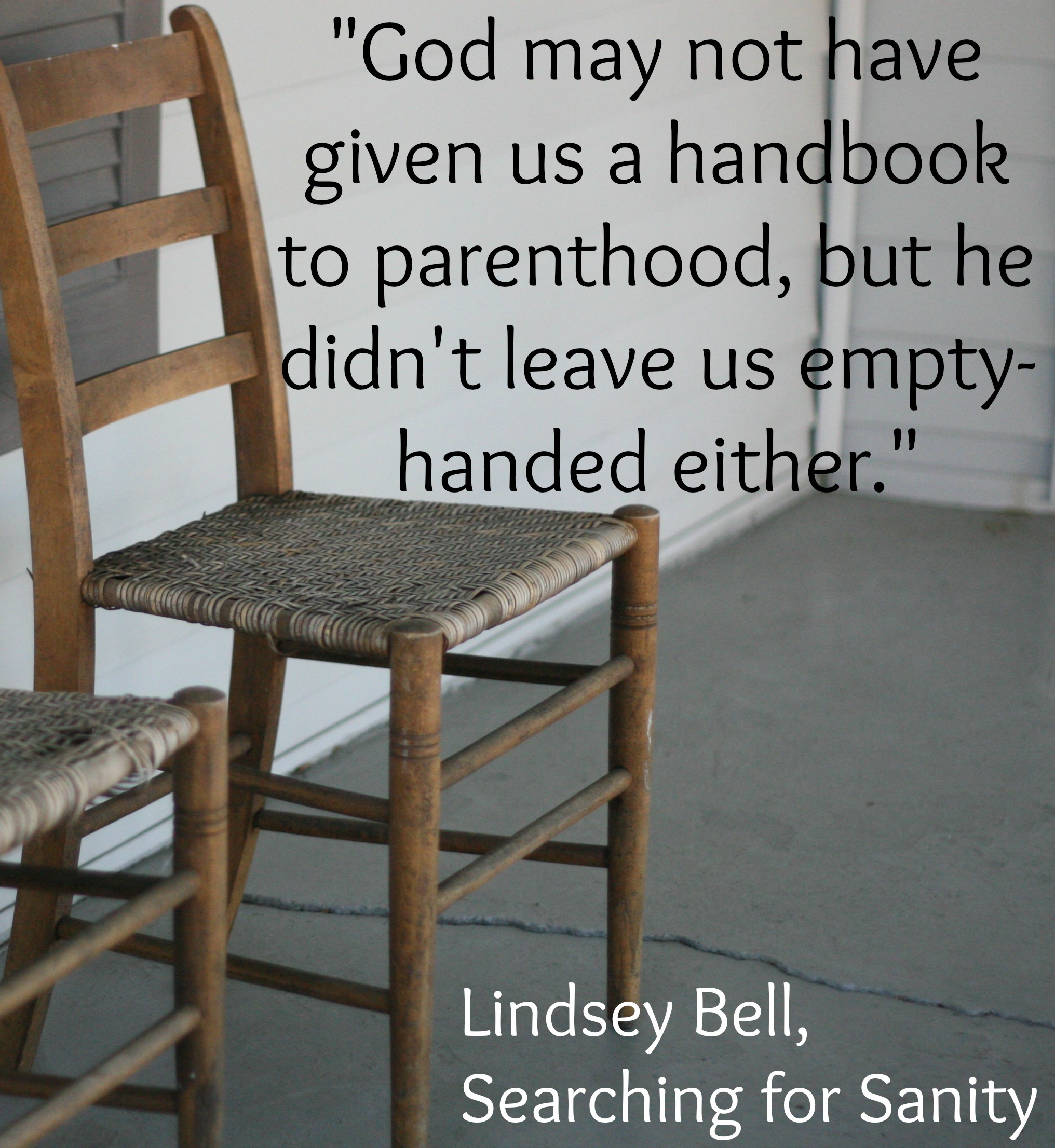
God’s Word was never meant to leave us empty.

It was never meant to be something we have to do…something that’s on our “to do” list, right along with laundry and soccer practice.

Look at Isaiah 55:10-11, a couple of verses that talk about the Word of God:

“As the rain and the snow come down from heaven, and do not return to it without watering the earth and making it bud and flourish, so that it yields seed for the sower and bread for the eater, so is my word that goes out from my mouth: It will not return to me empty, but will accomplish what I desire and achieve the purpose for which I sent it” (Isaiah 55:10-11).

God’s Word isn’t meant to leave us empty. It’s meant to leave us full.

Let’s break this text down  to see exactly how God’s Word is meant to refresh us.

1. It nourishes.

Just as the rain and snow water the earth and prepare the ground for growth, God’s Word nourishes our souls and prepares us for growth in Christ.

2. It produces a crop.

As I studied this text, I kept coming back to Jesus’ parable of the sower in Matthew 13:

“A farmer went out to sow his seed. As he was scattering the seed, some fell along the path, and the birds came and ate it up.  Some fell on rocky places, where it did not have much soil. It sprang up quickly, because the soil was shallow. But when the sun came up, the plants were scorched, and they withered because they had no root. Other seed fell among thorns, which grew up and choked the plants. Still other seed fell on good soil, where it produced a crop—a hundred,sixty or thirty times what was sown.” (Matthew 13:3-8).

Jesus explained the parable like this. There are 4 types of people:

  • People on the path-These people hear the Word, but the devil takes it away from them.
  • People on the rock-These people hear the Word but have no root; they fall away when tested.
  • People among thorns-These people hear the Word, but it is choked away by worries and pleasures.
  • People on good soil-These people hear the Word, retain it, and produce a crop.

So the question is…what type of people are we?

When we hear the Word of God, how do we respond? Do we forget about it as soon as we put our Bibles away?

Or…do you retain it, persevere through hard times, and produce a crop?

This is what the Word of God is designed to do in our lives.

3. It’s sent from above.

A third aspect of the Word is that it is sent from above. As rain falls from the skies, so the Word was sent to us from Heaven.

It’s so easy living where I live to neglect my study in the Word. I have at least 10 Bibles in my home, not to mention commentaries and concordances. This surplus, instead of leading me to study the Bible more, has at times (to my shame) led me to neglect it. It has become almost commonplace. (Ugh, please tell me someone can relate to that admission.)

God’s Word should never become commonplace to us. It is the living Word of God, sent directly from the Father.

If we let it, it can do amazing things in our lives. The key, though, is that we have to let it.

How has the Word of God nourished you in the past?

Tweetables:

“God’s Word was never meant to leave us empty.” –Click to tweet this.

“If we let it, God’s Word can do amazing things in our lives. The key, though, is that we have to let it.” –Click to tweet this.

Instead of running away . . .

March 13, 2014 by Lisa Burgess 11 Comments

seek-the-lord-isaiah-55

Seek the LORD while he may be found; call upon him while he is near; let the wicked forsake his way, and the unrighteous man his thoughts; let him return to the LORD, that he may have compassion on him, and to our God, for he will abundantly pardon.
Isaiah 55:6-7 (ESV)

UH-OH
You’ve messed up again. Criticized your husband. Yelled at your kids. Spent too much time on-line.

Now what?

The last thing you want to do is return to face the people you sinned against—your spouse, your child, even yourself.

Our first reaction, the human one, is usually to run away when we’re in trouble. But what if for our spiritual welfare, we did the opposite?

TURN AROUND
When we read Isaiah 55, we see this pattern: We need; God provides. That’s the gospel. God is honored when we recognize we need help, and we go to Him for it. It’s what He invites us to do over and over: come.

So instead of running away, what if we first run to (Isaiah 55:6-7)?

When we seek God, when we call on Him, we’ll discover extraordinary gifts.

  • Through His Spirit, He’ll convict us of where we went wrong (John 16:8)
  • Through His Word, He’ll reveal truth so we believe better (Psalm 119:160)
  • Through His Love, He’ll cover us with forgiveness and mercy (Psalm 103:3-4)

Will we still face consequences for our wicked ways and unrighteous thoughts? More than likely! But even then, God will be near us with His grace and His guidance.

Then, humbled and reaffirmed, we can easier return back to those we’ve hurt. With our apology in hand, we can go to that spouse we fussed with. To that child we exploded on. And to ourselves we were unkind to.

FIRST REACTION
Returning to the Lord is the path to healing—not only in our relationship with Him, but in our relationships with others and with ourselves. It’s where we’re on the receiving end of compassion and pardon—seeing what it looks like, learning what it feels like.

Turning to God as our first reaction (Matthew 6:33) is the best thing we can do for ourselves and for others. The more we seek His forgiveness, the more compassion we’ll find.

Who doesn’t want more grace? Come to the Source and get it.

QUESTION
Do you have a go-to place where you “seek the Lord”? When has God surprised you by His grace? Please share.

SHARE ON TWITTER

What happens when we run TO God instead of FROM Him http://wp.me/p1Su7F-2Qx Isaiah 55:6-7 @DoNotDepart
Click here to tweet

The more we seek God’s forgiveness, the more compassion we’ll find. http://wp.me/p1Su7F-2Qx @DoNotDepart
Click here to tweet

Want to memorize these verses? Here are tips for Isaiah 55:6 and tips for Isaiah 55:7.
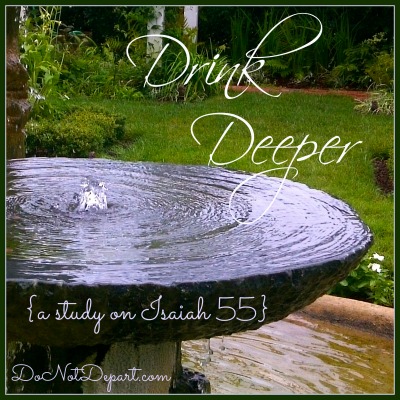
Drink Deeper {a study on Isaiah 55 at DoNotDepart.com}

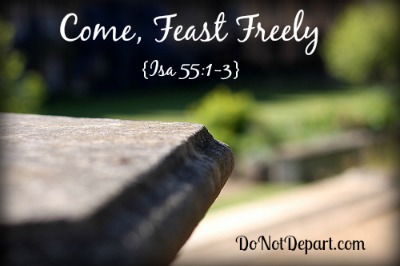
Come, Feast Freely

March 6, 2014 by Ali Shaw 10 Comments

DoNotDepart.com


“Come, everyone who thirsts, come to the waters; and he who has no money, come, buy and eat! Come, buy wine and milk without money and without price. Why do you spend your money for that which is not bread, and your labor for that which does not satisfy? Listen diligently to me, and eat what is good, and delight yourselves in rich food. Incline your ear, and come to me; hear, that your soul may live; and I will make with you an everlasting covenant, my steadfast, sure love for David.”
~ Isa 55:1-3, ESV


It’s Always About Love

God’s love is unfailing, gracious, and absolutely amazing. The Bible often refers to God’s steadfast, merciful, loyal lovingkindess (chesed or hesed in Hebrew). The Old Testament uses this word about 250 times, and I believe these verses point to God’s chesed character beautifully. And because I love doing research, I decided to look at the Hebrew translation. Guess what I found? A form of chesed, tucked away in verse three. But, we’ll get to that in a minute.

DoNotDepart.com
Photo Credit, CC License

Because God loves us so deeply, He wants what is best for us. He wants us to draw near to Him, so He invites us to come. A close relationship to God is the only thing that will satisfy our spirits. God offers a rich feast of love, spiritual blessings, and eternal life – a well that waters our thirsty souls, and bread that offers us rich, lasting contentment. He fulfills us spiritually like nothing in the world could ever do.

“If I find in myself desires which nothing in this world can satisfy, the only logical explanation is that I was made for another world.” – CS Lewis

The words in Isaiah were directed to the Israelites, offering them the promise of a Savior who would bring reconciliation to God, spiritual fulfillment, and eternal life. As Christians, we know Jesus is the Savior. Yet, I think it would still serve us well to examine our hearts in light of these words spoken before He came to earth.

  • Are we coming “to the waters”, knowing we can’t purchase what Christ has already paid for?
  • Are we spending (or wasting) time searching for things that can’t satisfy us like Jesus can?
  • Are we working for contentment apart from the Lord?
  • Are we laboring for what He offers freely?
  • Are we trading things of value (our time, our talents, our gifts, etc.) for things that have no real, lasting value simply to find temporary satisfaction?  (John Gill called this the “husks which swine eat”.)
  • Are we listening diligently to God and coming to Him to feast and be filled?
  • Are we thanking God for His new covenant and following Jesus?

“Come to me, all who labor and are heavy laden, and I will give you rest. Take my yoke upon you, and learn from me, for I am gentle and lowly in heart, and you will find rest for your souls. For my yoke is easy, and my burden is light.” – Matt 11:28-30

A new covenant was enacted through the sacrifice and resurrection of Jesus. The Father showed his great, merciful lovingkindness for the entire world by sending His very own Son to be the propitiation for our sins (1 John 2:2 and 4:10). I said we’d get to chesed tucked into verse three. Well, God’s new, everlasting covenant is based on His “covenant loyalty” translated in the ESV as His “steadfast… love.” That is the Hebrew word hasde, a form of chesed. This love was demonstrated by Jesus Christ coming into the world to save us, make our burden light, and to fulfill us spiritually with the very bread of life. Unfailing, gracious, absolutely amazing love! Wouldn’t you agree?

So, how are you delighting yourself in the rich food of Jesus? What do you need to give up laboring for?

Drink deeper – Isaiah 55

March 4, 2014 by Lisa Burgess 6 Comments

Drink Deeper {a study on Isaiah 55 at DoNotDepart.com}

With some things, the more you know, the more you love.

We believe this to be true about God.

So we invite you to join us here every Tuesday and Thursday in March to learn more about the Lord--and thus love the Lord more.

You already have the text we’ll be drinking deeply from–Isaiah 55 in the Old Testament of your Bible. It’s a chapter we’ve been memorizing one verse at a time since January 20.

But now we want to pause at the fountain to drink even deeper.

Drink Deeper {a study on Isaiah 55 at DoNotDepart.com}

Find a couple minutes this week to read all of Isaiah 55–it’s only 13 verses–to prepare yourself to learn and love the Lord more. Then return on Thursday to quench your thirst in the Lord’s compassion.

Share on Twitter:

“With God, the more you know, the more you love! http://wp.me/p1Su7F-2Q4 I’m reading Isaiah 55 @DoNotDepart”

Click here to tweet

Do you already have a favorite verse in Isaiah 55? Why? Please share.


The Most Important Place to Look for Parenting Advice

February 21, 2014 by Lindsey 10 Comments

Searching for Sanity by Lindsey Bell
Photo Courtesy: https://www.facebook.com/photosbyforeman

Admin note: Lindsey recently joined our writing team here at DoNotDepart, and we’re already so thankful to have her! Also, exciting: Lindsey’s first book just released! Read below for a little bit about the book.

I remember the ride home from the hospital well.

I sat in the front seat—still miserably sore from giving birth one day earlier—while my husband drove and my baby slept in the back.

I was happy, of course, but I was also overwhelmed. VERY overwhelmed. I had no idea what I was doing and didn’t know where to turn for help.

In the weeks that followed, as I adjusted to life with a baby, I scoured the Internet, desperately looking for some sort of guide that would make life easier for me.

What I found instead was a variety of parenting opinions that left me more confused than ever. It was then I noticed my Bible sitting on my nightstand.

Why I hadn’t searched it before is beyond me. After all, God was the One who invented parenthood. He—more than anyone else—knows what’s best for my children and for me.

So today, moms and dads, if you are feeling overwhelmed…if you’re wondering where to turn for parenting advice…don’t neglect the One who knows everything about you.

Turn to Him first. He might not give you a manual to parenthood, but (as I learned when my son was first born), He will help you through the often-overwhelming days of parenthood.

Let’s Talk: Besides the Bible, what are some other great places to look for parenting advice? Leave a comment to be entered to win a gift card from Lindsey for her blog tour contest!

This post is part of a Lindsey’s blog tour for Searching for Sanity, her new parenting devotional. You can read other posts in this tour by going to her blog: www.lindsey-bell.com or her website: www.lindseymbell.com.

You can also find Lindsey on Twitter, Facebook, or Pinterest.


Searching for Sanity_Lindsey BellAbout [amazon_link id=”1938499751″ target=”_blank” ]Searching for Sanity[/amazon_link]:

Have you ever looked at your beloved children and wondered, what in the world am I doing? Why did God trust me—of all people—to raise them?

Motherhood is the most difficult job many of us will ever take. Searching for Sanity offers moms an opportunity to take a breath, dig into the Word, and learn from parents of the past. In short devotions designed for busy moms, this book uses the parents of the Bible—both the good and the bad—to inspire today’s mothers.

Recap: Good tidings in modern times

December 31, 2013 by Julie Leave a Comment

Good tidings in modern times

In the past month we’ve celebrated the Word who became flesh and lived among us. We’ve talked about how to use our gift of words to display God’s glory and to share His truth. It’s all about Good Tidings in Modern Times.Good tidings in modern times

Good tidings tools we’ve shared

  • Daily scriptures to help tame the tongue (An awesome printable calendar)
  • Using words for purposeful praise (Christmas praise cards)
  • How to send our words responsibly in modern times full of social media
  • How to use our words to incorporate Christ into our conversations
  • Advent activities and Christmas crafts for the hearts of our children
  • A visual reminder for Celebrating the Word with our words
  •  How to repeat the joy of Jesus’ coming in our words
  • Christmas: What to do when it’s over

Though most ribbons are untied and most gifts are unwrapped, it’s still the right time to use our gift of language to reflect and share about the Word.  In him is life itself!

“In the beginning was the Word, and the Word was with God, and the Word was God.He was in the beginning with God. All things were made through him, and without him was not any thing made that was made. In him was life, and the life was the light of men.” (John 1:1-4)

We’re grateful to have you reading with us at Do Not Depart as we share tools and encouragement to abide in the Word.


If your thoughts have already turned to a new year and you just can’t wait for January inspiration, take a look at last year’s theme about Spiritual Disciplines.

How to Grow in Spiritual Disciplines

(from January 2013)

  • Mentoring, are you ready? Mentoring
  • Serving Others:  Service
  • Staying in the Word:  Reading the Bible
  • Following the knee-worn path: prayer
  • Let’s mean it – God bless you!
  • Giving God His due: worship
  • Finding quiet in an incredibly loud world: silence & solitude


Speedbumps in Bible Study {guest post month}

November 7, 2013 by Guest Post 8 Comments

Speedbumps in Bible Study {guest post month at DoNotDepart.com}
Original photo credit – Ryk Neethling

This guest post is from Wendy Widder. See her full bio at the end of the post.

Have you ever been reading the Bible and run across a word or phrase that makes you scratch your head and say, “That seems kind of random.” There’s one in the second half of Daniel 1:2, where Nebuchadnezzar took some of the vessels of the Jerusalem temple “to the land of Shinar” to put them in his god’s treasury (ESV).

Many translations replaced the word “Shinar” with “Babylonia/Babylon,” because they’re pretty much the same place and who’s really heard of Shinar anyway? (This is a good reason to use a more literal translation, like the ESV, NASB, or NRSV, for serious Bible study.) But eliminating “Shinar” from the story is like leveling a speedbump – something in the text that slows you down long enough to look up and wonder if you have been missing something in an otherwise familiar story. If you’re really going to hear what the text says, you’ve got some homework to do.

Shinar – The Beginning of Babylon

Shinar is only mentioned a handful of times in the Bible, mostly in Genesis. It first appears in Genesis 10:10, where we learn that Nimrod’s kingdom got its start in the region of Shinar. Then in the very next chapter, it’s on the plain of Shinar that the city of Babylon is born. You probably know the story – a group of people decide to build a city with a tower that reaches to the heavens, so they could make a name for themselves (Genesis 11:4).

The tower of Genesis 11 was a ziggurat, part of a temple complex. Every Mesopotamian city had one. Such a tower functioned as a staircase for a god to make his way down to earth, where he could hang out in his temple and accept gifts from worshipers. Worshipers built ziggurats for the ease and convenience of their gods. But did you catch why the settlers at Shinar built their tower? To make a name for themselves. They are a little confused about their place in the hierarchy of beings. The builders at Shinar blurred the lines between the divine and the human.

Ironically, the God Yahweh did come down to Shinar (perhaps He even used their little staircase), and, after assessing the situation, put an end to their city-building by confusing their language – and so the name “Babel,” meaning “to confuse.” The people confused about their role as humans had their language confused and they scattered.

But the city does get finished by someone, and in the Bible, Babylon becomes the epicenter of all things anti-God. “Shinar,” however, essentially disappears.

Shinar – The End of Babylon

So why does Daniel 1:2 use the obscure word? I think it’s a speedbump to make you think about the story of Babylon’s beginning, because you’re about to learn the story of its end. Babylon emerged out of the blurring of the lines between deity and humanity, and it will end in the same way. The king who dominates the book of Daniel – Nebuchadnezzar – may worship his god in his Shinar temple, but he will act more like a god himself. And the ultimate end of Babylon will come on a night when a certain King Belshazzar will make even Nebuchadnezzar look almost saintly.

In the first verses of Daniel, we discover that the true God has come to Shinar again – but this time He’s on a covert operation: His temple vessels are tucked away in the treasury of the god there and some of His choicest human vessels are on their way to the palace of the king there. God will once again confront confused humans in Shinar, and before the city of Babylon falls, everyone will know who’s God and who’s not.

What speedbumps have you encountered while studying the Bible? How can you keep your eyes out for deeper learning?


Wendy Widder


Wendy Widder lives in the Pacific Northwest, where her easiest get-away is the Canadian border. She loves teaching and writing about the Old Testament, and she can be found online at wendywidder.com and wendylynnwidder.wordpress.com.

A Recap on Wisdom for Life

September 30, 2013 by Julie Leave a Comment

Wisdom for Life

We’ve been in pursuit of Wisdom for Life here this month. Our prayer is that we’ve given you some Bible study tools to know how to get the wisdom and insight you need for life as a woman, an employee, a mom, a friend, a wife, a sister, a child, a friend, a neighbor.

How much better to get wisdom than gold! To get understanding is to be chosen rather than silver. (Proverbs 16:16)

A Recap on Wisdom for Life

  • 3 Tips to Understanding Proverbs
  •  Wisdom for today … still calling
  • What the world needs now … wisdom
  • Using Inductive Bible Study with Kids
  • Where you find wisdom
  • Oh, Job (Learning to abide with God when you don’t understand)
  • Applying Wisdom with Love (Rather than legalistic law)
  • Wisdom from Proverbs (free printable)
  • Ecclesiastes:  Wisdom to Understand What Matters Most

Wisdom for Life

 Let us know if you were helped this Wisdom for Life month. Share in the comments if this helped you to “wise up.”

Ecclesiastes: Wisdom to Understand What Matters Most

September 26, 2013 by Julie Leave a Comment

Today we welcome Stephanie Shott, founder of The MOM Initiative and author of Ecclesiastes: Understanding What Matters Most. We’ve asked her to pull back the curtain on this wisdom book that has many readers stumped. Find out why it’s a book of the Bible that helps us understand how to avoid wasting our lives. 

I have a huge affinity for Ecclesiastes. It was the unexpected place God took me when God called us to the mission field and I was desperately trying to make sense of that which didn’t make any sense at all.

Yet, it was one of those books of the Bible others had told me I would never really understand. So every year, when I read through the Bible, I would kind of ‘read over’ it, skimming the pages of what seemed to be one of the most negative twelve chapters I have ever read, written by one of the most pessimistic men who had ever lived.

But when I really needed to know what matters most in life, God planted my face and my heart smack dab in middle of that often avoided book where I discovered how we can make our lives count and minutes matter.

When Solomon was about 20 years old, he became the successor to his father, David’s throne. Solomon’s wildest dreams came true, when in a dream God asked him, “What shall I give you?”

Wise enough to choose wisdom, Solomon was given more than what he requested. He was a man who started really well, but didn’t cross the finish line as well as I’m sure he had hoped he would.

Solomon had it all. But like his daddy, he was a sucker for a pretty woman and what David did in moderation, Solomon did in excess. Somewhere along the way in his quest for more, he went from faithful to philanderer and from a man who worshiped God to a man who worshiped idols.

Ecclesiastes is written in his later years and was penned as a sort of riches to rags story. Kind of like a “been there, done that, you don’t want to go there” kind of message.

Wow! What a waste! All that wisdom and he still blew it!

That’s pretty scary to me!

I don’t know about you, but I don’t want to waste my life. It’s really one of my greatest fears. I don’t want to start out well and blow it along the way, do you?

I don’t want to spend my days letting life happen, focusing on the insignificant, and being so distracted by the dailies that I miss what really matters most.

And it can happen so easily. The laundry, the dishes, the all night cry-a-thons with the baby, little-league practice, work, life, even ministry – they all vie for our attention.

But what I love about Ecclesiastes is that Solomon covers the gamut of life experiences and gives us a solution to how we can make our lives count, not in spite of all of what is going on in our lives, but in light of it all.

From Solomon & the book of Ecclesiastes we learn:

1. WISDOM DOES NOT EQUAL PERFECTION ~ Knowing how we should live and actually living like we know we should are two very different things. Wisdom gives us the knowledge and ability to choose well, but it is an act of our will to actually do it.

Recently, I noticed a Facebook post from someone who is known to have a wealth of biblical knowledge, yet he is also known as a very hard and arrogant man. It’s pretty hard to tell someone about the love and mercy of God when others don’t see the love and mercy of God actively at work in the lives of His children. We are to be living epistles who live out loud for Christ. Not perfect. But passionately pursing a life that honors God.

2. DON’T WASTE YOUR TIME GRASPING AT THE WIND ~ Throughout Ecclesiastes, Solomon uses the terms, vanity and grasping at the wind a lot. But in Ecclesiastes 12, he sums up what is important in life and tells us the bottom-line to life is that we fear God and keep His commandments.

It’s easy to struggle with living for eternity in the midst of the dailies of life. But one day, with a toilet brush in one hand and a can of Comet in the other, the Lord showed me that I can even clean toilets to the glory of God.

It’s so easy to long for the significant rather than the menial. Yet, each is equal in God’s site when done for His glory. I’m not wasting my time when I’m cleaning toilets or scrubbing dried spaghetti off the carpets. With the right heart attitude, I can even do those things for eternity.

3. FAILURE IS NEVER FINAL ~ One of the hidden treasures of Ecclesiastes is the fact that it was written by a man who had forsaken God and followed false gods. He not only failed God, he forsook Him! But Ecclesiastes was penned in Solomon’s later years…after he had taken a detour and tried to live life under the sun apart from Him. The book of Ecclesiastes stands as a testimony to all of us that failure is never final.

I’ve failed God a lot. Maybe you have too. And it’s easy to think that God is done with us. But if you and I are still breathing, He’s not. He not only has a plan for your life, but He has plans for each minute of your life. Don’t give up. Don’t give in. Do the next thing because He’s not done with you yet!

HAVE YOU EVER AVOIDED ECCLESIASTES? HAVE YOU EVER FELT LIKE YOU HAD LET GOD DOWN AND COULDN’T BE USED ANYMORE? WHAT ARE YOU DOING NOW THAT MAY SEEM MUNDANE, YET CAN BE DONE FOR THE GLORY OF GOD?

Find Stephanie at www.stephanieshott.com

What the world needs now: WISDOM

September 3, 2013 by Julie 3 Comments

I dropped off my teenager and went to look for a parking spot. The place was packed. A man sat with his bottle and bag of books on the curb, staring at the pages as if they were empty. I wormed my way inside the store and past a long line of customers who looked like they’d been out all night. A swarm of humanity pushed each other aside to rifle through video games, movies, and gadgetry as if the store would close any minute … but it was mid-afternoon. From the upper level, a child screamed and ran away from an adult yelling obscene words to recapture him, and a man walked past me displaying an equally obscene t-shirt like a billboard on a highway. A couple sat on an old couch, groping one another as they watched the parade of people, but their gender was a mystery to me. Jesus once saw a throng such as that and “When he saw the crowds, he had compassion for them, because they were harassed and helpless, like sheep without a shepherd.” (Matt. 9:36)

I ducked into the first aisle to search for my son, only to find myself in “Erotic Fantasy,” just on the other side of “Children’s Fiction.” With bookshelves towering over my head across the length of the warehouse, I thought, there must surely be a book containing answers for wise living that the crowds with me so desperately need.

  • Today’s world thirsts for wisdom that comes from God alone.
  • Today’s church is malnutritioned when it comes to vital wisdom for living out our faith in an obscene world.

After navigating my way through the world, the Bibles were in the back corner of the store.  God’s book of truth holds the key to wisdom we so desperately need, and it was there all the time, waiting to be opened and read and obeyed. We only need to see what’s trending, check the Facebook feed, turn on the news, or open our front door to see our world buckling under the weight of sin and begging for the underpinnings of wisdom to give us strength and structure.

This month at Do Not Depart we’re taking a look at Wisdom Literature. We’ll give you Bible study tools to understand the rich resource of wisdom God has given us. Wisdom is calling out to us, and God’s blessings await those who listen. Come with us as we explore tools for unlocking Wisdom Literature.

Are you feeling the need for wisdom in your life?

Beautiful, Bountiful Harvest – “Fruit of the Spirit” Lesson 5

July 30, 2013 by Kathy Howard Leave a Comment

Fruit of the Spirit, Galatians 5

Fruit of the Spirit, Galatians 5This is the 5th – and last – lesson in a month-long series on “The Fruit of the Spirit.” You can also download today’s lesson as a PDF. You can access previous lessons here: First, Second, Third, and Fourth.

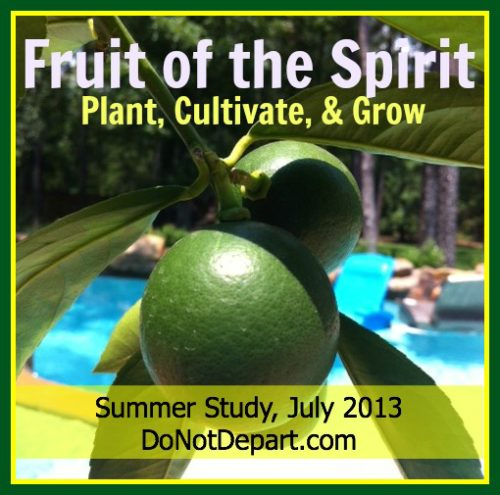
When we began this study, I mentioned my lemon tree. How it budded and bloomed. How the little lemons began to grow. Six weeks later the lemons aren’t ready to harvest. The fruit is still growing; the lemons still green. Fruit production takes time. But I will drink lemonade!

Like physical fruit needs time to grow, the fruit of the Spirit will not ripen in our lives overnight. We must work consistently to crucify the old nature. We must continually refuse to give in to our fleshly desires and yield our will to the Spirit’s. We can say “no” to our sinful nature, accept the “way out” God provides, and follow the Holy Spirit’s leading.

As we grow, the characteristics of Christ – fruit of the Spirit – will be manifested in our lives. As the Spirit transforms us more and more into the image of Christ, we will produce a beautiful, bountiful fruit harvest!

Plant: Knowing the Fruit

In Week Two, we discussed the meaning of “fruit.” The Greek word “karpos” refers to the natural product of the Holy Spirit, who lives inside every believer. The word is singular, signifying that “fruit” is a unified whole. The Expositor’s Bible Commentary suggests we think of the fruit as a “bunch of grapes instead of separate pieces of fruit.” As we grow in Christ-likeness we will produce all the characteristics of His nature.

Read Galatians 5:22-23. List the 9 characteristics of the Spirit’s fruit.


Let’s consider the meaning of each characteristic. Place the letter of a definition in the blank before the correct characteristic. (To double-check, the answer key is at the end of the lesson!)

___1. Love                       a. Enduring circumstances & other people, even when tried 

___2. Joy                    

                              b. Generosity springing from kindness; can include “sterner” good acts

___3. Peace                   c. Attitude expressing itself in loving ways & seeks others’ welfare

___4. Patience                  d. Trustworthiness; describes someone willing to die for Christ

___5. Kindness                  e. Strength to control sinful desires, to say “no” to the flesh    

___ 6. Goodness              

                               f.  “Happiness” that doesn’t depend on physical circumstances

___ 7. Faithfulness            g. Acting in a good and gentle way toward another

___8. Gentleness/Meekness 

                                           h. Tranquility; harmony with people & God; rest, contentment

___9. Self-Control            i. Linked to humility; not weakness; opposite of self-interest

Cultivate: Find out More

Let’s take a quick look at an example of each characteristic in action. Read the following Scripture passages. Make observations on the operation of these characteristics.

Galatians 5:13-14 (love):

John 16:22 (joy):

Romans 5:1 (peace):

2 Timothy 4:2 (patience):

Titus 3:4 (kindness):

Romans 15:14 (goodness):

2 Thessalonians 1:4 (faithfulness/faith):

2 Timothy 2:24-25 (gentleness/gentle):

2 Peter 1:5-6 (self-control):

Grow: Ready for a Harvest

We’ve talked facts and definitions. Now, let’s get personal. It’s time to do a fruit check. This is between each of us and God. Spend some quiet time with Him now and reflect on each characteristic of the fruit of the Spirit.

Ask God to show you the quality of the Spirit’s fruit in your life. Think about some recent circumstances. In the space below, jot down times you feel the Spirit’s character was manifested and times you allowed your natural, sinful character to take over.


Although we will battle our fleshly nature for the rest of our lives, we become more sensitive to the Spirit’s leading as we mature and learn to recognize His voice. As we end our study together, I pray God will encourage, strengthen, and grow you in the days ahead!

Let’s talk: What did you learn in this study that has encouraged or challenged you the most?


Fruit of the Spirit definition answer key. 1c, 2f, 3h, 4a, 5g, 6b, 7d, 8i, 9e

The Walking Dead – “Fruit of the Spirit” Lesson 4

July 23, 2013 by Kathy Howard Leave a Comment

Fruit of the Spirit, Galatians 5

Fruit of the Spirit, Galatians 5This is the fourth lesson in a month-long series on “The Fruit of the Spirit. Download the PDF version of today’s lesson. See previous lessons: first, second, third.

I know what you’re thinking. Images of horror movies and the undead have probably crept into your mind. Just for fun, I Googled “The Walking Dead,” the title of today’s lesson. Did you know there’s a TV series with the same name? This drama on AMC tells the story of a post-apocalyptic world ravaged by a zombie epidemic.

Thankfully, our fourth lesson in the “Fruit of the Spirit” has nothing to do with zombies. But we do need to talk about death – our own, in fact.

Here’s the truth of it: We cannot produce the fruit of the Spirit. We cannot – with any consistency – live a life characterized by love, joy, peace, patience, kindness, goodness, faithfulness, gentleness, or self-control.

Plant: We Can’t Do it!

You may be able to muster up a loving act now and again. I might work up enough will-power to control my fleshly desires in one instance today. But our lives will never abundantly exhibit the characteristics of Christ by our own strength and works. In today’s lesson we will explore how a life full of the Spirit’s fruit is possible.

Read Galatians 5:22-25. Are we told to produce the Fruit of the Spirit? (Circle one)  Yes   No

In lesson two, “What is Fruit?” we learned that “fruit” is the natural by-product of the Holy Spirit. Only the Spirit can produce these characteristics in our lives. As we allow Him to take control, His life will be manifested in ours.

Identify two things in the passage we should be doing.


Cultivate: Die to Self

Paul used the “active” voice in verse 24 when he wrote “have crucified the sinful nature.” This signifies an act that a believer has done and must continue to do to herself.

What do you think “crucifying our sinful nature” looks like in everyday life?

Remember, this is something we can do. We can choose to turn away from our sinful desires. Because of the presence of the Holy Spirit, we have the power to resist temptation and choose the way out God provides (1 Corinthians 10:13).

Before we take a closer look at the second thing we should be doing, read Romans 8:11-14. According to this passage, what “obligation” do we have as believers? Check all that apply.

___ To  follow our sinful nature and submit to its desires

___ To turn away from the deeds of our sinful nature

___ To submit to the leading of the Holy Spirit


According to Romans 8:11, why do we have this obligation?


Grow: Follow the Holy Spirit

Paul reinforces this reasoning in Galatians 5:25. Since the Holy Spirit has given new life to our sin-dead souls, we are obligated to follow His lead. This is the second thing we should be doing. Depending on your translation, you may read “keep in step with,” “follow the Spirit’s leading,” or “let us walk by.” Here’s how Strong’s Greek and Hebrew Dictionary defines the Greek word  stoicheo, that is translated in these various ways:

  1. To proceed in a row as the march of a soldier, go in order; metaph. to go on prosperously, to turn out well
  2. To walk; to direct one’s life, to live

Considering the definition of “walk,” what does it mean to “walk by” or “keep in step with” the Spirit?


Read Galatians 2:20 below from the New Living Translation:

My old self has been crucified with Christ. It is no longer I who live, but Christ lives in me. So I live in this earthly body by trusting in the Son of God, who loved me and gave himself for me.

How does this verse help us understand what it means to “walk by the Spirit.”


On my own, I would produce nothing but sinful works. Even my “good fruit” would be rotten. My flesh is too weak and sinful and to produce the characteristics of Christ. Kathy must “die.” I have to get out of the way and let the Holy Spirit live Christ’s life through me. It’s the appropriate response to the One who saved my life. And my eternal hope.

Let’s talk: What is the hardest thing for you about following the Spirit? What helps you submit to His leadership?


Throw Out the Bad Fruit – Fruit of the Spirit, Lesson 3

July 16, 2013 by Kathy Howard 2 Comments

Fruit of the Spirit, Galatians 5

This is the 3rd lesson in a study on “The Fruit of the Spirit.” Access the first and second lessons. Download today’s lesson in a PDF.

If you’ve had any experience with a GPS or use a navigation system for driving directions then you are familiar with the following phrases:

  • Recalculating
  • Make a legal u-turn as soon as possible

My anxiety level rises dramatically when I hear that little computerized voice. In layman’s terms, “recalculating” means “You aren’t following my directions!” And the command to make a u-turn means, “You’re going the wrong way! Turn around immediately and go the other way!”

Plant: What does fleshly fruit look like?

Like these GPS warnings to drivers, certain things should raise a red flag in our faith if they are present in our lives. In Galatians, Paul refers to these signs as “acts of the sinful nature.” These attitudes and behaviors are contrary to the Spirit and what He wants to produce in our lives.

Read Galatians 5:19-21 from the New Living Translation below.

19 When you follow the desires of your sinful nature, the results are very clear: sexual immorality, impurity, lustful pleasures, 20 idolatry, sorcery, hostility, quarreling, jealousy, outbursts of anger, selfish ambition, dissension, division, 21 envy, drunkenness, wild parties, and other sins like these. Let me tell you again, as I have before, that anyone living that sort of life will not inherit the Kingdom of God.  Galatians 5:19-21, NLT

Cultivate: Is our life growing any fruit of the flesh?

Circle any fruit of the sinful nature in the passage above that sometimes pop up in your life.

This list in Galatians is not exhaustive. Paul merely gave the believers in Galatia a sample of the fruit of the flesh. And everyone will struggle with different things. Let’s read two more passages from Paul’s letters to broaden our understanding of “the acts of the sinful nature.”

Read the following passages (maybe in more than one translation) and list any attitudes or behaviors that your sinful nature tends to produce.

Ephesians 4:22-32 and 5:1-7:

Colossians 3:5-10:

The presence of these attitudes and behaviors reveal that sometimes we allow our sinful nature to win a spiritual battle. If you’re like most Christians – including me – your life does produce some fleshly fruit from time to time. We still occasionally choose our own way over God’s and reject the “way out” He promises to provide when we’re tempted (1 Corinthians 10:13).

Grow: What can we do to get rid of the bad fruit?

Believer, whether our lives have produced a handful of fleshly fruit or an abundant crop, God’s desire for us is less “acts of the sinful nature” and more “fruit of the Spirit.” In the remainder of this lesson we are going to prepare our lives for the Spirit’s harvest by weeding out the bad fruit and tilling our heart for the Spirit’s work.

Read James 4:1-10.

Jesus’ brother James wrote to Christians caught in a cycle of sin. They had proudly rejected the leadership of the Spirit and chosen their own way. Distance from God, difficult relationships with God’s people, and a harvest of fleshly fruit were the result. But James commanded a remedy. I can hear him saying, “Make a legal u-turn as soon as possible!”

List phrases and words (vs 1-4) that describe their relationship with God and other believers.


Look back through verses 6-10 and list all the verbs you can spot that describe the actions a Christian should take when we’ve chosen our own way over God’s (I spotted 10).


These actions characterize true repentance. Sometimes Christians merely give lip service to repentance. But until we humble ourselves before God, grieve over our sin, and turn away from it we have not experienced real repentance. We must make a u-turn!

Read 1 John 1:9. How does God promise to respond to our repentance?


Today’s lesson has been very personal – and maybe even painful. We all have bad fruit in our lives. But, praise God, He does indeed allow u-turns! Take some time this week to sit quietly with God and work through getting rid of the fleshly fruit.

Let’s talk more about the process of repentance. Was there anything in James 4:6-10 about repentance that surprised you? Maybe an attitude God calls us to adopt or an action you previously have not considered part of repentance.

What is “Fruit?” – Fruit of the Spirit, Lesson 2

July 9, 2013 by Kathy Howard 1 Comment

Fruit of the Spirit, Galatians 5
This is the second lesson in our Summer Study, “The Fruit of the Spirit: Plant, Culivate, & Grow.” You can see the introductory/first lesson here.  You can also download today’s lesson as a PDF to print!
When my kids were little they loved watching Veggie Tales. Their favorite Veggie Tale characters were Bob and Larry – a tomato and cucumber, respectively. If you are also a Veggie Tales fan, you might want to sit down because I am about to shake things up. Larry and Bob aren’t vegetables! To be botanically correct, tomatoes and cucumbers are fruits!It doesn’t matter if we consider a tomato to be a fruit or a vegetable. But we do need a good understanding of the “fruit of the Spirit.” Over the next few weeks we will plant God’s truth about spiritual fruit in our hearts, cultivate our lives to receive it, and take action to help it grow! Today we’ll take a closer look at what the “fruit of the Spirit” is and consider our spiritual battle.

Read our focal passage, Galatians 5:16-26.

The word “fruit” used in Galatians 5:22 is the Greek word “karpos.” According to Mounces Complete Expository Dictionary, “karpos” refers to the natural product of something that is alive. Literally, it’s used of the product of trees, vines, and crops. But it’s also used metaphorically to refer to the natural product of a spiritual being. Paul uses it to contrast what our sinful natures naturally produce with what the Holy Spirit naturally produces.

Plant: Prerequisite to Growing Spiritual Fruit

The obvious prerequisite to producing the “fruit of the Spirit” is the presence of the Spirit. Let’s see what the Bible says about the indwelling presence of the Holy Spirit and His work in us.

Read Ephesians 1:13-14. Check all the statements that apply.

___ We receive the Holy Spirit through faith in Christ.
___ The Holy Spirit “marks” us as belonging to God.
___ The Spirit is our “guarantee” that we will receive all God’s promises.

When we place our faith in Jesus as Savior and Lord, God guarantees our salvation by placing His Spirit within us. Every Christian is indwelled by the Holy Spirit (See Romans 8:9-11).

Cultivate: Two Key Facts about the Fruit of the Spirit

Let’s get a better understanding of the Fruit of the Spirit by exploring two key facts.

Fact #1: “Fruit” is the natural by-product of the Spirit in a Christian’s life.

Read 2 Cor 3:17-18. According to verse 18, what is the work of the Spirit in a believer’s life?

From the moment of salvation until the end of our lives on this earth, the Spirit of God works in believers to transform our nature and character into that of Christ’s. Therefore, the Holy Spirit is constantly working to rid our lives of the “acts of the sinful nature” (Gal 5:19) and conform us into the image of Christ. “Fruit of the Spirit” is evidence that our character is becoming like Christ’s.

Fact #2: “Fruit of the Spirit” is not the same as “spiritual gifts.”

Although the Spirit is the source of both His “gifts” and “fruit”, they are not the same. There are a multitude of various gifts but an individual only receives what the Holy Spirit determines to give (1 Cor 12:4-11). However the “fruit” of the Spirit should be common to all Christians. The word “karpos” is singular signifying that “fruit” is a unified whole. As we grow in Christ- likeness we will produce all the characteristics of His nature.

Grow: Prepare for Battle

If we want our lives to be filled with the fruit of the Spirit, we must realize there’s a spiritual battle going on inside every Christian. Our sinful human nature wants to satisfy our selfish desires. The indwelling Holy Spirit calls us to follow Him. Who will win?

Read Galatians 5:16-18. Describe this spiritual battle in your own words.

Read Eph 1:18-21. List words and phrases that describe the power of the Holy Spirit within you?

Read the following verses and record God’s promises to you.

       2 Peter 1:3-4 –

       1 Corinthians 10:13 –

We have a weapon of unlimited power on our side. Our fleshly nature does not have to win. Satan can appeal to our sinful desires, but his power over us is limited. We have a greater power at work in us. We have the power to resist our fleshly desires through the presence of the indwelling Holy Spirit.

Look back at Galatians 5:16-19. We have a choice to make. What is it?

We can choose to refuse our sinful nature. The powerful presence of the Holy Spirit supplies us with the power to be obedient to God. We can choose God’s “way out.”

Let’s talk: Think about the last time you faced a spiritual battle. What was it? Did you allow your flesh to win or did you walk in the power of the Holy Spirit? If you gave in to sin, can you identify the “way out” God offered?


“Fruit of the Spirit” Summer Study – You’re Invited!

July 2, 2013 by Kathy Howard 8 Comments

Fruit of the Spirit, Galatians 5

Last year, I planted two fruit trees – one lemon and one lime. I carefully placed them in large pots on the patio using the soil recommended by the nursery for citrus trees. Both received the same amount of sun and water. Both bloomed. Both had numerous visits from bees and butterflies.

The two trees have had the same care and nurturing, but the fruit production has been drastically different. The lemons seem to be growing overnight. The flexible young tree branches curve down under their weight. My husband and I anticipate large slices of the tangy fruit for our iced tea later in the summer.

In contrast, the limes look pitiful. When the blooms faded, tiny little fruit balls emerged, but only two or three have grown much. Many have turned brown and dropped off. God intended for both trees to grow fruit, but only one is fulfilling its purpose.

God also intends for us, His children, to bear fruit. According to Jesus, when we follow Him closely our lives will produce “much” fruit (John 15:5). Is your life producing an abundant harvest or are you in serious need of some spiritual fertilizer?


You Are invited!

This month here at Do Not Depart, we will be studying the fruit of the Spirit. You are invited to join us each Tuesday as we explore Galatians 5:16-26 and related passages. Whether we need some major pruning or just a little shaping up, all of us could benefit from studying and applying what God’s Word says about the fruit of the Spirit.

Here are a few things we’ll learn in Fruit of the Spirit: Plant, Cultivate, & Grow

  • What are the characteristics of a “fruitless” life?
  • What does it mean to “live by the Spirit?”
  • Just what is “fruit” anyway?
  • Am I “fruity?”
  • What should the fruit of the Spirit look like in my life?
  • How can I improve my harvest?

Each week as we study together we will Plant God’s truth in our hearts, Cultivate our own lives to receive that truth, and take action to help it Grow! The study will be in blog format and also available as a PDF download. Today, we combine the intro post and an optional study on the context of the book of Galatians.

Where do we begin? Context of Galatians

The way God chooses to apply the truths found in His Word can vary with the individual and their circumstance. However the meaning of a biblical passage never changes. It will always mean what God originally intended for it to mean. Before we can make application to our lives we must have a good grasp of the original meaning by considering the larger context. (For more information on biblical context read “Context is King.”)

Galatians is a letter written to a specific people at a specific point in history for a specific purpose. Therefore, we need to know who, when, and why to understand the meaning. (Download the PDF of today’s lesson on the context of Galatians.)

As you work through today’s lesson, you’ll discover that some of Paul’s original audience struggled with legalism and some were abusing their freedom in Christ by indulging sinful desires.

Let’s discuss this today. So far in your Christian life do you feel you have been influenced more by the “law,” your own nature, or by the Spirit? (We may not have the influence of the Mosaic Law, but the “do’s” and “don’ts” or religion are still prominent.)


« Previous Page
Next Page »

This Month’s Theme

  • Jesus is the Way
  • And He Shall Be Called Series Intro

Enter your email address to have new posts emailed to you:

We’ll come to you

Enter your email address to have new posts emailed to you

Categories

Bible Memory – Lent 2021

Memorizing Isaiah 12

Let the Children Come

Let the Children Come

Want more #HideHisWord resources?

Memorizing Psalm 1

Find Us on Facebook


Search

Recent Posts

  • Series Wrap-Up: The Lord Is My Light
  • His Marvelous Light
  • When the Darkness Deepens
  • Though I Sit in Darkness…
  • Let Your Light Shine
  • Life-Giving Light

Archives

© 2026 · Pretty Creative WordPress Theme by, Pretty Darn Cute Design