• Home
  • About
    • Our Contributors
    • Our Beliefs
  • Blog
  • Bible Studies
    • Scripture Dig
  • Archives
  • Shop
  • Advertise
  • Contact
    • Email
    • Facebook
    • Instagram
    • Pinterest
    • Twitter

Do Not Depart

Encouragement and Tools to Abide in God's Word

You are here: Home / Archives for wisdom

The Simple Beauty of Wisdom {Proverbs 30-31}

January 31, 2018 by Patti Brown 1 Comment

The Simple Beauty of Wisdom - #31DaysInProverbs - We wrap up our series with Proverbs 30 and 31

We have come to the end of our 31 days in the book of Proverbs. At times convicting, at times inspiring, this collection of “the words of the wise and their riddles” (Proverbs 1:6) has taken us on a journey of truth in search of wisdom.

And like a lovely package all tied up, Proverbs begins with the fear of the Lord (Proverbs 1:7) and a woman (Proverbs 1:20-33), and it ends with the fear of the Lord (Proverbs 30:30) and a woman (Proverbs 31:10-31).

We see a style shift in chapters 30 and 31. Chapter 29 concluded another set of one-verse proverbs, and now in chapter 30 we embark on longer lessons that use numerical parallelism and poetry to convey truth.

In addition, both Proverbs 30 and Proverbs 31 are explicitly attributed to someone other than Solomon, though a few scholars think these may be nicknames for him. We actually know nothing about either Agur (chapter 30) or Lemuel (chapter 31), other than the fact that what they recorded was deemed worthy to be included in Holy Scripture.
The Simple Beauty of Wisdom - #31DaysInProverbs - We wrap up our series with Proverbs 30 and 31

Proverbs 30—The Wisdom of a Simple Man

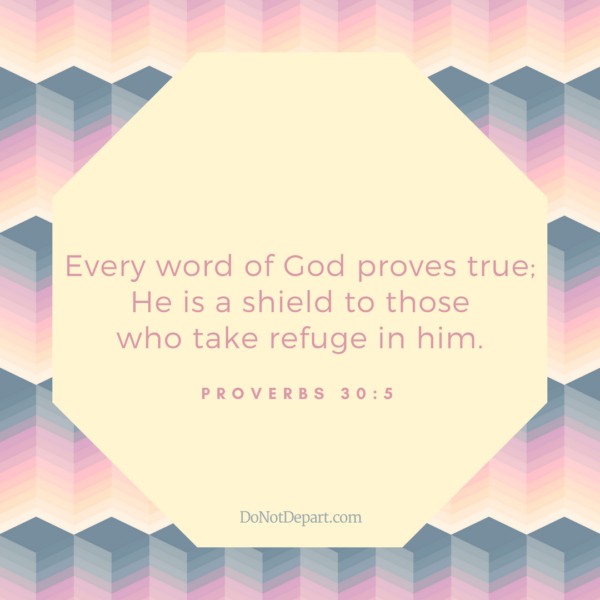
Agur is a humble man. The first section of Proverbs 30 is a clear reminder, necessary in a book about wisdom, that no matter how wise a human may become, no one will ever be as wise as God. True human wisdom leads to fearing God, and taking refuge in Him and in His Word (verse 5). We can not add to nor detract from God’s Word – it has been tested and stands.
The Simple Beauty of Wisdom - #31DaysInProverbs - We wrap up our series with Proverbs 30 and 31
Wisdom leads Agur to ask God to make him neither rich nor poor. Riches would distract him from God, and poverty tempt him to steal. Rather he asks, much like Jesus commands in the Lord’s Prayer (Mathew 6:11), only for his daily bread.

After describing some very unsavory characters (the sort of people who are spiritual fools), Agur moves into five sets of numerical parallel proverbs that are riddle-like. The words in this section paint a picture of the physical world with bright brush strokes. These Holy Spirit inspired pictures help us to understand deeper, spiritual realities: the greatest emptiness is life without God, His creation is awe-inspiring and mysterious, being small or unimportant does not preclude being wise.

Words and our use of them, or perhaps more accurately, our restraint from using them, are a major theme throughout the entire book of Proverbs. At this point, it’s time to be blunt: “put your hand on your mouth” (verse 32). This verse makes me laugh—I think we have all had moments when this would have been the best choice!

Proverbs 31—Eshet Chayil—The Virtuous Woman

As a mama, it brings joy to my heart that this entire chapter is a teaching from mother to son. Lemuel has paid attention to Proverbs 1:8-9:

Hear, my son, your father’s instruction,
and forsake not your mother’s teaching,
for they are a graceful garland for your head
and pendants for your neck.
Proverbs 1:8-9

In the first nine verses of Proverbs 31, King Lemuel’s mother gives him wise advice for leadership: do not be distracted by alcohol or women. A good leader focuses his strength on serving, not on indulging his appetites. She also exhorts him to speak up for those who have no voice: the afflicted, the poor, the unfortunate. A wise leader is one who thinks of others over himself and is compassionate.

Lemuel’s mother then moves on to describing an excellent wife. Verses 10-31 are an alphabetic acrostic poem. Each of the 22 verses starts with a different letter of the Hebrew alphabet. There are a number of reasons why the acrostic form might have been used, a simple one being that it makes a passage easier to memorize. This theory seems supported by the fact that these verses are traditionally memorized by Jewish men to sing to their wives as praise during the Sabbath meal. Imagine being blessed weekly by having these verses sung over you by your husband?

Many women shudder when they hear mention of Proverbs 31. “This stresses me out,” “An impossible to-do list!,” “I don’t know how to spin wool!” For some reason many Christians have taken this passage and turned it into a source of shame for women, when it is not meant to be a snapshot in time, but rather the arc of the life of a virtuous woman, or Eshet Chayil אֵשֶׁת חַיִל.

Think for a moment of Ruth. Ruth was a widow, a foreigner, and desperately poor. The only way she survived was by going into the fields after a harvest and gathering what was left behind. She did not have her own home, or servants, or fancy scarlet clothes like the woman in Proverbs 31. No husband to sit in the gates. And yet when Boaz spoke of her before their marriage, he called her Eshet Chayil, just like the Proverbs 31 woman!

You see, all the things the Proverbs 31 woman does are the fruit of her wise choice to fear the Lord. Getting up in the dark hours of the morning (Proverbs 31:15) or buying a field (Proverbs 31:16) aren’t what make her virtuous. She does those things because she loves God, and in her life, that’s what serving Him wisely looks like.

Does your husband work very late so you stay up to welcome him home, then are too tired to get up before dawn? Blessing your husband shows wisdom, so in your case getting up early is not the right choice. Do you make wise decisions about money so that you are a blessing to your family finances? That’s your field.

The Simple Beauty of Wisdom - #31DaysInProverbs - We wrap up our series with Proverbs 30 and 31

Proverbs 31 may seem like a picture of a complicated life, but in fact, it is beautifully simple, and summed up in verses 30-31, the final verses of Proverbs:

Charm is deceitful, and beauty is vain,
but a woman who fears the Lord is to be praised.
Give her of the fruit of her hands,
and let her works praise her in the gates.
Proverbs 31:30-31

God cares about our insides first. Running around trying to look like the Proverbs 31 woman is like trying to heal a wound by putting makeup on it. It might look okay for a while, but it makes the infection worse. When the focus of our hearts is on God, the rest falls into place.

#31DaysInProverbs—Our Whole Series

Our month in Proverbs has come to an end. Take a look back through all we have learned! The thirty one chapters of Proverbs are filled with advice, admonition, and observations on the nature of God’s world and humanity. The wisdom of Proverbs is practical, yet also addresses the spiritual realities of the eternal kingdom.

  • Printables for Studying Proverbs
  • Proverbs to Memorize
  • Proverbs 1-2 – Wisdom for Today
  • Proverbs 3-5 – Who Is Wisdom?
  • Proverbs 6-7 – Practical Warnings
  • Proverbs 8-9 – Wisdom Is Calling You
  • Proverbs 10-12 – Contrast Between Right and Wrong
  • Proverbs 13-16 – Give Attention to the Word
  • Proverbs 17-19 – Wisdom for Relationships
  • Proverbs 20-23 – 4 Life Lessons for Kids of All Ages
  • Proverbs 24-26 – The Source of True Wisdom
  • Proverbs 27-29 – More Themes in Proverbs
  • Proverbs 30-31 – The Simple Beauty of Wisdom

We make things complex, but they needn’t be. Fear God and you will grow in wisdom, then you will know how to live. This is the simple beauty of the wisdom that is shared in Proverbs.


1 for 31 Challenge - Read one Bible chapter a day for 31 days -- read more at DoNotDepart.com

Does the Proverbs 31 woman stress you out? Learn why she shouldn’t! #31DaysInProverbs

Click To Tweet

The message of Proverbs is simple: fear God and you will grow in wisdom.#31DaysInProverbs

Click To Tweet

Wisdom for Relationships – Proverbs 17-19

January 19, 2018 by Jaime Hilton 1 Comment

Earlier this month, as we were beginning our journey through Proverbs, my father-in-law’s health deteriorated rapidly until at last he passed away. We knew this day was coming yet somehow it took us completely by surprise. The kids and I quickly hopped a plane to Texas where my husband was already busy helping his mother and siblings make all the necessary arrangements. For the next week we gathered with family and friends to celebrate the life of our father/grandfather. Meals were delivered. The church rallied to provide whatever we needed, including things no one was thinking about like extra toilet paper and paper towels!

Grief, joy, reunion, and close quarters had everyone on edge. Battles were fought or swept under the rug, depending on the moment. Every conceivable relationship came into play as we prayed, cried, and asked for or accepted help. Perhaps this experience, still fresh in my heart as I write this, caused me to pay special attention to all the wisdom available to us as we navigate the sometimes tumultuous road of relationships that make up our lives.  

Relating to Society

When it comes to the community, whether it’s your neighbor, the grocer, or a stranger on the street, Solomon recommends integrity.

He who justifies the wicked and he who condemns the righteous are both like an abomination to the Lord.

Proverbs 17:15

It is not good to be partial to the wicked or to deprive the righteous of justice.

Proverbs 18:5

When it comes to friends, we are cautioned to see beyond the superficial motives,

Wealth brings many new friends, but a poor man is deserted by his friend. Proverbs 19:4

encouraged to seek out that true friendship,

A man of many companions may come to ruin, but there is a friend who sticks closer than a brother. Proverbs 18:24

and of course, there’s that call to integrity again!

Whoever covers an offense seeks love, but he who repeats a matter separates close friends. Proverbs 17:9

Relating to Family

Solomon has plenty to say to parents about relating to their children and for spouses relating to one another.

Grandchildren are the crown of the aged, and the glory of children is their fathers. Proverbs 17:6

He who finds a wife finds a good thing and obtains favor from the Lord. Proverbs 18:22

Discipline your son, for there is hope; do not set your heart on putting him to death. Proverbs 19:18

Relating to the Lord

Most importantly, the Proverbs give us insight into the heart of God. We see in these verses that the integrity, justice, and blessings of family and community are valuable to us because they are at the core of who God is.

 Whoever mocks the poor insults his Maker;
    he who is glad at calamity will not go unpunished. 17:5

 The name of the Lord is a strong tower;
    the righteous man runs into it and is safe. 18:10

 The fear of the Lord leads to life,
and whoever has it rests satisfied;
19:23

What insight or advice about relationships do you glean from these wise words?

Friends? Family? Proverbs can help you relate! #31DaysInProverbs

Click To Tweet


A Recap on Wisdom for Life

September 30, 2013 by Julie Leave a Comment

Wisdom for Life

We’ve been in pursuit of Wisdom for Life here this month. Our prayer is that we’ve given you some Bible study tools to know how to get the wisdom and insight you need for life as a woman, an employee, a mom, a friend, a wife, a sister, a child, a friend, a neighbor.

How much better to get wisdom than gold! To get understanding is to be chosen rather than silver. (Proverbs 16:16)

A Recap on Wisdom for Life

  • 3 Tips to Understanding Proverbs
  •  Wisdom for today … still calling
  • What the world needs now … wisdom
  • Using Inductive Bible Study with Kids
  • Where you find wisdom
  • Oh, Job (Learning to abide with God when you don’t understand)
  • Applying Wisdom with Love (Rather than legalistic law)
  • Wisdom from Proverbs (free printable)
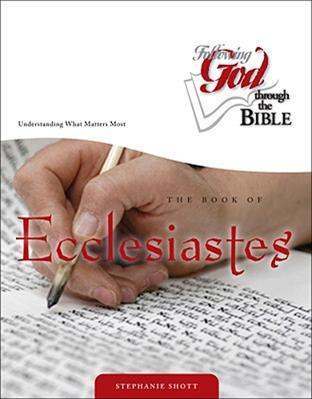
  • Ecclesiastes:  Wisdom to Understand What Matters Most

Wisdom for Life

 Let us know if you were helped this Wisdom for Life month. Share in the comments if this helped you to “wise up.”

Ecclesiastes: Wisdom to Understand What Matters Most

September 26, 2013 by Julie Leave a Comment

Today we welcome Stephanie Shott, founder of The MOM Initiative and author of Ecclesiastes: Understanding What Matters Most. We’ve asked her to pull back the curtain on this wisdom book that has many readers stumped. Find out why it’s a book of the Bible that helps us understand how to avoid wasting our lives. 

I have a huge affinity for Ecclesiastes. It was the unexpected place God took me when God called us to the mission field and I was desperately trying to make sense of that which didn’t make any sense at all.

Yet, it was one of those books of the Bible others had told me I would never really understand. So every year, when I read through the Bible, I would kind of ‘read over’ it, skimming the pages of what seemed to be one of the most negative twelve chapters I have ever read, written by one of the most pessimistic men who had ever lived.

But when I really needed to know what matters most in life, God planted my face and my heart smack dab in middle of that often avoided book where I discovered how we can make our lives count and minutes matter.

When Solomon was about 20 years old, he became the successor to his father, David’s throne. Solomon’s wildest dreams came true, when in a dream God asked him, “What shall I give you?”

Wise enough to choose wisdom, Solomon was given more than what he requested. He was a man who started really well, but didn’t cross the finish line as well as I’m sure he had hoped he would.

Solomon had it all. But like his daddy, he was a sucker for a pretty woman and what David did in moderation, Solomon did in excess. Somewhere along the way in his quest for more, he went from faithful to philanderer and from a man who worshiped God to a man who worshiped idols.

Ecclesiastes is written in his later years and was penned as a sort of riches to rags story. Kind of like a “been there, done that, you don’t want to go there” kind of message.

Wow! What a waste! All that wisdom and he still blew it!

That’s pretty scary to me!

I don’t know about you, but I don’t want to waste my life. It’s really one of my greatest fears. I don’t want to start out well and blow it along the way, do you?

I don’t want to spend my days letting life happen, focusing on the insignificant, and being so distracted by the dailies that I miss what really matters most.

And it can happen so easily. The laundry, the dishes, the all night cry-a-thons with the baby, little-league practice, work, life, even ministry – they all vie for our attention.

But what I love about Ecclesiastes is that Solomon covers the gamut of life experiences and gives us a solution to how we can make our lives count, not in spite of all of what is going on in our lives, but in light of it all.

From Solomon & the book of Ecclesiastes we learn:

1. WISDOM DOES NOT EQUAL PERFECTION ~ Knowing how we should live and actually living like we know we should are two very different things. Wisdom gives us the knowledge and ability to choose well, but it is an act of our will to actually do it.

Recently, I noticed a Facebook post from someone who is known to have a wealth of biblical knowledge, yet he is also known as a very hard and arrogant man. It’s pretty hard to tell someone about the love and mercy of God when others don’t see the love and mercy of God actively at work in the lives of His children. We are to be living epistles who live out loud for Christ. Not perfect. But passionately pursing a life that honors God.

2. DON’T WASTE YOUR TIME GRASPING AT THE WIND ~ Throughout Ecclesiastes, Solomon uses the terms, vanity and grasping at the wind a lot. But in Ecclesiastes 12, he sums up what is important in life and tells us the bottom-line to life is that we fear God and keep His commandments.

It’s easy to struggle with living for eternity in the midst of the dailies of life. But one day, with a toilet brush in one hand and a can of Comet in the other, the Lord showed me that I can even clean toilets to the glory of God.

It’s so easy to long for the significant rather than the menial. Yet, each is equal in God’s site when done for His glory. I’m not wasting my time when I’m cleaning toilets or scrubbing dried spaghetti off the carpets. With the right heart attitude, I can even do those things for eternity.

3. FAILURE IS NEVER FINAL ~ One of the hidden treasures of Ecclesiastes is the fact that it was written by a man who had forsaken God and followed false gods. He not only failed God, he forsook Him! But Ecclesiastes was penned in Solomon’s later years…after he had taken a detour and tried to live life under the sun apart from Him. The book of Ecclesiastes stands as a testimony to all of us that failure is never final.

I’ve failed God a lot. Maybe you have too. And it’s easy to think that God is done with us. But if you and I are still breathing, He’s not. He not only has a plan for your life, but He has plans for each minute of your life. Don’t give up. Don’t give in. Do the next thing because He’s not done with you yet!

HAVE YOU EVER AVOIDED ECCLESIASTES? HAVE YOU EVER FELT LIKE YOU HAD LET GOD DOWN AND COULDN’T BE USED ANYMORE? WHAT ARE YOU DOING NOW THAT MAY SEEM MUNDANE, YET CAN BE DONE FOR THE GLORY OF GOD?

Find Stephanie at www.stephanieshott.com

Applying Wisdom With Love {Rather than Legalistic Law}

September 20, 2013 by Caroline 5 Comments

Applying Wisdom with Love {donotdepart.com}

“The beginning of strife is like letting out water,
    so quit before the quarrel breaks out.” – Proverbs 17:14

“It is not good to be partial to the wicked
    or to deprive the righteous of justice.” – Proverbs 18:5

“Listen to advice and accept instruction,
    that you may gain wisdom in the future.” – Proverbs 19:20

“Do not say, “I will repay evil”;
    wait for the Lord, and he will deliver you.” – Proverbs 20:22

“Let another praise you, and not your own mouth;
    a stranger, and not your own lips.” – Proverbs 27:2

If you’re a recovering perfectionist or a “rule-follower” like me, you might easily look at these verses above and file these away as “more rules to follow.”

It’s even easier to take those rules and apply them so strictly, someone observing you might not see love, but instead only pressure.

We have rules because we need discipline. But, sometimes I need to remember getting stuck on rules without loving application restricts rather than builds. Pharisaical legalism is graceless.

Applying Wisdom with Love {donotdepart.com}

Looking to the Source of Wisdom

So, how do we apply all this wisdom with grace and with love and without building barriers?

By looking back to the Source of wisdom.

  • The very beginning of Proverbs says, “The fear of the LORD is the beginning of knowledge…” (Proverbs 1:7). Reverent trust of Him. As Lisa said last week, “to be truly wise, we’ll seek Him.”
  • I’m a rather stubborn person at times, so I need to pray for open ears and heart to wisdom and understanding (Proverbs 2:2).
  • Grab hold of steadfast love and faithfulness and don’t let go (Proverbs 3:3).
  • In the Proverbs that issue discipline, look for love. Notice how God offers love through this guidance (Proverbs 3:11-12). How can I offer it in a similar way?
  • Give freely (Proverbs 3:27-28). Often when I’m not sure how to react, if I stop and think, “how can I love?” I’m pointed in a better direction. There are still those situations where how to love while still protecting, directing, or helping seem very difficult to blend. In those situations, I try to seek wise counsel (Proverbs 12:15).

Do those still sound like more “rules” to follow?

I once heard that the motto of a prison ministry was to “listen, listen, love, love.” Those verbs are repeated on purpose. Wisdom Literature asks us to listen first, then love. When we listen first, we are usually better able to discern what’s needed for that person or situation, be it discipline, forgiveness, grace, protection, teaching, comfort, or encouragement. And then we can proceed with abundant love.

It takes discipline to live this way, and, really, we need discipline and training to grow (Proverbs 6:23, Proverbs 9:9).

“Hear instruction and be wise,
and do not neglect it.” – Proverbs 8:33

I’m praying for us to listen, listen, love, love today with God’s heart through us.

How do you apply wisdom without getting stuck on “following the rules?” I’m still growing here myself, so I’d love to hear your thoughts in the comments.

Where you find wisdom

September 12, 2013 by Lisa Burgess 9 Comments

And because of him you are in Christ Jesus, who became to us wisdom from God, righteousness and sanctification and redemption.
1 Corinthians 1:30

I’m afraid of being stupid. I realized it a few years ago.

None of us wants to be dumb. We all need wisdom.

  • To make godly decisions
  • To raise children who know the Lord
  • To love others in helpful ways
  • To glorify God in word and deed

Who’s the wisest man who ever lived? Solomon? He asked God for wisdom when he could have asked for anything (1 Kings 3:9). He subsequently authored much of the wisdom literature in the Bible.

Yet someone wiser than Solomon is here: Jesus (Matthew 12:42). In the Bible we typically seek His wisdom in the gospels where we see Him teaching about wisdom and living wisely (Matthew 13:54).

But Jesus can also be found in the wisdom literature of the Old Testament (2 Timothy 3:15).

THE WISDOM OF HUMILITY (JOB)

When Job suffered greatly as an apparently innocent man, his friends tried to find a reason. He obviously hadn’t been wise about keeping a rule or two; why else would he have lost so much? Eventually Job himself demanded answers from God (Job 3:11 ff).

But here we see foreshadowing of another Man who suffered—despite total innocence. Not only did He not question God about it, He wisely chose to obey at painful costs to Himself.

His wisdom teaches us to let go of demanding the answers. Instead, we’re to throw ourselves on His mercy in humility. Even when we don’t understand. Maybe especially when we don’t understand.

THE WISDOM OF WORSHIP (PSALMS)

The authors of these songs put word to emotions, not only for themselves, but also for us. Jesus Himself often quoted the Psalms (Psalm 31:5, for example).

In these laments, confessions, and praises, we learn to choose the wisdom of worship, verbalizing our adoration of and to Wisdom Himself—the Rock we rest on, the Refuge we hide in, the Shepherd we walk behind.

THE WISDOM OF THE WAY (PROVERBS)

We learn in this series of sayings that the fear of the Lord is the beginning of knowledge. Solomon urged over and over to choose the way of wisdom over the way of foolishness.

But what we know that he didn’t is that Jesus is the Way, the truth, and the life. He is wisdom personified (Proverbs 8:17), and to be truly wise, we’ll seek Him, empowered by His Spirit in us to choose the right over wrong that Solomon was preaching about.

THE WISDOM OF HOPE (ECCLESIASTES)

This book contains questions that can haunt us still: What is life’s true meaning? What is my purpose? Is all really hopeless?

While the world’s wisdom leaves us empty of lasting answers (Ecclesiastes 1:16-18), eternal wisdom from hoping in Jesus fills us up. In Him we live and love with meaning. Instead of chasing after knowledge, we chase after Him. Only then do we find purpose renewed and hope restored.

THE WISDOM OF CONNECTION (SONG OF SOLOMON)

Whether you see this collection of poems as an analogy or as pure story, this message comes across: the intimacy of love is to be desired (Song of Solomon 1:4).

While the original audience knew about God, they lacked full knowledge about Jesus. But from our vantage point in history, we see God’s wisdom in creating a beloved bride for the perfect Bridegroom. We are wise to recognize and delight in the love of the One who makes us His spotless bride.

Study deeper in these Old Testament books to find more.

And as you do, remember: True wisdom isn’t one more piece of knowledge we learn; it’s a Person we can know.

Jesus is our wisdom (1 Corinthians 1:30), and trusting Him is the wisest thing we can ever do.

Which of the five Wisdom Books is your favorite? Why? Do you see Jesus in it?

Please share your thoughts below.

For more on Jesus in the wisdom literature, see Nancy Guthrie’s [amazon_link id=”1433526328″ target=”_blank” ]The Wisdom of God: Seeing Jesus in the Psalms & Wisdom Books[/amazon_link]

3 Tips for Understanding Proverbs

September 10, 2013 by Kathy Howard 3 Comments

proverbs

proverbsWisdom literature comes in a variety of forms, but the best know is probably the “proverb.” Proverbs are easy to remember and often fun to say. For instance, men love to quote Proverbs 21:9: “Better to live on a corner of the roof than share a house with a quarrelsome wife.” (Ladies, unfortunately this is sad, but true!)


However, believers today often misunderstand or misuse this ancient form of wisdom writing. In today’s post, we will briefly define a proverb and then consider 3 interpretive tips that will help us understand this practical advice for living.

What is a proverb?

A proverb is an observation of life stated in a memorable way. It is a “persuasive saying proven true by experience” (“Encountering the Old Testament” by Arnold and Beyer, page 314). Proverbs are not unique to the Bible. Many ancient cultures made us of this literary device.

However, for the ancient Israelite, the purpose of a proverb was to “apply the principles of Israel’s covenant faith to everyday attitudes, activities, and relationships”  (“Old Testament Survey” by Lasor, Hubbard, and Bush, page 460). Biblical proverbs are also an observation of life, but they also acknowledge that true wisdom comes from God (Proverbs 1:7).

How can we understand the Proverbs?

Like the rest of Scripture, the Proverbs must be understood in light of their purpose, literary genre, context, and original meaning. Proverbs are a unique literary style and cannot be interpreted in the same way we do a historical book or an epistle.

Although the tips below are just a tip of the hermeneutical iceberg, they will get us off to a great start in understanding the Proverbs and applying their wisdom to our lives.

3 Tips to understanding Proverbs

1.    Principles, Not Promises

A biblical proverb seeks to apply God’s wisdom to the situations of life. They are guidelines for living, general principles, not promises from God. While generally accurate, they do not take into account every possible scenario or individual circumstance. Therefore, they are not guarantees of a certain outcome, but rather point hearers to the best chance for success. One well-know example is Proverbs 22:6:

“Start children off on the way they should go, and even when they are old they will not turn from it.”

Many of us have known Christian parents who claimed this verse as a promise and then were disillusioned when a child turned away from God and never returned. This demonstrates how important it is to understand the nature of a proverb.

 2.    Pithy Poetry

A proverb is a saying that encapsulates a broad observation about life. Its primary goal is to state an important, simple truth about life in easy-to-remember terms. Consider Proverbs 27:6:

“Wounds from a friend can be trusted, but an enemy multiplies kisses.”

Brief and memorable, this proverb is about something much deeper than flesh wounds and kisses. True friends tell us the truth for our good, even when it hurts. “Enemies” simply tell us what we want to hear or butter us up to get something they want.

Let’s look beyond the surface and past the simple, catchy words of a proverb to find the deeper truth. Then let’s apply that godly wisdom to our lives.

3. Proper Perspective

These ancient proverbs are based on ancient standards. They usually speak of simple desires and basic needs. Yet, often we subconsciously impose our modern, Western mindset and values.

“Whoever gives heed to instruction prospers, and blessed is the one who trusts in the Lord” (Proverbs 16:20).

Just imagine how the influence of our affluent culture can affect our understanding of “prospers” and “blessed.” The typical ancient Israelite considered himself blessed if he had shelter and enough food.

We could talk a lot more about proverbs. However, if we remember these 3 tips, we will be well on our way to wise living!

Did any of these 3 surprise you? In light of these 3 tips, have been misunderstanding a particular proverb?


Wisdom for today … still calling

September 5, 2013 by Julie 6 Comments

Wisdom for Life

The Bible isn’t the only book of wisdom. Around the globe, men have reached for other books claiming to be the source of wisdom, also known as “skill in godly living.” When biblical wisdom literature was recorded, scribes of parallel cultures and kingdoms also penned their words and stories. But when we talk about biblical truth, “All Scripture is breathed out by God and profitable for teaching, for reproof, for correction, and for training in righteousness,  that the man of God may be complete, equipped for every good work,” (2 Timothy 3:16).  God’s book self identifies its content as inspired by the one true God, and that makes its wisdom unique and essential.

When we refer to biblical Wisdom Literature we include five books:  Job, Psalms, Proverbs, Ecclesiastes, Song of Solomon. The righteous, the wicked, and the true God play the main parts in these books, revealing the limits of mankind’s wisdom and the necessity of fearing of God to prosper and find peace. In the times their words were written, voices opposing God’s ways called out from ancient streets peppered with a plethora of gods, but today voices call out from media screens, digital highways, steel framed cities and hand held gadgets. The tug of war for how we live hasn’t changed, but in many ways, the appearance of “righteous” and “wicked” has. Some may assume, then, the Bible doesn’t speak to life today, but Wisdom Literature’s concrete teaching matters as much now as when Job scraped his oozing sores.

Keys to unlock the 5 Wisdom books:

  • Job – This book addresses the same questions asked today:  Can we trust God? Is He good? Where do we find real comfort? The relatable character’s story takes place outside of Israel. Ultimately, we can put our faith in the sovereign God.
  • Psalms – Not all of these songs written for public worship fit in the “wisdom” category. Divided into 5 books, the Book of Psalms likely began as personal expressions of emotion, adapted for congregations. This book gives shape to our intense feelings about life in pursuit of God. Basic Old Testament themes like the fall of man, the One God, and the covenant relationship come to life here.
  • Proverbs – This collection of wisdom makes it clear that to be skillful in godly living, we must fear God and walk His way in everyday life. Practical truths show what a restored life with God looks like in our behavior, producing a joyful, useful life. Wisdom is available to all, and we discover it by comparing the wise man, the foolish man, and the simple man.
  • Ecclesiastes – This is a book for our day; Ecclesiastes explores trusting in God while living in a messed up world. Poetic devices help organize these proverbs into clusters with a plot line about the unfolding of a  quest for a good and satisfying life. This could be written in our day.
  • Song of Solomon – Intimacy stirs up emotion, and this book of love poetry is no exception. With a variety of opinions on its interpretation, some treat it as an allegory of God’s love for Israel and others as a picture of Christ’s love for the church. Authorship is not certain, but we agree that it’s a love story. There’s no doubt this poetic book demonstrates how God’s ways are the pathway to delight.

In the New Testament the Book of James and some of Jesus’ own teaching also qualify as “Biblical Wisdom Literature,” but these five Old Testament books form the collection commonly known as Wisdom Literature.

Today, as in days of old, “fools despise wisdom and instruction” (Prov. 1:7) but wisdom cries aloud in the street, in the market she raises her voice,” (Prov. 1:20).  Wisdom asks, “How long, O simple ones, will you love being simple? How long will scoffers delight in their scoffing and fools hate knowledge?” (Prov. 1:22). It’s hard to hear the call of wisdom in today’s world, but our children, families, and world are desperate to understand and apply skill in godly living that leads to a relationship with God and His peace.

“Let the wise hear and increase in learning, and the one who understands obtain guidance, to understand a proverb and a saying, the words of the wise and their riddles.  The fear of the Lord is the beginning of knowledge; fools despise wisdom and instruction.” (Prov. 1:22)

What evidence do you see that people desperately need biblical wisdom?

Click here for the printable Wisdom Bookmark to accompany our study of Wisdom Literature.

What the world needs now: WISDOM

September 3, 2013 by Julie 3 Comments

I dropped off my teenager and went to look for a parking spot. The place was packed. A man sat with his bottle and bag of books on the curb, staring at the pages as if they were empty. I wormed my way inside the store and past a long line of customers who looked like they’d been out all night. A swarm of humanity pushed each other aside to rifle through video games, movies, and gadgetry as if the store would close any minute … but it was mid-afternoon. From the upper level, a child screamed and ran away from an adult yelling obscene words to recapture him, and a man walked past me displaying an equally obscene t-shirt like a billboard on a highway. A couple sat on an old couch, groping one another as they watched the parade of people, but their gender was a mystery to me. Jesus once saw a throng such as that and “When he saw the crowds, he had compassion for them, because they were harassed and helpless, like sheep without a shepherd.” (Matt. 9:36)

I ducked into the first aisle to search for my son, only to find myself in “Erotic Fantasy,” just on the other side of “Children’s Fiction.” With bookshelves towering over my head across the length of the warehouse, I thought, there must surely be a book containing answers for wise living that the crowds with me so desperately need.

  • Today’s world thirsts for wisdom that comes from God alone.
  • Today’s church is malnutritioned when it comes to vital wisdom for living out our faith in an obscene world.

After navigating my way through the world, the Bibles were in the back corner of the store.  God’s book of truth holds the key to wisdom we so desperately need, and it was there all the time, waiting to be opened and read and obeyed. We only need to see what’s trending, check the Facebook feed, turn on the news, or open our front door to see our world buckling under the weight of sin and begging for the underpinnings of wisdom to give us strength and structure.

This month at Do Not Depart we’re taking a look at Wisdom Literature. We’ll give you Bible study tools to understand the rich resource of wisdom God has given us. Wisdom is calling out to us, and God’s blessings await those who listen. Come with us as we explore tools for unlocking Wisdom Literature.

Are you feeling the need for wisdom in your life?

I Obey Because He Instructs Righteousness (Run to Him – Psalm 119)

March 31, 2012 by Katie Orr 2 Comments

Picky

Obedience.

It’s hard for my four year old. (It’s also hard for that four-year-old’s momma.)

Though I long to live a life of obedience to His commands, I struggle daily to keep my feet on the narrow path.

Obedience is not simply a choice of the will, as our efforts will only bring us so far. Our beliefs come in to play as well.

When I disobey I am ultimately saying that I know better—just like my four year old. Now, I might never say so with my mouth—that I know better than God—but I say it daily when I choose my own way.

You do too.

Disobedience, even in the smallest of choices, is at its core rebellion against the God of those commands.

When I choose selfishness instead of sacrifice, I sin. When I “vent” my frustrations about a difficult person instead of holding my tongue, I disobey. When my thoughts drift to discontentment and dwell in an attitude of ungratefulness, I rebel.

In each of these situations, I say “Katie knows best.”

Obedience is saying “God knows best.”

Holiness is not a series of do’s and don’ts, but conformity to the character of God and obedience to the will of God. – Jerry Bridges, The Pursuit of Holiness

The Beliefs of the Psalmist

Your testimonies are wonderful; therefore my soul keeps them. (Psalm 119:129)

The psalmist was not some super-Christian, who had more ability to obey than you or me. We have all been given everything we need for godliness (2 Peter 1). We just need to figure out what hinders us. Oftentimes it is because we don’t believe that God and His commands are good. The psalmist saw God’s commands as wonderful, and I fully believe that had all to do with his commitment to obedience.

Here is more of what the psalmist believed:

  • God’s words gives light and understanding. (Psalm 119:130)
  • His rules are forever right and faithful. (Psalm 119:138, 144)
  • God righteousness is everlasting. (Psalm 119:137,142)
  • His Word is very pure.  (Psalm 119:140)
  • His law is truth and well tried. (Psalm 119:142)

Because of these beliefs, the writer of this Psalm had a resolved commitment to the Word of God, and the God of those words. This commitment flows naturally into obedience.

The Actions of the Psalmist

Here are just a few actions I saw of the psalmist:

  • He longed for God’s commandments. (Psalm 119:131)
  • He prayed for God to teach him His statues, and direct his steps by the Word (Psalm 119:133, 135)
  • He loved the Word. (Psalm 119:140)
  • He delighted in God’s commands. DELIGHTED. (Psalm 119:35, 143)
  • He was determined to walk in obedience to God’s Word. (Psalm 119:33,34,57)

The psalmist understood the relationship between God and His commandments. They could not be separated. If He wanted to be near to God, He must walk in His commands. He saw God and His commandments as good, right, and trustworthy. That made all the difference in his obedience.

When we walk with the Lord

in the light of his word,

what a glory he sheds on our way!

While we do his good will,

he abides with us still,

and with all who will trust and obey.

Then in fellowship sweet we will sit at his feet,

or we’ll walk by his side in the way;

what he says we will do,

where he sends we will go;

never fear, only trust and obey.

Trust and obey, for there’s no other way to be happy in Jesus, but to trust and obey.

–John H. Sammis

What did you see in the verses you studied this week? Come and share with us what you learned!


Photo Credit

The Life-Changing Power of God’s Word {Guest Post}

March 29, 2012 by Do Not Depart 9 Comments

By Brooke Espinoza

I would rather lay my soul asoak in half a dozen verses all day than rinse my hand in several chapters. -Charles Spurgeon

Though even a quick rinse in God’s Word will not return void, God gives us several motivating reasons to abide in His Word.

Photo credit

God’s Word is powerful!

I am just in awe of how great our God is that He literally spoke the entire universe into existence! The psalmist proclaimed in Psalm 33:6, “By the word of the Lord the heavens were made, and all the host of them by the breath of His mouth.”

Likewise, when a Roman centurion came to Jesus and asked Him to heal his dying servant, Jesus was happy to go with him to his home, but the centurion answered, “Lord, I am not worthy that You should come under my roof. But only speak a word, and my servant will be healed.” (Matthew 8:8) This man knew the incredible power of God’s Word! As a result of his great faith in God’s Word, the Roman centurion’s beloved servant was healed that very hour.

God’s Word is life-changing!

Psalm 1 shows the incredible transformation that is promised to anyone whose love for God’s Word drives them to abide in His Word day and night.

“He shall be like a tree
Planted by the rivers of water,
That brings forth its fruit in its season,
Whose leaf also shall not wither;
And whatever he does shall prosper.” Psalm 1:3

Just from this one verse we see the life changing power of God’s Word. This person is characterized:

  • Like a tree—a symbol of strength and uprightness
  • Planted by the rivers of water—fixed and abiding in the refreshing rivers of water
  • That brings forth its fruit in its season—a fruitful life
  • Whose leaf also shall not wither—with roots so deep into the Living Water, even the heat of trials shall not cause this tree’s leaves to wither
  • And whatever he does shall prosper—a prosperous life

God’s Word is mighty!

Just looking solely at Psalm 119, look at what it proclaims are just some of the awesome ways God uses His Word in our life when we take the time to be in it.

  • To bless us (v2)
  • To cleanse us (v9)
  • To give us counsel (v24)
  • To revive us (v25)
  • To strengthen us (v28)
  • To give us a ready answer (v42)
  • To give us hope (v49)
  • To comfort us in our afflictions (v50)
  • To give us life (v93)
  • To make us wiser than our enemies (v98)
  • To give us more understanding than all our teachers (v99)
  • To give us a lamp for our feet and a light to our path (v105)
  • To give us great peace (165)
  • To keep us from stumbling (v165)
  • To deliver us (v170)

Knowing the amazing life-changing power of God’s Word, I know what is at stake if I feel pressure from the day’s schedule to rush through my devotions or skip them all together. So on the days that I’m pressed for time, but still want to spend quality time in God’s Word, I will listen to my favorite audio Bible, The Word of Promise (NKJV) and take my memory verse for the day with me on a 3 x 5 card and meditate on it throughout my day when “my hands are busy, but my mind is free” as Janet Pope says in her book, His Word in My Heart.

Whether we spend time in God’s Word by reading it, studying it, listening to it, mediating on it, or memorizing it, what’s important is that we spent time in it. And when we do, oh will we be blessed!

What Bible verses have had the greatest impact on your life? Let us know in the comments


Brooke blogs at Rivers of Water, a site dedicated to encourage and equip Christian women to fully trust in God and His Word so when their faith is tested, through trials, they will not be shaken. She has a Bachelors degree in Biblical Studies from Calvary Chapel Bible College, and is passionate about studying and memorizing Scripture.

The Most Powerful List You Can Make :: Run to Him :: Psalm 77

March 9, 2012 by Do Not Depart 8 Comments

We make lists. To do lists. To read lists. To buy lists.

We live in a fast paced society that is all about getting things done. Go. Go. Go. Our culture sees the power in movement. But in all that getting ahead, we miss the power of remembering.

Sometimes? At the end of a day, I make a list of the things I accomplished simply so I can check them off. Yes, I’m one of those people. But there is a certain power and momentum in remembering what we’ve done.

the list

Photo credit

Apparently, the Psalmist was a list maker too. But he didn’t make a list of all the things he has or hasn’t done. Instead, he made a list of all the things God has done.  And wow what a difference it made!

In Psalm 77, the writer was having a terrible, horrible, no good, very bad day.

…I would not be comforted… (v. 2)

I was too troubled to speak. (v. 4)

Ever had one of those days? Ever wonder how to change the course of one of those days? Here’s how he did it:

Starting in verse 13, he began to simply list the wonders God has done.

Your ways, God, are holy. What god is as great as our God? You are the God who performs miracles; you display your power among the peoples. (v. 13)

The change in tone, attitude and hopefulness of the passage is simply remarkable from verse 13 onward.

With your mighty arm you redeemed your people, the descendants of Jacob and Joseph…You led your people like a flock by the hand of Moses and Aaron. (vv. 15, 20)

He may not have immediately felt different, but he immediately spoke different and that changed everything.

He took his eyes off of himself and what he could or couldn’t do. Instead put his eyes on God and what He has already done and will do again.

You see, God doesn’t change. He has been faithful to do wonders and He will be faithful to do wonders. Our greatest times of struggle are simply when we forget to remember.

Make a list

Keep a journal of the things God has done in your life. When troubles come your way, fight them with remembrance of the wonders He’s done.

Psalms Bible Study, How to run to God, Psalms study


What is one thing He’s done that you can remember today?

What did you learn from your study of the Psalms this week?


________________________________

Kat blogs at Inspired To Action, a site dedicated to helping moms develop the habits and skills they need to effectively manage their homes and raise children who are prepared to change the world. Kat and her husband live in the great state of Texas and have 3 children ages 7, 5 and 2.


Ten Verses for Trying Times

February 6, 2012 by Caroline 9 Comments

What do you do when you start feeling anxious, troubled, scared? Do you pray? Do you run to a spouse, a friend, a family member?

I wish I could say I always cry out to Him first. But I don’t.

I feel like it’s up to me to fix something, deal with trouble, solve a problem.

But it’s not.

God is always there.

How can I focus every bit of my heart – in every moment of life – on Him first, rather than on worry or “self-sufficiency.” How do I train my heart to seek His shelter rather than scrounge for my own?

A few ways helping me so far (and maybe able to help you?): Store up His Word in our hearts! Seek out verses to memorize, leading to quick recall when those trying times occur. Place His Word first in our hearts over and over and over again so we form a habit of going to Him first.

How can we find these guiding verses?

  • Pray first for God to open your heart to His leading and heighten your awareness of applicable verses for your situation.
  • Use a concordance (found in most study bibles) to find a topic (I searched for grief, trouble, fear, worry…) and read verses listed.
  • Use online bible study resourcesto search a specific topic.

    Image from Microsoft Clip Art
  • Study one passage (a chapter, a book) for several days in a row, asking God to lead you to needed truths at the right times.

Ten Verses for Trying Times

Here are ten verses I’ve found helpful in getting through hard times:

  1. Hebrews 12:7 – Hardships train us.
  2. Psalm 27:13-14 – Wait for and trust in Him in all things.
  3. Psalm 16:7-8 – God counsels.
  4. Psalm 34:2-5 – God hears.
  5. Psalm 34:18 – Brokenhearted? He remains near. (Our Run To Him reading for this week speaks on His redeeming us from troubles!)
  6. 1 Thessalonians 5:8-11 – We need not hold on to grief for we have His hope and joy in the midst of grief.
  7. Psalm 10:14 – God sees our troubles and helps.
  8. John 16:19-24, 33 – Grief caused by this age will be wiped away in the age to come. (John 16:33 is one of my personal favorites.)
  9. 2 Corinthians 1:3-7 – God comforts our troubles, and then we can share His comfort with others going through similar troubles.
  10. 2 Corinthians 4:16-18 – These troubles, no matter how severe they are, are nothing compared to the eternal glory coming. I have to remind myself of this perspective sometimes.

How does God share what you need through His Word?

The Real Temptation

December 28, 2011 by Katie Orr 3 Comments

Every temptation to sin is, in the moment, a temptation to disbelieve the gospel-the temptation to secure for ourselves in that moment something we think we need in order to be happy, something we don’t yet have: meaning, freedom, validation, and so on. Bad behavior happens when we fail to believe that everything we need, in Christ we already have; it happens when we fail to believe in the rich provisional resources that are already ours in the gospel. Conversely, good behavior happens when we daily rest in and receive the finished work of Christ in deeper and deeper ways, smashing any sense of need to secure for ourselves anything beyond what Christ has already secured for us.

-Tullian Tchividjian, Jesus + Nothing = Everything

______________________________________________

For the month of December we are sharing posts and quotes to help us escape the Cycle of Try Harder, through Believing Better.

Read more Believing Better posts here.

The Better Choice: Believing

December 13, 2011 by Do Not Depart 6 Comments

But be doers of the word, and not hearers only, deceiving yourselves. For if anyone is a hearer of the word and not a doer, he is like a man who looks intently at his natural face in a mirror. For he looks at himself and goes away and at once forgets what he was like. But the one who looks into the perfect law, the law of liberty, and perseveres, being no hearer who forgets but a doer who acts, he will be blessed in his doing.  James 1:23-25, emphasis added

I believe …

We say it all the time.  I believe Jesus is the Son of God.  I believe we’re called to share our faith.  I believe God wants us to know Him intimately through time spent in prayer and in His Word.  I believe the Word is true and changes people’s lives.

I believe.

But do we?  Really?

James says there is a difference between a hearer of the Word and a doer of the Word.   I’ve thought about this a great deal.   Not in the context of a works-based salvation, but even deeper.  That difference between knowing and believing.

Knowing the straps on a roller coaster are designed to hold me safely in the ride is one thing.  Believing they will do that job is totally different.  Knowing might get me in line … but believing straps me in the seat.

Grande Boucle


Photo Credit

Maybe, just maybe, we get caught up in the knowing … standing the lines of Bible study homework completed and church attendance lists … and we miss the real grace of believing … of strapping in the ride.

Believing might call some of us to sell everything and live in a poor community sharing the love of Jesus with those who have lost all hope.   Believing might ask some of us to give up the frantic pace of modern life and move slowly, intentionally, to be different in the scariest ways we can imagine.   Believing might require early mornings spent in prayer and study or late nights of intercession for the lost.    Believing asks that we lay down our dreams, our plans, our understanding.

Believing is strapping for the ride of our lives … with promised suffering but also eternal hope.

I don’t know about you, but I’m no longer satisfied with standing in the line of knowing.  I’m choosing to strap myself into the ride of believing.  Believing bigger, believing better.

Will you join me?

______________________________________________________

A guest post by

Teri Lynne Underwood


Married to her talented Worship Pastor husband and momma to her silly {and slightly hormonal}tween girl, Teri Lynne is living out her own happily ever after.  Finding glimpses of holy in the most mundane places, Teri Lynne’s one desire is to invite others into this journey toward a life where the sacred and secular collide.   She writes at a little white desk and studies in a big not-so-white-anymore chair in between loading the dishwasher, putting the dog out, and sitting in the car line.  Grace grabbed hold of her life and since it did, she’s never been the same.  You can join her on her blog and on Twitter.


______________________________________________

 For the month of December we are sharing posts and quotes to help us escape the Cycle of Try Harder, through Believing Better.

Read more Believing Better posts here.

The Dragon is Slain

December 9, 2011 by Katie Orr 1 Comment

Picture your flesh—that old ego with the mentality of merit and craving for power and reputation and self-reliance—picture it as a dragon living in some cave of your soul. Then you hear the gospel, and in it Jesus Christ comes to you and says, “I will make you mine and take possession of the cave and slay the dragon. Will you yield to my possession? It will mean a whole new way of thinking and feeling and acting.” You say: “But that dragon is me. I will die.” He says, “And you will rise to newness of life, for I will take its plan; I will make my mind and my will and my heart your own.” You say, “What must I do?” He answers, “Trust me and do as I say. As long as you trust me, we cannot lose.” Overcome by the beauty and power of Christ you bow and swear eternal loyalty and trust.

And as you rise, he puts a great sword in your hand and says, “Follow me.” He leads you to the mouth of the cave and says, “Go in, slay the dragon.” But you look at him bewildered, “I cannot. Not without you.” He smiles. “Well said. You learn quickly. Never forget: my commands for you to do something are never commands to do it alone.” Then you enter the cave together. A horrible battle follows and you feel Christ’s hand on yours. At last the dragon lies limp. You ask, “Is it dead?” His answer is this: “I have come to give you new life. This you received when you yielded to my possession and swore faith and loyalty to me. And now with my sword and my hand you have felled the dragon of the flesh. It is a mortal wound. It will die. That is certain. But it has not yet bled to death, and it may yet revive with violent convulsions and do much harm. So you must treat it as dead and seal the cave as a tomb. The Lord of darkness may cause earthquakes in your soul to shake the stones loose, but you build them up again. And have this confidence: with my sword and my hand on yours this dragon’s doom is sure, he is finished, and your new life is secure.”

—John Piper, Walk by the Spirit!  (Sermon)

______________________________________________
 

For the month of December we are sharing posts and quotes to help us escape the Cycle of Try Harder, through Believing Better.


Read more Believing Better posts here.

Next Page »

This Month’s Theme

  • Jesus is the Way
  • And He Shall Be Called Series Intro

Enter your email address to have new posts emailed to you:

We’ll come to you

Enter your email address to have new posts emailed to you

Categories

Bible Memory – Lent 2021

Memorizing Isaiah 12

Let the Children Come

Let the Children Come

Want more #HideHisWord resources?

Memorizing Psalm 1

Find Us on Facebook


Search

Recent Posts

  • Series Wrap-Up: The Lord Is My Light
  • His Marvelous Light
  • When the Darkness Deepens
  • Though I Sit in Darkness…
  • Let Your Light Shine
  • Life-Giving Light

Archives

© 2026 · Pretty Creative WordPress Theme by, Pretty Darn Cute Design